

Christian Art | Take Up Your Cross And Follow Me
Office Of Readings | Wednesday, Week 7, Ordinary Time | A Reading From The Commentary On Ecclesiastes By Saint Jerome | Seek The Things That Are Above
‘Seek the things that are above.’
In this reading, Saint Jerome offers a layered interpretation of Ecclesiastes, moving from a literal reading of human labour and enjoyment to a more developed spiritual understanding. The text reflects Jerome’s characteristic method: a progression from the observable realities of life to their theological fulfilment in Christ.
The opening contrast is between two attitudes towards material goods. One man receives wealth as a gift and enjoys it without anxiety; the other is consumed by restlessness and possessiveness. Jerome affirms the value of enjoyment, but only within a certain framework. The ability to take pleasure in what one has is itself a gift of God, not simply a natural disposition. This introduces an important distinction: material goods are not rejected, but their proper use depends on a rightly ordered interior state. Anxiety arises not from possession itself, but from disordered attachment.
Yet Jerome does not remain at this level. He quickly redirects the interpretation towards a spiritual reading, drawing on the teaching of Paul the Apostle. The ‘food and drink’ of which Ecclesiastes speaks are understood as spiritual nourishment. Labour becomes contemplation; enjoyment becomes participation in divine goodness. The emphasis shifts from external satisfaction to interior fulfilment. Even so, Jerome introduces a further qualification: this stage is not complete ‘until Christ is revealed’. All partial goods, even intellectual or spiritual ones, remain provisional until they are fulfilled in Jesus Christ.
The middle section develops a critique of purely material satisfaction. The imagery of eating is deliberately concrete. Food provides immediate pleasure, but its effects are transient and repetitive. The body is sustained, but the spirit remains unsatisfied. Jerome’s argument is not that bodily needs are irrelevant, but that they cannot fulfil the deeper longing of the human person. The cycle of consumption—desire, satisfaction, renewed desire—reveals the insufficiency of material goods as ultimate ends.
This leads to a comparison between the wise man and the fool. At the level of physical necessity, there is little distinction: both must eat, both are subject to the same conditions. The difference lies in orientation. The wise man recognises the limits of material satisfaction and seeks something beyond it. Jerome introduces here a second, more refined interpretation: the hunger in question is intellectual and spiritual. The one who studies Scripture continues to desire understanding, and this desire is not a defect but a sign of life. Unlike bodily hunger, which is cyclical and ultimately unproductive, this hunger leads to growth.
A key element in this interpretation is the notion of poverty. Jerome links the wise man with the ‘poor’ of the Gospel, those who recognise their need. This poverty is not material deprivation as such, but an awareness of one’s insufficiency before God. It is precisely this awareness that drives the search for truth. The fool, by contrast, remains confined to immediate satisfactions and does not perceive the need for deeper understanding.
The final movement of the reading brings the argument to its Christological conclusion. The wise man knows ‘where Christ… is to be found’ and walks the path that leads to life. Knowledge, therefore, is not an end in itself but a means of orientation towards Christ. The ‘straight and narrow way’ signifies a disciplined and directed life, in which desire is ordered towards its proper object.
In sum, Jerome presents a graduated account of human desire and fulfilment. Material goods, intellectual pursuits, and even spiritual practices are all relativised in light of their ultimate end in Christ. True satisfaction is not found in possession or consumption, but in a rightly ordered pursuit of what is enduring. The passage thus integrates ethical, intellectual, and theological dimensions into a coherent vision of the human good.
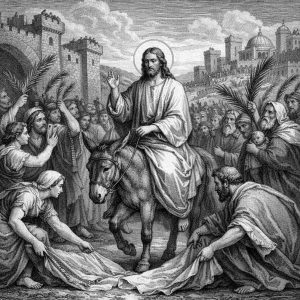
A Reading From The Commentary On Ecclesiastes By Saint Jerome | Seek The Things That Are Above
Every man to whom God has given wealth and possessions and power to enjoy them, and to accept his lot, and to take pleasure in his labor—that man has received a gift from God. For he will not notice the days of his life as they pass because God has filled his heart with joy. Compare him with the man who is anxious about his wealth and is full of vexation as he hoards up possessions that perish. Our text says that it is better to take delight in what you have. The first man at least has some pleasure in what he has, while the second suffers from excessive anxiety. And the reason is that the ability to enjoy riches is a gift from God; he does not count the days of his life, for God allows him to enjoy life; without sadness or anxiety, he is filled with delight of the moment. However, it is better to understand the text with the Apostle as referring to God’s gift of spiritual food and drink; man is to contemplate goodness in his works, for it takes great work and study for us to contemplate true good. And this is our lot: to rejoice in study and work. This is a good goal, but not completely good until Christ is revealed in our lives.
All the work of a man is to satisfy his mouth, yet his spirit will be hungry. For what has a wise man more than a fool, except the knowledge of how to live? All that men work for in this world is consumed by their mouths, chewed up by their teeth, and passed into the stomach for digestion. And even when something delights the taste, the pleasure lasts only as long as he can taste it.
But after all this, the mind of the eater gets no satisfaction, for he will want to eat again, and neither wise man nor fool can live without food, and even a poor man seeks nothing more than to keep his body alive and not die of starvation. Or again, it may be because the spirit gains nothing useful from feeding the body. Food is common to the wise and the foolish alike, and for the poor man food is wealth.
However, it is better to understand the text as referring to the man in Ecclesiastes, who is learned in the sacred Scripture, and knows that neither mouth nor spirit is satisfied so long as he still desires learning. In this the wise man has advantage over the fool. For if he knows himself to be poor (and the poor are called blessed in the Gospel), he strives to understand the important things in life, and he walks the straight and narrow way which leads to life. He is poor in wickedness, and he knows where Christ, who is our life, is to be found.
Christian Prayer With Jesus Christ
O God,
giver of every good gift,
teach us to receive what you give with gratitude
and to use it with wisdom.
Free us from restless anxiety
and from the desire for passing things,
that we may seek what truly endures.
Grant us a hunger for your truth,
and a longing that leads us beyond all lesser goods
to your Son, Jesus Christ.
Guide us along the narrow way,
that in seeking you we may find true joy
and lasting fulfilment.
Through Christ our Lord.
Amen
Glossary Of Christian Terms
Gift of God
Any good received from God, whether material or spiritual, given for right use and gratitude.
Detachment
Freedom from anxiety or excessive attachment to material possessions.
Spiritual Nourishment
The sustenance of the soul through truth, grace, and communion with God.
Contemplation
A reflective and attentive awareness of divine truth, especially through Scripture.
Desire (Spiritual Desire)
The longing of the soul for God, which surpasses all material satisfactions.
Vanity (in Ecclesiastes)
The transience and insufficiency of worldly pursuits when taken as ultimate ends.
Wisdom
The capacity to recognise the limits of earthly goods and to seek what is eternal.
Folly
A state of ignorance or misdirected desire, focused on passing goods.
Poverty of Spirit
The recognition of one’s dependence on God, praised in the Gospel.
Scripture
The sacred writings through which God reveals truth and guides believers.
Narrow Way
The disciplined path of life that leads to salvation, requiring effort and discernment.
Fulfilment (in Christ)
The completion of all human striving and desire in Jesus Christ.
Grace
The divine assistance that enables right understanding and right living.
Eternal Life
The lasting communion with God that surpasses all temporal pleasures.
Right Use of Goods
The ethical use of material and spiritual resources in accordance with God’s will.



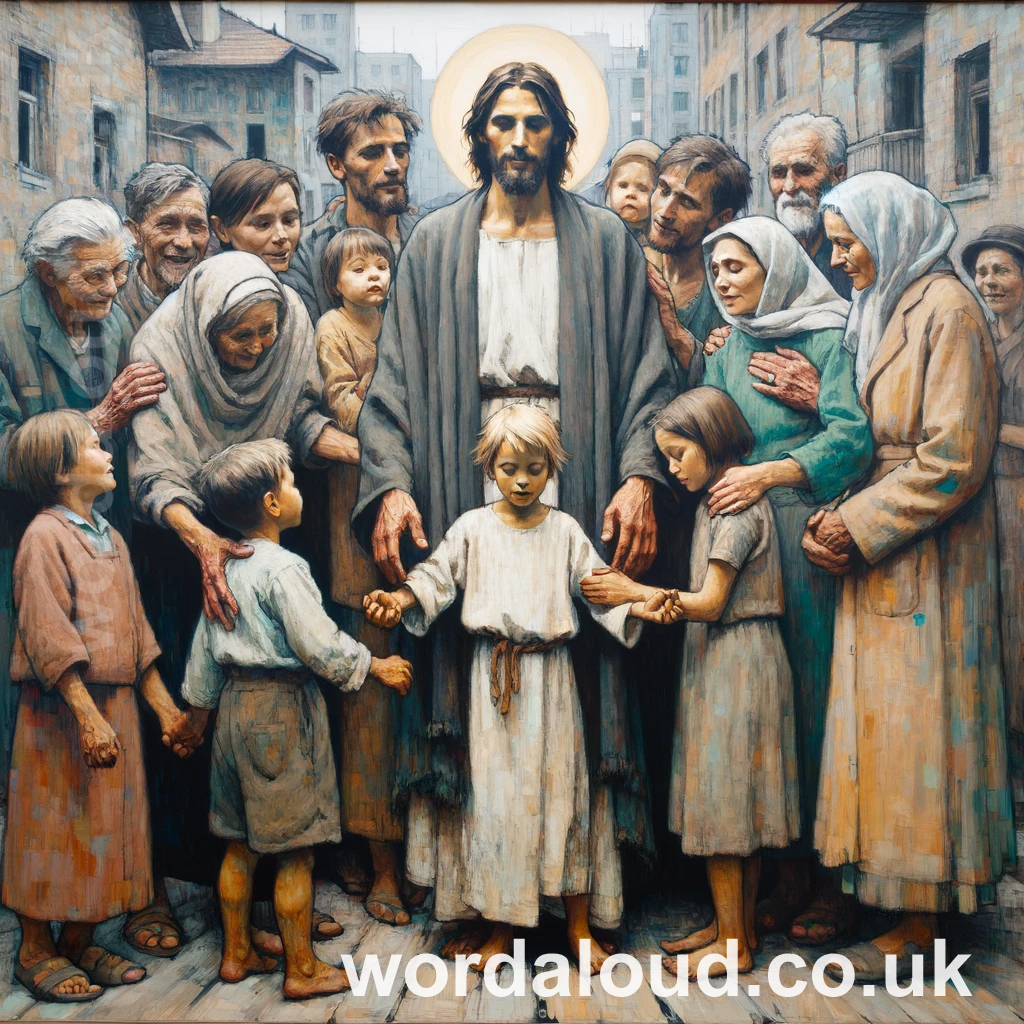
Dear Jesus, Thank you for the blessing of family. Help me to appreciate and cherish my family members, both biological and spiritual. Guide me to be a source of love, support, and encouragement to them. Grant us the strength to overcome challenges together and to celebrate our joys with gratitude. May our family be a reflection of your love and grace. Help us to forgive one another, to be patient, and to build each other up. Let your peace reign in our home, and may we always seek to do your will. Amen [ … ]
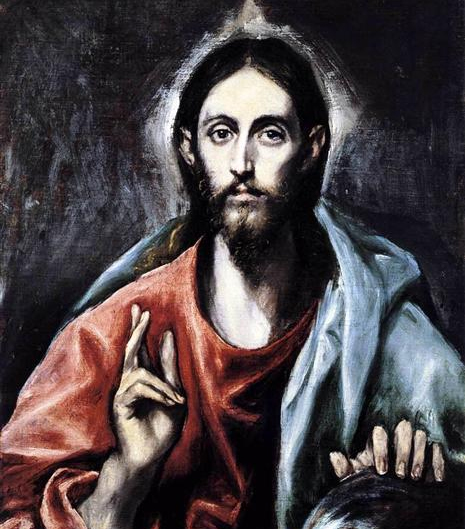
It is the Sermon on the Mount. Our Lord has presented the crowd with the Beatitudes. We have been taught to know the gateway to heaven. These are the great Christian truths to which we aspire [ … ]
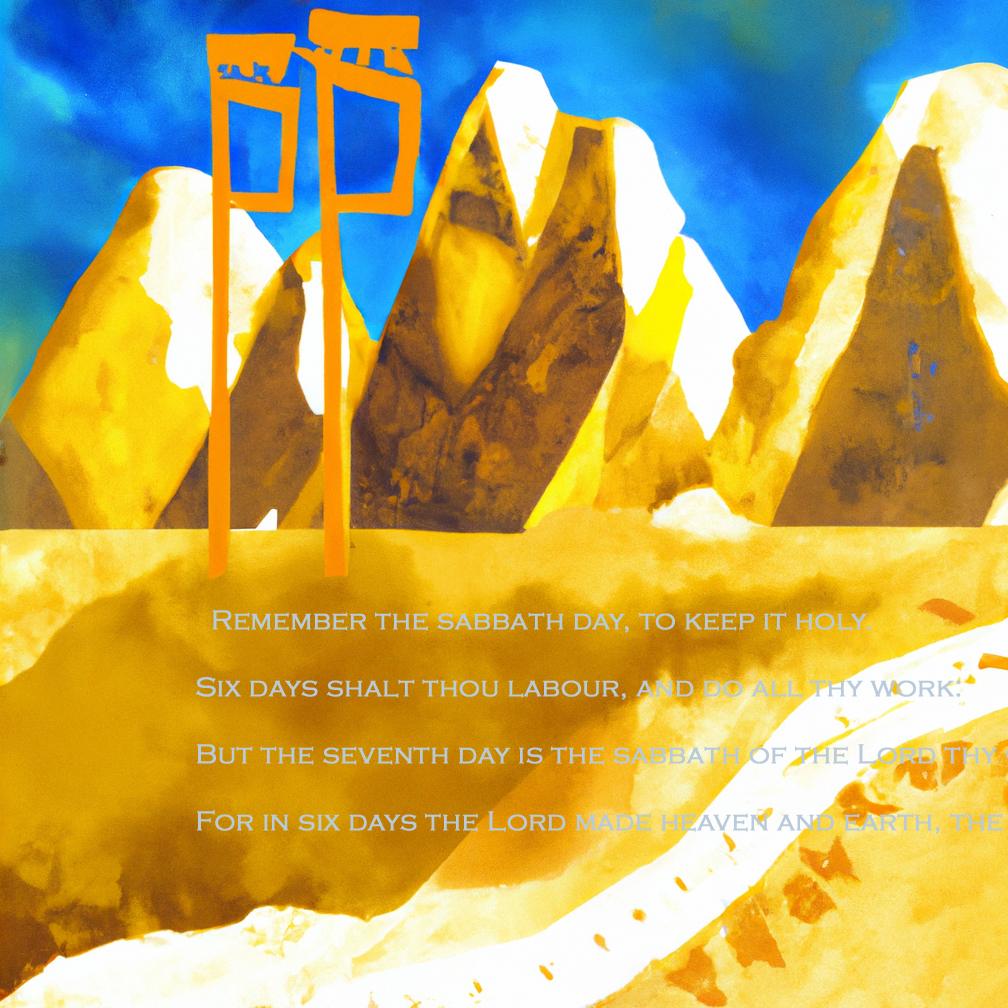
The third commandment of the Ten Commandments, ‘Keep holy the Lord’s day,’ is a call to set aside time on a regular basis to rest from one’s daily work and to focus on the worship and service of God. This commandment is often understood to refer to the Christian Sabbath, which is traditionally observed on Sunday, the day of the resurrection of Jesus Christ [ … ]