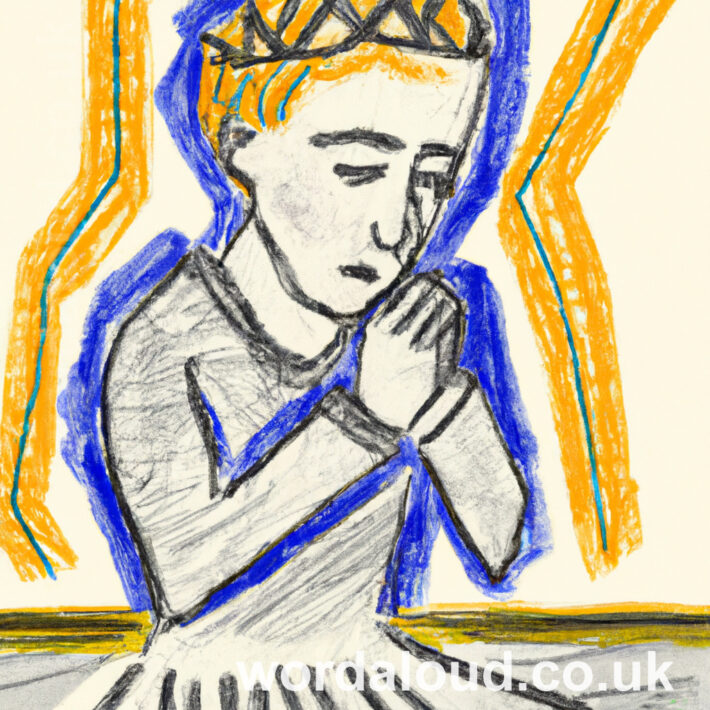
Christian Art | Prayer With Jesus | Psalms | Prayer For Help In Despondency | King David As A Boy | Audio KJV | Love Revealed By Jesus Christ | King James Audio Bible
Psalm 88 | King James Audio Bible
YouTube: Psalm 88 | KJV | King James Version | Audio Bible | Word Aloud
Psalm 88 expresses despair and there is an absence of the redemptive turn found in many other psalms. Traditionally ascribed to Heman the Ezrahite, this psalm explores depths of human suffering and spiritual desolation, offering a raw and unfiltered cry from the soul.
The psalmist addresses the Lord as the God of salvation, setting a poignant tone for the lament that follows. The psalmist’s plea is relentless, crying out day and night, seeking an audience with the Divine. The vivid language employed portrays a soul overwhelmed by troubles, drawing near to the very edge of the grave. The psalmist feels counted among those destined for the pit, devoid of strength and likened to the dead.
Imagery of being laid in the lowest pit, shrouded in darkness, and subjected to the waves of God’s wrath intensifies the psalmist’s experience of affliction. There is profound sense of being abandoned, with acquaintances distanced and the psalmist feeling like an abomination, imprisoned and unable to come forth.
The psalmist’s gaze turns inward as affliction takes a toll on the eyes, and the relentless suffering leads to a sense of daily mourning. The poignant questioning arises: Will wonders be shown to the dead? Can the dead arise and praise the Lord? The psalmist grapples with the seeming futility of divine intervention after death.
The psalm ends without the customary hopeful note, leaving the reader in the darkness of the psalmist’s affliction. Lover and friend are put far away, and acquaintances are shrouded in darkness, highlighting a stark sense of isolation.

Psalm 88 | King James Audio Bible KJV | Love Revealed By Jesus Christ
O Lord God of my salvation, I have cried day and night before thee:
Let my prayer come before thee: incline thine ear unto my cry;
For my soul is full of troubles: and my life draweth nigh unto the grave.
I am counted with them that go down into the pit: I am as a man that hath no strength:
Free among the dead, like the slain that lie in the grave, whom thou rememberest no more: and they are cut off from thy hand.
Thou hast laid me in the lowest pit, in darkness, in the deeps.
Thy wrath lieth hard upon me, and thou hast afflicted me with all thy waves. Selah.
Thou hast put away mine acquaintance far from me; thou hast made me an abomination unto them: I am shut up, and I cannot come forth.
Mine eye mourneth by reason of affliction: Lord, I have called daily upon thee, I have stretched out my hands unto thee.
Wilt thou show wonders to the dead? shall the dead arise and praise thee? Selah.
Shall thy lovingkindness be declared in the grave? or thy faithfulness in destruction?
Shall thy wonders be known in the dark? and thy righteousness in the land of forgetfulness?
But unto thee have I cried, O Lord; and in the morning shall my prayer prevent thee.
Lord, why castest thou off my soul? why hidest thou thy face from me?
I am afflicted and ready to die from my youth up: while I suffer thy terrors I am distracted.
Thy fierce wrath goeth over me; thy terrors have cut me off.
They came round about me daily like water; they compassed me about together.
Lover and friend hast thou put far from me, and mine acquaintance into darkness.
Psalm 88 | King James Audio Bible KJV | Love Revealed By Jesus Christ
- Relentless Lamentation: Psalm 88 is characterized by an unyielding expression of lamentation, expressing a soul’s persistent cry to God in the midst of profound despair.
- Desolation and Abandonment: The psalmist vividly portrays a sense of desolation, feeling abandoned and cut off from the divine presence. Themes of darkness and affliction permeate the psalm, reflecting depths of the psalmist’s suffering.
- Questioning Divine Intervention: The psalmist grapples with the seeming futility of divine intervention after death. Questions about wonders being shown to the dead and the praise of the Lord by those who are dead underscore complexity of the psalmist’s faith.
- Intense Personal Affliction: The psalmist experiences physical and emotional anguish, drawing near to the grave, feeling counted among the dead, and being subjected to the waves of God’s wrath. The language conveys the depth of personal affliction.
- Isolation And Separation: The psalm concludes with a poignant sense of isolation. Friends, lovers and acquaintances are put far away, shrouded in darkness; there is profound separation and loneliness experienced by the psalmist.
- Absence Of Redemptive Turn: Notably, Psalm 88 lacks the typical redemptive turn found in many other psalms. The absence of a shift towards hope or praise sets it apart, allowing it to stand as a powerful representation of the complexities of faith in the face of unrelenting suffering.
- Raw And Unfiltered Expression: The psalm’s unfiltered portrayal of the psalmist’s agony and the unrelenting nature of the lament contribute to its uniqueness. It provides a sacred space for the expression of raw, honest emotions and the complexities of the human experience.



In this reading from his letter to the Ephesians, Saint Ignatius of Antioch reflects on the importance of unity within the Christian community. Writing as a prisoner on his way to martyrdom, Ignatius speaks with humility and urgency. He does not present himself as a figure of authority, but as a fellow disciple who is still learning what it means to follow Christ [ … ]
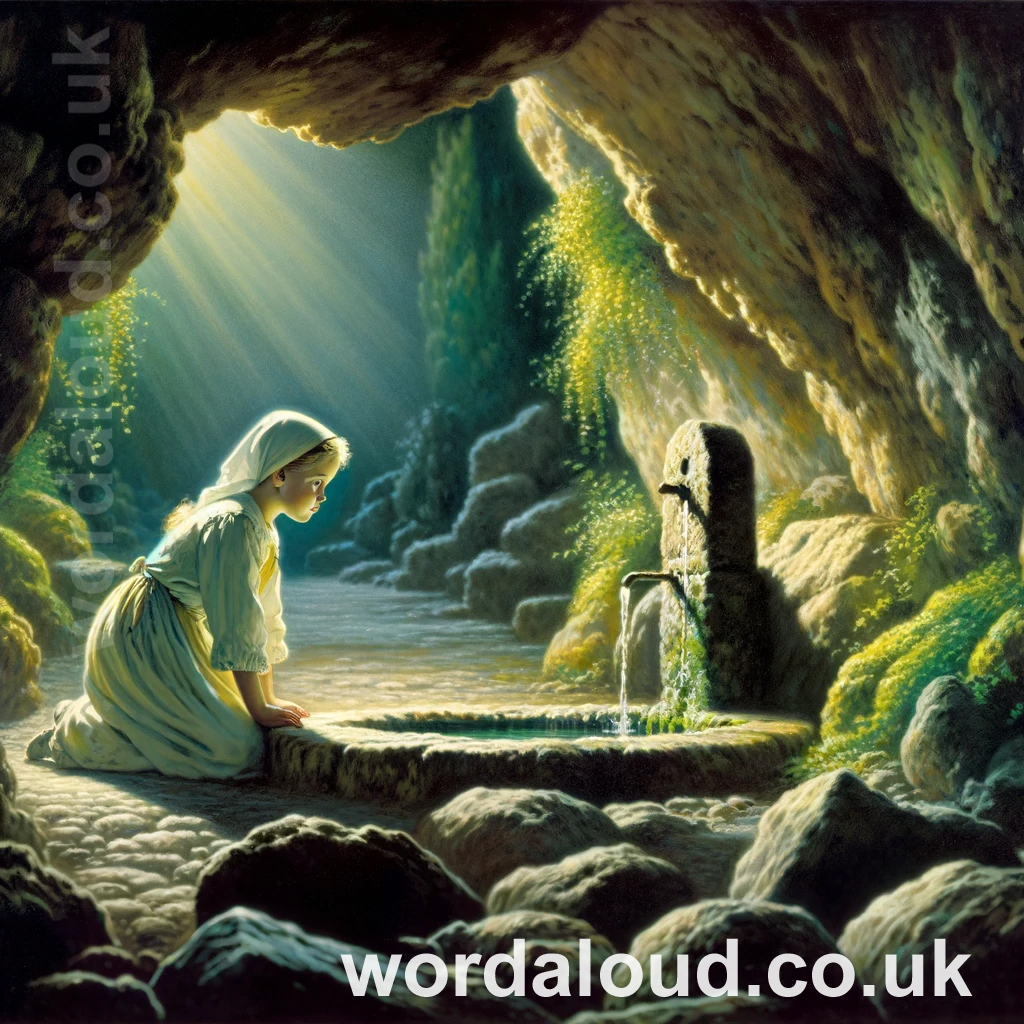
John 4:13-14 (KJV) ‘Jesus answered and said unto her, Whosoever drinketh of this water shall thirst again: But whosoever drinketh of the water that I shall give him shall never thirst; but the water that I shall give him shall be in him a well of water springing up into everlasting life.’ Introduction to the Life of Saint Bernadette Saint Bernadette Soubirous, a humble peasant girl from Lourdes, France, lived her life of faith, humility, and divine grace. Born on January 7, 1844, in the small town of Lourdes, Bernadette was the eldest of nine children in a poor and struggling family. Her father, François Soubirous, was a miller, and her mother, Louise, a laundress. The family lived in a former prison cell known as the Cachot, a damp and cramped space, according to their dire financial situation. Despite their poverty, the Soubirous family was deeply rooted in their Christian faith, a foundation that would profoundly shape Bernadette’s life and spiritual journey. Bernadette’s early years were marked by significant health challenges. She suffered from asthma and other respiratory ailments, which often left her weak and unable to attend school regularly. This lack of formal education meant that Bernadette struggled with reading and writing, and her understanding of Christian doctrine was limited. Nevertheless, she possessed a remarkable simplicity and purity of heart, qualities that would make her an ideal recipient of divine revelations. Bernadette’s life changed irrevocably on February 11, 1858, when she experienced the first of eighteen apparitions of the Blessed Virgin Mary at the grotto of Massabielle. On that cold winter day, Bernadette, her sister Toinette, and a friend were gathering firewood near the grotto when she heard a rustling sound and saw a beautiful lady dressed in white with a blue sash, holding a rosary. The lady, who later identified herself as the Immaculate Conception, appeared to Bernadette over the course of several months, delivering messages of penance, prayer, and the need for a chapel to be built at the site. Despite initial skepticism from her family and the local authorities, Bernadette remained steadfast in her account of the apparitions, enduring intense scrutiny and even ridicule. The apparitions drew enormous attention. Soon, people from all over France and beyond began to visit Lourdes, hoping to witness a miracle. One of the most significant messages conveyed by the Virgin Mary to Bernadette was the instruction to dig in the ground near the grotto, which led to the discovery of a spring. This spring, believed to have healing properties, became the focal point of the pilgrimage to Lourdes. Many miraculous healings have been attributed to the waters of Lourdes, reinforcing the belief in Bernadette’s visions and the sanctity of the site. As the apparitions concluded, Bernadette’s life took a different turn. In 1866, she joined the Sisters of Charity in Nevers, taking the name Sister Marie-Bernard. Her time in the convent was marked by continued poor health and humility, as she carried out menial tasks and lived a life of quiet service. Despite her physical suffering, Bernadette remained devout and accepted her hardships with grace, often repeating the phrase, “I am happier here in my little corner of the convent.” Her unwavering faith and dedication to her religious duties exemplified the depth of her spiritual commitment. Bernadette Soubirous passed away on April 16, 1879, at the age of 35, after a prolonged battle with tuberculosis. Her legacy, however, endured far beyond her earthly life. In 1933, she was canonized as a saint by Pope Pius XI, recognized for her humility, faith, and the miraculous events associated with her life. Today, millions of pilgrims flock to Lourdes each year, seeking spiritual renewal and physical healing at the site of her visions. Saint Bernadette’s life continues to inspire countless individuals around the world, reminding us of the power of faith, the virtue of humility, and the enduring presence of divine grace in our lives. To Visit Lourdes Visiting Lourdes, in the picturesque foothills of the Pyrenees in southwestern France, is an experience that transcends the physical journey, drawing pilgrims into a profound spiritual adventure. The small town, known for the Marian apparitions witnessed by Saint Bernadette Soubirous in 1858, has become one of the world’s most revered pilgrimage sites. As we approach the Sanctuary of Our Lady of Lourdes, the atmosphere is imbued with a palpable sense of reverence and anticipation. The grand basilicas, the tranquil Grotto of Massabielle and the gently flowing waters of the miraculous spring together create a sacred environment that invites reflection, prayer, and a deep connection with the divine. The focal point of any visit to Lourdes is the Grotto, where Bernadette experienced the apparitions of the Blessed Virgin Mary. Here, pilgrims can touch the rock face, light candles, and drink or bathe in the spring’s water, believed to possess healing properties. The profound silence and sense of sacredness at the Grotto allow visitors to contemplate their faith, seek solace and find spiritual renewal. The Rosary Basilica, with its mosaics, and the Basilica of the Immaculate Conception, perched above the Grotto, offer spaces for communal worship and personal meditation. The nightly candlelight processions, where pilgrims from around the globe unite in prayer and song, highlight the universal bond of faith and hope that Lourdes represents. Beyond its physical beauty and historical significance, visiting Lourdes offers a deeply personal and transformative experience. Pilgrims often arrive burdened with ailments, grief, or spiritual crises, seeking comfort and miracles. The stories of healing and faith that emerge from Lourdes are testimonies to the enduring power of belief and the intercession of the Blessed Virgin Mary. The communal aspect of the pilgrimage—sharing meals, prayers, and stories with fellow believers—fosters a sense of solidarity and mutual support. For many, the visit to Lourdes is a journey of healing, not only of the body but also of the soul, providing a renewed sense of purpose, peace, and spiritual clarity that lingers long after returning home. Prayer With Saint Bernadette Prayer for Intercession Dear […]
Psalm 120, a cry for deliverance and peace, is the first of the fifteen Songs of Ascents (Psalms 120-134) in the Book of Psalms. Traditionally attributed to King David, these psalms were sung by pilgrims journeying to Jerusalem for the great feasts. Psalm 120 reflects a deep yearning for deliverance from deceit and falsehood [ … ]