
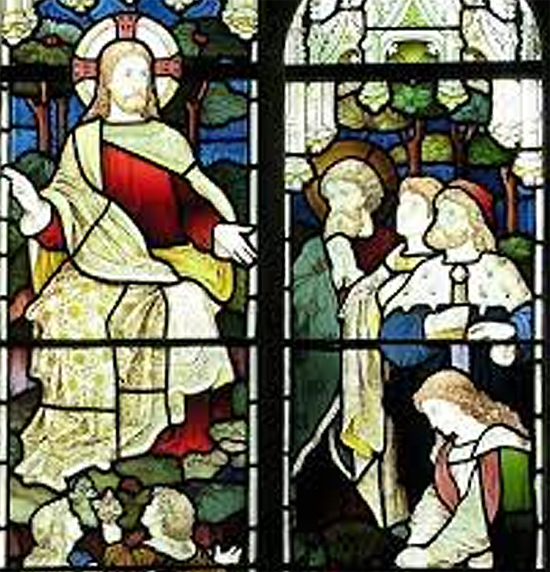
Christian Art | Pearls Before Swine
Matthew 7: 6, 12-14 – Week 12 Ordinary Time, Tuesday (King James Audio Bible KJV, Spoken Word)
6 ¶ Give not that which is holy unto the dogs, neither cast ye your pearls before swine, lest they trample them under their feet, and turn again and rend you.
12 Therefore all things whatsoever ye would that men should do to you, do ye even so to them: for this is the law and the prophets.
13 ¶ Enter ye in at the strait gate: for wide is the gate, and broad is the way, that leadeth to destruction, and many there be which go in thereat:
14 Because strait is the gate, and narrow is the way, which leadeth unto life, and few there be that find it.
Give not that which is holy unto the dogs, neither cast ye your pearls before swine. This is difficult text. The dogs, the pigs – these would be terms to describe the non-Jewish, yet in acknowledging this we are aware of Jesus’ ministering to everybody, gathering crowds of disparate people, and enjoining them to coexist peacefully, while he walked in the land of the Gentiles.
It may be strange additionally that Jesus seems to be telling us to keep back from the world some part of our Christian faith, in case that which is precious should be scorned, trampled upon, and, further to this, our act of giving become a weapon against us in an enemy’s hands, our defences having been lowered. Perhaps we may wonder: is this a teaching against martyrdom? And: is our expression of Christian faith not always good?
Why is Jesus telling us to be careful, to be worldly wise, and to hoard our treasures of faith, not always giving and displaying our treasures openly?
We can begin to answer such questions by considering today’s Gospel reading as a whole. Give not that which is holy unto the dogs, and do to others as you would have them do to you. We can think of these as two aspects of the same lesson.
Faith can seem very strange and quite forbidding from the outside. Joy, the knowledge of God, is not something automatically communicated. When a person is filled with the Spirit and feels compelled to tell others about his or her sense of being newly alive, it is entirely possible that those others, who do not know God, who are atheists, will think that person is crazy. We may remember that Jesus’ mother Mary and his family sought to have Jesus put away – we would now call this sectioned – as the Bible tells us.
Faith, then, is clearly not always being communicated by those who hope to be doing so. The message is being lost. Indeed, a contrary message, not intentionally sent, might be being received, this being that Christians are wrong. It would seem a different approach might be necessary. Assuming we actually do want to communicate Christian joy, it would seem a little thought is required as to how we do this.
Give not that which is holy unto the dogs, neither cast ye your pearls before swine. And now we bring in the rest of the message, which is most explicitly about taking care of other people, and is about the fact that this is not always easy. If I have a truth that I wish to share with you, then I have to take care of you, to show respect to you, to help you to know that the message is about you – in the case of Christian truth, it is about all people equally, and it so happens that this is a message about care, respect, and love. I have to speak your language.
Christianity is all about love. God is love. In these Bible verses, Jesus teaches us that love is not easy. It requires quite a lot of restraint, this because love is not about inflicting ourselves on those we love; rather we withhold our own needs, including our emotional needs, in order to serve the beloved better. We restrain ourselves so as to magnify the other, our loved ones.
Give not that which is holy unto the dogs. By maintaining our sense of what is sacred, and by being alert to just how precious this is, we become more able to share our joy, our relationship with God, our love with God, and for this to be communicated. God helps us in this way to bring other people to faith, rather than putting them off faith and driving them further away.
God wants us to attract other people to Christianity because it is what’s right – because living with God is our natural way of living – and to do so by taking immense care of our gifts. If we live well, and as we give our lives to Jesus, then we can be sure that others, who perhaps do not yet know God, will come to us. This is a delicate evangelization.
Ho, every one that thirsteth, come ye to the waters, and he that hath no money; come ye, buy, and eat; yea, come, buy wine and milk without money and without price. (Isaiah 55: 1)
Concluding Prayer
As we pray before you, Lord,
we ask you, in your mercy, for the grace
always to ponder in our hearts
what we proclaim with our lips.
We make our prayer through our Lord.


King James Audio Bible | Endnotes
Give Not That Which Is Holy Unto The Dogs
The verse Matthew 7:6 , ‘Give not that which is holy unto the dogs, neither cast ye your pearls before swine, lest they trample them under their feet, and turn again and rend you,’ has been a source of contemplation for Christians. Its meaning is both profound and complex.
In Matthew 7:12-14, Jesus teaches the Golden Rule, saying: ‘Therefore all things whatsoever ye would that men should do to you, do ye even so to them: for this is the law and the prophets.’ Jesus then goes on to warn his listeners that the path to eternal life is narrow and difficult, saying: ‘Enter ye in at the strait gate: for wide is the gate, and broad is the way, that leadeth to destruction, and many there be which go in thereat.’
Taken together, these Gospel verses paint a picture of a world in which the pursuit of holiness and righteousness is a difficult and narrow path, and in which there are those who would seek to distract and undermine those who are walking that path. It is in this context that the admonition ‘give not that which is holy unto the dogs’ should be understood.
In the Bible, dogs and swine are often used as symbols of impurity and uncleanliness. As such, there is a racism entailed in referring to people as dogs or pigs. The reference to casting pearls before swine suggests the futility of presenting valuable and precious things to those who are unable to appreciate their worth. It is also a warning about the dangers of giving something sacred or holy to those who are unworthy or disrespectful.
In his commentary on this passage, John Wesley, founder of the Methodist Church, writes that the dogs and swine mentioned in this verse represent those who are ‘wholly incapable of receiving or knowing the things of God’. John Wesley suggests that it is the responsibility of the faithful to discern who is deserving of their time and attention, and who is not.
Christian theologian Saint Thomas Aquinas writes in his Summa Theologica that the reference to dogs and swine ‘signifies those who are steeped in sin and have no reverence for spiritual things’. Aquinas suggests that the warning against casting pearls before swine is a call to exercise discernment in sharing the Gospel message, so as not to waste one’s time on those who are not receptive.
The idea of discernment is central to understanding the meaning of this verse. It is a reminder that the faithful must exercise wisdom and judgment in deciding how to share the teachings of the Bible with others. While it is important to spread the message of Christ, it is equally important to be aware of those who may not be receptive or who may actively seek to undermine that message.



Sin is an action or thought that goes against the will of God. It is believed that all people are born with a predisposition to sin, and that everyone is capable of committing sin. Sin is often seen as a barrier between people and God, and it is thought to be the cause of many of the problems and difficulties that people experience in their lives. Some common examples of sin in Christianity include things like lying, stealing, murder, and adultery. Ultimately, sin is seen as a form of rebellion against God, and it is thought to be something that can only be forgiven through mercy [ … ]
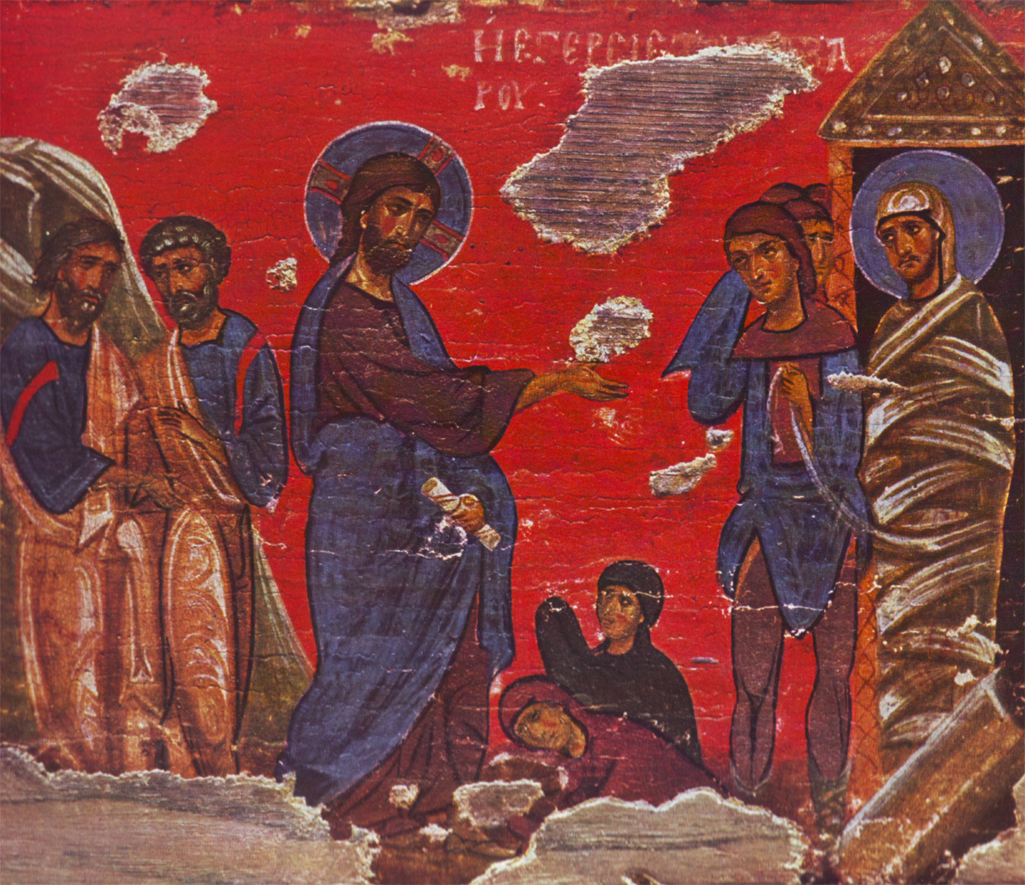
‘Death,’ says His Grace, ‘throws it all apart. For we are not as we should be. Faith requires our adjustment to God’s truth. God’s triumph in a very real sense requires in us the loss of our everything. Which, as with Mary at the other end of Jesus’s life, is God’s truth.’ The Gospel reading is of John 11: 1-45, which is a long passage, and His Grace’s homiletic theme commences in textual wilderness. Our brokenness – in this place – a family home. Our faith, our doubt, our death… The irruption – death, doubt, fear – within our precious scenes and our most intimate places. Our domesticity. His Grace speaks from the chair, as is a bishop’s prerogative, and says: ‘So much is obscure in the Gospels. We’re always reaching through them. We’re never there. Really, we never are. Our knowledge, our understanding, of the Gospels is never complete, and with each reading comes a new revelation. There are always new riches there. Just as there are between all of us, between myself and you. The Gospels are living texts. This is a part of the conversation we have with our own Christianity. It is a part of who we are in our relationship with Jesus. We are in this sense always on the brink. ‘So yes, there is plenty that doesn’t seem to make sense. As one of the order of bishops, we would be lying if we said that weren’t the case. They are not easy texts to encounter, if by that word we may signify something more than a superficial glancing off against, but rather a profound search for the word of God. The Gospels are written by people who had their own ideas, and often didn’t know what had really happened. Luke is quite explicit on this point. His is an investigation, from the explicitly claimed point of view of an historian, rather than that of a first-hand witness, who attempts, so he says, to set out an orderly account, out of the chaos, the sheer muddle, that has been handed down to him. It is possible to imagine Luke researching and composing his account after many years, when there has arisen a desire to know what exactly happened, and this implies a certain call to faith and certain demands of historicity, to historical exactitude. So in these different ways, the people of the first years of Christian faith are in the dark. There is also a decisive need to define the life of Jesus. And people didn’t get Jesus. The whole meaning of Christianity is only now beginning to take root throughout the composition. So much needs to be evangelized. The light shines almost in tentative fashion like that first star, which drew the wise men from the east to our Lord’s cradle. ‘John’s is widely held to be a very late Gospel. There are others who say that John’s Gospel might have been the first to acquire its true shape, because it most fully expresses Jesus, as we know him to be, as members of the Catholic Church. We don’t really know when any of this is being written, but we get a feel in John of a Gospel refined over many years, through a community. So there’s a lot going on there that I’d like you to think about. ‘What I would like to suggest to you is that, while within the Gospels we are often confronted with clues, guesswork, stories that have been handed down through so many people, and so in this sense we might find ourselves to be in the wilderness, this is the very desolate space itself to which we must give ourselves in order to experience Christ’s full redemption in our lives. I suggest it is for God’s glory that we do so. ‘As we become aware of ourselves, in this seminary, we find ourselves in a very secure, comfortable setting, and there are signs of Easter everywhere. Within the very fabric of these buildings, our Lord is risen; our Lord lives. But now this is our Lenten journey, where death enters, where death breaks us. We are to ride into Jerusalem in triumph, and then we are to be utterly broken, all hope gone, our hope extinguished. And really, I suggest to you, it is only by inhabiting this thought, as if we don’t know Easter is there, that our new life can follow, just when we have given up all hope, when every promise that Jesus made to us seems to have been cancelled. ‘And here now we have the story of Lazarus. I should like to suggest to you that we have a very powerful call now. In our very comfortable space, our domesticity, with all this comfort, where so very little might seem to happen each day, so it might seem to you, there is a disturbance within all of this comfort, and that is a disturbance within ourselves, and that is our call to Jesus. I think it is correct to say that our most comfortable places break in the light of Jesus from the inside, in order that we may take the necessary steps to be with Jesus. ‘Faith is not comfortable. I think that we can all receive the message of the rolling away of the rock from the tomb of Lazarus to say something of vital importance to ourselves concerning our openness to God’s love. The rock we roll away can come in all sorts of guises, but we know when we are blocked, and I firmly believe if we are truthful then we know where those blocks might be. ‘Next Sunday, which will be Palm Sunday, we process as it were to Jerusalem, to begin our Holy Week. Now as I speak to you we are on the brink. Even now, I suggest it might be very good for all of us to lay aside what we think we know, to fall apart a little, and so […]

The purification rituals of the Jews were originally laid down, in Exodus, for the priests to perform before they offered sacrifices to God. These rules were then later extended to all Jews, to be performed before every meal. This was as there developed a greater and greater call for all Jews to be a priestly people, particularly in the light of national set-backs, which were ascribed to infidelities to God [ … ]
