

Christian Art | Jacob’s Ladder | Angels Ascending And Descending | Earth And Heaven
Genesis 28: 10-22 | Jacob’s Ladder | King James Audio Bible | KJV
Jacob’s Ladder (Genesis 28: 10-22): A Theological Journey
And Jacob went out from Beer-sheba, and went toward Haran.
And he lighted upon a certain place, and tarried there all night, because the sun was set; and he took of the stones of that place, and put them for his pillows, and lay down in that place to sleep.
And he dreamed, and behold a ladder set up on the earth, and the top of it reached to heaven: and behold the angels of God ascending and descending on it.
And, behold, the Lord stood above it, and said, I am the Lord God of Abraham thy father, and the God of Isaac: the land whereon thou liest, to thee will I give it, and to thy seed;
And thy seed shall be as the dust of the earth, and thou shalt spread abroad to the west, and to the east, and to the north, and to the south: and in thee and in thy seed shall all the families of the earth be blessed.
And, behold, I am with thee, and will keep thee in all places whither thou goest, and will bring thee again into this land; for I will not leave thee until I have done that which I have spoken to thee of.
And Jacob awaked out of his sleep, and he said, Surely the Lord is in this place; and I knew it not.
And he was afraid, and said, How dreadful is this place! this is none other but the house of God, and this is the gate of heaven.
And Jacob rose up early in the morning, and took the stone that he had put for his pillows, and set it up for a pillar, and poured oil upon the top of it.
And he called the name of that place Beth-el: but the name of that city was called Luz at the first.
And Jacob vowed a vow, saying, If God will be with me, and will keep me in this way that I go, and will give me bread to eat, and raiment to put on,
So that I come again to my father’s house in peace; then shall the Lord be my God:
And this stone, which I have set for a pillar, shall be God’s house: and of all that thou shalt give me I will surely give the tenth unto thee.
Jacob’s Ladder | Bridge Of Earth And Heaven In Christian Theology | King James Audio Bible KJV
Genesis 28:10-22, the account of ‘Jacob’s Ladder’, tells the story of Jacob as he embarks on both a physical and spiritual journey. Through a visionary dream that unveils a ladder stretching from earth to heaven, with angels ascending and descending upon it, Jacob encounters the divine in a manner that profoundly impacts his life and leaves an enduring imprint on theological narratives of Abrahamic faith.
Historical And Cultural Context | Jacob’s Ladder
Jacob’s journey from Beer-sheba to Haran is not merely a geographical trek, but a symbol-laden odyssey. Beer-sheba, with its roots in the patriarchal history of Abraham and Isaac, carries deep historical weight. Conversely, Haran stands as a distant and unfamiliar destination, symbolizing Jacob’s pursuit of renewal and personal transformation. This geographical backdrop underscores the arduousness of Jacob’s expedition and symbolic richness of his quest.
Bethel, the place where Jacob rests and encounters the divine vision, bears cultural and religious significance. It initially surfaces as a sacred site in the tales of Abraham, who constructed an altar there after departing from Egypt. The very name ‘Bethel’ means ‘House of God,’ signaling its role as a locale where the boundaries between the divine and earthly realms blur. As Jacob experiences God and consecrates a stone as a sacred marker, Bethel becomes emblematic of the spiritual potential inherent in everyday places.
Divine Encounter | Love Revealed By Jesus Christ
The core of Jacob’s Ladder revolves around a visionary experience that carries profound theological implications. Jacob’s dream unveils a ladder extending from earth to heaven, with angels ascending and descending upon it. This vivid and symbolic imagery forms the linchpin of the passage’s theological depth.
Within this visionary encounter, Jacob, physically grounded on earth, gains insight into the spiritual realm. The ladder serves as a conduit between God’s celestial abode and the terrestrial plane of human existence. The angels, ascending and descending, represent a dynamic interplay between these two realms. Jacob’s dream thus conveys a notion of divine accessibility—possibility of encountering the divine in the fabric of everyday life.
Early Christian Church Fathers provided insights into this divine encounter:
- Origen, a 3rd-century Christian theologian, saw the ladder as a symbol of Christ bridging the chasm between heaven and earth. Origen emphasized the transformative potency of Christ’s redemptive work, stating, ‘Let us ascend the ladder that the Word of God has set up, and by means of it, let us approach the Word of God.’
- Saint Augustine interpreted the ladder allegorically, representing the Church, with Christ as its head. Augustine wrote, ‘The ladder, however, represented Christ, who lowered himself to us when he descended, and exalted us when he ascended.’
- Saint John Chrysostom, 4th-century theologian, emphasized the moral and ethical dimensions of Jacob’s Ladder. Saint John Chrysostom encouraged personal spiritual ascent through virtuous living and prayer, declaring, ‘The ladder of Jacob is a symbol of virtue. If you have ascended it, you have ascended to heaven.’
These early interpretations underscore theological significance of the ladder and angels as symbols of divine accessibility and spiritual growth. Such insights continue to resonate within Christian theology, expressing dynamic relationship between God and humanity.
Contributions To Understanding Faith, Covenant, And Divine-Human Interaction
Thought of Jacob’s Ladder makes substantial contributions to Christian understanding of faith, covenant, and divine-human interaction.
- Faith as a Bridge: The passage spotlights faith as the bridge connecting humanity to the divine. Just as Jacob’s dream signifies that faith permits humans to ascend to God, the New Testament underscores centrality of faith in the Christian journey. Hebrews 11:6 (KJV) proclaims, ‘But without faith, it is impossible to please him: for he that cometh to God must believe that he is and that he is a rewarder of them that diligently seek him.’ This Bible passage underscores the profound power of faith in connecting believers to the divine.
- Covenant: The Genesis account of Jacob’s Ladder in the Bible reaffirms enduring nature of God’s covenant. Reiteration of the covenant with Jacob mirrors God’s faithfulness to His promises throughout the broader biblical narrative. It emphasizes that God’s covenant extends beyond a single generation, impacting the lives of Jacob’s descendants and ultimately all of humanity. This concept aligns with Christian understanding that God’s covenant, fulfilled in Christ, extends to all who believe in Him. Saint Augustine elucidated the significance of the covenant, stating, ‘The covenant was renewed, the blessing was not. The covenant was renewed, and the blessing was multiplied.’
- Divine-Human Interaction: The ladder and angels in the Jacob’s Ladder narrative in Genesis in the Bible symbolize dynamic interaction between heaven and earth. This interaction serves as a reminder of God’s constant involvement in the human experience. This encourages believers to seek divine encounters in our lives and to recognize that God communicates with humanity in various ways, including dreams, visions, and ordinary moments. Pope Francis, in his apostolic exhortation ‘Gaudete et Exsultate’, spoke to the contemporary relevance of this interaction, saying, ‘The Lord speaks to us through events, by His presence in our midst, and by His word.’
Contemporary Relevance
An enduring relevance of Jacob’s Ladder in contemporary Christian theology and spirituality lies in its capacity to address pressing challenges and questions faced by believers today:
- Divine Accessibility in a Distracted World: In an era marked by constant distractions and by the complexities of modern life, The Genesis account of Jacob’s Ladder reminds contemporary Christians that God remains accessible. Amid the hustle and bustle, this theme encourages individuals to seek moments of spiritual connection and personal encounters with the divine. Pope Benedict XVI, in his encyclical ‘Spe Salvi’, emphasized importance of these moments, stating, ‘To come to know God—the true God—means to receive hope.’
- Faith in an Age of Doubt: Contemporary challenges often include doubt and skepticism regarding matters of faith. The theme of faith as a bridge offers solace to those grappling with questions and skepticism. This encourages individuals to trust in God’s promises even when answers seem elusive. Saint John Paul II, in his encyclical ‘Fides et Ratio’, affirmed harmony of faith and reason, stating, ‘Faith and reason are like two wings on which the human spirit rises to the contemplation of truth.’
- Seeking Connection Amid Isolation: In an age of social disconnection and isolation, the Genesis narrative account of Jacob’s Ladder highlights human longing for connection—with both the divine and with fellow human beings. It reminds believers that God actively engages with humanity and that faith can serve as a unifying force, bridging divides and fostering spiritual community. Pope Francis, in his encyclical ‘Fratelli Tutti’, stressed importance of fraternity and social friendship, stating, ‘No one can experience the true beauty of life without relating to others.’
- Navigating Change and Transformation: Contemporary society is characterized by rapid change and shifting cultural landscapes. Jacob’s journey from Beer-sheba to Haran mirrors the transitions and transformations people undergo today. Just as Jacob embarked on a journey of self-discovery and growth, individuals today can find guidance and purpose through their own spiritual journeys. Saint Teresa of Ávila, 16th-century mystic, spoke to the transformative power of such journeys, stating, ‘We need no wings to go in search of Him, but have only to find a place where we can be alone and look upon Him present within us.’
As Christians navigate complexities of today’s world, we are asked by God to draw inspiration.
God remains accessible and faith serves as a steadfast bridge between heaven and earth.



Psalm 41 expresses blessings, pain of betrayal, and the reassurance of divine mercy. This psalm serves as both a heartfelt cry for help and a declaration of trust in the Lord’s sustaining grace [ … ]

Psalm 24 expresses awe and reverence for God the Creator of the universe. The psalm resonates with themes of divine ownership, holiness, and quest for spiritual purity and access to the presence of the Lord [ … ]
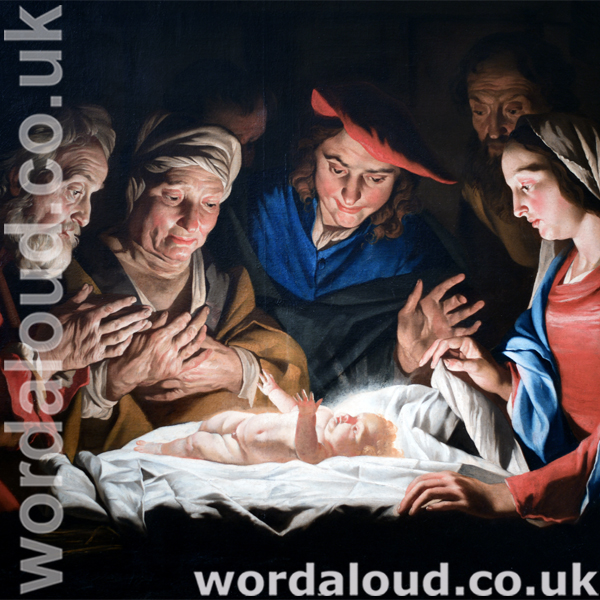
Saint Leo speaks of Christ’s birth as a source of joy that applies to all people. This joy does not depend on personal achievement or moral standing. Saints, sinners, and those outside the faith are all addressed. Christ comes because no one is free from sin, and therefore no one is excluded from the offer of salvation [ … ]
