

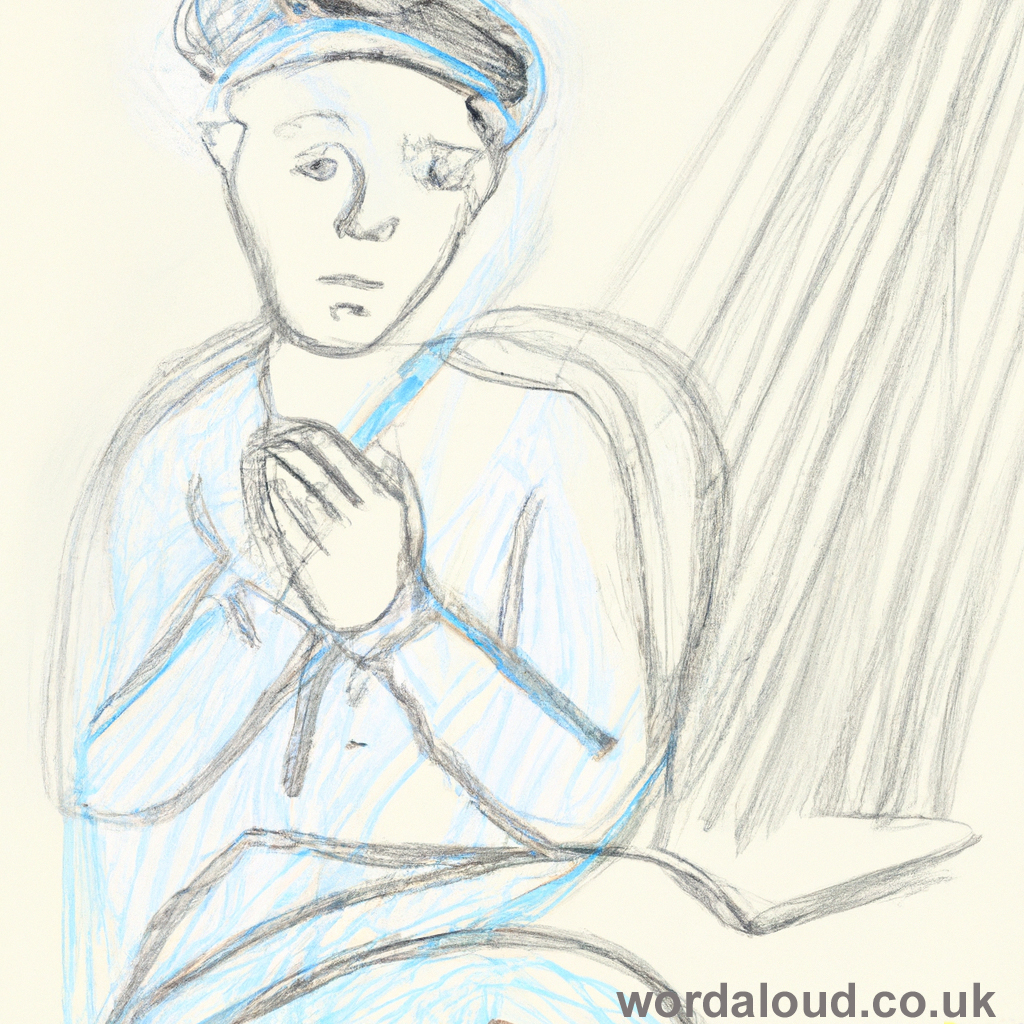
Christian Art | Prayer With Jesus | Psalms | Assurance Of God’s Help And A Plea For Healing | King David As A Boy | Psalm 41 KJV | Audio Bible | King James Audio Bible Psalms | KJV
Psalm 41 | King James Audio Bible
YouTube: Psalm 41 | KJV | King James Version | Audio Bible | Word Aloud
Psalm 41 expresses blessings, pain of betrayal, and the reassurance of divine mercy. This psalm serves as both a heartfelt cry for help and a declaration of trust in the Lord’s sustaining grace.
Blessed is he that considereth the poor: The psalm opens with a declaration of blessing for he who shows compassion and concern for the poor and needy. The psalm underscores importance of empathy and assistance to those less fortunate.
The Lord will deliver him in time of trouble: A promise follows the act of kindness—those who care for the poor can expect divine deliverance in times of trouble. And so, the psalmist’s personal plea for deliverance.
A Cry for Healing and Forgiveness: Amid personal trials and weight of sin, the psalmist implores the Lord for mercy and healing. The psalm acknowledges his transgressions and seeks God’s forgiveness.
Betrayal and Hostility: The psalmist laments betrayal and hostility of acquaintances and friends. He describes how some even wished for his demise, revealing pain of betrayal from within his circle.
Divine Upholding and Assurance: Despite challenges and adversities, the psalmist finds strength and assurance in the Lord. He trusts that God upholds him in integrity and will not let his enemies triumph.
A Plea for Divine Intervention: The psalmist prays for God to raise him up, allowing him to face his adversaries and repay them for their deeds. There is a plea for divine justice and intervention.
Recognizing God’s Favour: In hardship, the psalmist acknowledges God’s favour and blessing. He recognizes that despite his struggles, his enemies have not ultimately triumphed.
A Doxology of Praise: The psalm concludes with a doxology, a fervent expression of praise to the Lord God of Israel. The psalmist proclaims the everlasting nature of God’s blessings and concludes with a resounding ‘Amen’.

Psalm 41 | King James Audio Bible KJV | Love Revealed By Jesus Christ
Blessed is he that considereth the poor: the Lord will deliver him in time of trouble.
The Lord will preserve him, and keep him alive; and he shall be blessed upon the earth: and thou wilt not deliver him unto the will of his enemies.
The Lord will strengthen him upon the bed of languishing: thou wilt make all his bed in his sickness.
I said, Lord, be merciful unto me: heal my soul; for I have sinned against thee.
Mine enemies speak evil of me, When shall he die, and his name perish?
And if he come to see me, he speaketh vanity: his heart gathereth iniquity to itself; when he goeth abroad, he telleth it.
All that hate me whisper together against me: against me do they devise my hurt.
An evil disease, say they, cleaveth fast unto him: and now that he lieth he shall rise up no more.
Yea, mine own familiar friend, in whom I trusted, which did eat of my bread, hath lifted up his heel against me.
But thou, O Lord, be merciful unto me, and raise me up, that I may requite them.
By this I know that thou favourest me, because mine enemy doth not triumph over me.
And as for me, thou upholdest me in mine integrity, and settest me before thy face for ever.
Blessed be the Lord God of Israel from everlasting, and to everlasting. Amen, and Amen.
Key Themes Of The Psalm For Reflection | Love Revealed By Jesus Christ
- Blessing for Compassion:
- Blessing is promised to the one who shows compassion and concern for the poor.
- Divine Deliverance:
- The expectation of divine deliverance in times of trouble, especially for the compassionate.
- A Cry for Healing and Forgiveness:
- A heartfelt plea for God’s mercy and healing, acknowledging personal transgressions and seeking forgiveness.
- Betrayal and Hostility:
- Lamenting pain of betrayal and hostility, even from acquaintances and friends.
- Divine Upholding and Assurance:
- Finding strength and assurance in the Lord despite challenges, with trust that God will uphold integrity and thwart enemies.
- A Plea for Divine Intervention:
- Praying for God to raise the psalmist up, allowing him to face adversaries and seek divine justice.
- Recognition of God’s Favour:
- Acknowledging God’s favour and blessing despite personal struggles and enemies’ intentions.
- Doxology of Praise:
- A resounding doxology that praises the Lord God of Israel, proclaiming the everlasting nature of God’s blessings.




Give not that which is holy unto the dogs, neither cast ye your pearls before swine. This is difficult text. The dogs, the pigs – these would be terms to describe the non-Jewish, yet in acknowledging this we are aware of Jesus’ ministering to everybody, gathering crowds of disparate people, and enjoining them to coexist peacefully, while he walked in the land of the Gentiles [ … ]

The reading expresses Saint Ignatius’ faith in Jesus Christ as he was escorted to Rome for Christian martyrdom, to be torn apart by wild beasts in the Coliseum. One crucial point of the reading to take away is that Saint Ignatius expresses possible doubt in his own confidence to go through with his martyrdom with courage. He prays that his fellow Christians might support him through prayer to enable him to embrace his witness – his martyrdom – to Jesus Christ and to Christian faith [ … ]
Psalm 39 is a contemplative reflection on the fleeting nature of human existence. Attributed to King David, this psalm delves into themes of silence, self-control, and brevity of life in face of God’s eternal nature [ … ]
