

Christian Art | Prayer With Jesus | Psalms | Praise For God’s Wonderful Works | King David As A Boy | Audio KJV | Love Revealed By Jesus Christ | King James Audio Bible
Psalm 111 | King James Audio Bible
YouTube: Psalm 111 | KJV | King James Version | Audio Bible | Word Aloud
Psalm 111 likely originates from the post-exilic era, a time of rebuilding and re-establishing Jewish religious and community life after the Babylonian Exile. This background is essential to understanding the psalm’s emphasis on communal worship and remembering God’s acts.
Structure Of Psalm 111
Psalm 111 is an acrostic poem, each line beginning with a successive letter of the Hebrew alphabet. This structure serves to emphasize completeness in praising God. It consists of ten verses, each contributing to the overall theme of praise.
Themes Of Psalm 111
- Praise for God’s Works: Psalm 111 opens with a call to praise God, focusing on God’s actions. These are not abstract concepts but tangible deeds seen in history, such as the Exodus, that demonstrate God’s involvement in the world.
- Divine Righteousness and Justice: A recurring theme is God’s righteousness, shown through actions like giving laws and ensuring justice. This would have been particularly significant in the post-exilic period, offering hope and stability.
- Covenant and Community: Psalm 111 highlights the covenant, a central theme in Jewish theology. The covenant is portrayed as a deep, ongoing relationship between God and His people, emphasizing community and shared worship.
- Wisdom and Reverence: Psalm 111 concludes by linking reverence for God with wisdom. This idea is key in Hebrew wisdom literature, where wisdom starts with a proper relationship with God.
Contemporary Relevance Of Psalm 111
- Environmental Awareness: The psalm’s focus on God’s creation can encourage a deeper appreciation for nature and a commitment to environmental care.
- Social Justice: The themes of justice and care for the needy align with current concerns for social fairness and helping those in need.
- Spiritual Growth: The psalm offers insights into spiritual development, emphasizing remembrance, community worship, and the pursuit of wisdom.
- Artistic Influence: The psalm’s poetic nature continues to inspire artists, musicians, and writers, showing the intersection of ancient faith and modern expression.
Psalm 111 presents a concise yet profound expression of religious thought. It combines historical context, poetic structure, and deep themes, making it more than just a religious text; it’s a reflection of human interaction with the divine. As an historical document, Psalm 111 offers a window into the religious life of post-exilic Israel. Theologically, Psalm 111 speaks to enduring questions about God’s nature and human response. Artistically, it stands as a notable example of ancient poetry. In exploring Psalm 111, one gains not only an understanding of a biblical text but also insights into the broader religious and human experience.

Psalm 111 | King James Audio Bible
Praise ye the LORD. I will praise the LORD with my whole heart, in the assembly of the upright, and in the congregation.
The works of the LORD are great, sought out of all them that have pleasure therein.
His work is honourable and glorious: and his righteousness endureth for ever.
He hath made his wonderful works to be remembered: the LORD is gracious and full of compassion.
He hath given meat unto them that fear him: he will ever be mindful of his covenant.
He hath shewed his people the power of his works, that he may give them the heritage of the heathen.
The works of his hands are verity and judgment; all his commandments are sure.
They stand fast for ever and ever, and are done in truth and uprightness.
He sent redemption unto his people: he hath commanded his covenant for ever: holy and reverend is his name.
The fear of the LORD is the beginning of wisdom: a good understanding have all they that do his commandments: his praise endureth for ever.
Psalm 111 | King James Audio Bible
- Praise and Worship: A profound expression of gratitude and reverence towards God.
- God’s Mighty Works: Recognition of God’s powerful deeds in creation and history.
- Divine Righteousness: Emphasis on God’s enduring righteousness and moral integrity.
- Faithfulness and Covenant: Focus on God’s steadfast faithfulness and God’s covenant with His people.
- Provision and Care: Acknowledgement of God’s provision and care, especially towards those who fear Him.
- Wisdom and Understanding: The connection between the fear of the Lord and the acquisition of wisdom.
- Justice and Truth: Highlighting God’s commitment to justice and truth in His dealings.
- Permanence of God’s Commands: The enduring nature and reliability of God’s commandments.
- Redemption and Salvation: Mention of God’s role in redeeming and saving His people.
- Community and Collective Memory: The psalm’s use in communal worship, encouraging collective remembrance of God’s deeds.




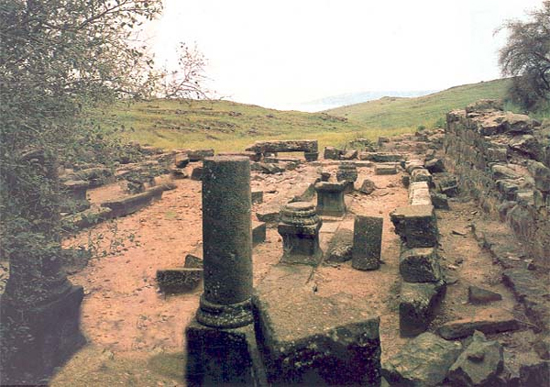
In the Discourse of the Mission, in Chapter 10 of Matthew’s Gospel, Jesus has instructed his disciples about evangelization. Now, in Chapter 11, we are told more of Jesus’ Mission in the region of Galilee – also known as the Lake of Gennesaret and as Lake Tiberius. The area in which Jesus preaches and performs his healing miracles is relatively small, and it is an obscure part of the Empire. In some ways, though, it is a microcosm of the world beyond and the world of later history to come, as we learn of those who will accept and those who will reject Jesus [ … ]

Psalm 143 is of the penitential psalms, attributed to David. Psalm 143 articulates a plea for divine intervention and guidance amidst adversity. The psalm opens with a direct appeal to the Lord, emphasizing the urgency and depth of the psalmist’s need for God’s attention and assistance. ‘Hear my prayer, O LORD, give ear to my supplications: in thy faithfulness answer me, and in thy righteousness.’ This verse not only serves as an invocation but also sets the tone for the entire psalm, expressing the psalmist’s reliance on God’s faithfulness and righteousness [ … ]

Saint Bede the Venerable (c. 673–735), monk of Wearmouth-Jarrow and the most eminent Anglo-Saxon theologian, offers in this passage a profound meditation on 1 Peter 2:9, wherein the Apostle applies Old Testament imagery to the new People of God. Bede’s theological genius lies in his ability to interweave patristic exegesis, liturgical spirituality, and historical typology into a cohesive vision of the Christian life as pilgrimage from darkness to light, from Egypt to the Promised Land [ … ]
