

Christian Art | Jesus Heals A Deaf Man | Miracles Of Jesus | Forgiveness Of Sins
Mark 7: 31-37 – 23rd Sunday Year B & Friday, Week 5, Ordinary Time (Audio Bible, Spoken Word)
31 ¶ And again, departing from the coasts of Tyre and Sidon, he came unto the sea of Galilee, through the midst of the coasts of Decapolis.
32 And they bring unto him one that was deaf, and had an impediment in his speech; and they beseech him to put his hand upon him.
33 And he took him aside from the multitude, and put his fingers into his ears, and he spit, and touched his tongue;
34 And looking up to heaven, he sighed, and saith unto him, Ephphatha, that is, Be opened.
35 And straightway his ears were opened, and the string of his tongue was loosed, and he spake plain.
36 And he charged them that they should tell no man: but the more he charged them, so much the more a great deal they published it;
37 And were beyond measure astonished, saying, He hath done all things well: he maketh both the deaf to hear, and the dumb to speak.
There is a sacramental quality to Jesus’ healing of the deaf man, as he takes him to one side, touches him, lifts his eyes to heaven, and then speaks the healing words of command. In the act of healing, as Jesus lays on his hands, he seems to act as intermediary between the deaf man and heaven, and so it through this that the man is healed.
The man’s deafness would be understood by the Jewish people not merely as a physical handicap but as a consequence of sin. Still, in our day, as in the New Testament, we often hear of physical handicaps being used to express, metaphorically, stupidity or ignorance – when, for example, we hear of people being blind or deaf to the truth. The healing Jesus offers is, then, not only of a physical condition – and of the problems with speech that naturally follow from deafness – but is also spiritual, a forgiveness of sin.
Jesus does not in these verses explicitly tell the man that his sins are forgiven him. Elsewhere in the Bible, when he does say this, he prompts the Jews’ angry reaction: ‘Who can forgive sins but God alone?’ Nonetheless, this is understood in the Gospels, and may perhaps do something to help explain why Jesus wishes his healing miracles to be kept secret.
We can only guess why Jesus asks for this secrecy. Perhaps it was because he wanted to be known for his teaching and his spiritual healing rather than for more showy and crowd-pleasing spectacles. Perhaps, as a man, he is overwhelmed by the sheer volume of requests for healing. Perhaps his purpose demands secrecy. Perhaps he fears what the Romans might do should large mobs start gathering around a charismatic leader, proclaiming him king. We do not know.
Christ is, to say the least, a complex character. He is both God and man and we cannot know how this great mystery could have worked out in practice. He is too a dangerous character, in more ways than one. In his lifetime on Earth, he was socially and religiously dangerous, including to established authorities. In our lifetime now he has power to transform our lives, our souls.
‘Happy the soul which desires the food of righteousness and thirsts for such a drink; had it not already tasted of its sweetness, it would not seek after them. When the soul harkens to the spirit of the prophet saying, “Taste and see that the Lord is good,” it has already received some part of the heavenly sweetness, and been inflamed with love for this purest of joys.’ Pope St Leo the Great




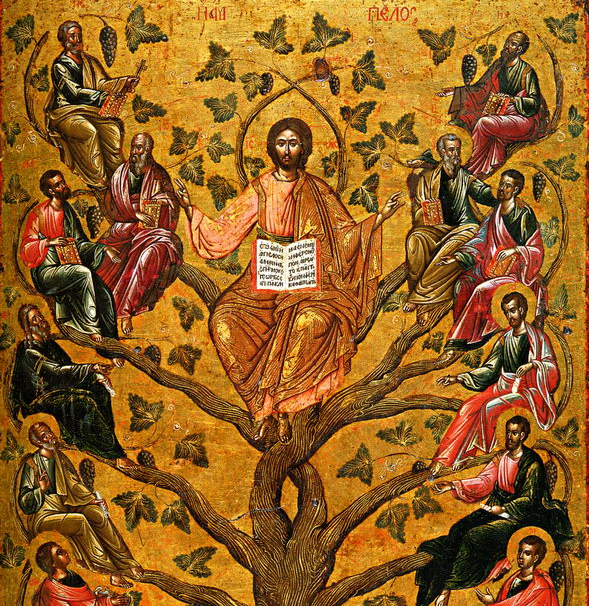
In the Old Testament, the chosen people of Israel have been compared to a vine. We may think, for example, of Isaiah’s Song of the Vineyard (Isaiah 5:1-7 – Audio Bible Verses Spoken Word), in which God complains that, despite the care he has lavished upon it, his vineyard has only produced wild grapes [ … ]
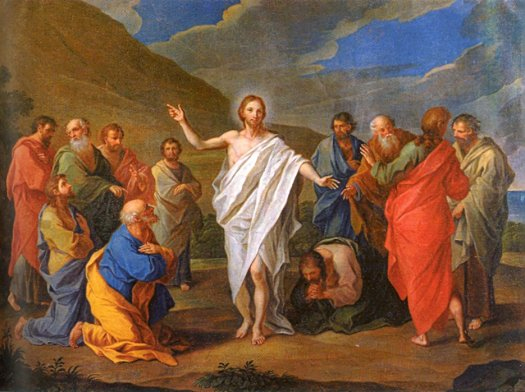
No matter how great the world’s lies may be, we are assured by Jesus, truth will triumph. For this reason, these verses of the Gospel of Matthew teach us, we need not be afraid, though the going can get very rough indeed, and our Christian faith will be tested, our love always coerced to turn into the opposite of love, and so we need always the more love to counter this threat [ … ]
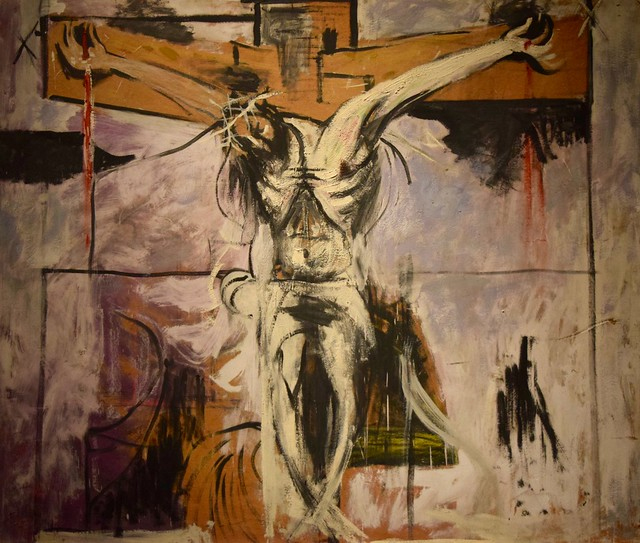
Jesus’ words to us in these verses may seem very strange indeed, even brutal. Are we really to hate our father, our mother, our family? We may recall the time when Jesus rejects his mother and family when they are calling him [ … ]