Christian Art | The Coin In The Fish’s Mouth
Matthew 17: 22-27 – Week 19 Ordinary Time, Monday (King James Audio Bible KJV, Spoken Word)
22 ¶ And while they abode in Galilee, Jesus said unto them, The Son of man shall be betrayed into the hands of men:
23 And they shall kill him, and the third day he shall be raised again. And they were exceeding sorry.
24 ¶ And when they were come to Capernaum, they that received tribute money came to Peter, and said, Doth not your master pay tribute?
25 He saith, Yes. And when he was come into the house, Jesus prevented him, saying, What thinkest thou, Simon? of whom do the kings of the earth take custom or tribute? of their own children, or of strangers?
26 Peter saith unto him, Of strangers. Jesus saith unto him, Then are the children free.
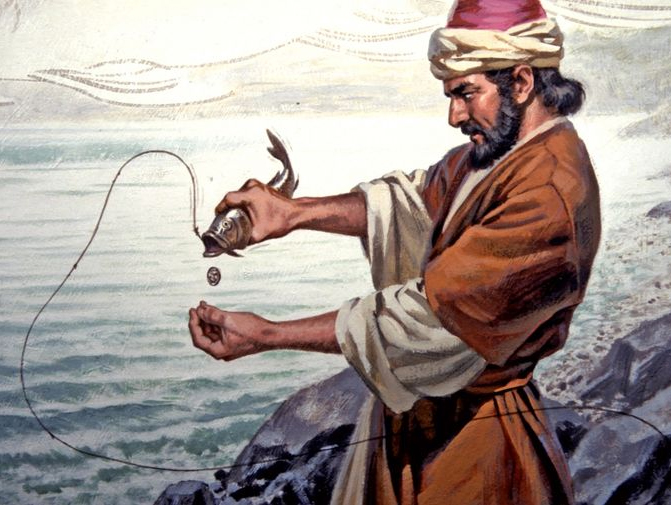
27 Notwithstanding, lest we should offend them, go thou to the sea, and cast an hook, and take up the fish that first cometh up; and when thou hast opened his mouth, thou shalt find a piece of money: that take, and give unto them for me and thee.
In Matthew’s Gospel, this is Jesus’ second announcement of his Passion. This time, the reaction of the disciples has mellowed. It is less extreme, while they remain very sorry. The disciples begin to recognize the cross as a necessary step on Jesus’ journey. We may think of our own tears mingled with joy as we contemplate Christ’s sacrifice, for example as we give ourselves in prayer, in adoration of the Blessed Sacrament. We may also note that the sorrow of the disciples follows upon Jesus’ saying that he will be raised again. Our sorrow as we contemplate Jesus’ death includes the resurrection. We may weep for the necessity and the absolute love and self-giving of Jesus’ sacrifice.
In Capernaum, where Jesus spent much of his time during his ministry, Peter is asked if he and Jesus and the other disciples pay the tribute money, which was to maintain the Temple in Jerusalem. Peter tells the collector of the tribute that Jesus does indeed pay his temple tribute. Jesus and the disciples are observant Jews. Jesus has come to complete the Law, not to abolish it.
There then follows a curious exchange, in which Jesus suggests a different relationship to the Law than that which has previously been thought upon. The sons are free. Christians are free. However, it remains fitting to pay respect to the people from whom Christianity originates. This is important – not to give offence but to give love. A miracle follows. It may seem something of a ‘throwaway’ miracle, but it remains a miracle. This tells us that the issue is not of particular significance in Jesus’ eyes: it is easy for us to pay our respects and not to cause offence. We may be with Jesus, with the new and complete Law, while paying our respects to the old. There need be no contradiction here.
Concluding Prayer | Love Revealed By Jesus Christ
King of heaven and earth, Lord God,
rule over our hearts and bodies this day.
You have called us to serve you responsibly in the world:
help us to build a just and Christian society.
Sanctify us,
and guide our every thought, word, and deed
according to the commandments of your law,
so that now and for ever
your grace may free and save us.
We make our prayer through our Lord.


King James Audio Bible | Endnotes
What Is The Spiritual Significance Of The Coin In The Fish’s Mouth?
The story of the coin in the fish’s mouth is a miraculous event that has a deeper spiritual significance.
To provide some context, in the previous chapter of Matthew’s Gospel, Jesus had taken Peter, James, and John up to a high mountain, where Jesus was transfigured before them. They saw Jesus’ face shining like the sun, and his clothes became as white as light. They also saw Moses and Elijah talking with Jesus. As they were coming down the mountain, Jesus instructed them not to tell anyone about what they had seen until after he had risen from the dead.
In Matthew 17: 22-23, Jesus and his disciples were traveling through Galilee, and Jesus began to teach them about his impending death and resurrection: ‘And while they abode in Galilee, Jesus said unto them, the Son of Man shall be betrayed into the hands of men: and they shall kill him, and the third day he shall be raised again. And they were exceeding sorry.’
It is at this point that the story of the coin in the fish’s mouth begins. In Matthew 17:24, the tax collectors came to Peter and asked him if Jesus paid the temple tax. Peter replied that he did, and he went to Jesus to confirm this. Jesus told Peter to go to the sea, cast a hook, and take the first fish that came up. Jesus said that when Peter opened the fish’s mouth, he would find a piece of money. Jesus instructed Peter to take that money and pay the tax for both of them.
So, what is the spiritual significance of this story?
One simple interpretation is that the story demonstrates Jesus’ divine power and authority. Jesus knew exactly what was going to happen, and he knew exactly what Peter needed to do to pay the tax. This interpretation emphasizes Jesus’ sovereignty over all things, including the natural world.
Another interpretation is that the story illustrates the importance of trusting in God’s provision. Jesus did not tell Peter how he was going to provide the money, but he assured him that it would be there. This interpretation emphasizes the importance of faith and trust in God’s provision, even when we cannot see how it will come about.
In his commentary on Matthew’s Gospel, theologian Saint Thomas Aquinas sees the story as a symbol of the sacrament of the Eucharist. He writes:
‘The coin in the fish’s mouth is a symbol of the Eucharist, which is received by the faithful as a kind of payment for their sins. The fish represents Christ, who is the source of our redemption. The coin represents the grace that we receive through the sacraments.’
Aquinas sees the story as a prefiguration of the sacraments, which are a means of grace for the Christian believer. He emphasizes the importance of the sacraments in the life of the believer and the role they play in our salvation.
Protestant theologian John Calvin, in his commentary on Matthew’s Gospel, sees the story as a rebuke to the religious leaders of the day. He writes:
‘The story of the coin in the fish’s mouth is a rebuke to the scribes and Pharisees, who were more concerned with their own piety than with the needs of the people. Jesus demonstrates that true religion is not about external acts of piety, but about serving others and meeting their needs.’
Calvin emphasizes the importance of compassion and service in the Christian life. He sees the story as an illustration of Jesus’ concern for the needs of his disciples and his willingness to provide for them. He also notes that the story serves as a reminder to believers that God will always provide for our needs, even in unexpected ways.
Another interpretation of the story comes from the early Church Fathers, who saw the fish as a symbol of Christ himself. Saint Augustine, in his sermon on the Gospel of Matthew, writes:
‘The fish that was caught and brought to Peter represents Christ, who was taken captive by death and then released, rising from the dead on the third day. The coin in the fish’s mouth represents the power of the resurrection, by which Christ triumphed over death and overcame the power of sin.’
Augustine emphasizes the central role of Christ’s death and resurrection in the Christian faith, and sees the story as a symbol of the victory that Christ has won for us over sin and death.
As we reflect on this story, we can be reminded of the many ways that God works in our lives, often in unexpected and miraculous ways. We can be encouraged to trust in God’s provision, even when we cannot see how it will come about, and to remain steadfast in our faith, knowing that God is always with us and will never leave us or forsake us.


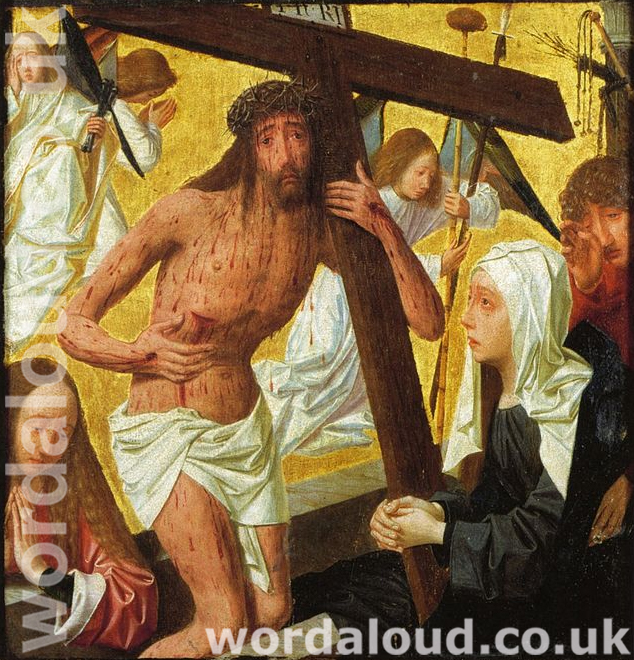
In this reading, Saint Ambrose reflects on Saint Paul’s teaching about life in the Spirit and the dignity given to believers as children of God. His focus is on adoption, inheritance, and hope, all of which shape the Christian understanding of suffering and future glory [ … ]
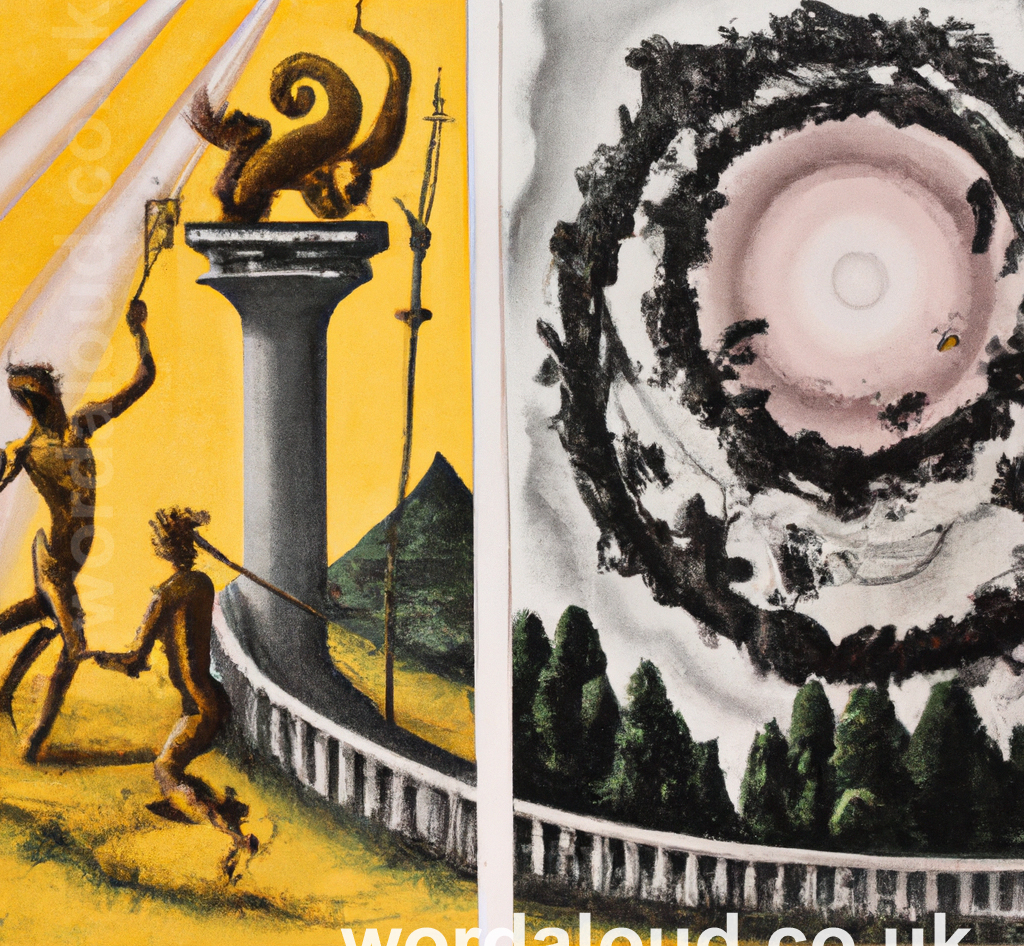
In the Garden of Gethsemane, Jesus prays and struggles desperately with the weight of his coming Crucifixion. He sweats blood – he is in agony. Jesus enters into his Passion fully cognizant of the horror of it [ … ]

In today’s Bible reading, we see clearly that many of those to whom Mark addresses his Gospel would not be familiar with Jewish customs. Mark, therefore, explains that the Jews wash as a ritual of purification prior to eating. This was initially a prescription for how priests should wash before offering sacrifice – see Exodus 30: 17ff – and was extended by tradition to all Jews before every meal. It may be helpful for us to remember that this was not a matter of hygiene; rather ritual purification was a symbol of the moral purity a person should have when approaching God. We may also consider our own practice of washing our hands and saying grace before meals, such that our participating in a meal becomes an act of thanksgiving to God, the meal a sacred space [ … ]