
Christian Art | George Herbert | Sepulchre | The Church | Frailtie
George Herbert | The Temple | The Church | Frailtie
Lord, in my silence how do I despise
What upon trust
Is styled honour, riches, or fair eyes;
But is fair dust!
I surname them guilded clay,
Deare earth, fine grasse or hay;
In all, I think my foot doth ever tread
Upon their head.
But when I view abroad both Regiments;
The worlds, and thine:
Thine clad with simplenesse, and sad events;
The other fine,
Full of glorie and gay weeds,
Brave language, braver deeds:
That which was dust before, doth quickly rise,
And prick mine eyes.
O brook not this, lest if what even now
My foot did tread,
Affront those joyes, wherewith thou didst endow,
And long since wed
My poore soul, ev’n sick of love:
It may a Babel prove
Commodious to conquer heav’n and thee
Planted in me


George Herbert | The Temple | The Church | Frailtie
The poem is an introspective dialogue in which Herbert contemplates a tension between worldly values and divine realities. The poem opens with an expression of disdain for the superficial trappings of honour, wealth, and beauty. These are dismissed as transient, ‘fair dust’ that, despite their allure, amount to no more than ‘gilded clay’ or ‘fine grass or hay’. This imagery diminishes worldly achievements and possessions, positioning them beneath Herbert’s spiritual footing as something to be trodden upon rather than exalted.
However, Herbert’s view becomes unsettled when he contrasts ‘both regiments’, the world’s and God’s. The worldly regiment is characterized by outward splendour—’glory and gay weeds’, ‘brave language, braver deeds’. It dazzles with its ostentation, standing in sharp contrast to God’s regiment, described as ‘clad with simpleness, and sad events’. This juxtaposition creates an inner conflict for Herbert. Despite his earlier dismissal of worldly values, he acknowledges their capacity to ‘quickly rise, and prick mine eyes’. The phrase suggests that worldly allurements have a seductive power that can disturb spiritual clarity, provoking a sense of unease or distraction.
The final stanza addresses this internal struggle with a plea for divine intervention. Herbert warns against potential consequences of allowing worldly values to take root in his soul. He fears that such values, though initially trampled underfoot, might rise to challenge and ‘affront those joys’ granted by God, which have long been the foundation of his spiritual life. Reference to Babel evokes a biblical story of human hubris—an attempt to reach heaven through self-aggrandizement and ambition. Here, it serves as a metaphor for the spiritual danger posed by pride and attachment to worldly success.
The concluding lines suggest a vulnerability within Herbert. He recognizes that the temptation to align with worldly values could undermine his relationship with God, transforming his inner life into a ‘Babel’ rather than a sanctuary. Yet, the final plea implies a hope that divine grace will prevent this outcome, keeping Herbert grounded in spiritual truths rather than worldly illusions.
Throughout the poem, the use of dualistic imagery—earthly dust versus heavenly love, gay weeds versus sad events, Babel versus spiritual unity—underscores the dichotomy between the transient and the eternal. The poem’s movement from confidence to uncertainty reflects the complexity of spiritual struggle, as even a devoted soul can feel the pull of worldly attractions. Rhythm and structure mirror this tension, with shifts from assertive declarations to introspective self-doubt.
The poem’s theological underpinning suggests that true contentment and salvation lie in aligning oneself with divine simplicity rather than worldly grandeur. Herbert’s plea for vigilance and divine assistance highlights fragility of faith in the face of human ambition and pride. In this way, the poem serves as both a confession and a prayer, capturing a dynamic interplay of humility, temptation, and divine reliance in the spiritual life.



The two parables make it clear that Christ intended the newly inaugurated phase of the history of our salvation to be the work of ages. His second coming was not to be an apocalyptic end of the world as we know it in weeks, months or just a few years after that first Easter. The world’s faith would grow with time. Christ’s Church would grow, to encompass the whole world. Christ intended the Gospel be preached to everyone the world over and through all subsequent history [ … ]

The Ten Commandments, also known as the Decalogue, are a set of religious and moral imperatives believed to have been given by God to the Israelites and recorded in the Hebrew Bible. They are traditionally understood to provide a code of conduct for the faithful to follow, and are of great significance in Judaism and Christianity. According to the biblical account, God delivered the Ten Commandments to Moses on tablets of stone on Mount Sinai, which he then brought down from the mountain and presented to the Israelites [ … ]
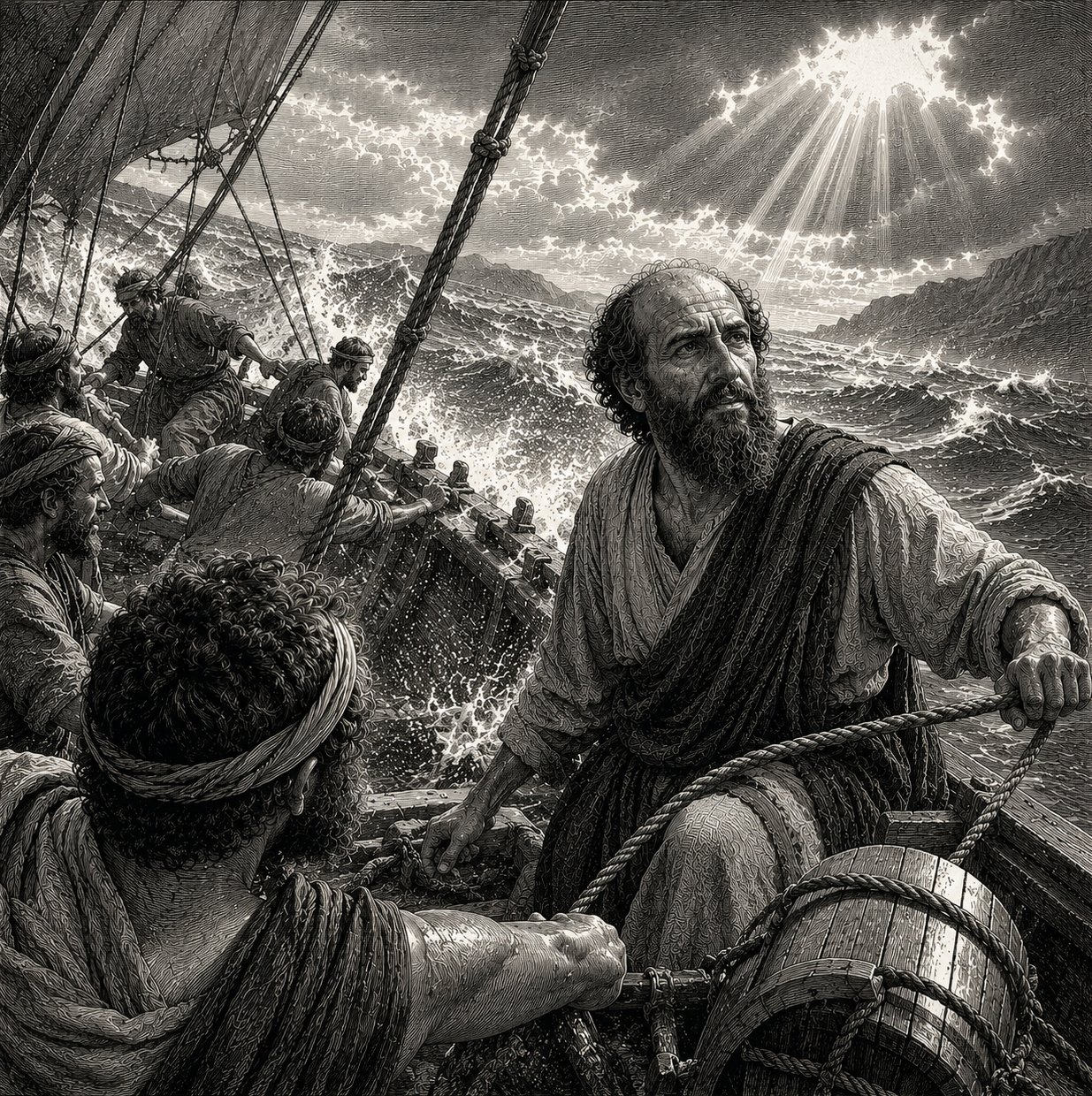
The Epistle To The Romans combines the occasional character of an early Christian letter with extended theological argument concerning law, the Law, covenant, sin, salvation, and the relation between Jews and Gentiles. Written probably in the late 50s AD, and during Paul’s stay in Corinth, the letter was addressed to Christian communities in Rome which Paul had not himself founded. Unlike several of his other letters, Romans was not written primarily in response to a specific local crisis already familiar to him. Instead, it functions partly as an introduction to his teaching and partly as an attempt to address tensions emerging within mixed Jewish / Gentile communities in the imperial capital [ … ]