

Christian Art | George Herbert | The Temple | The Church | Holy Baptism (1)
George Herbert | The Temple | The Church | Holy Baptism (1)
As he that sees a dark and shadie grove,
Stayes not, but looks beyond it on the skie;
So when I view my sinnes, mine eyes remove
More backward still, and to that water flie,
Which is above the heav’ns, whose spring and rent
Is in my deare Redeemers pierced side.
O blessed streams! either ye do prevent
And stop our sinnes from growing thick and wide,
Or else give tears to drown them, as they grow.
In you Redemption measures all my time,
And spreads the plaister equall to the crime:
You taught the book of life my name, that so
What ever future sinnes should me miscall,
Your first acquaintance might discredit all.


George Herbert | The Temple | The Church | Holy Baptism (1)
The poem centres on a reflection of sin and redemption, using a natural metaphor to illustrate the poet’s spiritual journey. In the opening lines, the poet likens himself to someone who stands at the edge of a dark, shadowy grove but looks beyond it toward the sky. This image suggests the poet’s desire to move past his sins, as represented by the grove, and seek out the purity and grace symbolized by the open sky above. Rather than remaining fixated on his wrongdoings, he wishes to direct his gaze toward salvation.
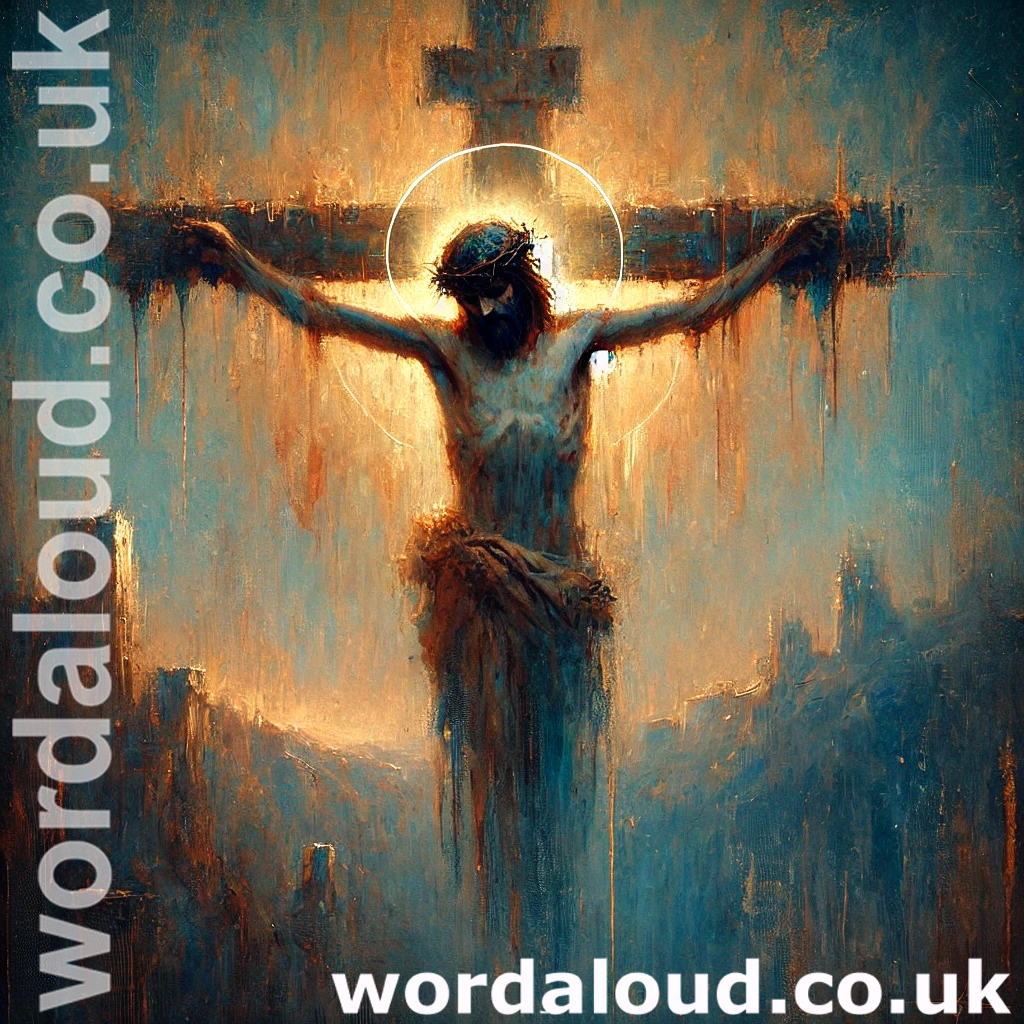
The poem shifts its focus to water, a symbol of cleansing and purification, as the poet’s spiritual ‘destination’. The poet’s gaze ‘flies’ to a higher, celestial body of water, described as the fountain above the heavens. This water flows from the pierced side of the ‘Redeemer’, a clear reference to Christ’s crucifixion and the subsequent outpouring of blood and water from his side. This specific allusion links the poet’s personal redemption with Christ’s sacrifice, establishing a direct connection between the source of divine grace and the poet’s journey toward forgiveness.
Following this revelation, the poet addresses the streams from Christ’s side as ‘blessed’. He attributes a dual role to these streams in his salvation: they either prevent his sins from ‘growing thick and wide’ or provide him with ‘tears to drown them’ as they emerge. In both cases, these streams contain the power to overcome sin, whether through prevention or through the cleansing act of penitential tears. Tears, often seen as an outward sign of genuine contrition, are here seen as part of the ongoing process of purification. The poet imagines that these tears flow from the same divine source, marking each step in his path toward redemption.
The poem then expresses how divine redemption functions as a timeless, continual force, ‘measuring all [his] time’. By aligning his entire life with the redemptive sacrifice, the poet perceives Christ’s atonement as encompassing and compensating for all his transgressions. In a metaphorical sense, Christ’s sacrifice acts as a ‘plaster’ or healing balm, one that is ‘equal to the crime’, covering over the wound of sin and enabling the poet to find spiritual wholeness again. This ‘plaster’ suggests not only a corrective but also a protective layer, covering the poet’s vulnerabilities against future transgressions.
In the concluding lines, the poet contemplates his name in ‘the book of life’. Through divine forgiveness, his name is recorded in this book, which traditionally symbolizes eternal salvation. The poet notes that this record of his identity, established through his ‘first acquaintance’ with redemption, would ‘discredit all’ future sins. This statement implies an enduring assurance of grace, as the initial divine intervention holds a lasting effect on the poet’s soul, offering a protective permanence. Even if new sins arise, they will be outweighed by his standing with God through the original redemptive act.
The poem portrays an intricate relationship between the human soul, sin, and divine forgiveness, presenting a vision of redemption that is both immediate and ongoing. Through personal penitence, Christ’s sacrifice, and the constant flow of divine grace, the poet describes his own spiritual restoration, finding assurance in an abiding source of salvation.


In this portion of his treatise, Saint Cyprian of Carthage underscores the profoundly communal nature of Christian prayer, especially as it is expressed in the Our Father. Writing in the mid-third century amidst persecution and internal divisions, Cyprian offers not only theological reflection but also pastoral guidance on the meaning and practice of unity in prayer [ … ]
Within the Discourse on the Church, the Discourse of the Community, Jesus speaks of the ways in which we may recall our brothers and sisters to the truth path when perhaps there has been a straying. This is to say, Jesus speaks of fraternal correction, of how Christian communities should work to sanctify others, in such a way that those who have sinned may be most readily and with dignity recalled [ … ]

William Blake’s ‘Jerusalem’ is a visionary poem taken from Milton: A Poem, one of Blake’s prophetic works. Though often associated with patriotism, the poem is more complex than a simple celebration of England. It expresses a deep anxiety about the spiritual and moral state of the nation, contrasting an idealized past with the corrupted present. Blake imagines a divine England, once touched by the presence of Christ, now overshadowed by oppressive forces that must be resisted through a struggle of the mind and spirit. The poem follows a regular structure of four quatrains with an ABAB rhyme scheme, and its meter, largely iambic tetrameter, gives it the quality of a hymn or a rallying cry [ … ]
