

Christian Art | George Herbert | The Temple | The Church | Love (1)
George Herbert | The Temple | The Church | Love (1)
Immortall Love, authour of this great frame,
Sprung from that beautie which can never fade;
How hath man parcel’d out thy glorious name,
And thrown it on that dust which thou hast made,
While mortall love doth all the title gain!
Which siding with invention, they together
Bear all the sway, possessing heart and brain,
(Thy workmanship) and give thee share in neither.
Wit fancies beautie, beautie raiseth wit:
The world is theirs; they two play out the game,
Thou standing by: and though thy glorious name,
Wrought our deliverance from th’ infernall pit,
Who sings thy praise? onely a skarf or glove
Doth warm our hands, and make them write of love.


George Herbert | The Temple | The Church | Love (1)
In this poem, Herbert reflects on humanity’s misplaced admiration and affection, which is directed at transient, earthly beauty rather than at God, the ‘Immortal Love’ and creator of all things. The poem begins by acknowledging God as the creator of the world’s beauty—a beauty that ‘can never fade’—and contrasts this with humanity’s inclination to direct love toward earthly, perishable objects. Humanity’s focus on ‘mortal love’ instead of divine love results in a separation from God, as people are captivated by temporary creations rather than the Creator.
The poem then considers how ‘mortal love’ gains control over both ‘heart and brain’, suggesting that human emotions and intellect are often devoted to pursuits that do not honour God. This is further emphasized in the line, ‘Wit fancies beauty, beauty raiseth wit,’ where the poet observes how intelligence and aesthetic appreciation work together to capture people’s attention, creating a self-contained realm in which humanity is ‘possessing heart and brain’, while God stands by, unacknowledged. Thus, human wit (or intellect) and beauty seem to rule over the world and play ‘out the game’ of life with no space for divine reverence.
Herbert implies a deep irony in humanity’s priorities: although God’s ‘glorious name’ was instrumental in ‘our deliverance from th’ infernal pit’, there is little genuine praise or gratitude directed to God. Instead, human creativity and affection are often spent on superficial or material matters, symbolized by ‘only a scarf or glove’. These small, decorative items, indicative of worldly love or affection, are what warm people’s hearts and inspire their writings and creations. This implies that, rather than creating or celebrating divine love, humans are inspired to produce art and expressions that focus on their personal, material attachments.
In this way, the poem suggests a critique of the human tendency to prioritize the tangible and immediate pleasures over spiritual devotion or reverence. The poem presents the pursuit of ‘mortal love’ as a diversion that leads people to neglect larger, more meaningful relationship with God. A human preoccupation with such transient beauty and wit is depicted as a kind of self-centred idolatry, maintaining people’s focus on the world rather than encouraging recognition of divine artistry. Through this reflection, the speaker calls into question the value of human priorities and seems to lament a disconnection between humanity and its Creator, as God’s love and sacrifice go largely unacknowledged.
The poem addresses the nature of true, lasting love versus fleeting, mortal love. The poem suggests that humanity’s fascination with material or sensory pleasures ultimately leads to a diminishing appreciation of the divine source of all beauty. By concluding with focus on such trivial symbols of earthly affection, Herbert implies that humans might be missing deeper, eternal love that offers true redemption and purpose beyond mere earthly attachments.



The people who have looked for and found Jesus now ask for a sign. Notwithstanding the miracle of the loaves and fishes, which they have witnessed, they now say they require a sign in order to believe in Jesus. It is in some ways akin to Christ’s temptation in the desert, when Satan tempted him to prove his divinity [ … ]
‘What is truth?’ So asks Pontius Pilate at the show-trial of Jesus. Pilate’s question dismisses and inherently rejects categorical truth as value. Pilate throws the truth to the masses – who cry for the blood of Jesus. As Christians, we hope – we pray, we ask – to adhere to truth. This is our truth: that Jesus is the Son of God, that Jesus died for our sins, and that through Jesus we can attain salvation. Yet, even as we seek to live in the truth, we are tested and tempted, just as Jesus was in the wilderness by Satan [ … ]
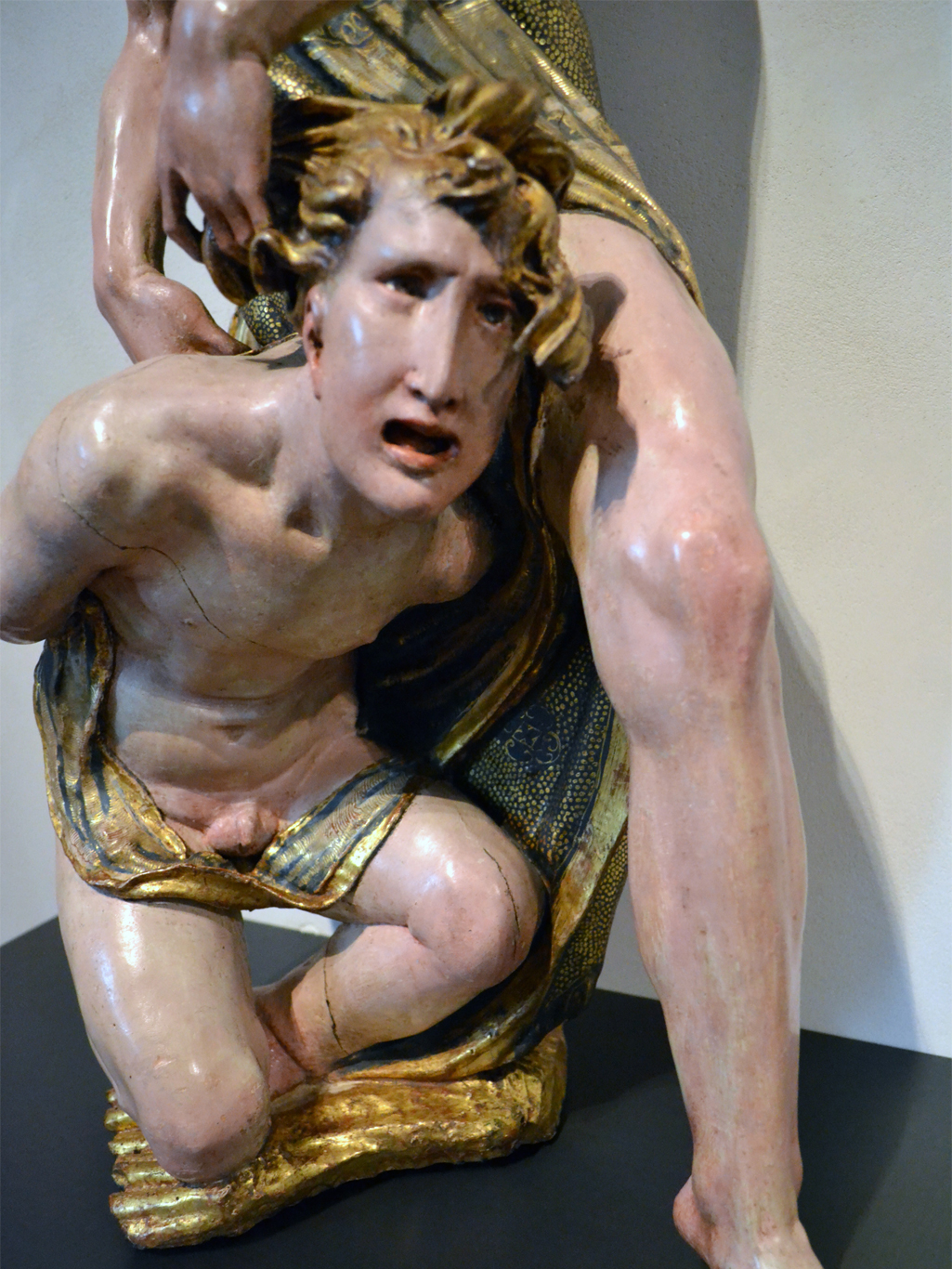
The Carrefour will be open, where I can buy nuts for the red squirrel, who lives in Campo Grande. The red squirrel is Valladolid’s best bit. Even as a child, I had never seen one before, apart from in picture books. It was last term’s discovery. The most beautiful encounter. I didn’t know it was there – in the park. A complete surprise. The tiny little thing bobbled and hopped, as it received in its little hands a nut from the man’s hands. Each surprising instant – it was childlike. I whispered: ‘Oh my wow.’ I walk toward the El Cortes Ingles. There is, for now, that settled feel of friends in bookshops. Though a null-affect, neutral day – it won’t glean, it is not to be scratched at. The queues are long in the Carrefour. Though, as it might be, on relatively modest incomes, many people live centrally. Their behaviours neither pinched nor stark. Yet the shop so busy while the street so empty… An error in the simulation, a glitch in the code. I potter about the aisles, which are pleasant enough, then at the tills I flinch at how expensive a little bag of up-sold nuts can be. Nonetheless, I queue for a packet of almonds. Two English men queue directly ahead of me. They are stocky, and have gay voices, their wheelie-bucket piled with soft drinks and party food, while they bitch to one another about the obviously terrible party they’re going to. The air heaves relief as I wander up the way to the broad plaza fringing Campo Grande. This is a place to see – a piece of Spain. There is a tourist information office, though unopened. At these fountains, three girls take selfies. Pompous-looking buildings, the military offices aside, line the park’s nearest vicinities. Hotel-bars have their patches. Liveried doormen idle time, for there are no paying customers, in and out the doorways’ shadows. A mixed group of kids play at the hoops on the pedestrian boulevard, and two boys practise on skateboards, working the thing out. I pass by them, touched by the thought, and happy that they are there. Wistful, I smile at the odds of the ball spilling over to me, and play in mind the agreeable scene of a fleeting connection. Then I am through the park gates. An air now – of humanity become self-selecting. Modestly understated. Understatedly modest. Campo Grande is nice but it isn’t grande… I walk slowly, and very soon hear for a second time English voices. Not them – it is an English family, just a little way ahead, a Dad and a Mum and a younger boy and an older girl, and theirs are Midlands accents. Dad seems to have been here and to know the place. He gestures panoramically. Mum wants her lunch. The girl at a difficult age. She carries a balloon-on-a-stick. Though she is sprouting – yet wears a loud dress. Then leggings, trainers. Her hair is nice… Maybe she is being okay about it. And not horrific. It’s okay once they get into it, but those months… Yet then, they mostly blossom, if they come from a good home, and become rounded personalities, entering into their womanhood. It was that… when yet they weren’t… I shudder to think of it. They walk toward the pond, and I trail, and would follow had I not been going that way. I wish I could say something so they might hear I am English too. (Fake a phone call?) How my voice might sound – there’d be all college hurling around in such matter I… a demented thing, ludicrous blurt – of Henry, Geoff, and all of them – not to mention the personal predicament. Maybe they’re a nice family. She is letting him explain what he needs to explain. And it would blow his fire, me being English. Mum and Dad. You’d probably see them all having their lunch in a little while. All sat round the table. With napkins and the menus out. Dad looks safe. I look into the pond. Terrapins live in there. But not today. I walk toward the join in the paths where the squirrel lives. There, I crumple the packet of almonds, making noise. I peer and I squat and crouch – chewing a mouthful. All the peacocks have perched right up in the trees’ branches. That never looks like something they should be doing. It’s disappointing that the squirrel isn’t here – but then the not-knowing-if is a part of it. Now, next, my visit to the National Sculpture Museum is an obligation. Canon Peter stood literally aghast when I hadn’t heard of it. Mortified, I made resolute promises. Though a few weeks have passed, it isn’t just any old something I could do on the hoof. A great commitment – it must command a known and prepared and anticipated not-just-any-old-time. But, rather, the sort you must wait for – and listen for. [ … ] Beyond Plaza Mayor, there would be a brief series of old-town alleyways. The National Sculpture Museum would be – just up there, this archway, this next…They are bleached and forgotten-looking walls, and the smoothed paving could be medieval. Not that it is making Tomàs anxious – I follow the map. A kind of place – uneasy credit-cards, and modern vaccinations, and a phone, might not help much. I fancy I feel the back-wall of a church, and that – fancifully – pressure-release drawn out of me. Only I am playing games in a nice way – making play-scared on the uncertainty – with only myself to see. The National Museum is there, modestly signed on stencilled plexiglass stuck to the stone wall. A uniformed lady sits just a little way inside the doorway. She reassures me there is no money required, and directs me over the courtyard into the planned route, showing me where I can pick up a free map. I get my […]
