

Christian Art | George Herbert | The Temple | The Church | The Temper (1)
George Herbert | The Temple | The Church | The Temper (1)
How should I praise thee, Lord! how should my rymes
Gladly engrave thy love in steel,
If what my soul doth feel sometimes,
My soul might ever feel!
Although there were some fourtie heav’ns, or more,
Sometimes I peere above them all;
Sometimes I hardly reach a score,
Sometimes to hell I fall.
O rack me not to such a vast extent;
Those distances belong to thee:
The world’s too little for thy tent,
A grave too big for me.
Wilt thou meet arms with man, that thou dost stretch
A crumme of dust from heav’n to hell?
Will great God measure with a wretch?
Shall he thy stature spell?
O let me, when thy roof my soul hath hid,
O let me roost and nestle there:
Then of a sinner thou art rid,
And I of hope and fear.
Yet take thy way; for sure thy way is best:
Stretch or contract me thy poore debter:
This is but tuning of my breast,
To make the musick better.
Whether I flie with angels, fall with dust,
Thy hands made both, and I am there:
Thy power and love, my love and trust
Make one place ev’ry where.


George Herbert | The Temple | The Church | The Temper (1)
In this poem, Herbert reflects on the immense and transcendent nature of God compared to limitations of human experience. The poem explores Herbert’s yearning fully to experience divine love and presence, while grappling with inevitable fluctuations of human faith and emotion. Herbert expresses a wish permanently to feel the closeness and joy sometimes sensed in God’s presence. Yet, this experience is shown to be inconsistent, varying between moments of near-heavenly insight and others of despair, represented as ‘falling to hell’.
The poet addresses God’s vastness directly, remarking that the scale of God’s being is too great for human comprehension. Through this contrast between the human and the divine, Herbert emphasizes the inadequacy of human language and capacity to fully encompass or even understand the divine, suggesting that the scope of God is ‘too little for the world’ and yet a grave ‘too big for me’. The idea that God might even engage with humanity on such a vast scale—that divine understanding stretches from ‘heaven to hell’—brings a sense of awe mingled with questioning: how can the infinite meet with the finite?
As the poem progresses, Herbert submits to God’s will, asking only to find refuge ‘when thy roof my soul hath hid’, a request for spiritual sanctuary where they might be freed from the burdens of ‘hope and fear’. The poet desires to be free from the human oscillation between these two states, instead finding lasting peace in God’s presence. Yet, this request for sanctuary does not stem from a desire to avoid spiritual growth; rather, Herbert recognizes that the process of being ‘stretched or contracted’ by divine influence refines and improves them, ‘tuning’ their ‘breast to make the music better’.
Herbert expresses a sense of unity with God, regardless of circumstance. Whether ‘flying with angels’ or ‘falling with dust’, there is a trust in God’s power and love, and an acceptance that wherever they are, God is present. The poem concludes with a sense of spiritual wholeness, where divine love and human faith come together to create a ‘place everywhere’ that transcends physical space and earthly limitations. This notion reflects a contemplative, introspective spirituality that emphasizes God’s constancy even amid human instability, allowing the poet to trust in God’s omnipresence and care, no matter the external conditions or internal states of being.



The poem expresses a living relationship between light and darkness, both real and symbolic. The change from night to day stands for a shifting disposition from ignorance to knowledge. This mirrors a human quest for understanding [ … ]
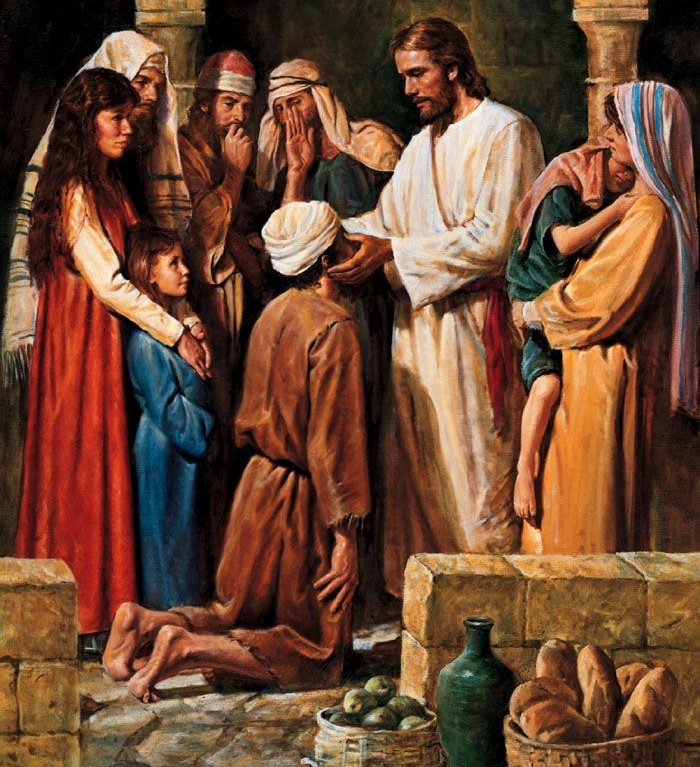
Blessed Isaac of Stella reflects on the close unity between Christ and the Church, especially in relation to the forgiveness of sins. He begins by affirming that two things belong to God alone: the right to receive confession and the power to forgive. Yet, he immediately links this divine prerogative with the mystery of Christ’s union with his bride, the Church [ … ]
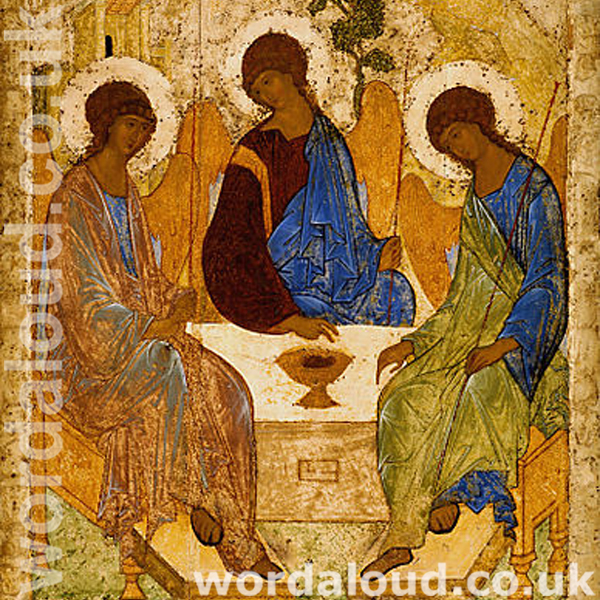
Saint Peter Chrysologus reflects on the long history of God’s dealings with humanity and sees one thread running through it all: God counters human fear with love. When the world fell into sin, God did not abandon it or treat it only with justice. Instead, he drew near with tenderness, guiding, calling, comforting, and reshaping hearts so that love—not fear—would be the foundation of worship [ … ]
