
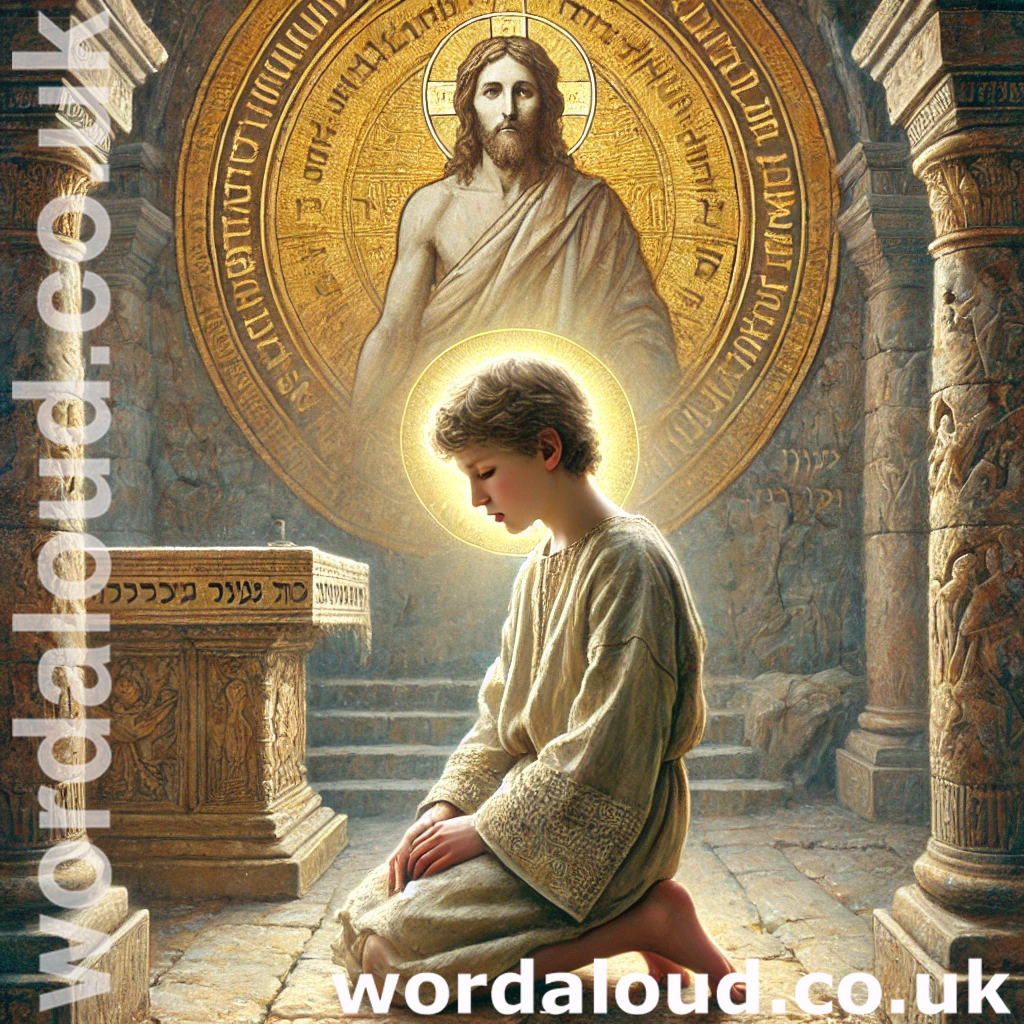
Christian Art | Prayer With Jesus | Psalms | Denunciation Of Godlessness | King David As A Boy | Audio KJV | King James Audio Bible | King James Version
Psalm 53 | King James Audio Bible
YouTube: Psalm 53 | KJV | King James Version | Audio Bible | Word Aloud
Psalm 53 reflects on faith and consequences of disbelief. The psalm echoes themes found in Psalm 14, offering a compelling exploration of the nature of human folly and the importance of seeking God.
The psalm begins with a striking declaration: ‘The fool hath said in his heart, There is no God.’ This opening verse sets the tone for contemplation on the perilous path of unbelief. It underscores the notion that denying the existence of God is a mark of spiritual foolishness and moral corruption.
The psalm paints a grim portrait of those who have turned away from God. They are described as corrupt, engaging in abominable deeds, and utterly lacking in goodness. This stark contrast between the wicked and the righteous is a central theme throughout the psalm.
The psalm invites us all to ponder depth of human understanding and pursuit of God. The psalm questions whether any among humanity truly seeks the Divine. The refrain ‘There is none that doeth good’ underscores the psalmist’s lament over the spiritual state of humanity.
The psalmist highlights moral degradation of those who have forsaken God, drawing attention to their cruel treatment of others, described metaphorically as devouring God’s people like bread. This imagery vividly conveys the moral decay that results from a rejection of faith and a disregard for the welfare of others.
Yet, amidst this portrayal of disbelief and consequences thereof, there is recognition of divine judgment. The psalm suggests that God looks down from heaven to witness every action of humanity. While the wicked may revel in their deeds for a time, the psalm hints at a reckoning to come.
The psalm concludes with a yearning for salvation, expressing a heartfelt desire for restoration of God’s people. It anticipates a time when God will deliver Israel from its captivity, bringing about joy and gladness.

Psalm 52 | King James Audio Bible KJV | Love Revealed By Jesus Christ
The fool hath said in his heart, There is no God. Corrupt are they, and have done abominable iniquity: there is none that doeth good.
God looked down from heaven upon the children of men, to see if there were any that did understand, that did seek God.
Every one of them is gone back: they are altogether become filthy; there is none that doeth good, no, not one.
Have the workers of iniquity no knowledge? who eat up my people as they eat bread: they have not called upon God.
There were they in great fear, where no fear was: for God hath scattered the bones of him that encampeth against thee: thou hast put them to shame, because God hath despised them.
Oh that the salvation of Israel were come out of Zion! When God bringeth back the captivity of his people, Jacob shall rejoice, and Israel shall be glad.
Key Themes Of The Psalm For Reflection | Love Revealed By Jesus Christ
- Consequences Of Unbelief: The psalm portrays the consequences of denying the existence of God, emphasizing the moral corruption and folly that can result from such disbelief.
- Contrast Between The Righteous And The Wicked: The psalm highlights the stark contrast between those who seek God and live righteously and those who have turned away from God, engaging in corrupt and wicked actions.
- Absence Of Goodness: The recurring refrain ‘There is none that doeth good’ underscores the psalmist’s lament over the apparent absence of goodness among those who have forsaken God.
- Cruelty Of The Wicked: The psalmist uses vivid imagery to describe the cruelty of the wicked, likening their treatment of others to devouring God’s people like bread. This serves as a condemnation of their moral degradation.
- Divine Judgment: The psalm hints at divine judgment, suggesting that God observes the actions of humanity and will ultimately hold the wicked accountable for their deeds.
- Yearning For Salvation: The psalm concludes with a heartfelt yearning for divine salvation and the restoration of God’s people, expressing hope for a future moment of joy and gladness.



Saint Cyprian, bishop and martyr of 3rd-century Carthage, continues his reflection on the Lord’s Prayer by turning to its eschatological heart: ‘Thy kingdom come.’ At first glance, this might seem strange—surely God always reigns? Indeed, Cyprian affirms, God’s kingship is eternal. But the petition is not for God’s benefit; it is for ours. We pray not for the beginning of God’s rule, but for the realization of His kingdom in us and for us [ … ]

Saint Bede the Venerable (c. 673–735), monk of Wearmouth-Jarrow and the most eminent Anglo-Saxon theologian, offers in this passage a profound meditation on 1 Peter 2:9, wherein the Apostle applies Old Testament imagery to the new People of God. Bede’s theological genius lies in his ability to interweave patristic exegesis, liturgical spirituality, and historical typology into a cohesive vision of the Christian life as pilgrimage from darkness to light, from Egypt to the Promised Land [ … ]

Saint Ephraem reflects on why Christ chose not to reveal the day or the hour of his return. For Ephraem, this hiddenness is not meant to create fear but to preserve longing and vigilance. If the exact time were known, he says, the desire for Christ would fade and the urgency of Christian living would weaken. By keeping the time concealed, Christ invites every generation to live as though he might come today. This keeps faith attentive and the heart awake [ … ]