

Christian Art | Love Revealed By Jesus Christ | Feeding Of The Multitude | Miracles Of Jesus
Office Of Readings | Advent December 19th | A Reading From The Treatise Of Saint Iranaeus Against The Heresies | The Operation Of The Redeeming Incarnation
‘The operation of the redeeming Incarnation.’
This reading sets out a central theme in the theology of Saint Irenaeus: the relationship between God and humanity as one of action and reception. God acts; human beings receive. God’s glory is shown not apart from humanity, but in humanity restored and brought to fulfilment.
Irenaeus explains that God is known by how he deals with human weakness. Humanity, having fallen into disobedience and lost immortality, is not abandoned. Instead, God responds with mercy. Paul’s statement that all are held under unbelief is understood as preparing the way for universal mercy, not condemnation.
The reading then describes the proper human response: right belief in God as creator, perseverance in love, obedience, and gratitude. These are not presented as achievements that earn salvation, but as the manner of life that allows God’s work to bear fruit. Growth in glory is gradual and is directed towards likeness to Christ.
The Incarnation is central. Christ takes on human nature, described as ‘sinful flesh’, not to share in sin, but to judge and overcome it from within human life itself. By becoming human, Christ opens the way for humanity to share in God’s life. The movement is mutual: God comes to dwell with humanity so that humanity may receive God.
The reading insists that salvation does not arise from human capacity. Human weakness is emphasised through quotations from Paul and Isaiah. Salvation is God’s work from beginning to end. Emmanuel, ‘God with us’, is given as the sign that deliverance comes from God himself, not from human effort.
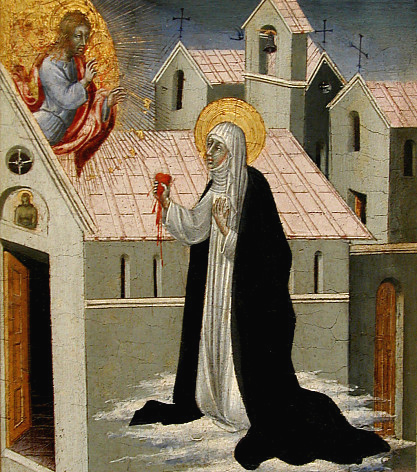
A Reading From The Treatise Of Saint Iranaeus Against The Heresies | The Operation Of The Redeeming Incarnation
God is man’s glory. Man is the vessel which receives God’s action and all his wisdom and power.
Just as a doctor is judged in his care for the sick, so God is revealed in his conduct with men. That is Paul’s reason for saying: God has made the whole world prisoner of unbelief that he may have mercy on all. He was speaking of man, who was disobedient to God, and cast off from immortality, and then found mercy, receiving through the Son of God the adoption he brings.
If man, without being puffed up or boastful, has a right belief regarding created things and their divine Creator, who, having given them being, holds them all in his power, and if man perseveres in God’s love, and in obedience and gratitude to him, he will receive greater glory from him. It will be a glory which will grow ever brighter until he takes on the likeness of the one who died for him.
He it was who took on the likeness of sinful flesh, to condemn sin and rid the flesh of sin, as now condemned. He wanted to invite man to take on his likeness, appointing man an imitator of God, establishing man in a way of life in obedience to the Father that would lead to the vision of God, and endowing man with power to receive the Father. He is the Word of God who dwelt with man and became the Son of Man to open the way for man to receive God, for God to dwell with man, according to the will of the Father.
For this reason the Lord himself gave as the sign of our salvation, the one who was born of the Virgin, Emmanuel. It was the Lord himself who saved them, for of themselves they had no power to be saved. For this reason Paul speaks of the weakness of man, and says: I know that no good dwells in my flesh, meaning that the blessing of our salvation comes not from us but from God. Again, he says: I am a wretched man; who will free me from this body doomed to die? Then he speaks of a liberator, thanks to Jesus Christ our Lord.
Isaiah says the same: Hands that are feeble, grow strong! Knees that are weak, take courage! Hearts that are faint, grow strong! Fear not; see, our God is judgement and he will repay. He himself will come and save us. He means that we could not be saved of ourselves but only with God’s help.
Christian Prayer With Jesus Christ
God our Father,
you have acted for our salvation
when we could not save ourselves.
Grant us humility to receive your work
and faith to live in obedience and gratitude,
through Jesus Christ our Lord.
Amen.
Glossary Of Christian Terms
Incarnation – The taking of human nature by the Son of God in Jesus Christ.
Redemption – God’s act of freeing humanity from sin and death through Christ.
Obedience – A life shaped by trust in God and readiness to follow his will.
Emmanuel – A name meaning ‘God with us’, expressing God’s saving presence.
Adoption – Being made children of God through Christ.
Likeness of God – Humanity restored to live in communion with God, shaped by Christ.



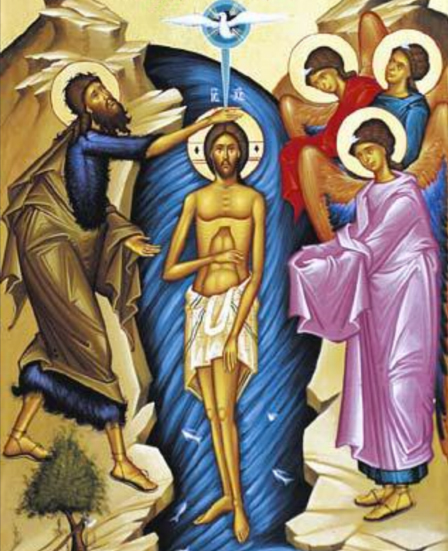
Today’s Bible reading celebrates two complementary affirmations of Jesus’ true identity, of Jesus’ divinity. The first is of John the Baptist, who came to prepare the way toward Jesus, teaching people an initial baptism of repentance, with water, such that they might be initially prepared to receive the Lord. The second is of God the Father and the Holy Spirit, the divine affirmation, that of heaven, the Father’s voice visiting Earth and the Spirit descending, as heaven bows to Earth, the Father to acknowledge His beloved Son as His Own [ … ]

The psalms, ancient anthology of religious poetry, offer a profound exploration into the human condition, spiritual longing, and divine transcendence. The psalms stand as testament to the enduring power of faith and expression across centuries and cultures [ … ]

‘Thou shalt not covet thy neighbour’s wife’ is a commandment against adultery. It has a broader application to encompass any form of envy or coveting of a person’s spouse or sexual partner. It is an instruction for Christians in terms of their intimate relationships and sexual space [ … ]
