

Christian Art | Baby Jesus, Mary And Joseph | The Holy Family
Office Of Readings | Christmas | 29th December | A Reading From A Sermon By Saint Bernard | The Fullness Of The Godhead Came In The Fullness Of Time
‘The Fullness Of The Godhead Came In The Fullness Of Time.’
In this reading, Saint Bernard reflects on the revelation of God’s kindness through the Incarnation. Bernard links the coming of Christ to what Saint Paul calls ‘the fullness of time’, when God’s purposes are no longer promised but realised.
Bernard begins by distinguishing between God’s eternal mercy and its historical manifestation. God’s kindness always existed, but before the Incarnation it remained largely hidden. It was announced by the prophets, but not yet experienced. Because suffering and conflict continued, many doubted that peace was truly intended or possible.
The Incarnation changes this situation. Bernard stresses that God’s promises are now visible and tangible. Peace is no longer something spoken about or awaited; it is given. God’s dwelling among humanity makes divine mercy accessible to human sight and understanding.
Bernard uses the image of a small but full gift. Christ comes as a child, small in appearance, yet containing the fullness of God. The humility of Christ does not limit God’s action; it reveals it. The fullness of the Godhead is present in a form suited to human weakness.
A central theme is that God reveals his kindness by assuming human flesh. Bernard insists that this flesh is not humanity in its original innocence, but humanity marked by weakness and need. By taking on what requires mercy, God demonstrates mercy in action.
Bernard urges the hearer to understand human worth through what God has done, rather than through human suffering alone. The Incarnation shows how seriously God takes humanity. God’s self-lowering reveals not weakness, but commitment.
The reading ends by drawing together humanity and kindness. The visible humanity of Christ makes God’s mercy undeniable. By becoming human, God invites a response of trust and love grounded in what has been shown, not merely promised.

A Reading From A Sermon By Saint Bernard | The Fullness Of The Godhead Came In The Fullness Of Time
The kindness and love of God our saviour for mankind were revealed. Thanks be to God, through whom we receive such abundant consolation in this pilgrimage, this exile, this distress.
Before his humanity appeared, his kindness lay concealed. Of course it was already in existence, because the mercy of the Lord is from eternity, but how could men know it was so great? It was promised but not yet experienced: hence many did not believe in it. At various times and in various different ways, God spoke through the prophets, saying I know the plans I have in mind for you: plans for peace, not disaster.
What reply did man make, man who felt the affliction, and knew nothing of peace? ‘How long will you keep saying ‘Peace, peace’ when there is no peace?’ And so the angels of peace weep bitterly saying Lord, who has believed our report?
But now at last let men believe their own eyes, because all God’s promises are to be trusted. So that it cannot escape the notice of even troubled eyes, He has set up his tabernacle in the sun. Behold, peace is no longer promised, but conferred; no longer delayed, but given; no longer predicted, but bestowed. Behold, God has sent down to earth a bag bulging with his mercy, a bag that, at the passion, is torn open so that our ransom pours out of it onto us. A small bag, perhaps, but a full one: for it was a small child that was given to us, but in him dwells all the fullness of the Godhead.
After the fullness of time had come, there came too the fullness of the Godhead. He came in the flesh, so that at least he might make himself manifest to our earthly minds, so that when this humanity of his appeared, his kindness might also be acknowledged. Where the humanity of God appears, his kindness can no longer be hidden. In what way, indeed, could he have better commended his kindness than by assuming my flesh? My flesh, that is, not Adam’s, as it was before the fall.
What greater proof could he have given of his mercy than by taking upon himself that very thing which needed mercy? Where is there such perfect loving-kindness as in the fact that for our sake the Word of God became perishable like the grass? Lord, what is man, that you make much of him or pay him any heed?
Let man infer from this how much God cares for him. Let him know from this what God thinks of him, what he feels about him. Man, do not ask about your own sufferings; but about what God suffered. Learn from what he was made for you, how much he makes of you, so that his kindness may show itself to you from his humanity.
The lesser he has made himself in his humanity, the greater has he shown himself in kindness. The more he humbles himself on my account, the more powerfully he engages my love. The kindness and humanity of God our Saviour appeared says St Paul. The humanity of God shows the greatness of his kindness, and he who added humanity to the name of God gave great proof of this kindness.
Christian Prayer With Jesus Christ
Lord Jesus Christ,
you revealed the kindness of God by sharing our humanity.
Help us to recognise your mercy,
not as a distant promise,
but as a gift already given.
Teach us to see our worth
in what you have chosen to bear for us.
Draw us to trust in your love
and to live in peace shaped by your humility.
Amen
Glossary Of Christian Terms
Fullness of time | The moment chosen by God for the coming of Christ, when divine promises are fulfilled.
Incarnation | The taking of human nature by the Son of God in Jesus Christ.
Kindness of God | God’s merciful concern for humanity, revealed fully in Christ.
Tabernacle | A biblical image for God dwelling among his people.
Humanity of Christ | The true human nature assumed by the Son of God, including weakness and mortality.
Mercy | God’s action towards humanity marked by compassion and forgiveness.
Fulness of the Godhead | The complete divine nature present in Christ.



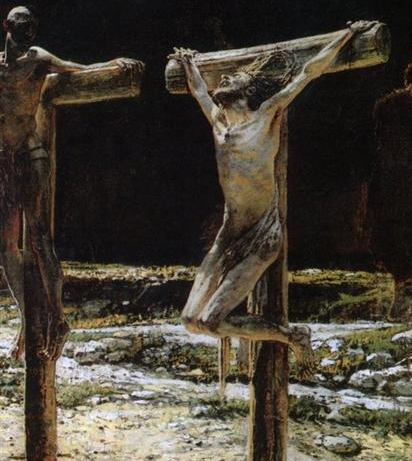
Jesus orders his disciples to keep his true identity, as the Messiah, a secret. We might wonder why this should be. One answer to this is that many of the people of whom we read in the Bible were hoping for and expecting the coming of the Messiah, who would lead the Jewish people to freedom, and yet their expectation – of a new judge or great warrior king – was not in accord with Christ’s true purpose, namely to serve and to suffer and so to save [ … ]

Saint Gregory, one of the Cappadocian Fathers and a central figure in fourth-century theology, explores what it means to bear the name ‘Christian’. Drawing heavily from the writings of Saint Paul, he lays out a vision of spiritual transformation in which the believer becomes an ‘alter Christus’ – another Christ [ … ]

Psalm 29 is a hymn that celebrates glory, power and sovereignty of the Lord. The psalm reflects on the divine might displayed through elements of nature, emphasizing the voice of the Lord as a significant force [ … ]
