

Christian Art | Boy At Prayer With Jesus
Office Of Readings | Week 11, Thursday, Ordinary Time | A Reading From The Treatise Of Saint Cyprian On The Lord’s Prayer | We Ask For Bread And Then For Forgiveness Of Sins
‘We ask for bread and then for forgiveness of sins.’
‘After The Gift Of Bread We Ask Pardon For Our Sins’
This section of Saint Cyprian’s treatise on the Lord’s Prayer turns our attention to the profoundly interconnected petitions: Give us this day our daily bread, and forgive us our trespasses. Cyprian interprets these lines not merely in material or moral terms, but through a rich theology centred on the Eucharist, sin, and salvation.
Daily Bread | Material And Eucharistic
Cyprian first affirms the dual nature of ‘our daily bread’. On a literal level, it includes our physical sustenance, an expression of our daily dependence on God. On a deeper spiritual level, he focuses on the Eucharist—the ‘bread of life’, which is ‘not for everyone’, but belongs to the faithful who live in communion with Christ. The Our Father is thus not simply a personal prayer, but the communal voice of the baptised, those who can rightly call God our Father and Christ our bread.
Drawing from John 6, Cyprian identifies Christ’s flesh as the Eucharistic bread ‘for the life of the world’. To receive it is to be united with Jesus Christ and to live in him; to be deprived of it is to fall from grace and be ‘far from salvation’. Therefore, the request for daily bread is also a plea for continued Eucharistic communion and spiritual life.
The Link Between Eucharist And Forgiveness
The sequence of the Lord’s Prayer is significant: after asking for our daily bread, we next ask for forgiveness. This reflects both liturgical practice and theological truth. We receive Jesus Christ only with a clean heart; therefore, we ask for pardon so we may worthily approach the sacrament.
Cyprian underlines this by warning against presumption: none should ‘complacently think himself innocent’. He references 1 John 1:8–9 to stress the universality of sin and the mercy of God. Even in our asking for forgiveness, we are reminded of our need for grace and humility. Prayer itself becomes a mirror in which we see both our weakness and God’s fidelity.
Prayer As Daily Renewal
The notion of daily prayer for forgiveness reinforces the Christian life as a constant turning back to God. Cyprian encourages a rhythm of penitence and restoration. His words correct the complacent while offering hope to the penitent. The faithful are not called to despair over sin, but to acknowledge it and trust in the forgiveness promised by Jesus Christ.
In this way, the Lord’s Prayer trains the heart in both Eucharistic reverence and moral vigilance. It reminds us that the life of grace must be renewed day by day, sustained by the bread of heaven and healed by divine mercy.
A Reading From The Treatise Of Saint Cyprian On The Lord’s Prayer | We Ask For Bread And Then For Forgiveness Of Sins
As the Lord’s Prayer continues, we ask: Give us this day our daily bread. We can understand this petition in a spiritual and in a literal sense. For in the divine plan both senses may help toward our salvation. For Christ is the bread of life; this bread does not belong to everyone, but is ours alone. When we say, our Father we understand that he is the Father of those who know him and believe in him. In the same way we speak of our daily bread, because Christ is the bread of those who touch his body.
Now, we who live in Christ and receive his Eucharist, the food of salvation, ask for this bread to be given us every day. Otherwise we may be forced to abstain from this communion because of some serious sin. In this way we shall be separated from the Body of Christ, as he taught us in the words: I am the bread of life which has come down from heaven. Anyone who eats my bread will live for ever and the bread that I will give is my flesh for the life of the world. Christ is saying, then, that anyone who eats his bread will live for ever. Clearly they possess life who approach his body and share in the Eucharistic communion. For this reason we should be apprehensive and pray that no one has to abstain from this communion, lest he be separated from the body of Christ and be far from salvation. Christ has warned of this: If you do not eat the flesh of the Son of man and drink his blood you will have no life in you. We pray for our daily bread, Christ, to be given to us. With this help, we who live and abide in him will never be separated from his body and his grace.
After this we ask pardon for our sins, in the words: and forgive us our trespasses. The gift of bread is followed by a prayer for forgiveness. To be reminded that we are sinners and forced to ask forgiveness for our faults is prudent and sound. Even while we are asking God’s forgiveness, our hearts are aware of our state! This command to pray daily for our sins reminds us that we commit sin every day. No one should complacently think himself innocent, lest his pride lead to further sin. Such is the warning that John gives us in his letter: If we say we have no sin, we deceive ourselves, and the truth is not in us. If we confess our sins, the Lord is faithful and just and will forgive our sins. His letter includes both points, that we should beg for forgiveness for our sins, and that we receive pardon when we do. He calls the Lord faithful, because he remains loyal to his promise, by forgiving us our sins. He both taught us to pray for our sins and our faults, and also promised to show us a father’s mercy and forgiveness.
Final Prayer With Jesus
Lord Jesus Christ,
Bread of life and source of all mercy,
you have taught us to pray for both daily nourishment and daily pardon.
Feed us always with your Body, that we may remain in your grace,
and forgive us when we stray, that we may return to your embrace.
Teach us humility, that we may know our need of you,
and gratitude, that we may cherish your gifts.
Keep us united to you in the Eucharist,
and in your mercy, lead us to the fullness of life.
Amen.
Glossary Of Christian Terms
- Eucharist: The sacrament in which the faithful receive the Body and Blood of Christ under the appearance of bread and wine.
- Daily bread: In this context, both physical sustenance and the spiritual nourishment found in the Eucharist.
- Trespasses: Sins or moral failings, for which we ask God’s forgiveness.
- Communion: Union with Christ and with the Church, particularly through receiving the Eucharist.
- Presumption: The sin of assuming one’s own righteousness or taking God’s mercy for granted.
- 1 John 1:8–9: A New Testament passage affirming the universality of sin and the assurance of God’s forgiveness for those who confess.
- Penitent: One who repents of their sins and seeks forgiveness.
- Liturgy: The official public worship of the Church, especially the celebration of the Eucharist.



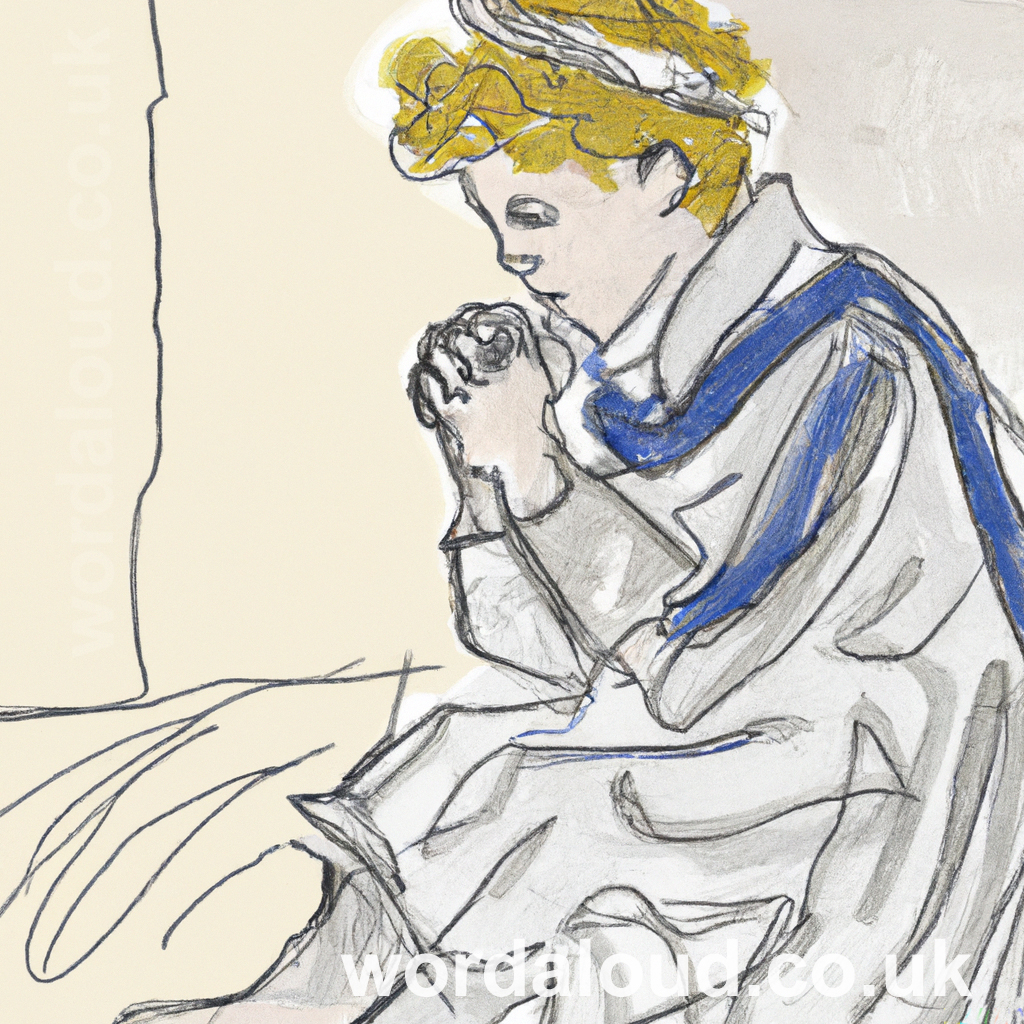
Psalm 105, a hymn of praise in the Hebrew Bible, is testament to God’s enduring faithfulness and mighty deeds throughout the history of Israel. This psalm is a celebration of God’s covenant with Abraham and the fulfilment of God’s promises through subsequent generations, culminating in the deliverance of the Israelites from Egypt and their journey to the Promised Land [ … ]
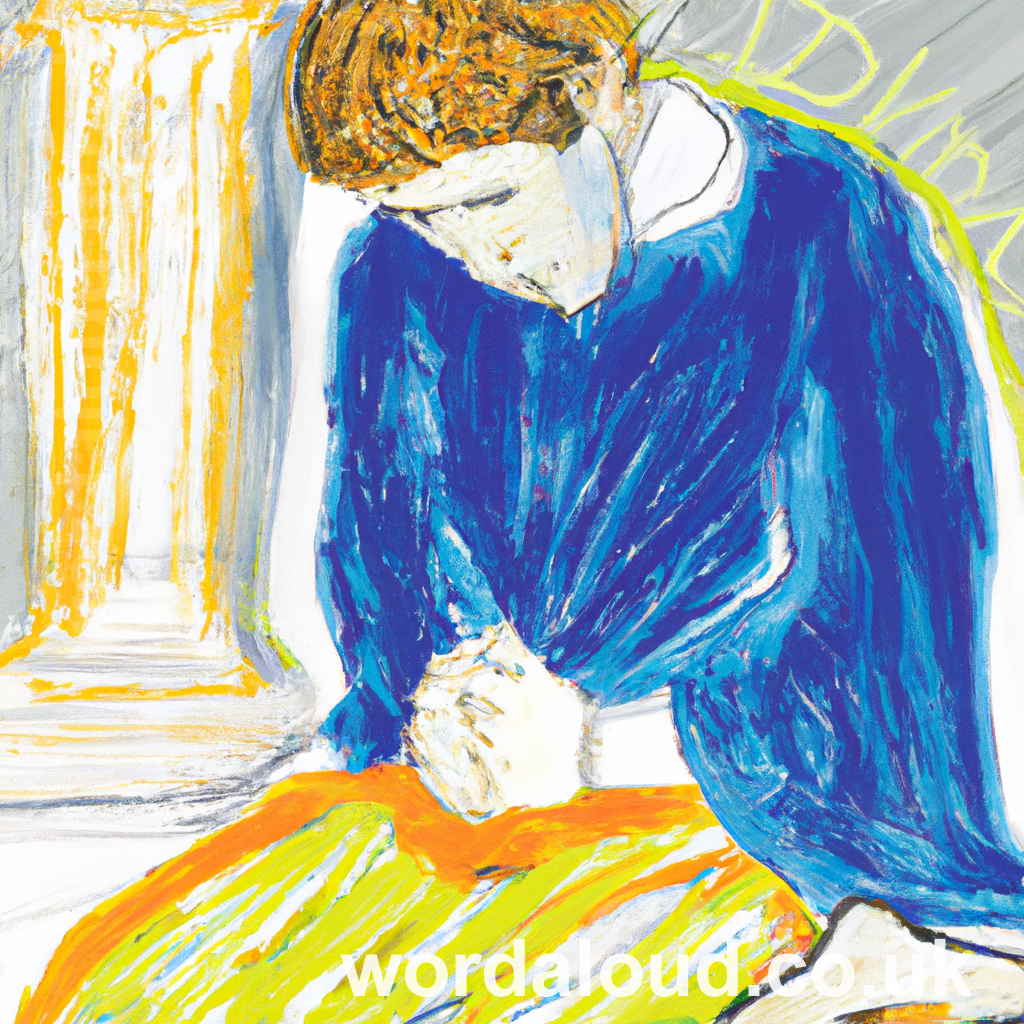
Psalm 74 is a plea for divine intervention during a period of devastation and spiritual turmoil. The psalmist expresses deep distress over the destruction of sacred places and the apparent abandonment of God’s people. This psalm is a call for God’s assistance and a reflection on the covenant between God and God’s chosen people [ … ]

William of Saint-Thierry reflects on salvation not as something we achieve, but as something we receive. From the beginning, he insists that God’s dominion is not oppressive power but saving love. To belong to God is already to be rescued, because serving God means being held within God’s care [ … ]
