

Christian Art | Christian Baptism | Love Revealed By Jesus Christ
Office Of Readings | Week 19, Friday, Ordinary Time | A Reading From The Sermon Of Saint Pacian On Baptism | A New Christian Morality | Holy Spirit Of Jesus Christ
‘We must practise a new Christian morality by the Holy Spirit.’
Saint Pacian, Bishop of Barcelona in the fourth century, presents baptism as the decisive passage from the old humanity of Adam to the new life in Jesus Christ. Drawing from Romans 5:12–21 and 1 Corinthians 15:45, he sets up a parallel: through Adam’s disobedience, sin and death entered the human race; through Christ’s obedience, grace and eternal life are offered to all. Pacian insists that just as Adam’s descendants inherit his fallen condition by birth, so believers receive Christ’s life by a different kind of descent—not physical but spiritual.
He answers an anticipated objection: ‘We are not physically descended from Christ, so how can his righteousness save us?’ Pacian’s reply rests on the imagery of marriage from Ephesians 5:31–32. Christ’s union with human nature, received from Mary, is also the union of Christ and his Church—‘two in one flesh.’ From this mystical marriage, the Christian people are born. The Holy Spirit is the ‘seed’ that generates new life within the womb of the Church, and Christ himself gives that life at baptism.
Baptism, chrismation (the anointing with holy oil), and the ministry of the priest together form the means by which this new birth is effected. The waters of the font wash away sin, the chrism pours out the Spirit’s gifts, and the priest’s hands and voice enact and declare the sacrament. Faith ‘presides’ over the whole rite, ensuring that the outward signs are matched by inward assent.
For Pacian, baptism is not merely a ritual washing but a genuine rebirth: the whole person—body and soul—is renewed. Just as Christ rose from the tomb, so the baptised are called to ‘walk in newness of life’ (Romans 6:4), leaving behind the ‘errors of the old life’ to follow a new way in the power of the Spirit. Salvation, then, is not a private possession but an incorporation into Christ’s body, the Church, where the Spirit continually begets and nourishes believers until they reach eternal life.
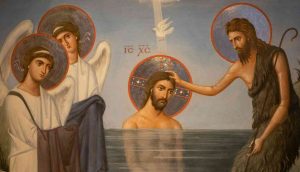
A Reading From The Sermon Of Saint Pacian On Baptism | A New Christian Morality | Holy Spirit Of Jesus Christ
The sin of Adam had come into all men. Through one man, the Apostle says, sin entered and through sin, death. Thus it has come to all men. Therefore, the justice of Christ must enter into men; and as the old Adam ruined his descendants through sin, so Christ must bring new life to all men through justice. The Apostle stresses this theme when he says: As through the disobedience of one man, many were made sinners, so too, through the obedience of one man, many were made just. And, as sin brought death to the offender, so grace through justice brings birth to life eternal.
Someone may say to me: ‘But the sin of Adam is justifiably transmitted to his posterity. Since they were descended from him, and since we are not descended from Christ, how can we be saved because of him?’ Do not think in physical terms about descent, then you will see how Christ is our father. In these times of salvation, Christ received body and soul from Mary. He came to save this soul, not to leave it in hell. He united it with his spirit and made it his own. And this is the marriage of the Lord, the union of two in one flesh, so that according to that great mystery, two become one flesh, Christ and his Church.
From this marriage the Christian people are born, by the descent of the spirit of the Lord. The essential nature of the soul, engendered by heavenly seed, grows in the womb of our mother, the Church, and at birth is given life by Christ. Therefore, the Apostle says: The first Adam was a living soul, the new Adam a life-giving spirit. Thus Christ continues in the Church through his priests, as the same Apostle says: In Christ, I have begotten you. And so, the seed of Christ, that is, the Spirit of God, brings forth the new man, nourished in the womb of his mother, welcomed at his birth at the font through the hands of the priests, while faith presides over the ceremony.
Christ must, therefore, be received in order to beget, for the apostle John says: To all who received him he gave the power to become sons of God. But these things cannot be accomplished except by the sacrament of the font, the chrism and the priest. For sin is washed away by the waters of the font; the Holy Spirit is poured forth in the chrism; and we obtain both of these gifts through the hands and the mouth of the priest. Thus the whole man is reborn and renewed in Christ. Just as Christ rose from the dead, so we shall walk in the newness of life, that is we put away the errors of our old lives and we follow the new way through the Spirit in Christ.
Christian Prayer With Jesus Christ
Lord Jesus Christ, new Adam and life-giving Spirit,
you have joined our humanity to your divinity,
and in the waters of baptism you have made us children of God.
By your grace, help us to renounce the errors of our old life
and to walk in the new way through your Spirit.
May we remain faithful members of your Body, the Church,
until we share in the fullness of life with you for ever.
Amen.
Glossary Of Christian Terms
Adam – The first human being in biblical tradition; his disobedience brought sin and death into the world.
New Adam – A title for Christ (cf. 1 Corinthians 15:45), who reverses the effects of Adam’s sin by his obedience.
Justice – In biblical and theological terms, the state of being made right with God, also called righteousness.
Grace – The free and undeserved gift of God’s life and help.
Mystical marriage – The spiritual union between Christ and his Church, likened to a marriage (Ephesians 5:31–32).
Font – The vessel or pool in which baptism is performed.
Chrism – Consecrated oil used in certain sacraments, symbolising the gift of the Holy Spirit.
Life-giving Spirit – A title for Jesus Christ in his risen, glorified life, through whom believers receive the Holy Spirit.
Faith – Trust in God and assent to his truth, the foundation of Christian life and sacramental participation.
Walk in newness of life – A phrase from Romans 6:4, meaning to live in a way transformed by Christ’s resurrection.



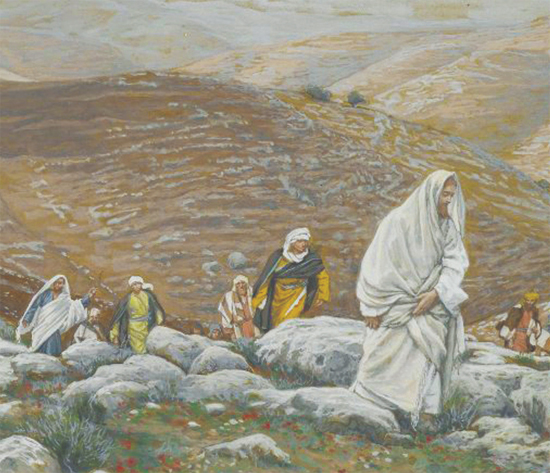
When Jesus returns to Nazareth, to his own country, he attends synagogue on the Saturday and teaches there, not as a leader of the synagogue but as a participant in the faith community. Nonetheless, Jesus’ teaching is different from other people’s. Jesus, we have been told, teaches with authority, and not as the scribes (Matthew 7: 29). Jesus does not merely interpret Scripture, according to scholarly tradition; rather, Jesus reworks Scripture, providing for the people a new Torah, which centres upon himself and which we may understand as Jesus himself. In this way, Jesus’ authority matches and exceeds that of Moses. Jesus is a new Moses, and then infinitely more [ … ]

Saint Maximus was born around 580 in Constantinople to a distinguished family and initially served as a high-ranking official in the imperial court. However, he left political life to become a monk, devoting himself to asceticism, prayer, and theological study. His writings would later reveal a deep synthesis of biblical exegesis, patristic thought, and Neoplatonic influences [ … ]
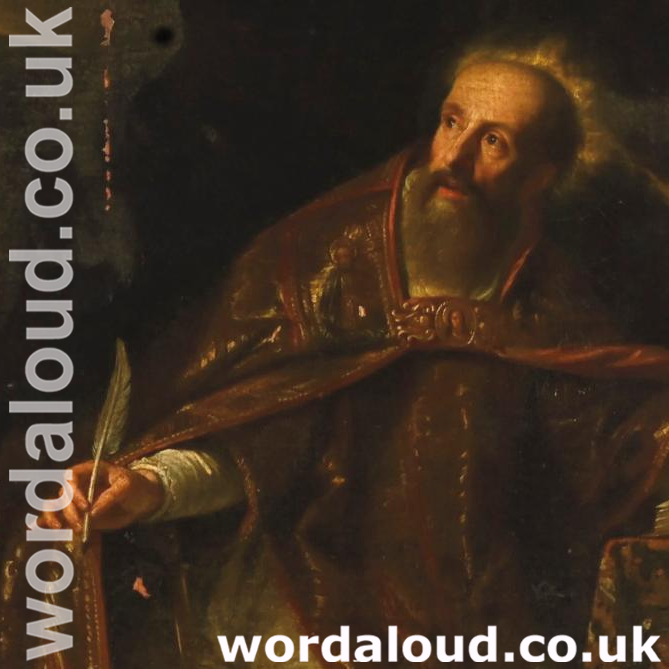
Saint Augustine’s commentary on Psalm 60 focuses on the psalmist’s words: “From the ends of the earth I call to you.” Augustine interprets this as the cry of a person who feels distant from God. He explains that this “distance” is not physical but spiritual — a condition of being separated from God by sin, suffering, or inner turmoil [ … ]
