
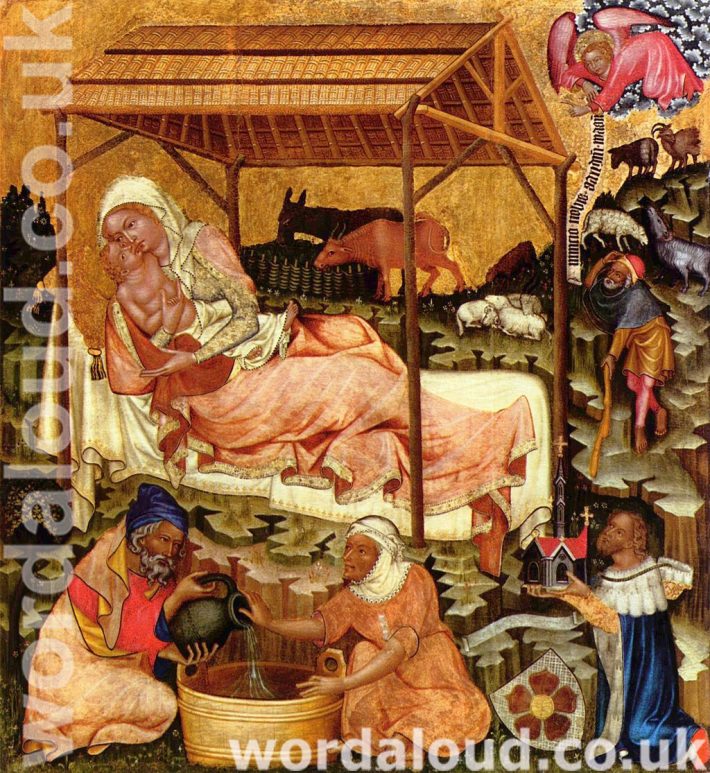
Christian Art | Life Of Jesus Christ | Nativity
Office Of Readings | Week 21, Friday, Ordinary Time | A Reading From The Commentary Of Saint Jerome On The Book Of Joel | Return To Me With All Your Heart
‘Return to me.’
Saint Jerome’s reflection on Joel 2:12–18 draws attention to the biblical theme of repentance, particularly the inward transformation of the heart. Joel’s summons, ‘Return to me with all your heart,’ is not merely a call to external practices such as fasting, mourning, or tearing garments, but to a conversion of the interior self. Jerome insists that the rending of garments, a traditional sign of grief in the ancient world, must be replaced by the rending of the heart. This aligns with prophetic teaching elsewhere in the Old Testament, where God prefers inward change over ritualistic displays (cf. Hosea 6:6; Amos 5:21–24).
Jerome compares the unrepentant heart to a wine skin that bursts unless cut open. This imagery highlights the necessity of repentance as a release of what is hidden or corrupted within, to prevent destruction. The tearing open of the heart makes space for divine mercy to enter.
The central emphasis of the passage is God’s mercy. Jerome interprets Joel’s teaching as a reassurance that no sin is beyond forgiveness. He underscores the biblical witness to God’s patience and readiness to pardon, contrasting divine forbearance with human impatience. God’s threats of punishment, according to Jerome, should be understood not as evidence of cruelty but as warnings designed to lead to repentance. Even when judgment is threatened, the possibility of mercy remains open.
Jerome clarifies that ‘evil’ in this context should be understood as affliction or misfortune, not moral wrongdoing, citing scriptural passages where calamity is attributed to God’s providence (cf. Amos 3:6). Thus, divine warnings of ‘evil’ refer to discipline that can be withdrawn if repentance follows.
The prophet’s phrase, ‘Who knows whether he will not turn and repent and leave behind him a blessing?’ is treated by Jerome with careful nuance. While God’s mercy is abundant, the outcome of repentance cannot be presumed. By framing it as an open possibility rather than a certainty, Joel avoids reducing divine freedom to human calculation. This preserves both human responsibility and God’s sovereignty.
Finally, Jerome notes that reconciliation with God leads to restored worship: once forgiveness has been granted, offerings and sacrifices can be made in sincerity. Repentance, therefore, not only reconciles the sinner to God but restores the community’s relationship with him, enabling authentic worship.

A Reading From The Commentary Of Saint Jerome On The Book Of Joel | Return To Me With All Your Heart
Return to me with all your heart and show a spirit of repentance with fasting, weeping and mourning; so that while you fast now, later you may be satisfied, while you weep now, later you may laugh, while you mourn now, you may some day enjoy consolation. It is customary for those in sorrow or adversity to tear their garments. The gospel records that the high priest did this to exaggerate the charge against our Lord and Savior; and we read that Paul and Barnabas did so when they heard words of blasphemy. I bid you not to tear your garments but rather to rend your hearts which are laden with sin. Like wine skins, unless they have been cut open, they will burst of their own accord. After you have done this, return to the Lord your God, from whom you had been alienated by your sins. Do not despair of his mercy, no matter how great your sins, for great mercy will take away great sins.
For the Lord is gracious and merciful and prefers the conversion of a sinner rather than his death. Patient and generous in his mercy, he does not give in to human impatience but is willing to wait a long time for our repentance. So extraordinary is the Lord’s mercy in the face of evil, that if we do penance for our sins, he regrets his own threat and does not carry out against us the sanctions he had threatened. So by the changing of our attitude, he himself is changed. But in this passage we should interpret ‘evil’ to mean, not the opposite of virtue, but affliction, as we read in another place: Sufficient for the day are its own evils. And, again: If there is evil in the city, God did not create it.
In like manner, given all that we have said above – that God is kind and merciful, patient, generous with his forgiveness, and extraordinary in his mercy toward evil – lest the magnitude of his clemency make us lax and negligent, he adds this word through his prophet: Who knows whether he will not turn and repent and leave behind him a blessing? In other words, he says: ‘I exhort you to repentance, because it is my duty, and I know that God is inexhaustibly merciful, as David says: Have mercy on me, God, according to your great mercy, and in the depths of your compassion, blot out all my iniquities. But since we cannot know the depth of the riches and of the wisdom and knowledge of God, I will temper my statement, expressing a wish rather than taking anything for granted, and I will say: Who knows whether he will not turn and repent?’ Since he says, Who, it must be understood that it is impossible or difficult to know for sure.
To these words the prophet adds: Offerings and libations for the Lord our God. What he is saying to us in other words is that, God having blessed us and forgiven us our sins, we will then be able to offer sacrifice to God.
Christian Prayer With Jesus Christ
Merciful Lord,
you call us to return to you with all our hearts.
Cleanse us from sin,
tear open what is hardened within us,
and fill us with your compassion.
Do not treat us as our deeds deserve,
but pour out your mercy and leave behind a blessing,
that we may offer you true worship
through Jesus Christ our Lord. Amen.
Glossary Of Christian Terms
Joel 2:12–18 – The biblical passage behind Jerome’s commentary, part of the prophet’s call to repentance during a time of crisis.
Rending garments – A traditional Jewish sign of mourning, grief, or outrage, often performed in public (cf. Genesis 37:34; Matthew 26:65).
Rend your hearts – A metaphor for sincere repentance and inner contrition, contrasted with external displays of sorrow.
Wine skins – Containers for wine that, if not properly cut or prepared, could burst under pressure; here symbolising the unrepentant heart.
God’s repentance – A biblical expression describing God’s change of course when people repent, not implying divine fickleness but highlighting mercy (cf. Jonah 3:10).
Evil (malum) – In Jerome’s interpretation, refers to misfortune or affliction, not moral wickedness; a way of describing divine chastisement or testing.
Who knows? – A phrase used in prophetic literature (cf. Jonah 3:9; Joel 2:14) to emphasise humility before the hidden purposes of God.
Offerings and libations – Sacrificial acts in the Temple, restored only once sin has been forgiven, symbolising reconciliation between God and his people.




Since beginning his ministry, Jesus has called his first disciples to follow him. Now it is time to choose, from his disciples, the twelve who are to be called Apostles, that is those who are to be most especially sent to preach, on mission, and to found and to lead the Church. There are key, notable stages as Jesus constitutes his Church – the Apostles will be fully confirmed in their mission on the day of Pentecost. This is one such important stage [ … ]

At the time of Luke’s writing his Gospel, those Christian communities which had largely arisen among the poor were being joined by richer people. This caused some problems, which appear in the advice given in the Letter of James, in the First Letter of Paul to the Corinthians, and in Luke’s Gospel. Saint Paul describes how, when the Christian community comes together to share the Lord’s supper, the rich have brought their own food and have no intention of sharing it. This was at a time when the Eucharist proper was still celebrated as part of a larger meal, an arrangement which did not last many years. St Paul writes [ … ]
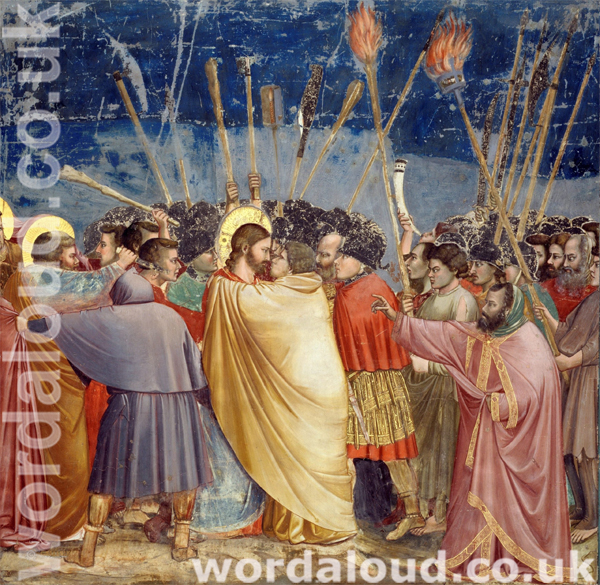
Saint Fulgentius of Ruspe sets out a theology of the Eucharist grounded in the words of Saint Paul: ‘Do this in remembrance of me.’ He presents the Eucharist as the means by which the Church continues to proclaim the death of the Lord until his return. The sacrifice of Christ, offered once for all, is made present in the Church’s act of remembrance. The liturgy is not a repetition but a participation in that one sacrifice [ … ]
