
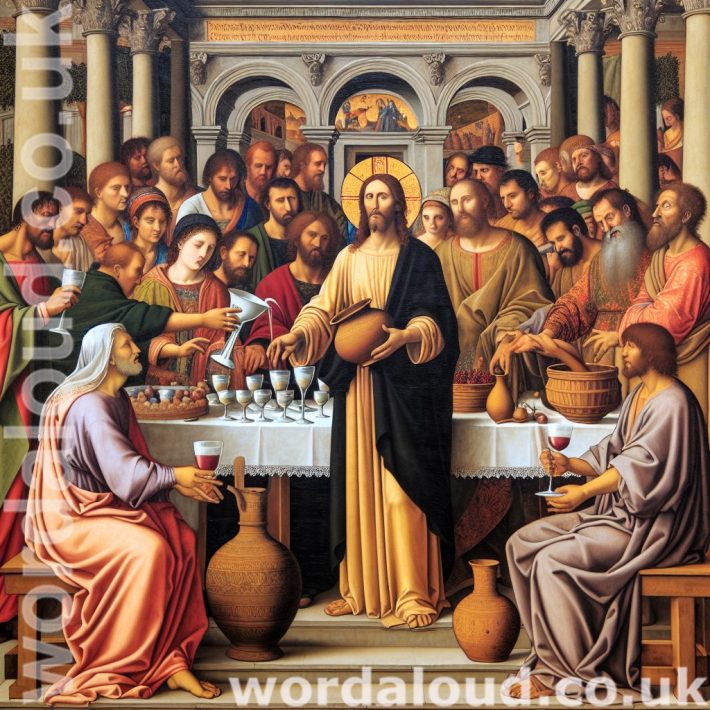
Christian Art | Miracles Of Jesus | Jesus Turns Water Into Wine At The Wedding Of Cana
Office Of Readings | Week 24, Sunday, Ordinary Time | The Beginning Of The Sermon Of Saint Augustine On The Shepherds | We Are Christians And Appointed Leaders
‘We are Christians and appointed leaders.’
Saint Augustine opens his sermon on pastors with a reflection that sets out the responsibilities of Christian leadership within the Church. He begins by affirming that Christ alone is the true Shepherd, the source of salvation and hope. The faithful are his flock, and all pastors serve only in relation to Christ’s own care.
Augustine draws upon the prophetic critique in Ezekiel 34, where God condemns shepherds of Israel who feed themselves instead of tending the flock. These failed shepherds represent leaders who use their office for self-interest rather than for service. By recalling the Apostle Paul’s words that some ‘seek what is theirs and not what is Christ’s’ (Philippians 2:21), Augustine highlights how misplaced priorities can corrupt pastoral ministry.
Augustine then reflects on his own role, distinguishing between two dimensions of his identity: first, he is a Christian, which concerns his own salvation; second, he is a leader, which concerns his accountability for the flock entrusted to him. His Christian faith benefits him personally, but his pastoral office exists for the benefit of others. This distinction allows Augustine to show both the dignity and the burden of ecclesial leadership: a pastor must give account not only for his own conduct, but also for the stewardship of his people.
Augustine’s remarks suggest that pastoral ministry is inseparable from humility. A bishop is not set apart from the Church, but remains a member of it, sharing in the same hope of salvation as every other Christian. At the same time, he bears an added responsibility that demands vigilance, integrity, and self-denial. Pastoral office is understood not a privilege of power, but a ministry of service under the judgement of Christ the Good Shepherd.

The Beginning Of The Sermon Of Saint Augustine On The Shepherds | We Are Christians And Appointed Leaders
You have often learned that all our hope is in Christ and that he is our true glory and our salvation. You are members of the flock of the Good Shepherd, who watches over Israel and nourishes his people. Yet there are shepherds who want to have the title of shepherd without wanting to fulfil a pastor’s duties; let us then recall what God says to his shepherds through the prophet. You must listen attentively; I must listen with fear and trembling.
The word of the Lord came to me and said: Son of man, prophesy against the shepherds of Israel and speak to the shepherds of Israel. We just heard this reading a moment ago, my brothers, and I have decided to speak to you on this passage. The Lord will help me to speak the truth if I do not speak on my own authority. For if I speak on my own authority, I will be a shepherd nourishing myself and not the sheep. However, if my words are the Lord’s, then he is nourishing you no matter who speaks. Thus says the Lord God: Shepherds of Israel, who have been nourishing only themselves! Should not the shepherds nourish the sheep? In other words, true shepherds take care of their sheep, not themselves. This is the principle reason why God condemns those shepherds: they took care of themselves rather than their sheep. Who are they who nourish themselves? They are the shepherds the Apostle described when he said: They all seek what is theirs and not what is Christ’s.
I must distinguish carefully between two aspects of the role the Lord has given me, a role that demands a rigorous accountability, a role based on the Lord’s greatness rather than on my own merit. The first aspect is that I am a Christian; the second, that I am a leader. I am a Christian for my own sake, whereas I am a leader for your sake; the fact that I am a Christian is to my own advantage, but I am a leader for your advantage.
Many persons come to God as Christians but not as leaders. Perhaps they travel by an easier road and are less hindered since they bear a lighter burden. In addition to the fact that I am a Christian and must give God an account of my life, I as a leader must give him an account of my stewardship as well.
Christian Prayer With Jesus
O Christ, the Good Shepherd,
you watch over your flock with mercy and love.
Grant to all who lead your Church
the grace to serve selflessly,
seeking not their own advantage
but the good of those entrusted to them.
Strengthen us all as members of your flock
to follow you faithfully,
so that together we may enter the pastures of eternal life,
where you live and reign with the Father and the Holy Spirit,
God for ever and ever. Amen.
Glossary Of Christian Terms
Good Shepherd – A title for Christ drawn from John 10, where Jesus describes himself as the shepherd who lays down his life for the sheep.
Shepherds of Israel – A biblical phrase (Ezekiel 34) referring to leaders who were entrusted with the care of God’s people but failed in their duties.
Pastor – From the Latin pastor (‘shepherd’), a term for one who tends the Christian community, especially bishops and priests.
Stewardship – The responsibility of leaders to care for what is entrusted to them by God, especially the spiritual welfare of the faithful.
Ezekiel 34 – A prophetic passage condemning negligent shepherds and promising that God himself will shepherd his people.
Philippians 2:21 – A verse where Paul laments that ‘all seek their own, not the things which are Christ’s,’ often applied to unfaithful ministers.
Accountability – The obligation to give an account before God, both for one’s personal life and, for leaders, for the care of the community.



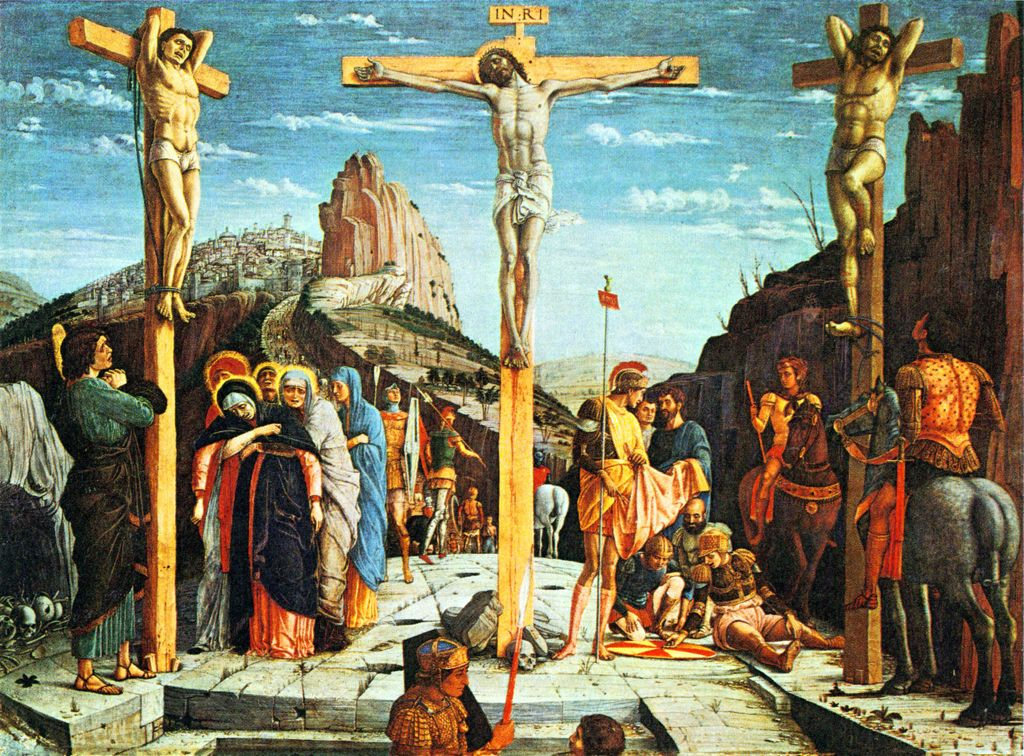
Theodoret presents the suffering and death of Jesus as a deliberate act of obedience, not a tragic accident. Jesus is shown moving purposefully towards his passion, fully aware of what the Scriptures foretold. He warns his disciples in advance, rebukes Peter for resisting the idea of his suffering, and openly identifies himself to those who come to arrest him. Unlike earlier occasions when Jesus avoided capture, this time Jesus refuses to hide or defend himself [ … ]
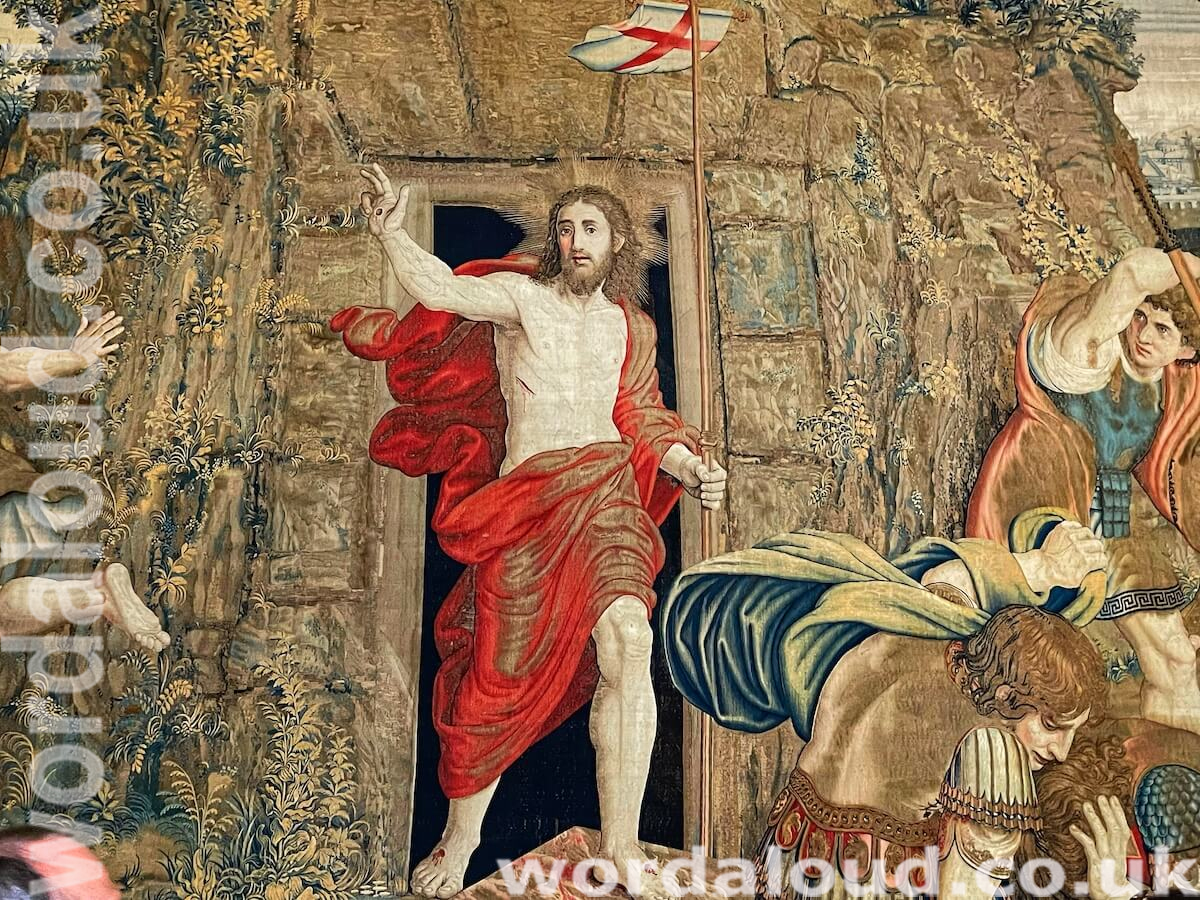
This reading reflects the vision of the Second Vatican Council concerning the Church’s relationship with the modern world. It presents human history as the meeting place of divine purpose and human freedom. The ‘earthly’ and ‘heavenly’ cities – terms drawn from Augustine – are not separate realities but interwoven. Their relationship can only be discerned through faith, because human progress remains marked by sin and imperfection until the final revelation of God’s glory [ … ]
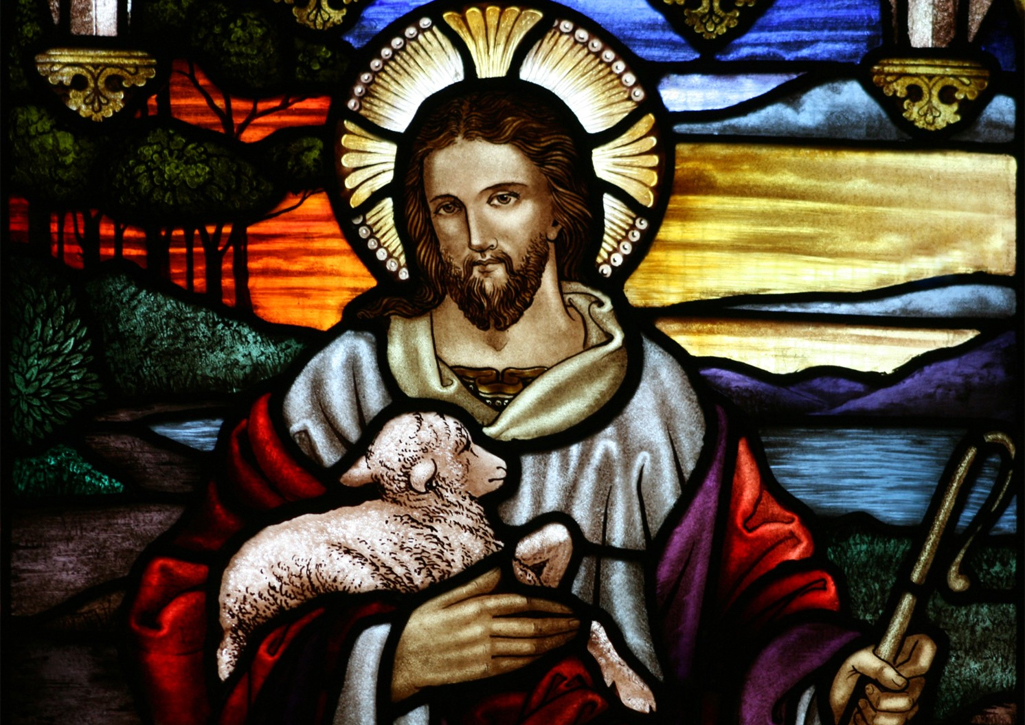
Christ offers himself to the people as the good shepherd, recalling a favourite theme of Old Testament prophecy. Priests and kings are so described, and indeed God is spoken of as a shepherd, as we hear, for example, in Psalm 23: THE Lord is my shepherd; I shall not want. 2 He maketh me to lie down in green pastures: he leadeth me beside the still waters [ … ]
