
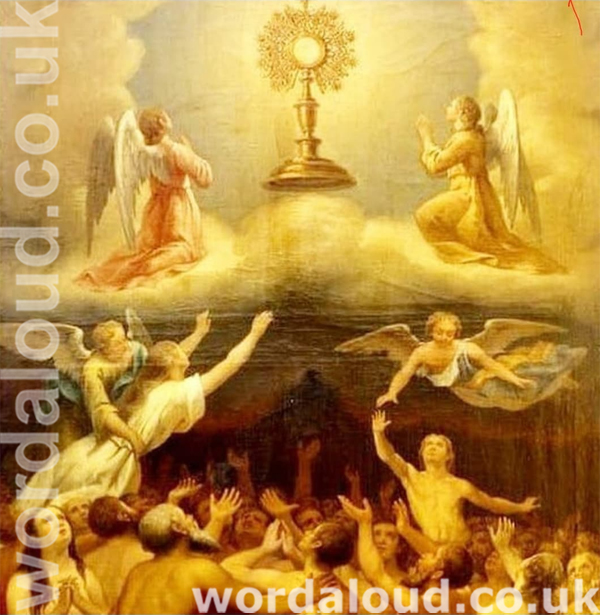
Christian Art | Prayer For The Dead | Purgatory | All Souls
Office Of Readings | Week 31, Friday, Ordinary Time | A Reading From The Addresses Of Saint Gregory Nazianzen | It Is A Holy Thought To Pray For The Dead
‘It is a holy thought to pray for the dead.’
Saint Gregory Nazianzen reflects on the mystery of human existence and the continuity between life, death, and resurrection. His meditation joins theological insight with pastoral realism: to live as a creature of God is to occupy a space between mortality and immortality, frailty and glory.
Gregory begins with astonishment at the human condition: ‘What is man that you are mindful of him?’ Humanity, he says, is both ‘small and great’. both ‘lowly and exalted’. This tension defines the human state as both finite and yet destined for participation in divine life. By becoming man, Christ transforms what is mortal, enabling human beings to share in what is divine. Gregory summarises the purpose of the Incarnation as the restoration of the divine image, the re-creation of humanity in Christ. Through union with him, the distinctions that divide humanity — male and female, slave and free, ethnic and cultural differences — lose their ultimate significance. The believer bears instead the ‘seal of God’, a mark of belonging that transcends social and physical boundaries.
The unity Gregory envisions is not merely symbolic but ontological: believers are to be ‘moulded by him’ and conformed to his likeness. The transformation is moral, spiritual, and cosmic, achieved through grace and realised in the body of Christ. The passage anticipates later theological discussions of deification (theosis), in which human nature participates in divine life without ceasing to be human.
Gregory then turns to the practice of perseverance and gratitude. The Christian life involves endurance in hope and acceptance of suffering as part of divine providence. Trials are not random but serve the work of salvation. Within this framework, the exhortation to pray for the dead takes its place. To commend to God those who have gone before is to affirm that life and death are held within one divine economy. Death does not erase communion; it re-defines it in relation to God’s timeless care.
The closing prayer gathers the meditation into direct address. Gregory speaks to God as creator and ruler of all, the one who governs life and death with wisdom and purpose. He asks for the peaceful reception of the departed and for his own readiness at the appointed time. The prayer distinguishes between fear of God and fear of death: the former is the reverent awareness of divine majesty; the latter the anxiety of those still attached to earthly life. The goal is to depart ‘not troubled’ but with confidence toward ‘that everlasting and blessed life which is Christ Jesus our Lord’.
Gregory’s sermon thus connects anthropology, Christology, and eschatology. Humanity’s dignity arises from divine creation; its hope from Christ’s resurrection; its continuity from the communion of saints, in which prayer unites the living and the dead within the one body of Christ.
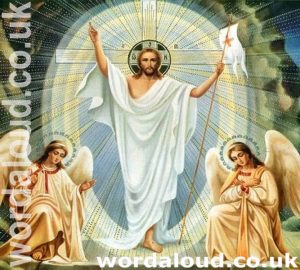
A Reading From The Addresses Of Saint Gregory Nazianzen | It Is A Holy Thought To Pray For The Dead
What is man that you are mindful of him? What is this new mystery surrounding me? I am both small and great, both lowly and exalted, mortal and immortal, earthly and heavenly. I am to be buried with Christ and to rise again with him, to become a coheir with him, a son of God, and indeed God himself.
This is what the great mystery means for us; this is why God became man and became poor for our sake: it was to raise up our flesh, to recover the divine image, to re-create mankind, so that all of us might become one in Christ who perfectly became in us everything that he is himself. So we are no longer to be male and female, barbarian and Scythian, slave and free – distinctions deriving from the flesh – but are to bear within ourselves only the seal of God, by whom and for whom we were created. We are to be so formed and molded by him that we are recognized as belonging to his one family.
If only we could be what we hope to be, by the great kindness of our generous God! He asks so little and gives so much, in this life and in the next, to those who love him sincerely. In a spirit of hope and out of love for him, let us then bear and endure all things and give thanks for everything that befalls us, since even reason can often recognize these things as weapons to win salvation. And meanwhile let us comment to God our own souls and the souls of those who, being more ready for it, have reached the place of rest before us although they walked the same road as we do.
Lord and Creator of all, and especially of your creature man, you are the God and Father and ruler of your children; you are the Lord of life and death, you are the guardian and benefactor of our souls. You fashion and transform all things in their due season through your creative Word, as you know to be best in your deep wisdom and providence. Receive now those who have gone ahead of us in our journey from this life.
And receive us too at the proper time, when you have guided us in our bodily life as long as may be for our profit. Receive us prepared indeed by fear of you, but not troubled, not shrinking back on that day of death or uprooted by force like those who are lovers of the world and the flesh. Instead, may we set out eagerly for that everlasting and blessed life which is Christ Jesus our Lord. To him be glory for ever and ever. Amen.
Christian Prayer With Jesus
Lord of life and death,
source of all being and end of all our ways,
receive into your peace those who have gone before us in faith.
Grant them rest in the light of your presence,
where all divisions are healed and all longing fulfilled.
Prepare us also for the hour of our own departure;
make us ready, not fearful,
trusting in your mercy and upheld by your promise.
May we, with all your saints,
enter the joy that has no end,
through Christ Jesus our Lord,
who lives and reigns with you and the Holy Spirit,
one God, now and for ever.
Amen.
Glossary Of Christian Terms
Incarnation: The act by which the Son of God took human nature in Jesus Christ for the salvation of humankind.
Deification (Theosis): The participation of human beings in the divine life through grace; a central theme in Eastern Christian theology.
Providence: The divine governance of the world, in which all things are directed toward God’s purpose.
Communion of Saints: The spiritual solidarity between the faithful on earth, the souls in purgation, and the blessed in heaven.
Eschatology: The study or doctrine of the last things — death, judgment, resurrection, and the life to come.
Anthropology (Theological): The study of human nature in relation to God, creation, and redemption.
Seal of God: A biblical and theological image denoting belonging to God and participation in his covenant.
Fear of God: Reverence for the divine majesty that leads to humility and obedience, distinct from servile fear.
Resurrection: The rising of Christ from the dead and, by participation, the future rising of all the faithful.
Intercession for the Dead: The practice of praying for those who have died, expressing belief in ongoing communion and divine mercy.




Christian Art | George Herbert | The Temple | The Church | The Sinner George Herbert | The Temple | The Church | The Sinner Lord, how I am all ague, when I seek What I have treasur’d in my memorie! Since, if my soul make even with the week, Each seventh note by right is due to thee. I finde there quarries of pil’d vanities, But shreds of holinesse, that dare not venture To shew their face, since crosse to thy decrees. There the circumference earth is, heav’n the centre. In so much dregs the quintessence is small: The spirit and good extract of my heart Comes to about the many hundredth part. Yet Lord restore thine image, heare my call: And though my hard heart scarce to thee can grone, Remember that thou once didst write in stone. George Herbert | The Temple | The Church | The Sinner The poet reflects on his spiritual state, describing a struggle with weakness, sin, and the desire for divine alignment. The poem opens with the poet addressing God, expressing discomfort, likened to an ‘ague’ (fever or chill), when he searches his memory for spiritual treasures. This ‘ague’ suggests both a physical and spiritual unease, revealing the tension the poet feels in self-examination. The second line conveys a sense of regret as the poet searches for ‘treasur’d’ holiness in his memory. He recognizes that, although he might strive to keep his soul ‘even with the week’, dedicating every seventh day to God, he falls short. This phrase reflects the expectation to honour the Sabbath, but the poet’s efforts are met with disappointment in their perceived spiritual emptiness. The poet goes on to examine his inner self, describing ‘quarries of pil’d vanities’ that dominate his mind. Here, ‘quarries’ implies an overwhelming quantity of earthly or superficial concerns, while ‘vanities’ suggests that these concerns are meaningless in the context of divine expectation. In contrast, he finds only ‘shreds of holinesse’, fragmented attempts at righteousness, which he hesitates to bring forward as these elements are ‘crosse to thy decrees’, or in opposition to God’s laws. This imagery underscores the poet’s internal conflict and recognition of shortcomings. Further, the poet contrasts earth and heaven, saying that ‘the circumference earth is, heav’n the centre.’ This phrase symbolizes the poet’s focus on worldly concerns (the circumference) that orbit around a neglected spiritual core (the heavenly center). The poet reflects that his life is filled with ‘dregs’, the lesser, unrefined aspects of his being, while ‘quintessence’, or the purest part of himself, is scarce. This ‘quintessence’ is described as the ‘spirit and good extract’ of the poet’s heart, amounting to a ‘many hundredth part’ — a small fraction of life’s essence. The poet realizes that, despite attempts to cultivate holiness, his internal state largely lacks spiritual substance. The final lines shift to a plea for restoration. The poet calls on God to ‘restore thine image’, asking for renewal and transformation. This restoration request implies a yearning to reflect God’s nature more fully, as humanity is believed to be made in God’s image. The poet acknowledges that his heart ‘scarce… can grone’ to God, reflecting the difficulty he feels in truly connecting with or petitioning the divine. The poem ends with reference to the biblical account of the Ten Commandments, when God ‘didst write in stone’. This allusion serves as both a reminder of God’s past willingness to communicate directly and a plea for a similar intervention to etch divine law into the poet’s heart. The poem examines themes of introspection, human fallibility, and a longing for divine transformation. The poet’s self-examination reveals struggle to balance earthly concerns with spiritual commitments, culminating in a plea for God’s direct action to restore spiritual integrity.
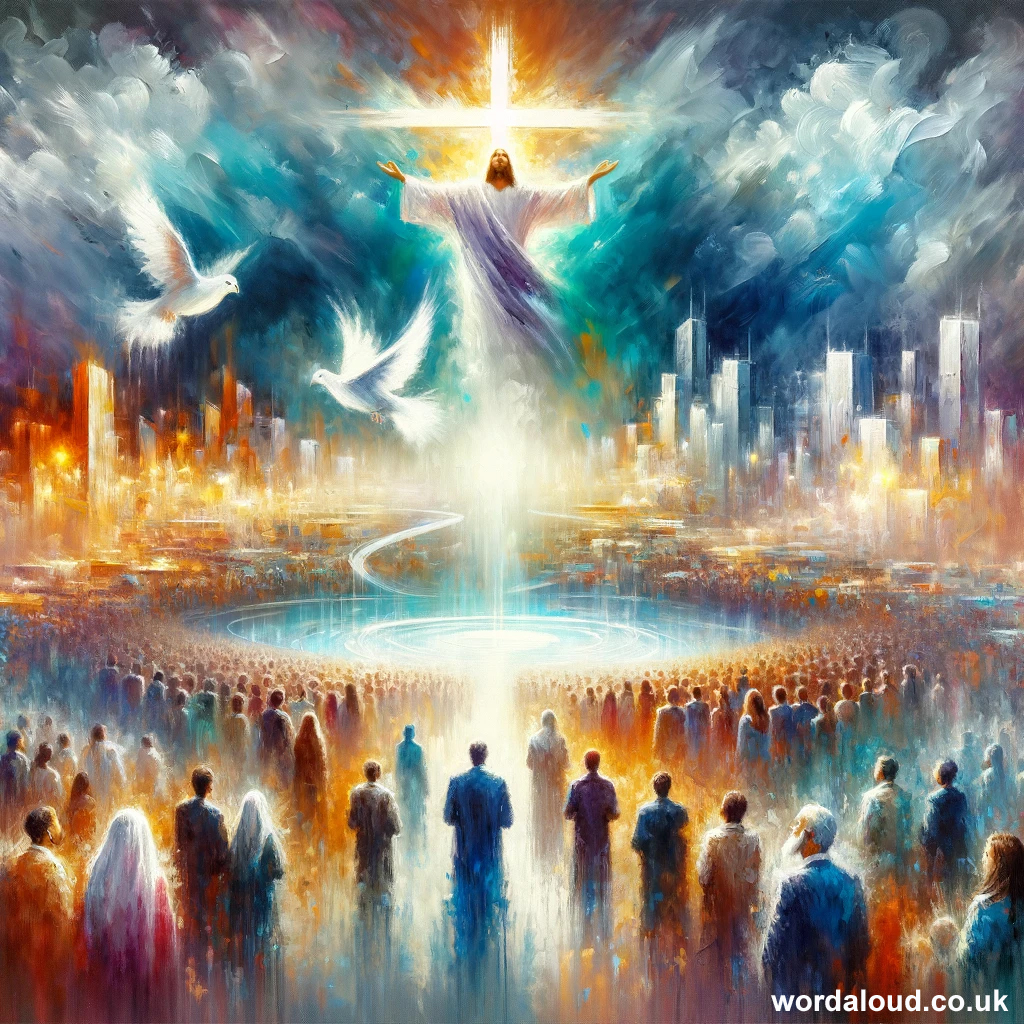
The thought: Jesus 2024 is an invitation to remain vigilant and hopeful. It encourages believers to live each day with intentionality and joy, actively preparing for Christ’s return. This thought is not mere theological exercise; rather it is call to embody teachings of Jesus in our daily lives, making each action a step closer to welcoming Jesus back. This vision for a new era in Christian thought and practice invites Christians to reassess our understanding of Biblical prophecies in the light of modern developments and societal changes. The prayer is to nurture vibrant, living faith that actively anticipates and prepares for the Parousia, transforming our individual lives and our communities in the process [ … ]

Jesus once more contrasts the gift of his own body with the manna given to the Israelites to eat during the Exodus, which bread of heaven they ate and yet they still went on to die. Christ is the living bread. He is the bread that has come from heaven. Christ’s origin in heaven is, as John tells us, what sets him apart and enables our redemption. Jesus explains: just as he lives because of the Father, so we live through Christ. We are called to share in his supper and so to have life eternal [ … ]
