
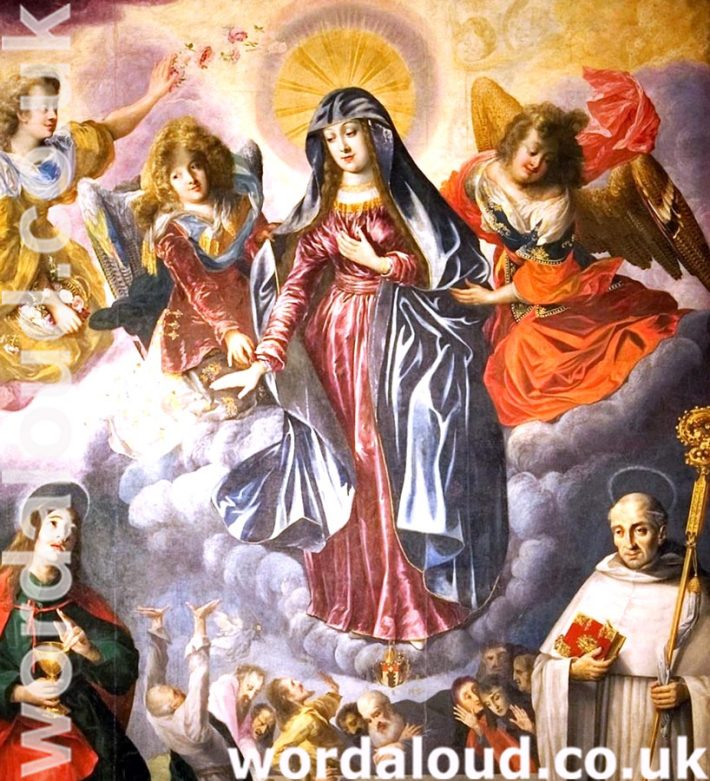
Christian Art | Mary, Queen Of Heaven | Assumption
Office Of Readings | Week 33, Thursday, Ordinary Time | A Reading From The Commentary Of Saint Gregory Of Nyssa On The Song Of Songs | A Prayer To The Good Shepherd
‘A prayer to the good Shepherd.’
Saint Gregory of Nyssa reflects on the soul’s desire for Christ by placing the words of the Song of Songs on the lips of the believer. The soul addresses Christ as the Good Shepherd, the one who carries the whole of human nature on his shoulders. By doing so, Gregory emphasises both Christ’s universal work of salvation and the personal relationship he forms with each believer. The soul asks to be shown ‘the place of peace’ and ‘the good grass’, that is, the place where Christ nourishes, protects, and restores his people.
Gregory’s interpretation centres on the simple petition: Show me where you pasture your flock. The soul seeks Christ not out of curiosity but out of need—awareness that without his guidance, she cannot grow in holiness or attain eternal life. The ‘pasture’ is Christ himself, especially the grace that flows from his saving Passion. Gregory directly connects this nourishment with the water that flowed from Christ’s pierced side, the water that becomes in believers ‘a spring welling up to eternal life’. Salvation is not abstract; it is received through communion with Christ’s life-giving gifts.
The image of ‘noonday rest’ expresses the stability and clarity granted to those who live in God’s light. Noon has no shadow; it symbolises a state free from the darkness or confusion of sin. To rest in this light, Gregory says, one must be a ‘child of the day’, someone who has turned away from the beginnings and endings of evil—its first movements and its final outcomes. The noonday rest is not yet the final vision of God, but it is a share in his peace given to those who remain close to Christ.
The soul asks Christ to ‘show me how I should sleep and how I should graze’, meaning: teach me how to rest securely in you and how to live daily on what you provide. The concern is practical and spiritual: the soul fears wandering away through ignorance, losing the beauty that God’s grace has bestowed. Gregory thus highlights the need for continual instruction and continual dependence on Christ.
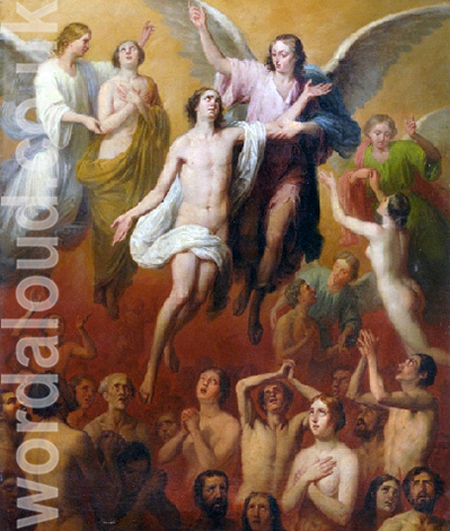
A Reading From The Commentary Of Saint Gregory Of Nyssa On The Song Of Songs | A Prayer To The Good Shepherd
Where are you pasturing your flock, O good Shepherd, who carry the whole flock on your shoulders? (for the whole of human nature is one sheep and you have lifted it onto your shoulders). Show me the place of peace, lead me to the good grass that will nourish me, call me by name so that I, your sheep, hear your voice, and by your speech give me eternal life. Answer me, you whom my soul loves.
I give you the name ‘you whom my soul loves’ because your name is above every name and above all understanding and there is no rational nature that can utter it or comprehend it. Therefore your name, by which your goodness is known, is simply the love my soul has for you. How could I not love you, when you loved me so much, even though I was black, that you laid down your life for the sheep of your flock? A greater love cannot be imagined, than exchanging your life for my salvation.
Show me then (my soul says) where you pasture your flock, so that I can find that saving pasture too, and fill myself with the food of heaven without which no-one can come to eternal life, and run to the spring and fill myself with the drink of God. You give it, as from a spring, to those who thirst – water pouring from your side cut open by the lance, water that, to whoever drinks it, is a spring of water welling up to eternal life.
If you lead me to pasture here, you will make me lie down at noon, sleeping at peace and taking my rest in light unstained by any shade. For the noon has no shade and the sun stands far above the mountain peaks. You bring your flock to lie in this light when you bring your children to rest with you in your bed. But no-one can be judged worthy of this noonday rest who is not a child of light and a child of the day. Whoever has separated himself equally from the shadows of evening and morning, from where evil begins and evil ends, at noon he will lie down and the sun of righteousness will shine on him.
Show me, then (my soul says), how I should sleep and how I should graze, and where the path is to my noonday rest. Do not let me fall away from your flock because of ignorance, and find myself one of a flock of sheep that are not yours.
Thus my soul spoke, when she was anxious about the beauty that God’s care had given her and wanted to know how she could keep this good fortune forever.
Christian Prayer With Jesus Christ
Lord Jesus Christ,
Good Shepherd who carries us in your mercy,
draw our hearts to the pasture where you give life.
Teach us to hear your voice,
to rest in the light of your presence,
and to remain close to you in all our ways.
Keep us from the shadows of sin
and preserve in us the grace you have given.
Lead us at last to the fullness of your peace,
you who live and reign for ever and ever.
Amen.
Glossary Of Christian Terms
Good Shepherd – A title for Christ, especially from John 10, emphasising his care, guidance, and sacrificial love for his people.
Pasture – Symbolically, the spiritual nourishment Christ provides: his Word, his grace, his sacraments, and his presence.
Eternal Life – The definitive life with God, beginning now through grace and fulfilled fully in the age to come.
Grace – God’s free and undeserved gift of his life and help, enabling us to believe, act rightly, and grow in holiness.
Noonday Rest – In Gregory’s imagery, the peace and clarity of living in God’s light, without the shadows of sin or ignorance.
Child of Light / Child of the Day – A biblical expression (cf. 1 Thess 5:5) for those who belong to Christ and live according to his truth.
Water from Christ’s Side – Refers to John 19:34; symbolises Baptism, the sacraments, and the life-giving grace that flows from Jesus Christ’s Passion.
Light of God – God’s truth and presence, which illumines the believer’s life and dispels spiritual darkness.
Song of Songs – A book of Scripture often interpreted spiritually as the dialogue of love between Christ and the soul or between Christ and the Church.
The Flock – The people of God, shepherded and saved by Jesus Christ.



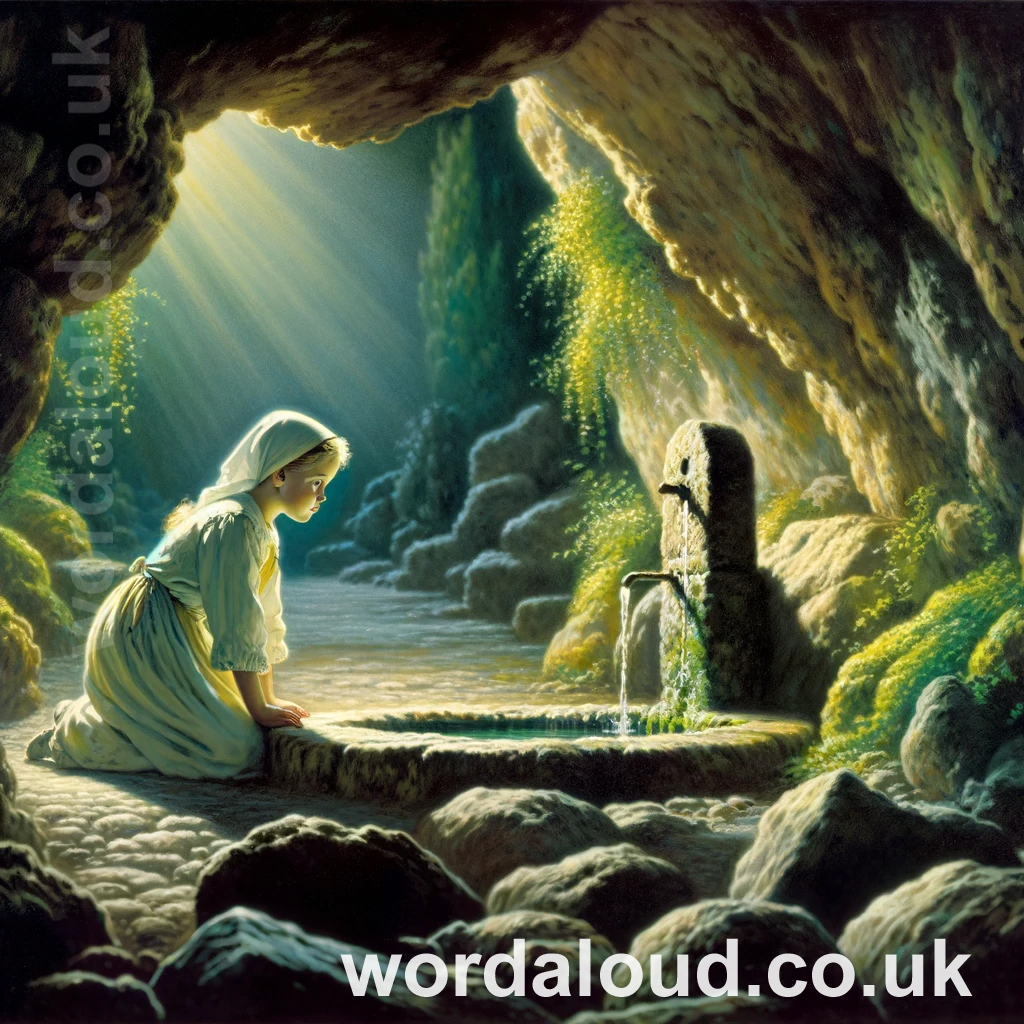
John 4:13-14 (KJV) ‘Jesus answered and said unto her, Whosoever drinketh of this water shall thirst again: But whosoever drinketh of the water that I shall give him shall never thirst; but the water that I shall give him shall be in him a well of water springing up into everlasting life.’ Introduction to the Life of Saint Bernadette Saint Bernadette Soubirous, a humble peasant girl from Lourdes, France, lived her life of faith, humility, and divine grace. Born on January 7, 1844, in the small town of Lourdes, Bernadette was the eldest of nine children in a poor and struggling family. Her father, François Soubirous, was a miller, and her mother, Louise, a laundress. The family lived in a former prison cell known as the Cachot, a damp and cramped space, according to their dire financial situation. Despite their poverty, the Soubirous family was deeply rooted in their Christian faith, a foundation that would profoundly shape Bernadette’s life and spiritual journey. Bernadette’s early years were marked by significant health challenges. She suffered from asthma and other respiratory ailments, which often left her weak and unable to attend school regularly. This lack of formal education meant that Bernadette struggled with reading and writing, and her understanding of Christian doctrine was limited. Nevertheless, she possessed a remarkable simplicity and purity of heart, qualities that would make her an ideal recipient of divine revelations. Bernadette’s life changed irrevocably on February 11, 1858, when she experienced the first of eighteen apparitions of the Blessed Virgin Mary at the grotto of Massabielle. On that cold winter day, Bernadette, her sister Toinette, and a friend were gathering firewood near the grotto when she heard a rustling sound and saw a beautiful lady dressed in white with a blue sash, holding a rosary. The lady, who later identified herself as the Immaculate Conception, appeared to Bernadette over the course of several months, delivering messages of penance, prayer, and the need for a chapel to be built at the site. Despite initial skepticism from her family and the local authorities, Bernadette remained steadfast in her account of the apparitions, enduring intense scrutiny and even ridicule. The apparitions drew enormous attention. Soon, people from all over France and beyond began to visit Lourdes, hoping to witness a miracle. One of the most significant messages conveyed by the Virgin Mary to Bernadette was the instruction to dig in the ground near the grotto, which led to the discovery of a spring. This spring, believed to have healing properties, became the focal point of the pilgrimage to Lourdes. Many miraculous healings have been attributed to the waters of Lourdes, reinforcing the belief in Bernadette’s visions and the sanctity of the site. As the apparitions concluded, Bernadette’s life took a different turn. In 1866, she joined the Sisters of Charity in Nevers, taking the name Sister Marie-Bernard. Her time in the convent was marked by continued poor health and humility, as she carried out menial tasks and lived a life of quiet service. Despite her physical suffering, Bernadette remained devout and accepted her hardships with grace, often repeating the phrase, “I am happier here in my little corner of the convent.” Her unwavering faith and dedication to her religious duties exemplified the depth of her spiritual commitment. Bernadette Soubirous passed away on April 16, 1879, at the age of 35, after a prolonged battle with tuberculosis. Her legacy, however, endured far beyond her earthly life. In 1933, she was canonized as a saint by Pope Pius XI, recognized for her humility, faith, and the miraculous events associated with her life. Today, millions of pilgrims flock to Lourdes each year, seeking spiritual renewal and physical healing at the site of her visions. Saint Bernadette’s life continues to inspire countless individuals around the world, reminding us of the power of faith, the virtue of humility, and the enduring presence of divine grace in our lives. To Visit Lourdes Visiting Lourdes, in the picturesque foothills of the Pyrenees in southwestern France, is an experience that transcends the physical journey, drawing pilgrims into a profound spiritual adventure. The small town, known for the Marian apparitions witnessed by Saint Bernadette Soubirous in 1858, has become one of the world’s most revered pilgrimage sites. As we approach the Sanctuary of Our Lady of Lourdes, the atmosphere is imbued with a palpable sense of reverence and anticipation. The grand basilicas, the tranquil Grotto of Massabielle and the gently flowing waters of the miraculous spring together create a sacred environment that invites reflection, prayer, and a deep connection with the divine. The focal point of any visit to Lourdes is the Grotto, where Bernadette experienced the apparitions of the Blessed Virgin Mary. Here, pilgrims can touch the rock face, light candles, and drink or bathe in the spring’s water, believed to possess healing properties. The profound silence and sense of sacredness at the Grotto allow visitors to contemplate their faith, seek solace and find spiritual renewal. The Rosary Basilica, with its mosaics, and the Basilica of the Immaculate Conception, perched above the Grotto, offer spaces for communal worship and personal meditation. The nightly candlelight processions, where pilgrims from around the globe unite in prayer and song, highlight the universal bond of faith and hope that Lourdes represents. Beyond its physical beauty and historical significance, visiting Lourdes offers a deeply personal and transformative experience. Pilgrims often arrive burdened with ailments, grief, or spiritual crises, seeking comfort and miracles. The stories of healing and faith that emerge from Lourdes are testimonies to the enduring power of belief and the intercession of the Blessed Virgin Mary. The communal aspect of the pilgrimage—sharing meals, prayers, and stories with fellow believers—fosters a sense of solidarity and mutual support. For many, the visit to Lourdes is a journey of healing, not only of the body but also of the soul, providing a renewed sense of purpose, peace, and spiritual clarity that lingers long after returning home. Prayer With Saint Bernadette Prayer for Intercession Dear […]
Psalm 41 expresses blessings, pain of betrayal, and the reassurance of divine mercy. This psalm serves as both a heartfelt cry for help and a declaration of trust in the Lord’s sustaining grace [ … ]
Psalm 97 commences with a declarative burst: ‘The Lord reigneth; let the earth rejoice; let the multitude of isles be glad thereof.’ The proclamation sets the tone for universal celebration, urging the earth and its distant isles to exult in response to the Lord’s sovereign rule. The very essence of the psalm lies in the rejoicing prompted by recognition of the Lord’s reign—a theme that resonates through each verse [ … ]
