
Loading...
Poems With Jesus | Christian Faith In Poetry

Gerard Manley Hopkins| The Windhover | Christian Poems

Gerard Manley Hopkins | The Windhover | Christian Poem | Kestrel

Christian Art | Gerard Manley Hopkins | The Windhover

Gerard Manley Hopkins | The Windhover

I caught this morning morning’s minion, king-
dom of daylight’s dauphin, dapple-dawn-drawn Falcon, in his riding
Of the rolling level underneath him steady air, and striding
High there, how he rung upon the rein of a wimpling wing
In his ecstasy! then off, off forth on swing,
As a skate’s heel sweeps smooth on a bow-bend: the hurl and gliding
Rebuffed the big wind. My heart in hiding
Stirred for a bird, – the achieve of, the mastery of the thing!

Brute beauty and valour and act, oh, air, pride, plume, here
Buckle! AND the fire that breaks from thee then, a billion
Times told lovelier, more dangerous, O my chevalier!

No wonder of it: shéer plód makes plough down sillion
Shine, and blue-bleak embers, ah my dear,
Fall, gall themselves, and gash gold-vermilion.

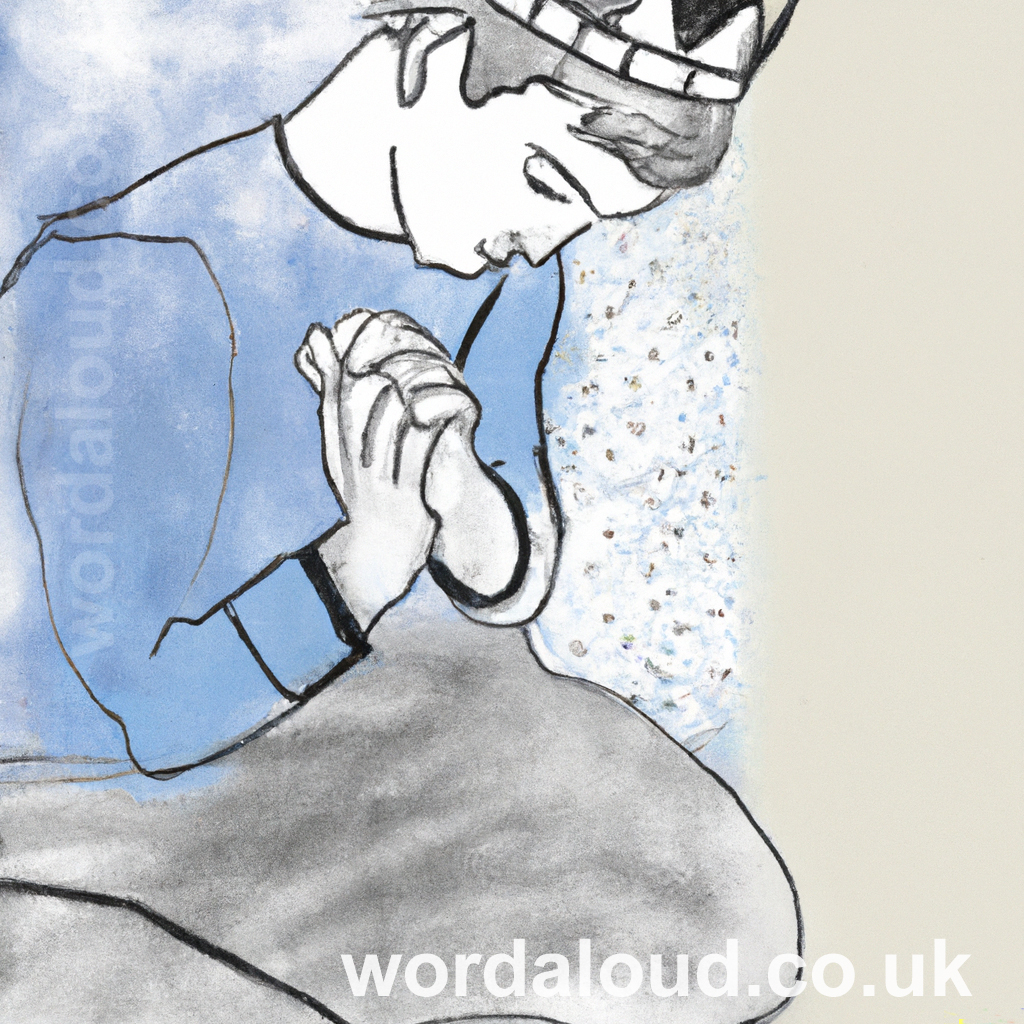
An angel boy prays in the temple - Christian art

Gerard Manley Hopkins | The Windhover

The Windhover by Gerard Manley Hopkins is a richly layered poem exploring the beauty of a kestrel in flight, while presenting a complex meditation on spiritual revelation, self-sacrifice, and divine glory. Hopkins dedicates the poem ‘To Christ our Lord’, indicating that the bird’s physical mastery mirrors the divine majesty of Christ.

The poem opens with an exclamation of awe as Hopkins describes seeing the kestrel in its early morning flight: ‘I caught this morning morning’s minion, kingdom of daylight’s dauphin, dapple-dawn-drawn Falcon, in his riding.’ The bird is both a servant of the morning (‘minion’) and a princely figure (‘dauphin’), reflecting both humility and nobility. The repeated ‘morning’ emphasizes both the freshness of the sight and spiritual renewal. This imagery captures the bird’s effortless command of the air, emphasizing both grace and control.

The kestrel’s mastery is described as it ‘rung upon the rein of a wimpling wing’. The word ‘rung’ conveys the idea of the bird circling or ringing in the air, while ‘rein’ suggests restraint and control, as if the bird is deliberately holding back its power. The alliteration and the rhythmic complexity mimic the bird’s fluid motion, while ‘wimpling’ adds a sense of delicate movement. Hopkins’s language fuses sound and meaning, allowing the reader to feel the energy and tension of the kestrel’s motion.

The bird’s movement shifts suddenly in the next lines: ‘then off, off forth on swing, as a skate’s heel sweeps smooth on a bow-bend.’ This describes a sudden, powerful descent. Comparison to ice-skating reflects both elegance and force, emphasizing the controlled strength of the bird. Herbert’s emotional response crescendos as he declares: ‘My heart in hiding stirred for a bird, – the achieve of, the mastery of the thing!’ The phrase ‘my heart in hiding’ suggests an awakening, a spiritual stirring triggered by the kestrel’s flight. The bird’s physical mastery becomes a metaphor for spiritual transcendence, drawing the speaker into awe.

In the sestet, the focus shifts from the bird’s external beauty to a deeper, hidden glory. ‘Brute beauty and valour and act, oh, air, pride, plume, here buckle!’ The triad of ‘beauty, valour, act’ captures the kestrel’s qualities but also suggests spiritual ideals. The word ‘buckle’ here implies both compression and submission, hinting at the paradox of strength through surrender. This prepares the reader for the poem’s spiritual climax.

The poem transitions into a meditation on self-sacrifice: ‘And the fire that breaks from thee then, a billion times told lovelier, more dangerous, O my chevalier!’ The ‘fire’ suggests a burst of divine energy or spiritual revelation, while ‘chevalier’ (knight) reinforces the Christ figure. This moment emphasizes how true glory is revealed through the yielding of strength, as seen in Christ’s sacrifice.

The final tercet deepens this theme with images of transformation through suffering: ‘No wonder of it: sheer plod makes plough down sillion shine.’ The hard work of ploughing (‘sheer plod’) results in the sillion (the turned earth) gleaming, a metaphor for how effort and suffering can reveal beauty. Similarly, ‘blue-bleak embers’ may appear lifeless but when broken open, they ‘gash gold-vermilion’, revealing hidden fire. The kestrel’s controlled energy mirrors this concept of spiritual strength revealed through apparent weakness.

Hopkins’s use of sprung rhythm, alliteration, and such dense imagery conveys both the physical splendor of the kestrel and a profound spiritual truths the kestrel represents. The poem suggests that divine beauty is not merely external but is often revealed through restraint, struggle, and sacrifice. This intertwining of physical observation and spiritual insight is both a praise poem and profound meditation on Christian faith.


Meditations On The Love Of Jesus Christ | Bible Verses | Reflections On The Gospel | Prayer With Jesus
  • King Herod | Audio Bible | KJV | Oliver Peers | Jesus

    King James Audio Bible | KJV | King James Version King Herod There were several individuals named Herod who played significant roles in ancient history, particularly in the history of the Roman Empire and the region of Palestine. Here is a brief overview of the most notable Herods: Herod the Great: Also known as Herod I, he was a Roman client king of Judea, ruling from 37 BC to 4 BC. He is perhaps most famous for his role in the biblical story of the birth of Jesus, in which it is said that he ordered the slaughter of all male children in Bethlehem under the age of two in an attempt to kill the newborn Jesus. Herod Antipas: Also known as Herod II, he was the son of Herod the Great and ruled over Galilee and Perea, two regions in Palestine, from 4 BC to 39 AD. He is mentioned in the New Testament as the ruler who imprisoned John the Baptist and later had him beheaded. Herod Agrippa I: Also known as Herod III, he was the grandson of Herod the Great and ruled over Judea from 41 to 44 AD. He is mentioned in the New Testament as the ruler who imprisoned the apostle Paul. Herod Agrippa II: Also known as Herod IV, he was the great-grandson of Herod the Great and ruled over parts of Palestine and Syria from 50 to 100 AD. He is mentioned in the New Testament as the ruler who heard Paul’s defence before the Roman governor Festus. These rulers, who were known as the Herodian dynasty, were not Jewish but rather descended from a Greek family that had converted to Judaism. Despite this, they were appointed as rulers by the Roman Empire and were generally unpopular among the Jewish population due to their collaboration with the Roman occupation and their often brutal methods of rule. Herod The Great Herod the Great, also known as Herod I, was a Roman client king of Judea who ruled from 37 BC to 4 BC. He was born in 73 BC in Idumea, a region in southern Palestine, and was the son of Antipater the Idumean, an Edomite who had been appointed as a governor of Judea by the Roman general Pompey. Herod rose to power after the Roman general Julius Caesar appointed him as king of Judea in 40 BC. He consolidated his power over the next few years by defeating his rivals and establishing himself as the undisputed ruler of the region. As king, Herod embarked on a massive building program that included the expansion and renovation of the Temple in Jerusalem, the construction of the port city of Caesarea Maritima, and the fortification of several cities in Judea. He also commissioned the construction of a number of palaces and other buildings, including the famous Herodium, a palace-fortress located south of Jerusalem. Despite his many accomplishments, Herod was a controversial figure who was known for his harsh rule and his willingness to use violence to maintain his power. He was married several times and had a large number of children, several of whom he had executed when they posed a threat to his rule. One of the most famous stories associated with Herod is the biblical account of the birth of Jesus, in which it is said that he ordered the slaughter of all male children in Bethlehem under the age of two in an attempt to kill the newborn Jesus. According to the New Testament, Jesus was saved by his parents, who fled to Egypt, and later returned to Palestine after Herod’s death. Herod died in 4 BC at the age of 70, leaving a legacy as one of the most significant rulers in the history of ancient Palestine. Herod Antipas Herod Antipas, also known as Herod II, was the son of Herod the Great and ruled over Galilee and Perea, two regions in Palestine, from 4 BC to 39 AD. He was born in 20 BC and was named after his father’s patron, the Roman emperor Augustus. Like his father, Herod Antipas was known for his ambitious building projects, including the construction of the city of Tiberias on the Sea of Galilee and the expansion of the Temple in Jerusalem. He was also known for his political cunning and his ability to navigate the complex political landscape of the Roman Empire. Herod Antipas is mentioned in the New Testament as the ruler who imprisoned John the Baptist, a prominent religious figure who criticized Herod’s marriage to his sister-in-law, Herodias. According to the New Testament, John was eventually beheaded at the request of Herodias’ daughter, Salome, who danced for Herod and his guests at a banquet. Herod Antipas is also mentioned in the New Testament as the ruler who oversaw the trial and execution of Jesus. Although he initially wanted to release Jesus, he ultimately handed him over to the Roman authorities at the urging of the Jewish religious leaders. Herod Antipas’ rule came to an end in 39 AD when the Roman emperor Caligula exiled him to Gaul, modern-day France. He died in exile a few years later. Herod Agrippa I Herod Agrippa I, also known as Herod III, was the grandson of Herod the Great and ruled over Judea from 41 to 44 AD. He was born in 10 BC and was the son of Aristobulus and Bernice, two of Herod the Great’s children. Herod Agrippa I was well-educated and fluent in both Greek and Hebrew, and he was highly regarded by the Roman authorities for his loyalty and his ability to maintain order in Judea. He was appointed as king of Judea in 41 AD by the Roman emperor Claudius, who was impressed by his abilities and saw him as a reliable ally in the region. As king, Herod Agrippa I continued the building projects of his grandfather and expanded the Temple in Jerusalem. He also implemented a number of reforms aimed at improving the lives of the […]

  • Psalm 118 KJV | King James Audio Bible | Word Aloud | Oliver Peers

    Psalm 118 is a composite hymn of thanksgiving, combining elements of individual and communal praise. The psalm’s rich thematic tapestry encompasses deliverance, trust, prophetic fulfilment and joy. The psalm’s enduring message is its affirmation of God’s unfailing mercy and faithfulness – of hope and comfort across generations [ … ]

  • George Herbert | The Temple | The Church | Easter-Wings | Christian Poems

    The poem reflects a meditation on human suffering and redemption, as well as a call for divine assistance to transcend the human condition. It is structured in two stanzas, each beginning with the poet’s reflection on human limitations, followed by a plea for union with God, and concluding with a hope for spiritual elevation [ … ]

Search Google Here | A Holy Land Jerusalem Pilgrimage? | A Safari? | An Escape..