
Office Of Readings | Wednesday, Lent Week 3 | From The Book Addressed To Autolycus By Saint Theophilus Of Antioch, Bishop
‘Blessed are the clean of heart, for they will see God.’
Saint Theophilus Of Antioch And His Reflection On Seeing God
The second reading for today’s Office of Readings is taken from Apologia ad Autolycum (Apology to Autolycus), the only surviving work of Saint Theophilus of Antioch, a second-century Christian apologist and bishop. This work is a defence of Christianity addressed to a pagan named Autolycus, who was sceptical of Christian beliefs. In this passage, Theophilus argues that the ability to perceive God is not dependent on physical sight but on the inner purity of the soul. He draws a comparison between bodily vision and spiritual insight, explaining that just as blindness prevents one from seeing the light of the sun, so too does sin obscure one’s ability to recognize God.
Who Was Saint Theophilus Of Antioch?
Saint Theophilus was born in Mesopotamia, modern-day Iraq, in the early second century, and converted to Christianity after extensive study of the Scriptures, particularly the prophetic books of the Old Testament. Around the year 169 AD, he became Bishop of Antioch, one of the most important Christian centers of the early Church. His writings reflect a deep engagement with both Greek philosophy and biblical theology, making use of reasoned argumentation to defend the Christian faith.
The Apology to Autolycus was written in response to the criticisms of a pagan intellectual culture that often dismissed Christianity as irrational or barbaric. Theophilus sought to demonstrate the intellectual and moral superiority of the Christian faith, using both scriptural evidence and philosophical reasoning. His work is among the earliest known Christian apologies, following in the tradition of figures such as Justin Martyr.
Theophilus was well-versed in Hellenistic thought, and his apologetic strategy integrates elements of Stoicism and Platonism while firmly grounding his argument in Biblical revelation. His goal was not only to defend Christianity against accusations of atheism but also to demonstrate that moral purity is key to perceiving God. Unlike the philosophical schools of the time, which often sought knowledge through reason alone, Theophilus asserts that seeing God requires a transformation of the soul.
Purity And The Vision Of God
A central theme of this reading is the idea that spiritual sight is dependent on moral purity. Theophilus presents a deeply biblical vision of how one comes to know God—not through external proofs, but through inner cleansing. This echoes Matthew 5:8: ‘Blessed are the pure in heart, for they shall see God.’ Theophilus argues that just as physical sight requires healthy eyes, so too does the vision of God require an unclouded soul. Sin, he explains, is like rust on a mirror: it distorts our ability to reflect divine truth.
This idea resonates with later Christian thought, particularly in the writings of Saint Augustine and Gregory of Nyssa, who further developed the idea that holiness allows one to perceive divine reality more clearly. It also aligns with the early Christian understanding of deification (theosis)—the process by which humans are purified and drawn into deeper communion with God.
Metaphors Of Sight And Healing
Theophilus employs several key metaphors to illustrate his argument:
- The Blind and the Sun – He compares spiritual blindness to a person unable to see the sun. Just because a blind person cannot perceive the sun does not mean the sun is not shining. Likewise, the inability to perceive God is due to sin, not because God is absent.
- The Mirror and Rust – The soul should be like a polished mirror reflecting divine light. Sin, like rust, distorts this reflection.
- The Physician of the Soul – Theophilus presents God as the healer of human blindness, much like Christ healing the physically blind in the Gospels. By surrendering to divine wisdom, the soul’s vision can be restored.
These metaphors demonstrate that seeing God is not an abstract intellectual exercise, but a lived reality dependent on spiritual healing and renewal.
Faith And The Fear Of The Lord As Prerequisites
Theophilus emphasizes that before one can perceive God, two essential dispositions must be present: faith and the fear of the Lord. This reflects Proverbs 9:10: ‘The fear of the Lord is the beginning of wisdom.’ Faith provides the foundation for knowledge of God, while the fear of the Lord ensures that a person approaches Him with reverence and humility. These qualities allow the soul to be properly oriented toward divine truth, preparing it for deeper understanding.
Connection To Lent | Purification And Spiritual Renewal
This passage is especially appropriate for Lent, a season focused on purification, repentance, and preparation for the vision of God in the resurrection of Christ. Theophilus’ message aligns with the three traditional pillars of Lent:
- Prayer – Just as physical sight requires light, prayer opens the soul to divine illumination.
- Fasting – By renouncing worldly excess, the soul becomes more attuned to spiritual realities, removing the ‘rust’ that impairs its vision.
- Almsgiving – Acts of charity reflect a heart that is being purified by love, making it more receptive to God’s presence.
By embracing these Lenten disciplines, Christians participate in the process Theophilus describes: cleansing the soul so that it may better reflect and perceive the light of God.
Promise Of The Beatific Vision
Theophilus closes this passage with an eschatological hope: that those who believe in Christ and persevere in righteousness will one day see God in immortality. This promise of the beatific vision—the ultimate fulfilment of human longing—echoes 1 Corinthians 13:12: ‘For now we see in a mirror dimly, but then face to face.’ Lent serves as a time of preparation for this reality, reminding us that our earthly journey is leading toward the full and unveiled vision of God in eternity.

From The Book Addressed To Autolycus By Saint Theophilus Of Antioch, Bishop
If you say, ‘Show me your God,’ I will say to you, ‘Show me what kind of person you are, and I will show you my God.’ Show me then whether the eyes of your mind can see, and the ears of your heart hear.
It is like this. Those who can see with the eyes of their bodies are aware of what is happening in this life on earth. They get to know things that are different from each other. They distinguish light and darkness, black and white, ugliness and beauty, elegance and inelegance, proportion and lack of proportion, excess and defect. The same is true of the sounds we hear: high or low or pleasant. So it is with the ears of our heart and the eyes of our mind in their capacity to hear or see God.
God is seen by those who have the capacity to see him, provided that they keep the eyes of their mind open. All have eyes, but some have eyes that are shrouded in darkness, unable to see the light of the sun. Because the blind cannot see it, it does not follow that the sun does not shine. The blind must trace the cause back to themselves and their eyes. In the same way, you have eyes in your mind that are shrouded in darkness because of your sins and evil deeds.
A person’s soul should be clean, like a mirror reflecting light. If there is rust on the mirror his face cannot be seen in it. In the same way, no one who has sin within him can see God.
But if you will you can be healed. Hand yourself over to the doctor, and he will open the eyes of your mind and heart. Who is to be the doctor? It is God, who heals and gives life through his Word and wisdom. Through his Word and wisdom he created the universe, for by his Word the heavens were established, and by his Spirit all their array. His wisdom is supreme. God by wisdom founded the earth, by understanding he arranged the heavens, by his knowledge the depths broke forth and the clouds poured out the dew.
If you understand this, and live in purity and holiness and justice, you may see God. But, before all, faith and the fear of God must take the first place in your heart, and then you will understand all this. When you have laid aside mortality and been clothed in immortality, then you will see God according to your merits. God raises up your flesh to immortality along with your soul, and then, once made immortal, you will see the immortal One, if you believe in him now.


Psalm 30 is a hymn of thanksgiving and praise, capturing the profound emotions of a soul who has experienced both adversity and deliverance. It is a deeply personal and heartfelt expression of gratitude to the Lord for His healing, salvation, and the transformation of sorrow into joy [ … ]

The Galileans Herod has had killed have not behaved any better or worse than other people; they were not worse sinners than whose to whom Jesus addresses his words. God does not always punish sinners in this life. Accidents and acts of brutality may constitute no particular moral judgement. We are sinners. We stand in need of God’s mercy. We must repent [ … ]
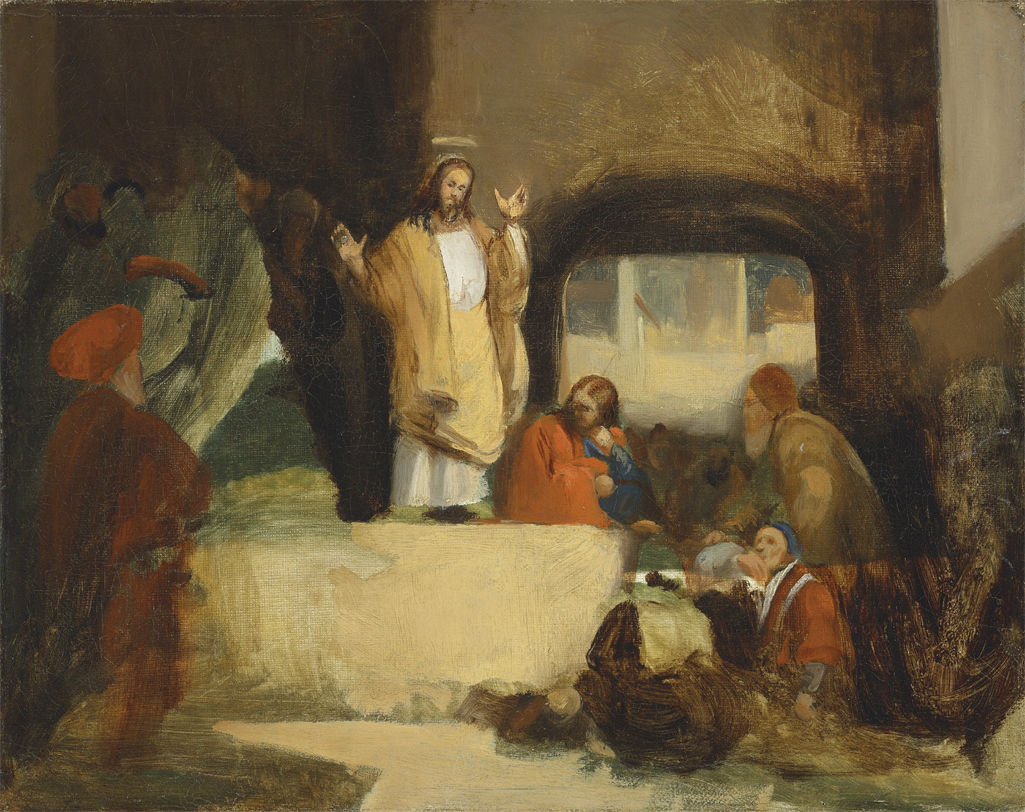
As we progress through Lent, we listen to Christ’s teaching of the limitations of the Old Law and the complete fulfilment, transcendence and renewal of the Law which Christ, through his life, death and resurrection, gave to us. As St Paul will teach: through the Law, there can be no salvation; salvation is for us through Christ alone [ … ]