
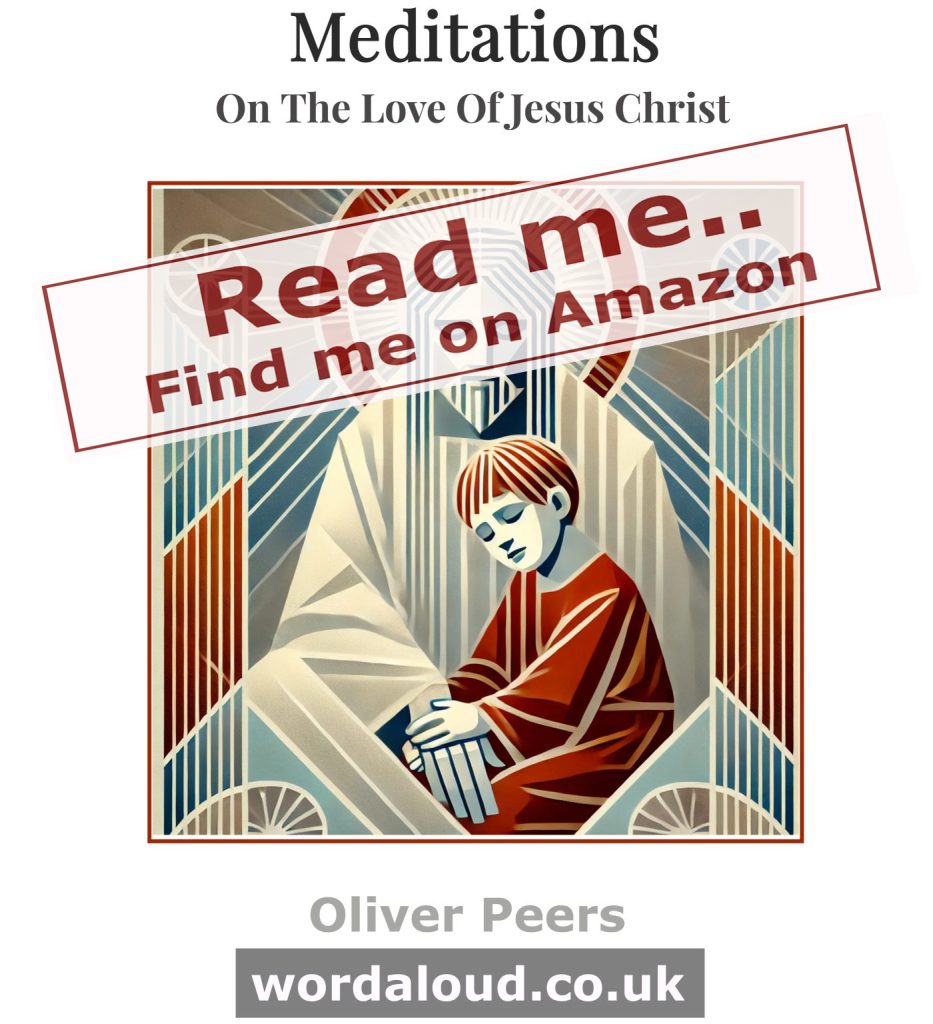
Christian Art | A Boy At Prayer | A Child With Jesus | The Eucharist
Office Of Readings | Eastertide Week 2, Thursday | A Reading From A Treatise Of Saint Gaudentius Of Brescia | Jesus Our Bequest Of The New Testament
‘Jesus Christ is our bequest of the new testament.’
Commentary on ‘The Inheritance of the New Covenant’ by Saint Gaudentius of Brescia
Saint Gaudentius, a 4th–5th century bishop and contemporary of Saint Ambrose, offers in this homily a profound reflection on the Eucharist as the enduring inheritance Christ has left his Church. Rooted deeply in the language and symbolism of Scripture and the early Church, his words provide a moving theology of presence, sacrifice, and transformation that remains strikingly relevant to Christian thought today.
The Eucharist As Covenant And Legacy
At the heart of Gaudentius’s sermon is the idea of the Eucharist as the gracious legacy of Christ—a living testament of the New Covenant. Just as in human affairs a legacy is a final, often solemn gift left by someone departing, so here Christ, on the night before his Passion, gives his very self to his Church in the sacrament of his Body and Blood. This aligns closely with the institution narratives found in the Synoptic Gospels and in 1 Corinthians 11, where Jesus says: ‘Do this in memory of me.’
But this memorial is not a mere recollection; it is a re-presentation of the once-for-all sacrifice. Drawing on the biblical understanding of anamnesis—a memory that makes present—Gaudentius insists that the Eucharist is not a symbolic reminder of a past event but the enduring presence of Christ’s saving action. Christ, who ascended bodily into heaven, nevertheless abides sacramentally in his Church. This gift sustains us on our journey through life, much as manna sustained Israel in the desert.
The Eucharist As Necessary For Life
Gaudentius references Jesus’ own teaching in John 6: ‘Unless you eat the flesh of the Son of Man and drink his blood, you have no life in you.’ This stark and mystical claim expresses the necessity of the Eucharist for eternal life. The early Church Fathers did not spiritualize or metaphorize these words—they took them with utmost seriousness. In receiving Christ’s Body and Blood, the faithful are nourished not only spiritually, but are joined more intimately to the life of the Risen Lord.
This Eucharistic realism—shared by Fathers like Ignatius of Antioch, Irenaeus, Ambrose, and Augustine—emphasizes that Christ’s sacrifice is not just remembered but received, and through it, believers are transformed. The grace of the cross becomes present and active in every celebration of the Mass.
Priestly Continuity And The Everlasting Memorial
Gaudentius affirms that the apostles were instituted by Christ as the first priests and commanded to continue this mystery ‘until Christ comes again from heaven’. This clear expression of apostolic succession reflects early ecclesiology: that the Eucharist is not a private devotional act but the act of the Church, led by ordained ministers. Across time and space, through the hands of countless priests, the single sacrifice of Calvary is made present.
This universality links all the faithful—priests and people alike—in one common act of worship. The Eucharist is, therefore, both profoundly personal and essentially communal. Gaudentius urges us to participate in it not as passive observers but as living members of Christ’s body.
Eucharistic Symbols: Bread And Wine
A beautiful element of this sermon is its use of natural metaphors to explain the Eucharistic signs:
- Bread is made from ‘many grains’ ground into flour, mixed with water, and baked by fire. This symbolizes the unity of the Church—many members formed into one body and consecrated by the Holy Spirit. As Saint Augustine similarly says, ‘Be what you see; receive what you are—the Body of Christ.’
- Wine, made from many grapes pressed in the wine-press, evokes both suffering and transformation. Gaudentius’s mention of the wine-press of the cross recalls Isaiah 63 and Revelation 14, where divine justice and love meet. This wine, when received in faith, ferments within the believer—an image of interior transformation, filled with both vitality and mystery.
In using such homely, earthy images, Gaudentius connects divine grace to the ordinary stuff of creation, reminding us that God’s glory is revealed not only in heaven, but in wheat, water, grapes, and fire.
Baptism And The New Exodus
Gaudentius also draws a subtle parallel between Israel’s Exodus and the Christian’s deliverance from sin. Egypt and Pharaoh symbolize sin and the devil. Just as Israel was saved by the blood of the lamb and passed through the Red Sea, so Christians are saved by the blood of Christ and pass through the waters of baptism. The Eucharist becomes the Paschal meal of this New Exodus, completing what baptism begins and sustaining us until we reach the promised land of eternal life.
This is why early Christians saw in the liturgical year—and especially the Paschal feast—a spiritual journey mirroring salvation history. The Eucharist is thus the Passover of the Church, the sign that we have been brought from death to life.
Presence Of Christ And The Power Of Faith
Central to this homily is the assertion that Christ is truly present in the Eucharist—not as a memory or symbol only, but as a reality, encountered by faith. This is not a philosophical abstraction but a lived truth: ‘we hold it in our hands, we receive it in our mouths, and we accept it in our hearts.’ It is a tactile and intimate union.
This presence is transformative. Like the disciples on the road to Emmaus, we recognize Christ in the breaking of the bread. The Eucharist shapes not only individual piety but the very identity of the Church as Christ’s Body.
Contemporary Resonance
Though written over fifteen centuries ago, Gaudentius’s theology speaks powerfully to the contemporary Church. In an age where the Eucharist is sometimes reduced to mere ritual or misunderstood as purely symbolic, his words are a needed reminder of the profound mystery at the heart of Christian life.
His focus on unity, sacrificial love, and spiritual renewal speaks to the mission of the Church today: to be the Body of Christ in the world, nourished by the Body of Christ in the sacrament. As Sacrosanctum Concilium would affirm many centuries later, the Eucharist is truly ‘the source and summit of the Christian life.’

A Reading From A Treatise Of Saint Gaudentius Of Brescia
The heavenly sacrifice, instituted by Christ, is the most gracious legacy of his new covenant. On the night he was delivered up to be crucified he left us this gift as a pledge of his abiding presence.
This sacrifice is our sustenance on life’s journey; by it we are nourished and supported along the road of life until we depart from this world and make our way to the Lord. For this reason he addressed these words to us: Unless you eat my flesh and drink my blood, you will not have life in you.
It was the Lord’s will that his gifts should remain with us, and that we who have been redeemed by his precious blood should constantly be sanctified according to the pattern of his own passion. And so he commanded those faithful disciples of his whom he made the first priests of his Church to enact these mysteries of eternal life continuously. All priests throughout the churches of the world must celebrate these mysteries until Christ comes again from heaven. Therefore let us all, priests and people alike, be faithful to this everlasting memorial of our redemption. Daily it is before our eyes as a representation of the passion of Christ. We hold it in our hands, we receive it in our mouths, and we accept it in our hearts.
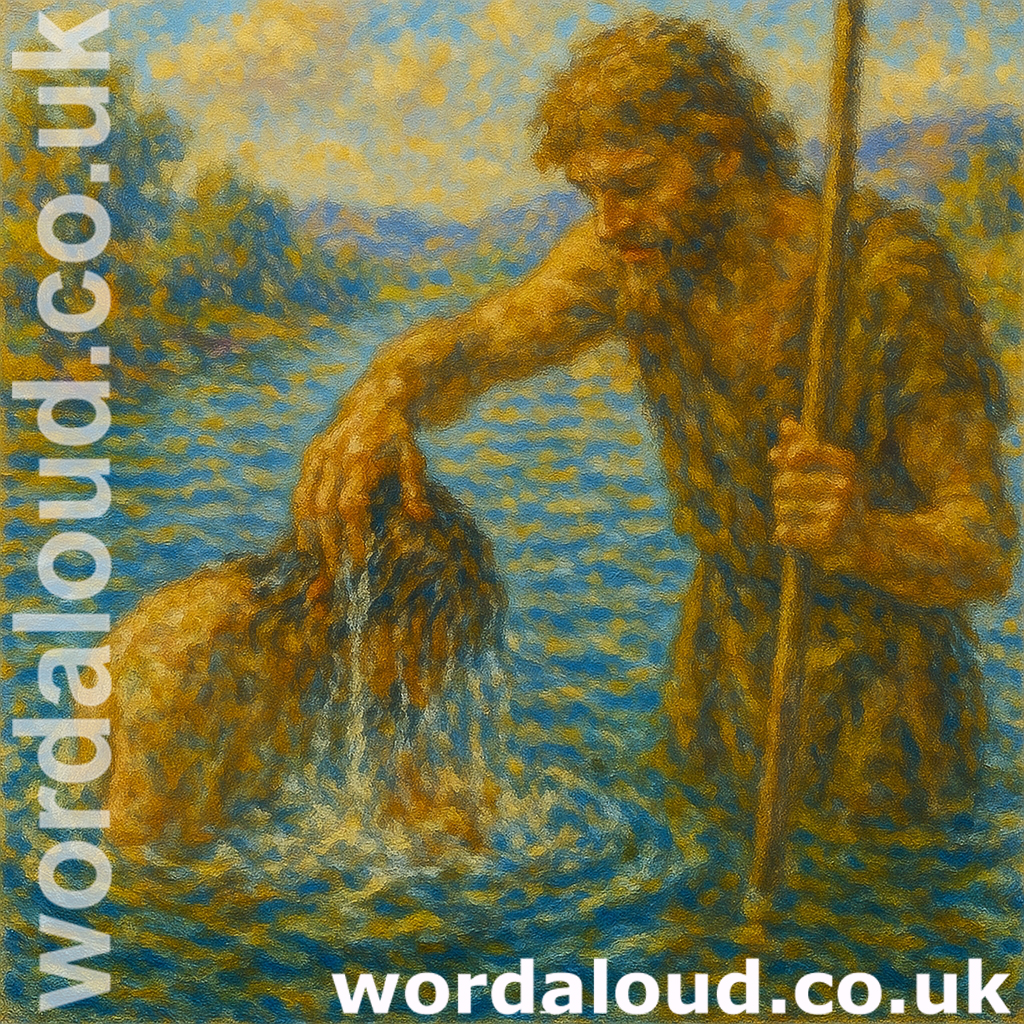
It is appropriate that we should receive the body of Christ in the form of bread, because, as there are many grains of wheat in the flour from which bread is made by mixing it with water and baking it with fire, so also we know that many members make up the one body of Christ which is brought to maturity by the fire of the Holy Spirit. Christ was born of the Holy Spirit, and since it was fitting that he should fulfil all justice, he entered into the waters of baptism to sanctify them. When he left the Jordan he was filled with the Holy Spirit who had descended upon him in the form of a dove. As the evangelist tells us: Jesus, full of the Holy Spirit, returned from the Jordan.
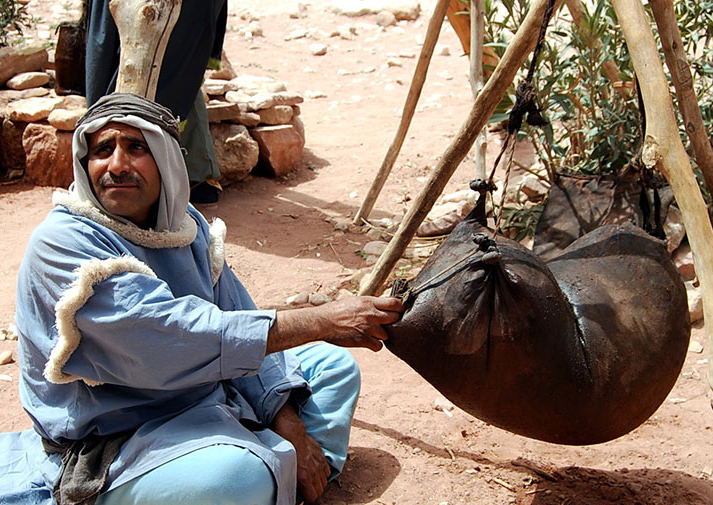
Similarly, the wine of Christ’s blood, drawn from the many grapes of the vineyard that he had planted, is extracted in the wine-press of the cross. When men receive it with believing hearts, like capacious wineskins, it ferments within them by its own power.
And so, now that you have escaped from the power of Egypt and of Pharaoh, who is the devil, join with us, all of you, in receiving this sacrifice of the saving passover with the eagerness of dedicated hearts. Then in our inmost being we shall be wholly sanctified by the very Lord Jesus Christ whom we believe to be present in his sacraments, and whose boundless power abides for ever.


Saint Jerome begins by drawing a direct connection between the deer of the psalm and the newly baptized, freshly emerged from the waters of baptism. The metaphor of thirst is especially apt during this Easter season, when catechumens have completed their Lenten preparation and now experience the fulfilment of their longing in the sacraments. For Jerome, this thirst is not a vague spiritual desire but an acute yearning for the triune God—the Father, the Son, and the Holy Spirit—whom he identifies as the ‘three fountains’ of the Church [ … ]
Jesus fasted in the wilderness for 40 days toward the start of his ministry. This was a time of preparation, while Jesus was tempted by Satan. Matthew’s Gospel account most fully expresses the time of fasting as one in which Jesus declares his assumed humanity to be in accord with his Father’s will, oriented toward God’s saving purpose. Fasting is an aspect of many historical religions. We are asked to fast at particular times, and as we do, in our physical hunger, we may discover a closer relationship with God, even when our fasting can be mentally challenging [ … ]
Christian Art | Our Lord Jesus On The Cross | God The Father | God The Son Office Of Readings | Advent December 23rd | A Reading From The Treatise Of Saint Hippolytus Against The Heresy Of Noetus | The Hidden Sacrament Is Revealed ‘The hidden sacrament is revealed.’ In this reading, Saint Hippolytus writes against the Noetic heresy, which denied the real distinction between the Father and the Son by treating them as the same person acting under different names. The purpose of Saint Hippolytus is to defend the Church’s confession of one God who is not solitary, but who exists with his Word and Spirit. Hippolytus begins by setting a principle: knowledge of God comes from the Holy Scriptures, not from speculation or private reasoning. Faith is not shaped by human preference but by what God has chosen to reveal. The Father determines how He is believed, the Son how He is glorified, and the Spirit how He is received. This establishes Scripture as the rule of faith and guards against theological invention. Hippolytus then affirms that God existed alone before creation, with nothing co-eternal alongside Him. At the same time, God was not without reason, wisdom, or power. Hippolytus insists that plurality within God does not compromise divine unity. God contains within himself Word, wisdom, and counsel. Creation begins when God wills and manifests His Word. The Word is not created from nothing but proceeds from God and acts as the agent of creation. The Word is first invisible to the created world, though known to God. When God chooses, He makes the Word visible, described as ‘Light of Light’. This language safeguards both distinction and unity: the Word comes from God and reveals God, without being separate from Him. The manifestation of the Word is ordered towards salvation, so that the world may see and be saved. Hippolytus identifies this Word clearly with the Son of God. Through him all things were made, and he alone comes forth from the Father. The Law and the prophets belong to the same saving plan. God speaks through them by the Holy Spirit, so that they proclaim not their own ideas but the Father’s will. Revelation is therefore coherent: creation, prophecy, and incarnation belong to one divine purpose. Hippolytus appeals to the Gospel of John to show continuity between prophecy and fulfilment. The Word spoken of by the prophets is the Word made flesh. Though the world was made through him, it failed to recognise him. This failure does not negate God’s plan but reveals the depth of the mystery now disclosed. A Reading From The Treatise Of Saint Hippolytus Against The Heresy Of Noetus | The Hidden Sacrament Is Revealed There is, brethren, one God, the knowledge of whom we gain from the Holy Scriptures and from no other source. Whatever things the Holy Scriptures declare, at these let us look; and whatever they teach, let us learn it; and as the Father wills our belief to be, let us believe; and as he wills the Son to be glorified, let us glorify him; and as he wills the Holy Spirit to be bestowed, let us receive him. Not according to our own will, nor according to our own mind, nor yet storming by force the things which are given by God, but even as he has chosen to teach them by the Holy Scriptures, so let us discern them. God, subsisting alone, and having nothing coeval with himself, chose to create the world. And conceiving the world in mind, and willing and uttering the Word, he made it; and at once it appeared, formed it in the way he desired. For us it is sufficient simply to know that nothing was coeval with God. Outside him there was nothing; but he, while existing alone, yet existed in plurality. For he did not lack reason, or wisdom, or power, or counsel. All things were in him, and he was the All. At a time and in a manner chosen by him he made his Word manifest, and through his Word he made all things. He bears this Word in himself, as yet invisible to the created world. He makes him visible, uttering the voice first, and begetting him as Light of Light. He presents him to the world as its Lord; and whereas the Word was visible formerly to God alone, and invisible to the world which is made, God makes the Word visible in order that the world might see him and be able to be saved. This is the mind which came forth into the world and was manifested as the Son of God. All things came into being through him, and he alone comes from the Father. He gave us the Law and the prophets; and in giving them, he made them speak by the Holy Ghost, in order that, receiving the inspiration of the Father’s power, they might declare the Father’s counsel and will. Thus, then, was the Word made manifest, even as the blessed John says. For he sums up the things that were said by the prophets, and shows that this is the Word, by whom all things were made. In the beginning was the Word, and the Word was with God, and the Word was God. All things were made by him, and without him nothing was made. And later, The world was made by him, and the world did not know him; he came to his own, and his own did not receive him. Christian Prayer With Jesus Lord God,You are one, and from You come the Word and the Spirit.You have chosen to make Yourself known, not by human effort,but by what You have revealed in the scriptures. You spoke Your Word, and all things were made.You made that Word visible, so that the world might see and be saved.Grant that we may receive what You give,believe what You teach,and worship You as You have shown Yourself to be. Keep us […]