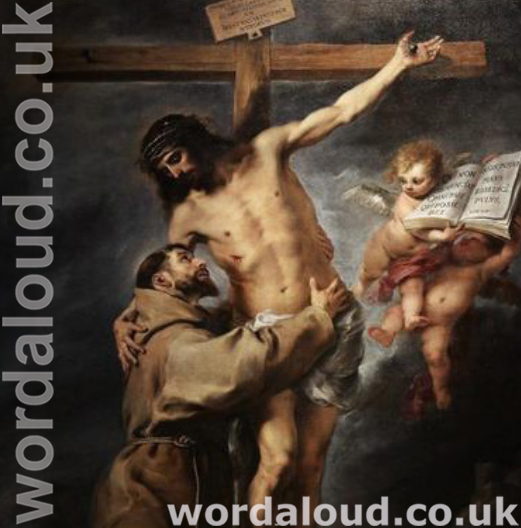
Christian Art | Jesus Is Crucified
Office Of Readings | Tuesday, Week 6, Ordinary Time | A Reading From The Discourses Against The Arians By Saint Athanasius | The Knowledge Of The Father Through Creative Wisdom Made Flesh
‘We know the Father through creative and incarnate Wisdom.’
This passage from Athanasius of Alexandria presents a tightly argued account of how God is known, drawing together themes of creation, incarnation, and revelation. Written in the context of doctrinal controversy, particularly against Arian interpretations of Christ, the text aims to clarify the identity of the Son as true Wisdom and not a created intermediary in any diminished sense.
The opening establishes the Son—identified as divine Wisdom—as the agent of creation. Athanasius draws on scriptural language to affirm that all things are made through this Wisdom. Yet creation is not merely an act of bringing things into existence; it is also an act of ordering them towards goodness. This is achieved through participation. Creatures bear a ‘resemblance to their Model’, that is, they reflect the Wisdom through which they were made. The emphasis here is ontological: the created order is intelligible and ordered because it shares, in a limited way, in divine Wisdom.
Athanasius then develops an analogy between human speech and divine reality. Just as a spoken word reflects the inner word of the mind, so the wisdom present in human beings reflects the divine Wisdom, who is the Son. This analogy is carefully controlled. The human capacity for knowledge is not identical with divine Wisdom, but it is a genuine participation in it. Through this participation, human beings are capable of recognising the Son and, through him, the Father. The epistemological claim is clear: knowledge of God is mediated through the Son. This is reinforced by scriptural citations linking reception of the Son with reception of the Father.
A key difficulty addressed in the passage concerns scriptural language that appears to describe Wisdom as ‘created’. Athanasius resolves this by distinguishing between Wisdom in itself—eternal and uncreated—and its image in creatures. When Scripture speaks in this way, it refers not to the divine essence of the Son, but to the created reflection of that Wisdom within the world. This distinction is central to Athanasius’ argument against Arianism: the Son is not part of creation but its source.
The argument then turns to the failure of creation as a sufficient means of knowing God. Although creatures bear the imprint of divine Wisdom, this was not enough for humanity to attain true knowledge. The world, Athanasius states, ‘was not wise enough’ to recognise God through these signs. This leads to a decisive shift: the Incarnation. The same Wisdom through whom all things were made becomes human in Jesus Christ. The mode of revelation changes from indirect to direct. What was previously known through images and reflections is now disclosed in a concrete, historical person.
The reference to the ‘foolish’ message recalls the teaching of Paul the Apostle, highlighting the paradox of the cross. The Incarnation and crucifixion do not conform to conventional expectations of wisdom, yet they constitute the definitive act of divine self-disclosure and salvation. Athanasius’ emphasis lies not on the moral example of Christ, but on the ontological transformation effected through his death and resurrection—specifically, the defeat of death and the restoration of humanity.
The culmination of the passage is epistemological and relational. To know the Father is to know the Son; the two are inseparable. This unity is not merely functional but intrinsic, grounded in their shared divine life. The mutual joy of Father and Son, expressed in the closing lines, introduces a contemplative dimension. Knowledge of God is not only cognitive but participatory, drawing the believer into the relation of delight that exists within the divine life itself.
In sum, Athanasius articulates a coherent theology of revelation centred on the Son as divine Wisdom. Creation bears witness to this Wisdom, but only the Incarnation provides its full disclosure. The passage integrates metaphysical clarity with soteriological purpose, insisting that true knowledge of God is inseparable from the person of the Son and the work he accomplishes.
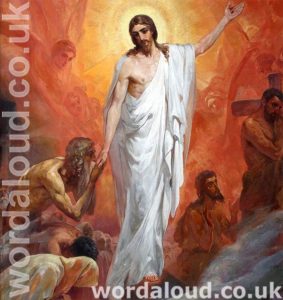
A Reading From The Discourses Against The Arians By Saint Athanasius | The Knowledge Of The Father Through Creative Wisdom Made Flesh
The only-begotten Son, the Wisdom of God, created the entire universe. Scripture says: You have made all things by your wisdom, and the earth is full of you creatures. Yet simply to be was not enough: God also wanted his creatures to be good. That is why he was pleased that his own wisdom should descend to their level and impress upon each of them singly and upon all of them together a certain resemblance to their Model. It would then be manifest that God’s creatures shared in his wisdom and that his works were worthy of him.
For as the word we speak is an image of the Word who is God’s Son, so also is the wisdom implanted in us an image of the Wisdom who is God’s Son. It gives us the ability to know and understand and so makes us capable of receiving him who is the all-creative Wisdom, through whom we can come to know the Father. Whoever has the Son has the Father also, Scripture says, and Whoever receives me receives the One who sent me. And so, since this image of the Wisdom of God has been produced in us and in all creatures, the true and creative Wisdom rightly takes to himself what applies to his image and says: The Lord created me in his works.
But because the world was not wise enough to recognize God in his wisdom, as we have explained it, God determined to save those who believe by means of the ‘foolish’ message that we preach. Not wishing to be known any longer, as in former times, through the mere image and shadow of his wisdom existing in creatures, he caused the true Wisdom himself to take flesh, to become man, and to suffer death on the cross so that all who believed in him might be saved by faith.
Yet this was the same Wisdom of God who had in the beginning revealed himself and his Father through himself by means of his image in creatures (which is why Wisdom too is said to be created). Later, as John declares, that Wisdom, who is also the Word, became flesh, and after destroying the power of death and saving our race, he revealed himself and his Father through himself with greater clarity. Grant, he prayed, that they may know you, the only true God, and Jesus Christ whom you have sent.
So now the whole earth is filled with the knowledge of God, since it is one and the same thing to know the Father through the Son, and to know the Son who comes from the Father. The Father rejoices in his Son, and with the same joy the Son delights in the Father and says: I was his joy: every day I took delight in his presence.
Christian Prayer With Jesus Christ
O God,
Father of all wisdom and truth,
who have made yourself known to us
through your Son, Jesus Christ,
grant that we may know you more deeply
by knowing him whom you have sent.
Open our minds to perceive your wisdom in creation,
and our hearts to receive your Word made flesh.
Deliver us from error and confusion,
and lead us into the fullness of truth.
Strengthen our faith in the mystery of your Son,
true God and true man,
that through him we may come to you
and share in your life.
Through the same Christ our Lord.
Amen
Glossary Of Christian Terms
Wisdom of God
A title for the Son of God, expressing his role in creation and revelation; identified with Jesus Christ.
Only-begotten Son
A term expressing the unique relationship of the Son to the Father, indicating that he is not created but eternally begotten.
Incarnation
The doctrine that the Son of God took human nature and became man in Jesus Christ.
Word (Logos)
The eternal Son of God, through whom all things were made and through whom God is revealed.
Creation
The act by which God brings all things into existence and sustains them.
Image (of God)
The reflection or participation of creatures in God’s wisdom and being, enabling knowledge of him.
Revelation
God’s self-disclosure, first through creation and fully through the Incarnation of the Son.
Arianism
A theological teaching that denied the full divinity of the Son, opposed by Athanasius of Alexandria.
Salvation
The deliverance of humanity from sin and death through the life, death, and resurrection of Christ.
Cross
The instrument of Christ’s death, understood as the means of redemption and the revelation of divine love.
Faith
Trust in and assent to the truth revealed by God, especially in the person of Christ.
Knowledge of God
Not merely intellectual awareness, but a relational and participatory knowing through the Son.
Divine Nature
The essence of God, shared fully by the Father and the Son.
Participation
The sharing of created beings in the life or attributes of God, especially in wisdom and truth.
Eternal Life
The life of communion with God, begun in faith and fulfilled in the world to come.


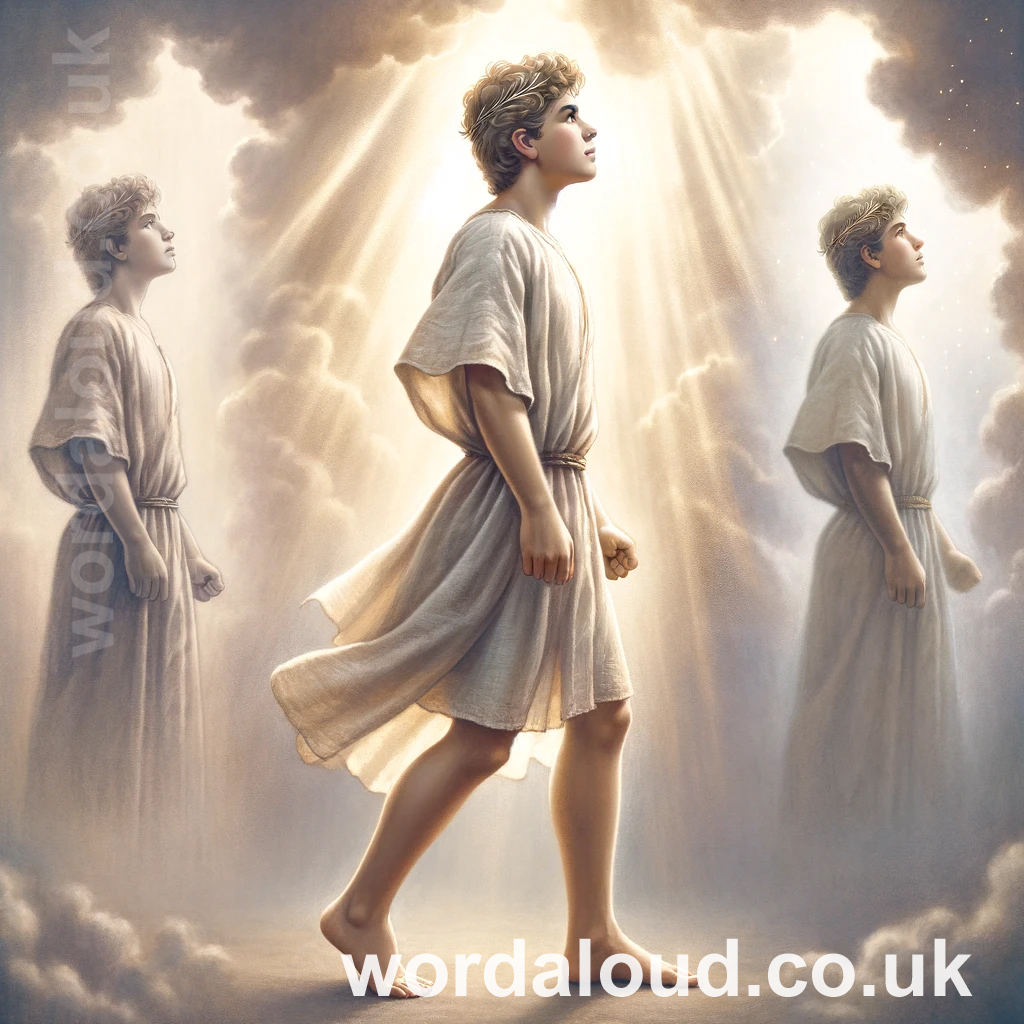
Gospel Reading: Matthew 25:35-36 (KJV) ‘For I was an hungred, and ye gave me no meat: I was thirsty, and ye gave me no drink: I was a stranger, and ye took me not in: Naked, and ye clothed me not: I was sick, and ye visited me not: I was in prison, and ye came unto me not.’ Reflection on the Gospel In these verses, Jesus speaks about compassion and how our actions towards others reflect our love for Jesus. Jesus teaches us that by caring for those in need, we are also caring for Jesus. This passage challenges us to look beyond ourselves and extend kindness and mercy to those around us. Prayer Heavenly Father, I come to you asking for a heart filled with compassion. Help me to see others through your eyes, to feel their pain, and to be moved to action. Teach me to love and care for those who are suffering, just as Jesus did. Let my actions reflect your love and bring comfort to those in need. Thank you for your endless compassion and grace. In Jesus’ name, I pray. Amen. Personal Reflection I think about a time when I was in need and someone showed me compassion. How did it make me feel? Now, I consider a time when I had the opportunity to help someone else. How did my actions impact them? Compassion is more than just feeling sympathy for others; it is about taking action to alleviate their suffering. By practicing compassion, I bring God’s love into the world. Meditation On The Prayer And Gospel Compassion begins with recognizing the humanity in others and responding with love and kindness. Jesus’ words in Matthew 25:35-36 remind me that my treatment of others is a reflection of my relationship with Jesus. This is not only a call to action but an invitation to embody God’s love in my daily life. As I meditate on this prayer, I remember the story of the Good Samaritan. Despite being a stranger, the Samaritan showed great compassion to a wounded traveler, demonstrating the kind of love Jesus calls me to show. This story illustrates that true compassion knows no boundaries and is driven by love. I think about those in my community who are in need. I visualize their faces and hold them in my thoughts. I imagine Jesus standing with me, encouraging me to extend compassion and kindness. I feel the warmth of Jesus’ love as I commit to making a difference in their lives. Compassion is not just about grand gestures but also about small acts of kindness that can transform someone’s day. It involves listening, understanding, and being present for others. As I practice compassion, I become a vessel of God’s grace, reflecting Jesus’ love to those around me. Prayer Lord Jesus, thank you for your example of compassion. Help me to follow your footsteps and show love to those in need. Grant me the strength and courage to act with kindness and mercy. Fill my heart with empathy and understanding, and let your love be evident in all that I do. Amen. Scripture Reading: Colossians 3:12 (KJV) ‘Put on therefore, as the elect of God, holy and beloved, bowels of mercies, kindness, humbleness of mind, meekness, longsuffering;’ Blessing May the compassion of God fill my heart and guide my actions. May His grace empower me to show love and kindness to those in need. Go forth in His love, extending mercy and compassion to all you meet. Amen.
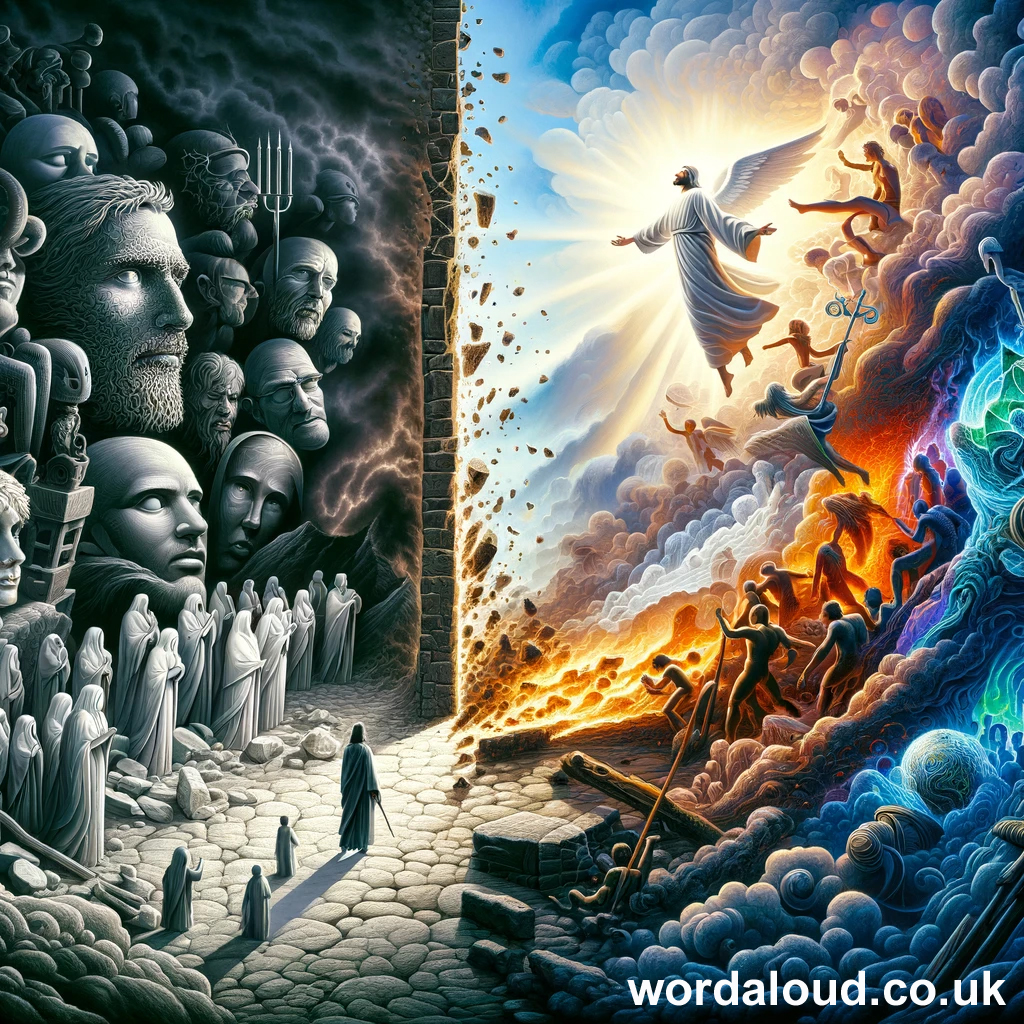
Psalm 115 in the King James Version (KJV) of the Bible presents a narrative that contrasts the living God of Israel with lifeless pagan idols. This psalm is part of the ‘Egyptian Hallel’ group, typically read during Passover, and reflects a time when the Israelites, despite facing mockery from neighboring peoples, reaffirm their faith in God [ … }

The parable of the prodigal son is among the most famous of the parables which Jesus teaches us. Indeed the phrase ‘prodigal son’ is familiar to English speakers who might not tend to read the Bible very often if at all. In the parable of the prodigal son, the story Jesus tells is so homely and familiar to our lives, and to our most basic human and family instincts, that even without the deeper meanings as we interpret the parable, it would be powerfully moving to hear as a tale of estrangement and difficulty followed by forgiveness and reconciliation through love [ … ]