
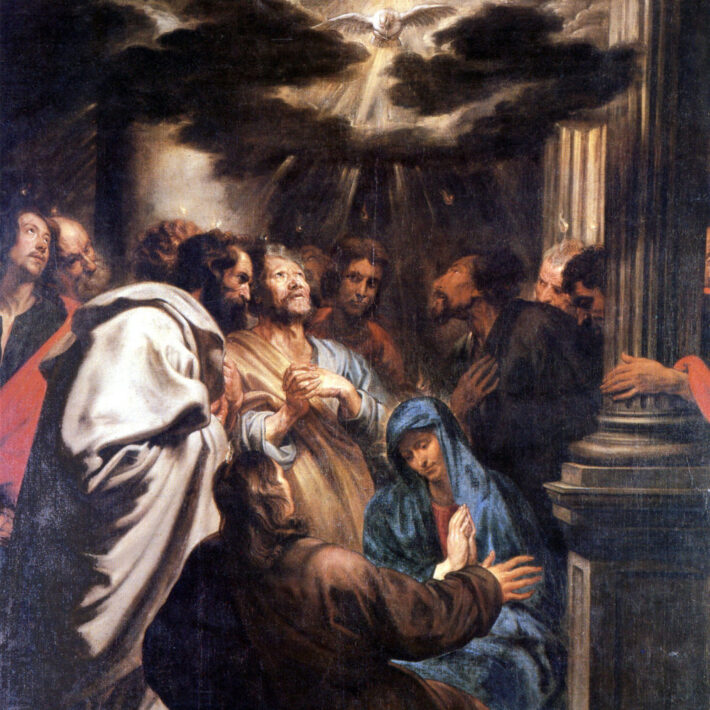
Christian Art | Daily Verses | The Holy Spirit Easter To Pentecost
John 15:26 – 16:4 | King James Audio Bible KJV King James Version
26 But when the Comforter is come, whom I will send unto you from the Father, even the Spirit of truth, which proceedeth from the Father, he shall testify of me:
27 And ye also shall bear witness, because ye have been with me from the beginning.
1 THESE things have I spoken unto you, that ye should not be offended.
2 They shall put you out of the synagogues: yea, the time cometh, that whosoever killeth you will think that he doeth God service.
3 And these things will they do unto you, because they have not known the Father, nor me.
4 But these things have I told you, that when the time shall come, ye may remember that I told you of them. And these things I said not unto you at the beginning, because I was with you.
The disciples who have consistently been with Jesus are charged to bear witness to Jesus. They have been with him from the beginning, have seen his signs and miracles and have heard his teaching, both public and to the disciples alone. In these Bible verses, Jesus continues to prepare the disciples both for the Passion and also for their mission, to bring the gift of Christ to the whole world, and he tells them of the hardships they must then endure, which for all but one of the Apostles, John, will result in martyrdom.
Jesus speaks of what will happen at Pentecost, when after a time when the disciples have hid themselves, confused and afraid for their lives, the Holy Spirit will descend upon them, bringing them great joy and new knowledge and conviction, such that they be compelled to rush out from their private meeting place and proclaim the good news of Christ to everyone.
The Holy Spirit is named by Jesus as the Counsellor and the Spirit of truth. He is a guide for us for all time. When we examine our conscience, the Holy Spirit is with us. Our very calling to be with Christ is through the Spirit. It is through the Spirit that we may pray.
In these verses, Jesus explains that the Spirit proceeds from the Father and is sent from the Father by the Son. We may touch here on the question of the filioque, upon which Catholic and Orthodox Christians have been at variance as concerning the Trinity. It is a great mystery.
While contemplating these Bible verses, we may wish to reflect especially on the gift and the works of the Spirit in our lives. For the Apostles, the gift of the Spirit meant that their faith in Jesus, the Son of God, was no longer to be a private matter; it was then time for the Apostles to begin their ministry.
As Christians, we may wish to think of how we bring Christ to others, both Christian and otherwise, and of how much we share of our faith and all that it teaches us outside of church services and private prayer. It is a gift of the Spirit that we are able to share our faith and good works.
We will know also that there are times when our call to imitate Christ is rejected by others, and often by people who themselves feel they are doing the right thing, indeed who may think or say that they are serving God. We are taught by Jesus to endure such difficulties, and no matter what others may say or do, to remain steadfast in our love for Jesus.
‘Being God, the Holy Spirit, together with the Father and the Son, makes us new in baptism. He leads us back from ugliness to our former beauty, and fills us with his grace, so that we no longer have any capacity for the things which are not worthy of love. He frees us from sin and death.’ Didymus of Alexandria
King James Audio Bible | Endnotes
The Holy Spirit And Christian Martyrdom
John 15: 26-16:4 is a powerful passage that speaks to the role of the Holy Spirit in the lives of believers and the reality of persecution that followers of Christ may face. In this passage, Jesus is preparing his disciples for his departure and instructing them on the nature of the Holy Spirit, who will come after him. He also warns them that they will face opposition and persecution for their faith, even to the point of martyrdom.
The passage begins with Jesus saying, ‘But when the Comforter is come, whom I will send unto you from the Father, even the Spirit of truth, which proceedeth from the Father, he shall testify of me.’ (John 15:26, KJV) Here, Jesus is referring to the Holy Spirit, who he promises will come to the disciples after he has gone. The Holy Spirit is described as the ‘Comforter’, a term that has been interpreted in different ways by scholars and religious authorities over the centuries. Some have seen the Comforter as a source of consolation and comfort to believers in times of difficulty, while others have emphasized the role of the Holy Spirit as a guide and teacher.
The Holy Spirit is also described as the ‘Spirit of truth’, which emphasizes the importance of truth and knowledge in the Christian faith. The Holy Spirit is said to ‘testify of’ Jesus, which means that the Spirit bears witness to the truth of Jesus’ teachings and life.
As the passage continues, Jesus warns his disciples about the opposition and persecution they will face as his followers. He says, ‘They shall put you out of the synagogues: yea, the time cometh, that whosoever killeth you will think that he doeth God service.’ (John 16:2, KJV) Here, Jesus is predicting the kind of persecution that his disciples will face, which would indeed come to pass after his death and resurrection. The phrase ‘whosoever killeth you will think that he doeth God service’ is a sobering reminder that even those who are convinced they are doing God’s will can commit terrible acts of violence.
Throughout history, many Christians have faced persecution and martyrdom for their faith. The early Christian Church, for example, was marked by waves of persecution that resulted in the deaths of countless believers. In more recent times, Christians in countries such as China, North Korea, and Sudan have faced imprisonment, torture, and even death for their faith. The examples of these martyrs stand as a testament to the enduring power of faith and the courage of those who are willing to suffer for it.
Religious authorities from both Catholic and Protestant traditions have spoken about the role of the Holy Spirit in the lives of believers and the reality of persecution. For example, St. Augustine of Hippo, Catholic theologian of the 4th and 5th centuries, wrote extensively about the Holy Spirit and its role in the life of the church. He emphasized the importance of the Holy Spirit as a source of unity and love among believers, as well as a guide to the truth.
Martin Luther, the 16th century German Protestant reformer, also wrote about the Holy Spirit and its role in the Christian life. He emphasized the importance of faith in Christ and the work of the Holy Spirit in bringing about spiritual transformation.
More recently, Pope Francis has spoken about the reality of persecution and martyrdom in the contemporary world. He has called on Christians to stand firm in our faith and to be willing to suffer for it if necessary. In a speech in 2015, he said, ‘Today, too, Christians are persecuted, they are chased away, they are killed. There are more martyrs today than in the first centuries. And this is a fact. Christians are persecuted for their faith, because they bear witness to Jesus Christ, because they proclaim the truth of the Gospel.’ The Pope’s words are a reminder that persecution and martyrdom are still a reality for many Christians around the world, and that the courage and faith of these believers should inspire all Christians to remain faithful in the face of adversity.
The passage reminds us of the reality of persecution and martyrdom that may come with following Christ. The Holy Spirit is a source of comfort, truth, and guidance for believers, and we can trust in its power to sustain us in difficult times. At the same time, we must be prepared to face opposition and persecution for our faith, and to be willing to stand firm in the face of these challenges. Examples of martyrs through history remind us that faith in Christ is worth any sacrifice we may be called to make.



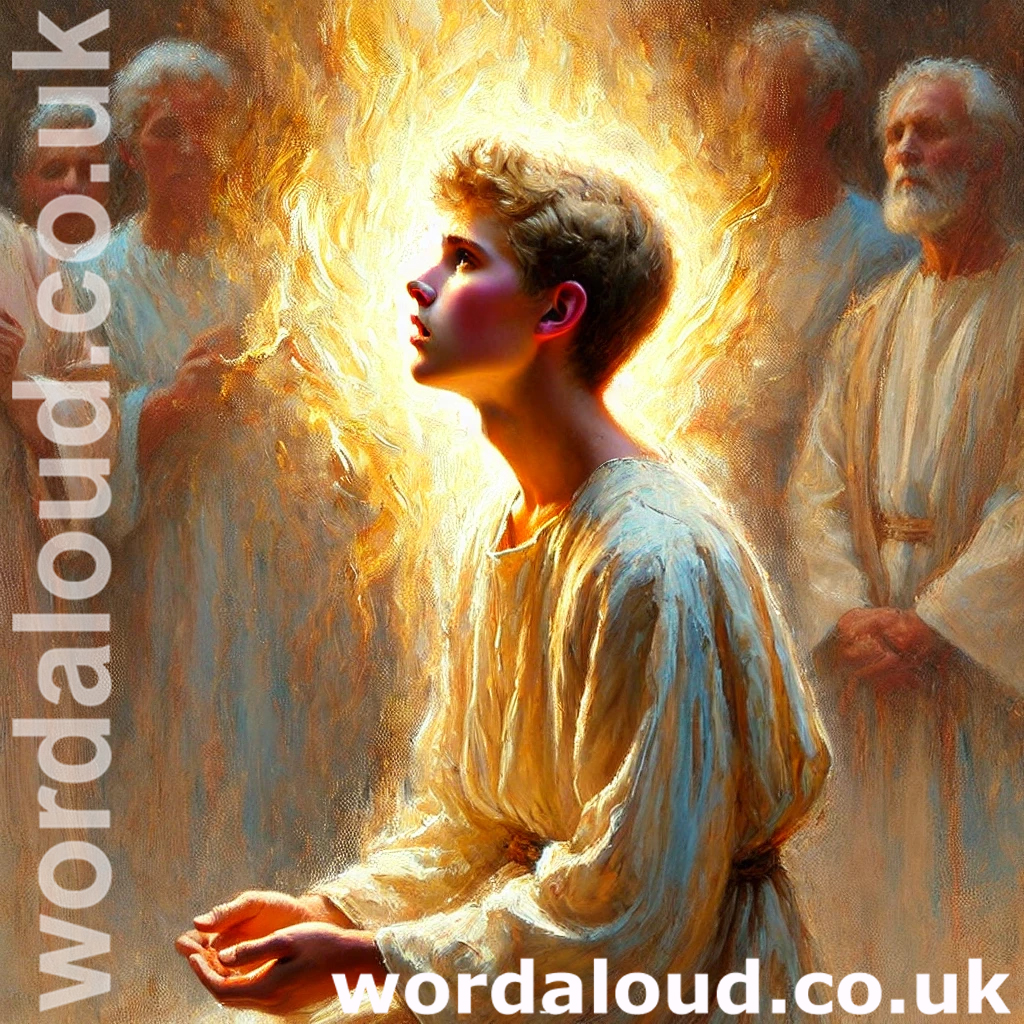
Leo begins by asserting that the forty days following the Resurrection were not idle or incidental. Rather, they were filled with ‘great mysteries’ and ‘deep truths’ revealed by Christ. This aligns with Luke’s account (Acts 1:3), where Jesus ‘presented himself alive… by many convincing proofs, appearing to them during forty days and speaking about the kingdom of God’. The period is thus both transitional and transformational: it bridges the historical mission of Christ with the future mission of the Church, mediated by the Apostles [ … ]

‘I speak the name of Jesus.’ As the Discourse of the Mission continues, Jesus prepares his disciples to face danger. They are to be as sheep. In this way again they are to imitate Jesus – to act in persona of Jesus – as they preach and heal, as they prefigure the saving sacrifice upon the cross. There is to be contention, contradiction [ … ]
The psalm calls the world to worship. The psalm unfolds as an harmonious blend of exuberant praise, acknowledging the God’s sovereignty, the divine relationship with His people, and the everlasting nature of God’s goodness, mercy, and truth. As worshippers are beckoned into the presence of God with gladness, Psalm 100 is a profound expression of gratitude and an enduring anthem of celebratory worship [ … ]
