
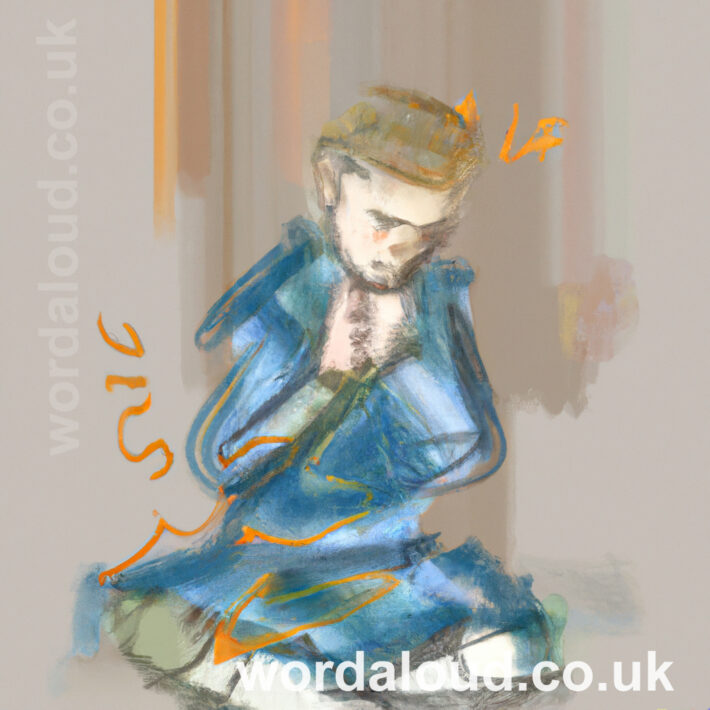
Christian Art | Prayer With Jesus | Psalms | Supplication For Help Against Enemies | King David As A Boy | Audio KJV | Love Revealed By Jesus Christ | King James Audio Bible
Psalm 86 | King James Audio Bible
YouTube: Psalm 86 | KJV | King James Version | Audio Bible | Word Aloud
Psalm 86, traditionally attributed to David, is a plea to God—a soul’s cry for mercy and guidance in times of deep need. It is a psalm that resonates with humility, encapsulating the essence of a supplicant seeking solace in the divine presence.
The psalmist begins by bowing down before the Lord, a symbolic gesture of reverence and submission. This act sets the tone for the entire psalm—a recognition of personal poverty and profound neediness in the face of life’s challenges. The plea is not merely a request for relief but an acknowledgment of reliance on a higher power.
The opening verses echo a dual sentiment—preservation and holiness. The psalmist entreats God to preserve his soul, emphasizing personal consecration to the divine. In this plea, there is an implicit acknowledgment of the sacred covenant between the supplicant and the Almighty. The soul, marked as holy, seeks salvation, revealing a trust that is anchored in unwavering faith.
Throughout the psalm, the psalmist repeatedly implores for mercy. The acknowledgment of daily cries to the Lord reflects the immediacy and constancy of the supplicant’s need. The soul, in its vulnerability, is laid bare before the divine, seeking not only preservation but also the joy that comes from lifting up one’s soul to God.
The psalmist affirms the goodness of the Lord, describing God as ready to forgive and plenteous in mercy. These attributes depict a compassionate God, ever-responsive to the cries of those who call upon Him. The acknowledgment of God’s unique qualities serves as a foundation for the subsequent pleas.
Psalm 86 unfolds as a dialogue between the psalmist and God. The supplicant calls upon God in the day of trouble, confident that God will answer. Amidst the tumultuous circumstances of life, there is an unwavering trust in the accessibility of God—a belief that divine intervention is not only possible but imminent.
The psalmist’s acknowledgment of God’s unparalleled greatness is coupled with a universal vision. All nations, created by God, are envisioned as coming to worship and glorify the Lord. The psalm transcends personal concerns to embrace a broader perspective of God’s sovereignty over all peoples.
As the psalm progresses, the petitioner seeks divine instruction, expressing a willingness to walk in God’s truth. This plea for guidance is coupled with a desire for a unified heart, one that fears and reveres the name of the Lord. The psalmist recognizes the transformative power of divine teachings in shaping a righteous path.
Psalm 86 concludes with expressions of gratitude. The psalmist pledges to praise the Lord with all his heart, glorifying God’s name forever. The soul, delivered from the depths, acknowledges the great mercy bestowed upon it.

Psalm 86 | King James Audio Bible KJV | Love Revealed By Jesus Christ
Bow down thine ear, O Lord, hear me: for I am poor and needy.
Preserve my soul; for I am holy: O thou my God, save thy servant that trusteth in thee.
Be merciful unto me, O Lord: for I cry unto thee daily.
Rejoice the soul of thy servant: for unto thee, O Lord, do I lift up my soul.
For thou, Lord, art good, and ready to forgive; and plenteous in mercy unto all them that call upon thee.
Give ear, O Lord, unto my prayer; and attend to the voice of my supplications.
In the day of my trouble I will call upon thee: for thou wilt answer me.
Among the gods there is none like unto thee, O Lord; neither are there any works like unto thy works.
All nations whom thou hast made shall come and worship before thee, O Lord; and shall glorify thy name.
For thou art great, and doest wondrous things: thou art God alone.
Teach me thy way, O Lord; I will walk in thy truth: unite my heart to fear thy name.
I will praise thee, O Lord my God, with all my heart: and I will glorify thy name for evermore.
For great is thy mercy toward me: and thou hast delivered my soul from the lowest hell.
O God, the proud are risen against me, and the assemblies of violent men have sought after my soul; and have not set thee before them.
But thou, O Lord, art a God full of compassion, and gracious, longsuffering, and plenteous in mercy and truth.
O turn unto me, and have mercy upon me; give thy strength unto thy servant, and save the son of thine handmaid.
Shew me a token for good; that they which hate me may see it, and be ashamed: because thou, Lord, hast holpen me, and comforted me.
Psalm 86 | King James Audio Bible KJV | Love Revealed By Jesus Christ
- Humility and Neediness: The psalmist begins with a humble acknowledgment of personal poverty and neediness, symbolized by bowing down before the Lord.
- Preservation And Holiness: The psalmist entreats God to preserve his soul, emphasizing personal consecration to the divine and trust anchored in unwavering faith.
- Daily Cry For Mercy: There is a recurring plea for mercy, expressed through daily cries to the Lord, indicating the immediacy and constancy of the supplicant’s need.
- Divine Goodness And Mercy: The psalmist extols the goodness of the Lord, describing God as ready to forgive and plenteous in mercy, portraying a compassionate deity responsive to the cries of those who call upon Him.
- Confidence In God’s Response: Amidst life’s challenges, there is a profound trust that God will answer in the day of trouble, highlighting the accessibility and responsiveness of God.
- Universal Vision: The psalm envisions all nations coming to worship and glorify God, emphasizing God’s sovereignty over all peoples and transcending personal concerns to embrace a broader perspective.
- Seeking Divine Instruction: The psalmist expresses a desire for divine guidance and a willingness to walk in God’s truth, recognizing the transformative power of God’s teachings in shaping a righteous path.
- Unified Heart In Reverence: Alongside the plea for guidance, there is a desire for a unified heart that fears and reveres the name of the Lord, emphasizing the importance of inner alignment with divine principles.
- Gratitude And Praise: The psalm concludes with expressions of gratitude and pledges of praise, acknowledging the great mercy bestowed upon the soul and the commitment to glorify God’s name forever.
- Transformative Power Of Divine Intervention: Throughout the psalm, there is an underlying theme of the transformative power of divine mercy and intervention in the life of the supplicant, leading to preservation, joy, and an enduring commitment to walk in the ways of the Lord.



- George Herbert | The Temple | The Church | The Church-Floore | Christian Poems | Metaphysical Poetry

The poem describes a metaphorical interior of a sacred space. This symbolizes a concept of the human heart as a temple built by God. Each element of the architecture serves as an allegory for spiritual virtues, struggles, and the divine influence in maintaining the integrity of the space. The poet weaves a contemplative vision that ties physical imagery to theological themes [ … ]

The poem meditates on mortality, the ephemeral nature of the human body, and spiritual preparation required for the inevitability of death. Herbert, addressing the relationship between the soul and body, deliberately ‘entombs’ the flesh in acknowledgment of its temporal nature, using the act as an opportunity to reflect on its destiny: to return to dust. This act of entombment is not literal but symbolic, serving as a lesson in humility and a call to align oneself with a spiritual reality that transcends physical existence [ … ]

Mark’s Gospel tells us that, astonishingly quickly, Jesus has become the focus of a vast popular movement. He is preaching in Galilee, and his listeners have come all the way from Judea, from Jerusalem, and from Jordan, Tyre and Sidon. It is an international crowd, and these really are great distances. Jerusalem is over 100 kilometres from Lake Galilee, at its nearest point and as the crow flies. That’s a good few days on foot, and no package tour pilgrimage [ … ]
