

Christian Art | Our Love For Jesus Christ | Jesus’ Love For Each One Of Us
Office Of Readings | Week 16, Saturday, Ordinary Time | A Reading From The Homilies Of Saint John Chrysostom On The Second Letter To The Corinthians | We Open Wide Our Hearts To Jesus
‘We have opened wide our hearts.’
In this homily, Saint John Chrysostom reflects on the Apostle Paul’s words to the Corinthian church: ‘Our mouth is open to you, Corinthians; our heart is enlarged.’ (2 Corinthians 6:11) Chrysostom, known for his deep pastoral insight and command of Scripture, explores how love works to expand the heart, just as heat causes material things to expand. He sees in Paul not only a preacher of doctrine but a man whose heart was capacious—so full of love that it embraced both the faithful and the unbelieving.
Historical And Pastoral Context
Saint John Chrysostom preached during the late fourth and early fifth centuries in Antioch and later Constantinople. These were significant centres of Christian life and thought, but also of internal division and social disparity. Chrysostom’s emphasis on Paul’s unselfish, self-giving love may be read as a response to the challenges he faced in his own ministry, including opposition from powerful elites and a sometimes indifferent laity.
Paul’s appeal in 2 Corinthians comes in a context of strained relations. The Corinthian church had been troubled by internal factions, moral failings, and suspicion toward Paul himself. Chrysostom is acutely aware of this and holds up Paul as a model of pastoral love—not one that is harsh or coercive, but tender and persuasive. He especially notes Paul’s gentle correction: ‘You are not restricted by us, but you are restricted in your own affections.’ Chrysostom sees in this a charitable forbearance, the kind of loving tact that builds bridges rather than burns them.
Chrysostom’s audience would likely have recognised the implications. In a Church often fractured by theological and political tension, Paul’s model offers an antidote: a leadership grounded not in control but in openness, not in pride but in love that seeks to draw others in.
Textual And Theological Reflection
Chrysostom’s interpretation draws deeply on the imagery of warmth and openness. The Greek word translated as ‘enlarged’ (πεπλάτυνται, peplatyntai) appears rarely in the New Testament but is more familiar in the Greek Old Testament. For example, Psalm 119:32 (LXX 118:32) says, ‘I will run in the way of your commandments when you enlarge my heart.’ In that verse, an expanded heart represents readiness and desire to follow God freely and energetically.
For Chrysostom, Paul’s ‘enlarged heart’ is not merely an expression of personal affection, but an image of spiritual transformation—love that is generous, undivided, and unpossessive. It is a heart open wide enough to contain many, not in the sense of ownership, but of solidarity. Chrysostom underlines the unique nature of Paul’s love: it is not diminished by being shared among many people. Rather, it remains ‘whole and entire’ for each.
This resonates with a fundamental Christian theme: the inexhaustibility of divine love. Chrysostom implicitly compares Paul’s love to God’s, whose love is not a finite resource but something that grows the more it is given. Paul, then, becomes an icon of Christ’s own self-giving—a man whose heart is being reshaped into the likeness of the Saviour’s.
Patristic Parallels And Broader Interpretations
Chrysostom’s reading of Paul is distinctively pastoral, but he is not alone in recognising the emotional and spiritual intensity of Paul’s language. Other Church Fathers also explored the Apostle’s affective style. Augustine, for example, speaks in several of his letters about the burden of love that accompanies true pastoral care, and Origen had earlier highlighted how Paul’s emotional expressions served a theological purpose—to reflect God’s own deep desire for reconciliation with humanity.
What sets Chrysostom apart, however, is his rhetorical method. He draws together passages from several of Paul’s letters—Romans, Galatians, Ephesians, Thessalonians, and Colossians—showing how Paul consistently expresses yearning, prayer, and personal involvement in the life of each church. By collating these statements, Chrysostom constructs a portrait of Paul as one whose ministry is characterised not only by truth but by affection. This was clearly intended as a model for bishops, presbyters, and Christian leaders of his own day.
His concluding emphasis is not just that Paul loves the Corinthians, but that he wants them to love him in return—not for his own ego, but so that mutual affection will open them to receive the Gospel more fully. Chrysostom understands that love is not simply a private virtue, but the basis of ecclesial unity. It is only when the heart is opened—both Paul’s and the Corinthians’—that true communion becomes possible.

A Reading From The Homilies Of Saint John Chrysostom On The Second Letter To The Corinthians
Our heart is enlarged. For as heat makes things expand, so it is the work of love to expand the heart, for its power is to heat and make fervent. It is this that opened Paul’s lips and enlarged his heart. For I do not love only in words; he means, but my loving heart too is in unison with my words; and so I speak with confidence, without restraint or reserve. There was nothing more capacious than the heart of Paul, for he loved all the faithful with as intimate a love as any lover could have for a loved one, his love not being divided and lessened but remaining whole and entire for each of them. And what marvel is it that his love for the faithful was such, since his heart embraced the unbelievers, too, throughout the whole world?
So he did not just say, ‘I love you,’ but with greater emphasis: Our mouth is open, our heart is enlarged; we hold you all in it, and not only that, but with room for you to move freely. For those who are loved enter fearlessly into the heart of their lover. And therefore he says: You are not constrained because of us, but you are constrained in your own affections. See how this reproach is tempered with much forbearance, as is the way with those who love much. For he did not say: You do not love me, but you do not love me in the same measure; for he did not want to charge them more harshly.
Indeed one may see with what a wonderful love for the faithful he is always inflamed, as one finds proof of it in all his writings. To the Romans he says: I desire to see you, and I have often planned to come to you, and if by any means at last I may succeed in reaching you. To the Galatians he says: My little children, with whom I am again in labour; to the Ephesians: For this reason I bend my knees on your behalf; and to the Thessalonians: What is my hope and my crown of glory? Is it not yourselves? For he used to say that he carried them about in his heart and in his chains.
Again he writes to the Colossians: I want you to know how greatly I strive for you and for all who have not seen my face; and to the Thessalonians: Like a nurse taking care of her children, being desirous of you, we were ready to share with you not only the Gospel but also our own selves. So too he says: You are not restricted by us. And so Paul does not merely say that he loves them but also that they love him, so that in this way he may draw them to him. Indeed, to the Corinthians he bears witness of this love when he says: Titus came, telling us of your longing, your mourning, your zeal for me.
Christian Prayer With Jesus Christ
Lord of all compassion,
You enlarged the heart of your servant Paul
to embrace the Church with tireless love and care.
Teach us to love not in word only,
but with hearts open and unreserved,
that we may hold one another in patience and peace.
Through the example of your apostle
and the wisdom of your saints,
shape our affections to reflect your own,
and help us to grow in the unity and joy of Christ Jesus,
in whose name we pray.
Amen.
Glossary Of Christian Terms
Chrysostom – A title meaning ‘golden-mouthed,’ referring to St John Chrysostom (c. 349–407), an early Church Father and Archbishop of Constantinople known for his eloquent preaching and strong moral teaching.
2 Corinthians – A letter in the New Testament written by the Apostle Paul to the church in Corinth. It addresses themes of reconciliation, suffering, ministry, and apostolic authority.
‘Our heart is enlarged’ – A phrase from 2 Corinthians 6:11, expressing Paul’s deep, open-hearted love for the Corinthian community.
Capacious – Spacious, able to contain much. Used by Chrysostom to describe Paul’s heart of love.
Patristic – Relating to the Church Fathers, early Christian theologians and writers who shaped Christian doctrine and pastoral practice from the 2nd to 8th centuries.
Ecclesial – Pertaining to the Church (from Greek ekklesia, meaning assembly or Church).
Undivided love – Love that is not diminished by being shared, reflecting the theological idea that divine love is infinite and not limited like human resources.
Affective – Relating to emotions or feelings. In Christian theology, often used to describe love, longing, or compassion as spiritual movements of the heart.
Reconciliation – The restoration of right relationship, especially between God and humanity, or within the Church.
Communion – Deep fellowship or mutual participation, especially referring to the unity of believers in Christ.




The Jewish authorities have begun to take note of Jesus. While Jesus has attracted the people, now ‘the Jews’, a term which in John’s Gospel is often used to refer to the Jewish authorities, are beginning to murmur against him. Jesus’ relationship with the Jews is to become increasingly tense [ … ]
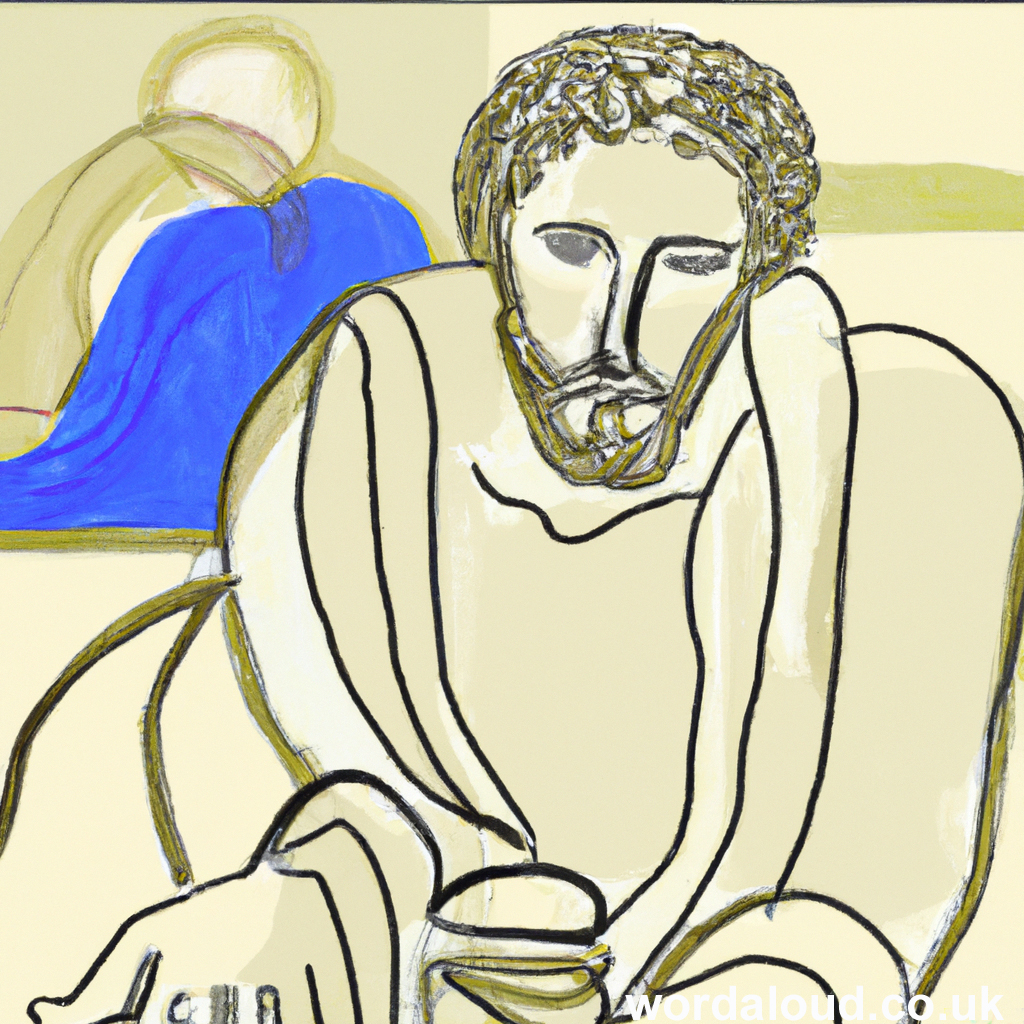
Throughout the psalm, the psalmist’s emotions are evident. He’s troubled and tired, wondering how long his suffering will continue. There is, crucially, an entire emotional as intellectual self-revelation in prayer and openness to God. There is honesty – honesty in prayer absolute [ … ]

Psalm 118 is a composite hymn of thanksgiving, combining elements of individual and communal praise. The psalm’s rich thematic tapestry encompasses deliverance, trust, prophetic fulfilment and joy. The psalm’s enduring message is its affirmation of God’s unfailing mercy and faithfulness – of hope and comfort across generations [ … ]