
Christian Art | Prayer With Jesus | Psalms | Majesty Of God’s Rule | King David As A Boy | Audio KJV | Love Revealed By Jesus Christ | King James Audio Bible
Psalm 93 | King James Audio Bible
YouTube: Psalm 93 | KJV | King James Version | Audio Bible | Word Aloud
Psalm 93 declares the authority and lasting nature of God’s rule. The psalmist depicts God as a majestic ruler, emphasizing God’s enduring reign and unchanging authority. A thought is that God’s rule isn’t recent; it has been in place forever, representing a timeless and unwavering sovereignty.
The psalm uses imagery of surging floods to symbolize life’s challenges. Despite the chaos, the psalmist asserts that God is more powerful than the most overwhelming circumstances. Turbulent waves of life are nothing compared to God’s control and strength, offering reassurance to those who trust in God.
The conclusion of the psalm underscores the reliability of God’s promises and inherent holiness of God’s dwelling place. The psalmist assures that God’s promises are steadfast, and His presence is characterized by holiness.
Psalm 93 is a direct proclamation of God’s enduring rule and stability. It invites listeners to reflect on the unchanging nature of God’s authority, God’s control over life’s challenges, and the reliability of God’s promises.

Psalm 93 | King James Audio Bible KJV | Love Revealed By Jesus Christ
The Lord reigneth, he is clothed with majesty; the Lord is clothed with strength, wherewith he hath girded himself: the world also is stablished, that it cannot be moved.
Thy throne is established of old: thou art from everlasting.
The floods have lifted up, O Lord, the floods have lifted up their voice; the floods lift up their waves.
The Lord on high is mightier than the noise of many waters, yea, than the mighty waves of the sea.
Thy testimonies are very sure: holiness becometh thine house, O Lord, for ever.
Psalm 93 | King James Audio Bible KJV | Love Revealed By Jesus Christ
Divine Sovereignty: Psalm 93 centres on the theme of God’s rule and authority over all creation, emphasizing God’s enduring reign.
Eternal Stability: The psalm underscores the timeless nature of God’s throne, highlighting His existence from ancient times and beyond.
Symbolism Of Floods: The surging floods symbolize life’s tumultuous challenges and uncertainties.
God’s Supremacy Over Challenges: Despite chaos represented by the floods, the psalm affirms God’s might and supremacy over life’s overwhelming circumstances.
Assurance And Reassurance: The psalm provides reassurance to those facing difficulties, assuring them of God’s strength and control.
Reliability Of God’s Word: Testimonies of God are portrayed as sure and steadfast, emphasizing reliability of His promises.
Holiness Of God’s Dwelling Place: The psalm concludes by highlighting the holiness that characterizes God’s dwelling place, signifying God’s divine perfection.




Peter has been instructed by Jesus as to his mission in life, and his destiny. Now he turns to see John approaching, ‘the disciple whom Jesus loved’, who leant on Jesus at the Last Supper, and Peter asks Jesus about what will happen to him in his life. John is the one Apostle who not martyred. According to St Irenaeus, he lived into the reign of Trajan (AD 89-117), and rumours had circulated that John was not to die [ … ]
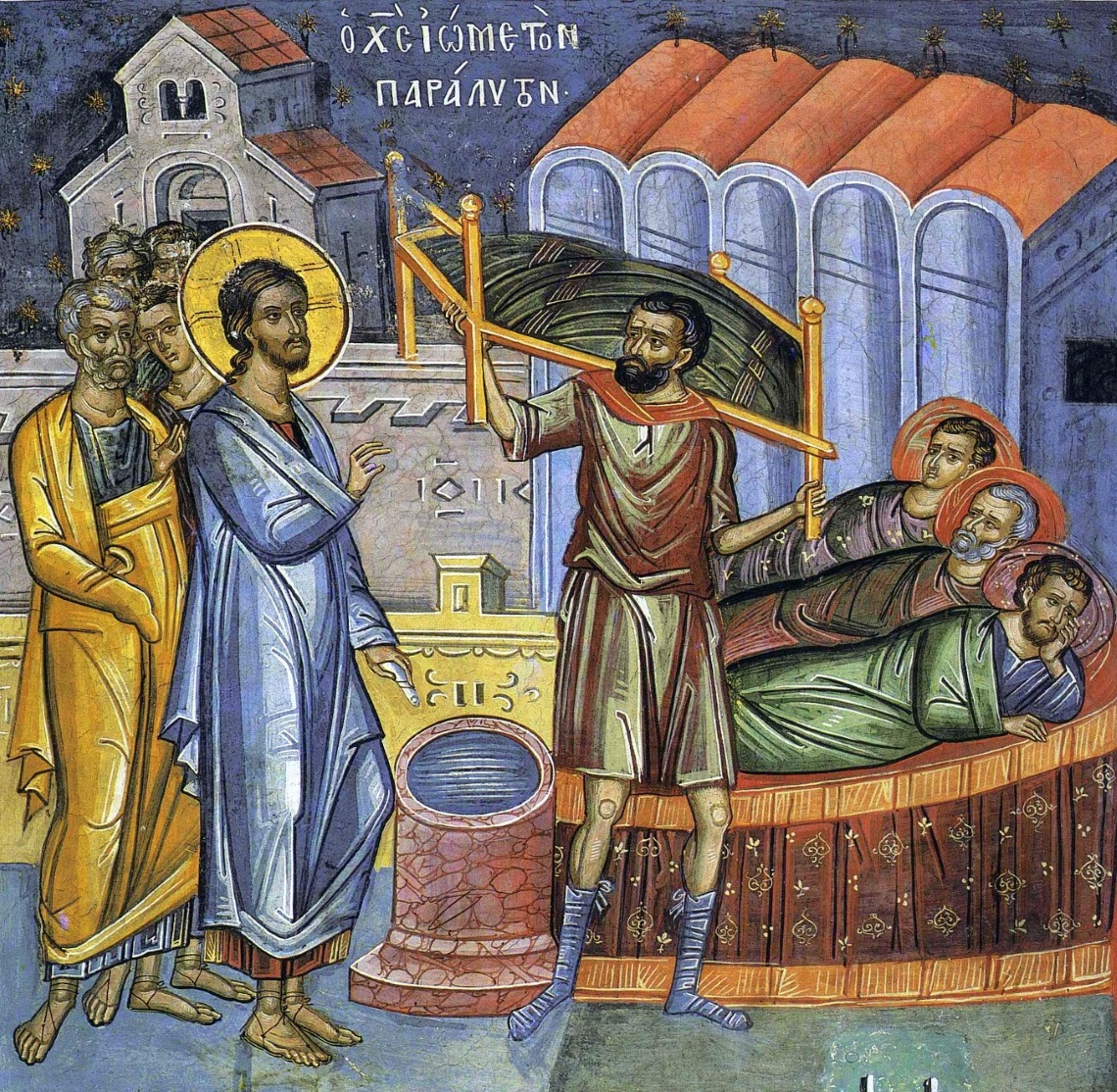
The paralyzed man would not have been able to come to Jesus without the help of his friends. It is his friends’ faith, and their initiative and bravery, as well as his own that work together to find a way to come to Jesus. Jesus is touched by their faith and their friendship. We may think now as well about the help we give others and the help which we receive from others, in matters of faith and as we confess our sins and seek spiritual healing. Our sins can be like a form of spiritual paralysis, in which condition we may rely a great deal on our friends to bring us back to Jesus [ … ]

The parable teaches us that we must be ready, because we do not know when Christ will come to us, for the final account of our lives. This is a warning, edging our lives with the unpredictable. One positive effect of this parable is that it helps us to remain alert to the present moment. While it is easy to allow our thoughts to drift from where we are here and now, to recall the past, to worry or hope for the future, or to slip into daydreams and fantasy altogether, it is when we bring our attention to this very moment of time that we find sharpness, significance, and vibrancy in our life. We may realise just how extraordinary this great gift of life truly is, and feel empowered to live well and offer ourselves wholly to God. When we are attentive to this moment in time we may walk with Jesus [ … ]