

Christian Art | Prayer With Jesus | Psalms | Thanksgiving For Israel’s Deliverance | A Song Of Ascents | King David As A Boy | Audio KJV | Love Revealed By Jesus Christ | King James Audio Bible
Psalm 124 | King James Audio Bible
YouTube | Psalm 124 KJV Audio | King James Audio Bible | Word Aloud
Psalm 124 is a Psalm of Ascent. These psalms were typically sung by pilgrims traveling to Jerusalem.
Psalm 124 is a narrative of danger, deliverance, and gratitude. The psalm moves from contemplation of what might have been to a celebration of what is – the Lord’s protection and deliverance. The psalm serves as reminder of the need for divine protection and the importance of acknowledging and giving thanks for such protection. Psalm 124 is a testament to faith in the face of adversity and the power of divine intervention.
The psalmist uses Israel’s voice for this reflection. This collective voice represents the community’s experiences and perspectives. The psalm quickly moves to describe potential consequences without divine intervention. It speaks of adversaries and their wrath, using metaphors of being swallowed and overwhelmed. These metaphors convey the intensity of the threat faced. Use of water imagery, streams and floods, illustrates an overwhelming nature of these challenges.
The psalm then shifts its focus to gratitude for deliverance. It acknowledges the Lord’s role in preventing the dire consequences imagined earlier. This expression of thanks serves as a pivot in the psalm’s narrative. The psalmist highlights the community’s escape from danger, likening this to a bird evading a trap. This imagery symbolizes liberation and the breaking of bonds.
The conclusion of the psalm reaffirms trust in the Lord. It identifies the Lord as the maker of heaven and earth, underscoring divine authority and power. This final declaration serves as a statement of faith and reliance. The palm, as a whole, captures a journey from contemplation of peril to the celebration of salvation.


Psalm 124 | King James Audio Bible
If it had not been the LORD who was on our side, now may Israel say;
If it had not been the LORD who was on our side, when men rose up against us:
Then they had swallowed us up quick, when their wrath was kindled against us:
Then the waters had overwhelmed us, the stream had gone over our soul:
Then the proud waters had gone over our soul.
Blessed be the LORD, who hath not given us as a prey to their teeth.
Our soul is escaped as a bird out of the snare of the fowlers: the snare is broken, and we are escaped.
Our help is in the name of the LORD, who made heaven and earth.
Psalm 124 | King James Audio Bible
- Divine Protection In Adversity: The psalm emphasizes the protection provided by God during times of danger. It suggests that without God’s intervention, the people would have faced grave consequences.
- Gratitude For Deliverance: There is a strong theme of gratitude for being saved from potential disasters. The psalmist expresses thankfulness for God’s intervention in preventing the imagined threats.
- Power Of God Over Circumstances: The psalm highlights God’s supremacy and control over challenging situations. It portrays God as a powerful entity capable of altering the course of negative events.
- Dependence On God For Survival: The narrative underlines the community’s dependence on God for survival. It reflects the belief that divine support is crucial for overcoming difficult times.
- Community’s Collective Experience: The psalm reflects a collective experience, moving from individual to community perspective. This shift underlines the shared nature of both the challenges faced and the relief received.
- Contrast Between Human Vulnerability And Divine Strength: There is notable contrast between human vulnerability in the face of danger and the strength provided by divine intervention. This contrast underscores the limitations of human capacity and the necessity of relying on a higher power.

Connections | External Resources | Psalm 124 KJV Audio
Enduring Word Bible Commentary by David Guzik: David Guzik provides an in-depth analysis of Psalm 124, focusing on themes of divine deliverance and protection.
Matthew Henry Commentary on the Whole Bible (Complete): Matthew Henry’s renowned commentary offers a comprehensive examination of Psalm 124, discussing its historical context and theological significance.
Study Guide for Psalm 124 by David Guzik on Blue Letter Bible: Guzik provides insights into the historical context and spiritual significance of Psalm 124 in this detailed study guide.


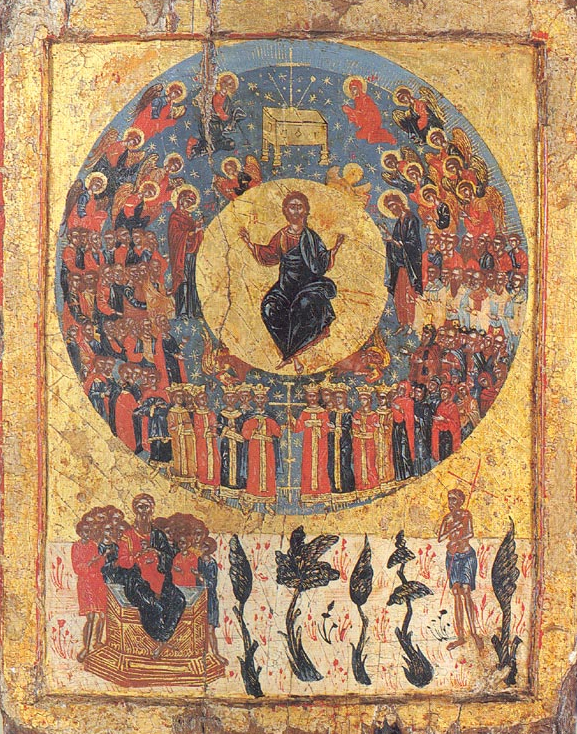
Most of the signs Christ describes to his listeners in the eschatological discourse had already been realized by the time Luke’s first audience would have heard his Gospel. There had been, and were, wars, persecutions, family conflict, and Jerusalem with the Temple had been destroyed. The Christians of Luke’s time listening to these Gospel verses, of today and since Tuesday, could then have been encouraged to know that they were very close to Christ’s full revelation, his apocalypse, and so have courage to bear persecutions and other great challenges of the early Church [ … ]

As they travel on the way to Jerusalem, Jesus throws his disciples into confusion by telling them about the suffering and death he must undergo. The disciples simply do not understand. For centuries, the Jews have awaited the coming of the Messiah, whom they envisaged as a glorious warrior king, not as one who would suffer and die the most ignominious of deaths, on a cross, of all things. A person condemned to die on a cross could not be the Messiah; rather, according to the Old Law, he had to be “cursed by God” (Deuteronomy 21: 22-23). The disciples cannot see the divine plan for our salvation, while the command for all who would be saved to ‘take up his cross and follow me’ must have seemed both strange and terrifying. To reassure his disciples, Jesus allows them to witness his glorious body through the transfiguration [ … ]

The infancy narratives of Jesus are more than mere history. Luke’s accounts of Jesus’ infancy constitute a theological and Christological prologue to his Gospel. Many great truths of the Gospels are here prefigured. We may think of the Jesus’ infancy narratives given to us in Luke as a beautiful gateway, through which we enter to encounter the Gospels as a whole. This would certainly be appropriate to the spirit of our celebrations of Christmas, when we rejoice that God has answered our calls to be with us, as we celebrate the great mystery of the Incarnation [ … ]
