
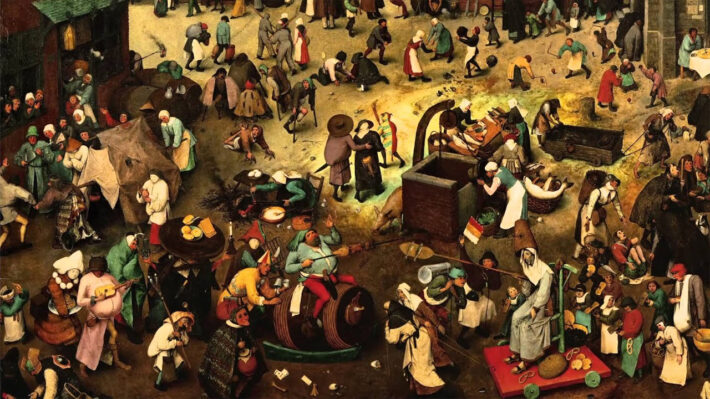
The image is Pieter Brueghel the Elder “The Fight Between Carnival And Lent” 1559
Matthew 6: 1-6, 16-18 – Ash Wednesday & Wednesday of Ordinary Time week 11 (King James Audio Bible, Spoken Word)
1 TAKE heed that ye do not your alms before men, to be seen of them: otherwise ye have no reward of your Father which is in heaven.
2 Therefore when thou doest thine alms, do not sound a trumpet before thee, as the hypocrites do in the synagogues and in the streets, that they may have glory of men. Verily I say unto you, They have their reward.
3 But when thou doest alms, let not thy left hand know what thy right hand doeth:
4 That thine alms may be in secret: and thy Father which seeth in secret himself shall reward thee openly.
5 ¶ And when thou prayest, thou shalt not be as the hypocrites are: for they love to pray standing in the synagogues and in the corners of the streets, that they may be seen of men. Verily I say unto you, They have their reward.
6 But thou, when thou prayest, enter into thy closet, and when thou hast shut thy door, pray to thy Father which is in secret; and thy Father which seeth in secret shall reward thee openly.
16 ¶ Moreover when ye fast, be not, as the hypocrites, of a sad countenance: for they disfigure their faces, that they may appear unto men to fast. Verily I say unto you, They have their reward.
17 But thou, when thou fastest, anoint thine head, and wash thy face;
18 That thou appear not unto men to fast, but unto thy Father which is in secret: and thy Father, which seeth in secret, shall reward thee openly.
In these Bible verses, from the Sermon on the Mount, Jesus gives to his people instruction regarding the three traditional works of mercy of the Jews, namely almsgiving, prayer and fasting. A key message is that, when we pray, when we fast and when we give charity, this is not supposed to be because we wish to be seen as pious by other people. Jesus satirizes those hypocrites who wish to be glorified by other people for their fasting, their giving of alms and their prayers. They sound a trumpet in the streets and strike extravagant attitudes in the synagogues. They visibly mortify their bodies and pull dismal expressions. Jesus portrays such hypocrites as ridiculous. Their piety is not to do with their love of God; it is to do with their wish to be seen as ‘pious’ by their fellow man. And such will be their reward.
Jesus teaches us that, when we give, we must not then declare how much we are giving to others, or even that we are giving. We should, as it were, smuggle our small mite into the offertory. This may then be the act of giving which is most valuable. We are then giving solely through love, of God and of other people, and indeed of ourselves.
Jesus teaches us how to pray. While we share in our community of faith, we are called additionally to be alone with our Father. This is where we meet the truth and the reality of ourselves. While we pray, we are with Jesus. It is beautiful to recall how Jesus prayed, and this at some of his most difficult moments. As we pray, we follow Jesus’ example. We pray to him and through him and with him.
Jesus also teaches us that, when we pray, simplicity and honesty, sincerity, are everything. God already knows our needs. He knows our thoughts. He knows what we keep in our heart of hearts. It is pointless to heap up empty phrases, as if we are going to fool God through a profusion of big, complicated words. It is the truth that we carry inside ourselves, and our being with that truth, that really matters. And so he teaches us the Lord’s Prayer, the Our Father.
As Lent begins, it is perhaps Jesus’ teaching regarding fasting that is uppermost in our minds. And it is a beautiful thought, true to the reality of our faith, that as we give up certain pleasures for the duration of Lent, we should express happiness, really the joy that Christ’s message brings to us.
Lent is a time of penance. We might ask ourselves why we are giving things up for Lent. What is the point of, for example, not eating meat or drinking alcohol? Why ‘mortify’ ourselves, even in small, symbolic ways, when we could easily just roll along with all life’s pleasures? Why remind ourselves that this flesh and the pleasures thereof are temporary; that it is the life of the world to come that really matters? The questions, once we have remembered to ask them, seem to answer themselves.
As we embark on our Lenten journey, may we make each day a day of prayer and of giving and of fasting. Let us seek to imitate Christ each day. May we acknowledge our sins and seek reconciliation. May we give ourselves more and more fully to God in every moment.
And perhaps, when people ask us what we are giving up for Lent, we should keep that our own little secret, between ourselves and God.
‘Let us fix our thoughts on the blood of Christ; and reflect how precious that blood is in God’s eyes, inasmuch as its outpouring for our salvation has opened the grace of repentance for all mankind… Let us turn our eyes to the Father and Creator of the universe, and when we consider how precious and peerless are his gifts of peace, let us embrace them eagerly for ourselves.’ Pope St Clement I to the Corinthians


King James Audio Bible | Endnotes
What is Ash Wednesday?
Ash Wednesday is a Christian religious holiday that marks the beginning of Lent, the 40-day period of fasting and reflection leading up to Easter. On Ash Wednesday, participants attend church services where they receive ashes in the form of a cross on their forehead as a symbol of penance and mortality. The ashes are typically made from palm branches that were blessed on the previous year’s Palm Sunday.
When did Ash Wednesday start?
The exact origins of Ash Wednesday are uncertain, but it has been observed by the Catholic Church for several centuries. The use of ashes as a symbol of repentance dates back to the Old Testament, and early Christians also used ashes as a sign of mourning and penance. The imposition of ashes on the forehead in the form of a cross became a common practice in the Western Church during the eighth century. Since then, Ash Wednesday has been established as an important liturgical observance and a central part of the season of Lent, celebrated annually by millions of Christians around the world.
Why is Lent 40 days?
Lent is observed for 40 days to commemorate the 40 days Jesus spent fasting in the wilderness, as described in the New Testament. According to the Gospels, Jesus was tempted by the devil during this time, but he resisted temptation and emerged from the wilderness strengthened in his resolve to fulfill his mission. The 40-day period of Lent is seen as a time for Christians to imitate Jesus’ fasting and self-discipline, to reflect on their own spiritual lives, and to prepare for the celebration of Easter. The 40 days of Lent are also meant to symbolize the 40 years that the Israelites spent wandering in the wilderness before they entered the Promised Land.
Who celebrates Ash Wednesday?
Ash Wednesday is primarily celebrated by Christians, particularly those of the Catholic and some Protestant denominations, such as Anglicans and Methodists. It is observed by millions of people around the world, including those in North America, Europe, and Latin America, as well as other countries with significant Christian populations. Ash Wednesday is considered an important observance in the liturgical calendar, and many people choose to participate in the traditions and rituals associated with the day as a way of marking the beginning of the season of Lent and preparing for Easter.
What happens on Ash Wednesday?
Ash Wednesday is a solemn day of fasting and reflection observed by Christians, especially Catholics. On this day, people attend Mass or church services where they receive ashes, usually made from palm branches blessed the previous year on Palm Sunday, which are then imposed on the participants’ foreheads in the shape of a cross. Here the priest says to each penitent: ‘Remember you are dust and to dust you shall return.’ This is a sign of penance and mourning for past sins. In addition to the imposition of ashes, Ash Wednesday services often include the singing of hymns, prayers, and homilies or sermons about the significance of the day and the season of Lent. Some people may also choose to fast or give up certain luxuries or pleasures for the duration of Lent as a form of self-discipline and spiritual reflection.
What is the purpose of Ash Wednesday?
Ash Wednesday marks the beginning of the season of Lent, which is a period of reflection, fasting and penance leading up to Easter. On this day, ashes made from palm branches blessed on the previous year’s Palm Sunday are placed on the foreheads of participants in a sign of repentance, humility and mortality. It is a reminder to live a life of devotion and to seek forgiveness for past wrongs.


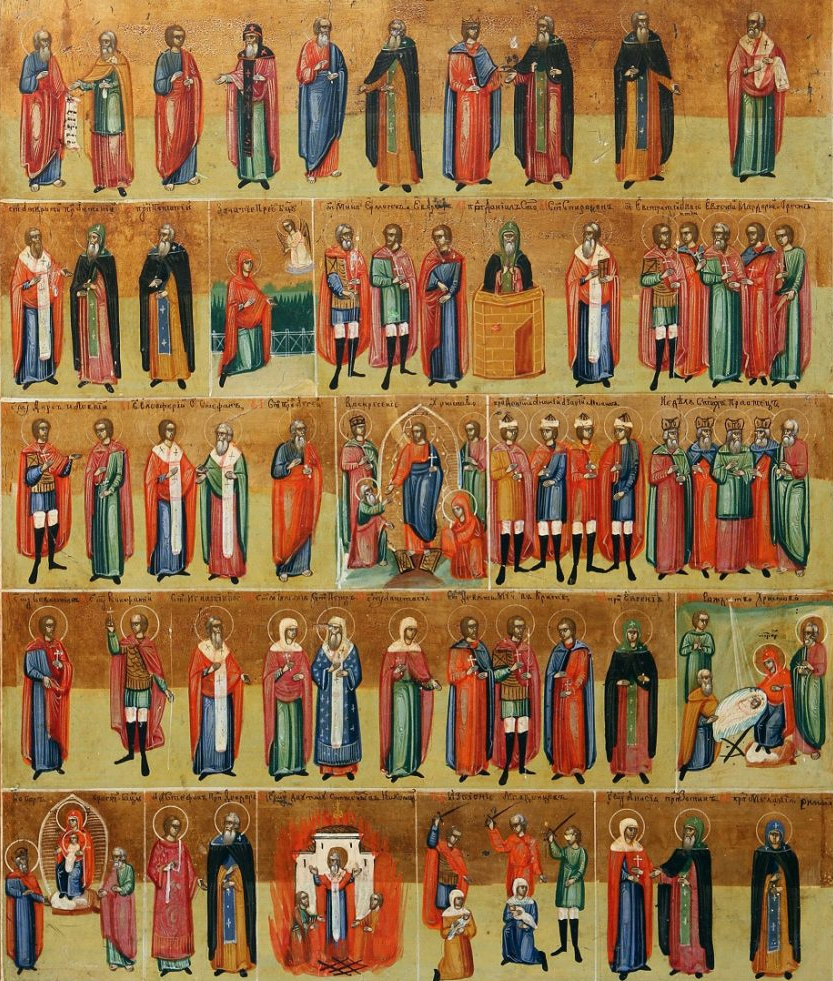
The seventy have been sent ahead of Jesus to prepare the way for Jesus; they have been sent to the towns and places – the ‘cities’ of the Gospels are for the most part small towns and villages – to which Jesus intended to travel. These disciples have been sent in a spirit of poverty, told by Jesus to trust in God, and so as a corollary in human hospitality. The disciples have borne the message that the kingdom of God is imminent. In humility as in poverty, they have been sent by Jesus as evangelists. In Bible verses, we witness the first missionaries, swelled with good news, return to Lord Jesus to share the joy of the initial, explosive success of their work of evangelizing [ … ]
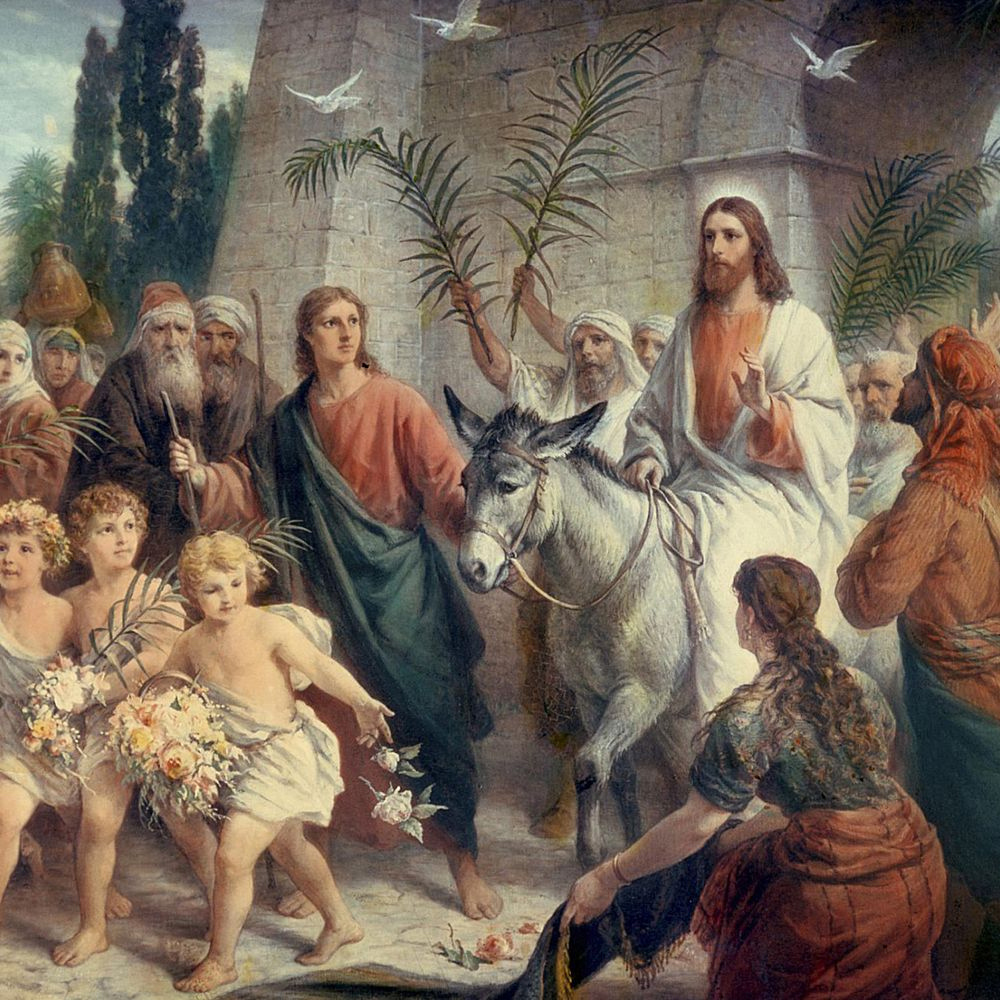
We process. Glass exhibition cases, old reliquaries. A forearm here; here a nun’s fingertip. In chapel, at a glance, there are the usual faces. But they all stand to attention. Jonathan breaks from the procession to – fire the organ with oomph and dignity: Ride on! ride on in majesty! The angel-squadrons of the sky look down with sad and wondering eyes to see the approaching sacrifice. When we’ve done the readings, the Arch holds that tree in his hands to deliver the homily. He rocks quietly on his feet, some few seconds, as if balance defeated it. A way you might affect as the Spirit moves… Copying. Then he says: ‘Our palm fronds may seem to us today rather dry. I mean this not in a literal sense, but by the standards of those who originally lined the roadways in order to welcome Jesus into Jerusalem, as they proclaimed Jesus to be the Messiah, who would be clambering up and ripping their palm branches fresh from off the trees. I think perhaps also our faith is somewhat distant from that of the people there on that highroad into Jerusalem, and something of our sense of the meaning has shifted in vividness from what it was then. And of course the expectation of all those many people is markedly different, but in many important respects the same. There are the same essential qualities to all our faith in God, which springs complete from our humanity, and that is one and the same in value for all of us, and time is consistent on this point. So then, let us renew the fullness of Catholic faith, and let us ask the Lord’s blessing as we embark upon our Holy Week. ‘Our Lord enters into Jerusalem in order to refresh us. He is to die in order that we may have life. There is a living reality here, both spiritual and as entangled in the joy of our daily living. We have Ladies’ Day where I grew up. They still have it, and they close the roads off, and little children parade, dressed-up like spring brides. When I was a boy, there was a May Day festival, and there was a May pole on the field, with the people dancing, like Morris dancers might be one way of visualizing this if you’ve never seen it, with their ribbons tied onto the top of the May pole, and they would weave around each other, dressing the pole, which is what we called it. It was like a dance with red and white and blue ribbons all hung off of the top of the May pole, which stood there all year, only like a telegraph pole, but it was concreted in, and then there was a slide, and swings – one baby-swing and two you could have a go at – terrible health and safety but that’s what it was in those days. ‘There was a round-a-bout – we used to run it round and round to try to get it off its central axis. It were rusty as anything and creaked like mad – on concrete. And climb up where it was all greased up at the top. Ruth, who was big as the next four of us, used to sit there sucking on the lollipops we nicked for her from Raddies, and she’d direct matters. We were trying to destroy it, and get it to dislodge from its central axis, and fly away – roll off into that farmer’s field, which he only ever kept for silage, but we never succeeded. There was a car someone had left there so we spent forever smashing that up, until someone who lived in one of the houses there took exception to our doing that, so he put thick grease under the door handles and gave us a right talking to. ‘It would only be a few stands, hot-dogs and things like that. The man selling the hot dogs would have his records on full blast. There’d be a couple of set-up stalls. Air-rifles – that sort of thing. But we all had them, and we all went shooting, of course, if not with twelve bores then with smaller gauge. Or pay a pound – I have no idea how much it was in actual fact then – it might have only been a few pennies – and we’d get all that time smashing up the crockery the man would put up for us to smash on the dressers. That was my particular favourite thing to do at these festivals, by the way, in case you were wondering. You got a little bucket of so many cricket balls. ‘I dread to think what went into those hot dogs. Probably EE rules would forbid it now. But it was a fair mix in those days. A lot of young people then were C of E. We’ve done a lot to hang onto our young people, which is a tremendous encouragement when you consider how things are, while in recent decades the Church of England hasn’t been so successful. People still want it on feast days and what are essentially now civic celebrations. It’s strange to see, though, how all the little stands there people have are run by the police and people like that along those lines. There’s no May pole. That was a sort of faith that ran and ran beneath all the theoreticals of it in the 1960s and the 1970s and into the 1980s. The May pole isn’t there now in the particular place I’m thinking of. Considering May poles were officially suppressed hundreds of years ago – as a part of the protestant reformation. One or two of you are probably thinking I’m remembering things from that time! ‘I should have liked to say that those processionals were so hardwired into us, that even after the last thirty years, when I became a bishop, they are still with us. They were […]
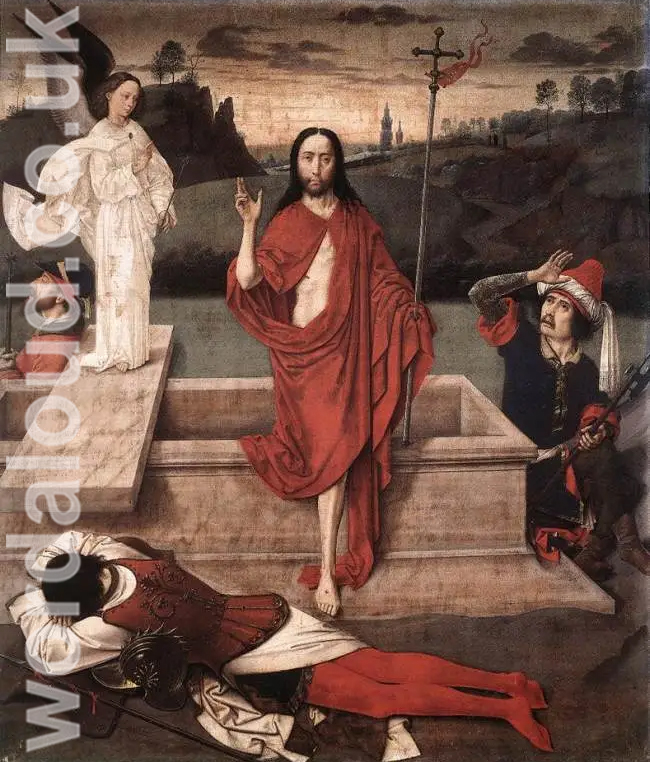
Saint Maximus the Confessor interprets Christ’s saying about the lamp set upon a lamp stand (Matthew 5:15; Luke 8:16) as a theological statement about the Incarnation and the Church. The ‘lamp’ is Christ himself — the eternal Word of the Father, who has taken human nature and become visible within creation. The imagery unites revelation and embodiment: divine wisdom, formerly hidden, is now manifest through the humanity of Jesus [ … ]
