
Christian Art | Sign Of The Times
Luke 11: 29-32 – Lent Week 1, Wednesday | Week 28 Ordinary Time, Monday (Audio Bible KJV, Spoken Word)
29 ¶ And when the people were gathered thick together, he began to say, This is an evil generation: they seek a sign; and there shall no sign be given it, but the sign of Jonas the prophet.
30 For as Jonas was a sign unto the Ninevites, so shall also the Son of man be to this generation.
31 The queen of the south shall rise up in the judgment with the men of this generation, and condemn them: for she came from the utmost parts of the earth to hear the wisdom of Solomon; and, behold, a greater than Solomon is here.
32 The men of Nineveh shall rise up in the judgment with this generation, and shall condemn it: for they repented at the preaching of Jonas; and, behold, a greater than Jonas is here.
The crowds gather to see and to hear Jesus. Among them, as Matthew relates in his Gospel (Matthew 12: 38-42), are the scribes and Pharisees, who ask for a sign from Jesus to prove his divinity. Jesus refuses to confirm his preaching with dramatic signs. It is his teaching Jesus wishes the people to hear. Through seeking to taunt Jesus, and through their unbelief, the scribes and the Pharisees express the hardness of their hearts. Christ is present to them and they refuse to see. Christ is speaking to them and they refuse to hear. Through the Gospel, we have witnessed Christ’s miracles. And we are called to hear his word. ‘An evil and adulterous generation seeketh after a sign.’
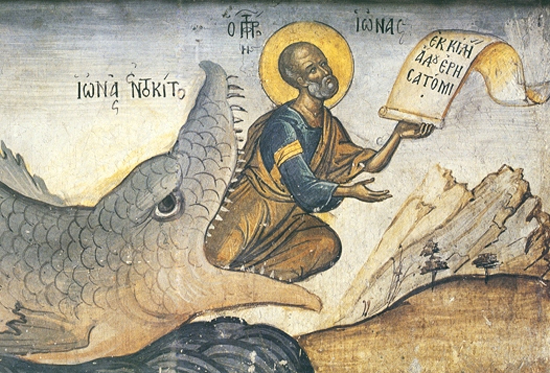
Christ throws the taunts of the scribes and the Pharisees back at them: ‘This is an evil generation: they seek a sign; and there shall no sign be given it, but the sign of Jonas the prophet.’ Jesus replies, in other words, by announcing the mystery of his death and resurrection, using the parallel of the case of Jonah. Matthew tells us of Christ’s explanation of what he has said: ‘For as Jonas was three days and three nights in the whale’s belly; so shall the Son of man be three days and three nights in the heart of the earth.’
Jonah was sent by God to Nineveh, in Mesopotamia. He was a sign to them. Through his preaching, the people of Nineveh were converted and did penance, accepting his message. It is a striking contrast with the response of the people to Jesus, one infinitely greater than he who prefigured him.
The crowds are also reminded of the great journey of the Queen of Sheba to hear the wisdom of Solomon. Jesus is prefigured also in Solomon, whom Jewish tradition saw as the epitome of the wise man. The pagan Queen makes such effort to hear Solomon’s wisdom, and yet the Jews, the people of God, cannot recognise Christ, who is infinitely greater than Solomon.
It is the converts who will rise to condemn this generation who reject Christ when the day of judgement is here. Christ’s message, the Gospel, will spread through the world to the Gentiles, and as St Paul teaches, Christ does not require circumcision of us. We are called to a deep conversion through our hearing of Christ’s word. We are called to hear the word of God and keep it.
‘When Jesus the son of Nun passed over the Jordan with his people, he circumcised them a second time with a stone knife. Jesus our Saviour circumcises a second time, with circumcision of the heart, those who believe in him and are washed in baptism. They are circumcised with a sword which is his word, sharper than any two-edged sword… Blessed are those who are circumcised in their hearts and are born again of water in this second circumcision. They will share in the inheritance of Abraham.’ Aphraates
Audio Bible KJV | Endnotes
Sign Of The Times
The passage begins with the people asking for a sign, saying: ‘Master, we would see a sign from thee.’ (Luke 11:29, KJV) They were seeking some kind of proof that Jesus was who he claimed to be. Jesus responds by telling them that ‘an evil and adulterous generation seeketh after a sign; and there shall no sign be given to it, but the sign of the prophet Jonas’ (Luke 11:29-30, KJV). In other words, Jesus is saying that the people’s desire for a sign is a symptom of their unbelief and lack of faith.
Jesus then goes on to explain what he means by the sign of Jonah: ‘For as Jonas was a sign unto the Ninevites, so shall also the Son of man be to this generation.’ (Luke 11:30, KJV) The story of Jonah is well-known: Jonah was sent by God to preach to the people of Nineveh, warning them of impending judgment. The people of Nineveh repented and were spared. Jesus is saying that just as Jonah was a sign to the people of Nineveh, so Jesus himself will be a sign to the people of his generation.
What does this mean for us today? There are a few different ways to interpret this passage. One way is to see it as a warning against seeking after signs and wonders as a way of proving one’s faith. As Jesus says in Matthew 24:24: ‘For there shall arise false Christs, and false prophets, and shall shew great signs and wonders; insomuch that, if it were possible, they shall deceive the very elect.’ (KJV) In other words, just because someone can perform miracles doesn’t necessarily mean that they are sent by God.
Another way to interpret this passage is to see it as a call to repentance. The people of Nineveh repented when Jonah preached to them, and Jesus is saying that the people of his generation need to do the same. As the apostle Peter writes in 2 Peter 3:9: ‘The Lord is not slack concerning his promise, as some men count slackness; but is longsuffering to us-ward, not willing that any should perish, but that all should come to repentance.’ (KJV) God is patient with us, giving us time to turn away from our sins and turn to him.
Finally, this passage can also be seen as a foreshadowing of Jesus’ death and resurrection. Just as Jonah was in the belly of the fish for three days and three nights, so Jesus would be in the tomb for three days before rising again. As the apostle Paul writes in 1 Corinthians 15:3-4: ‘For I delivered unto you first of all that which I also received, how that Christ died for our sins according to the scriptures; And that he was buried, and that he rose again the third day according to the scriptures.’ (KJV)
Theologians and scholars have offered their own interpretations of this passage. For example, Saint Augustine of Hippo saw the sign of Jonah as a symbol of Christ’s resurrection, while John Calvin saw it as a warning against seeking after signs and wonders.



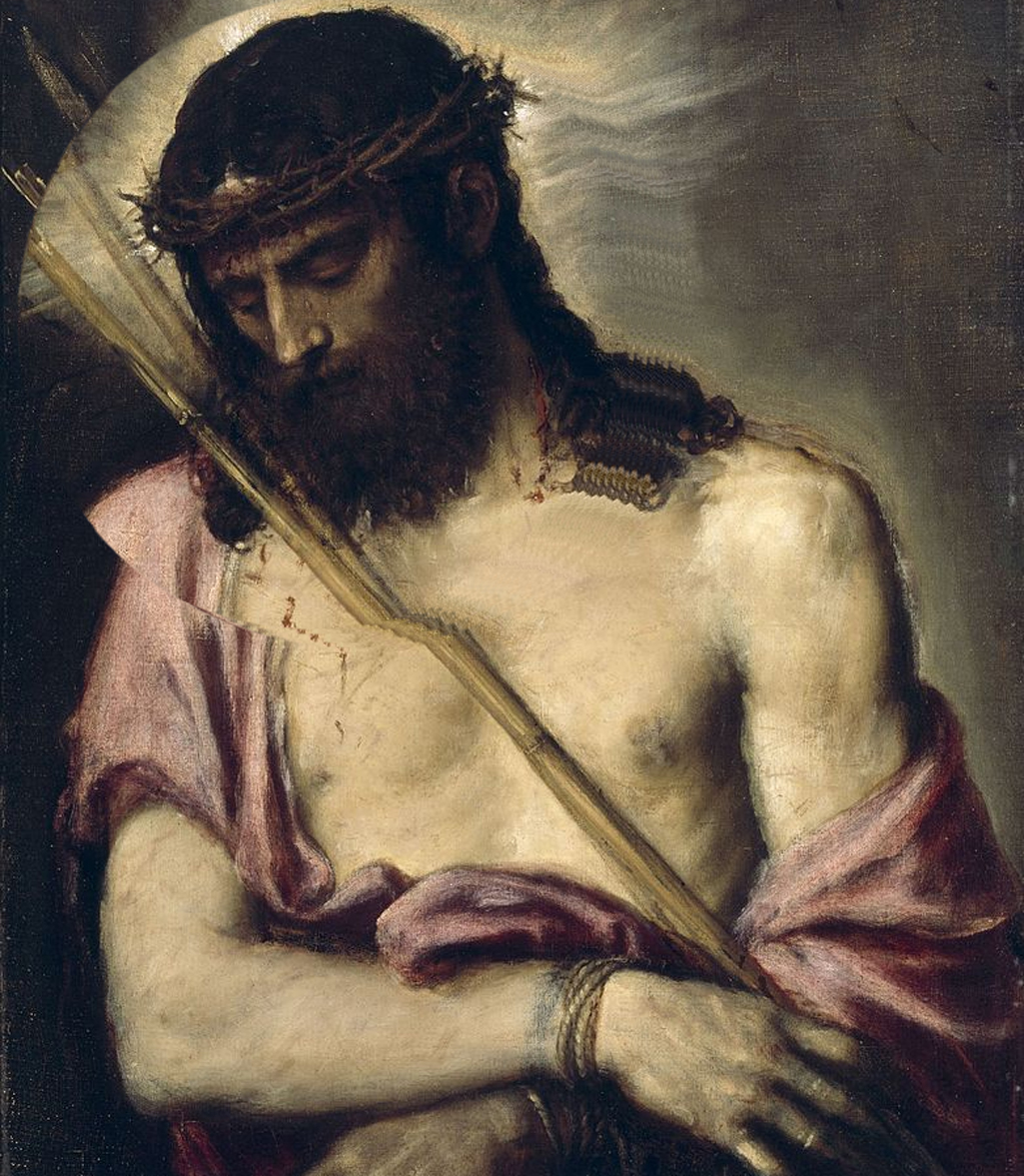
Jesus has told his disciples about the Passion to come for the third time, as they journey to Jerusalem, and still this grizzly series of events, of mockery, scourging and death, is quite beyond the disciples’ comprehension. It is a great testimony to the apostles’ honesty and humility that, in recounting the Gospel, they do not seek to conceal their early weaknesses; these men chosen by Jesus have yet to be transformed through grace, to become the great pillars of the Church. Now further weakness is recalled, as the disciples reveal their ambition to have a powerful and prestigious position when the Kingdom comes [ … ]
Saint Ambrose of Milan (c. 340–397), one of the Latin Fathers of the Church, offers in this commentary a theological reflection on Psalm 49(48), where it is written: ‘Brother cannot redeem brother, nor give to God a ransom for him’ (Ps 49:7). Ambrose interprets this in light of Christ’s unique role as Redeemer, contrasting human limitation with divine sufficiency [ … ]

Saint Teresa wrote during a period of profound spiritual and political upheaval in 16th-century Spain, amidst the Counter-Reformation and a Church in crisis. Her audience included not only cloistered nuns but a wider ecclesial community in need of reform and renewal. Her insight into prayer as intimate conversation with God stemmed from her personal experience of spiritual desolation, ecstatic union, and eventual peace in God. The call for the Kingdom to come ‘in us’ is not abstract: it is grounded in Teresa’s urgent desire that each soul be transformed into a sanctuary where God may reign [ … ]