

Christian Art | George Herbert | The Temple | The Church | Holy Communion
George Herbert | The Temple | The Church | Holy Communion
Not in rich furniture, or fine aray,
Nor in a wedge of gold,
Thou, who from me wast sold,
To me dost now thy self convey;
For so thou should’st without me still have been,
Leaving within me sinne:
But by the way of nourishment and strengh
Thou creep’st into my breast;
Making thy way my rest,
And thy small quantities my length;
Which spread their forces into every part,
Meeting sinnes force and art.
Yet can these not get over to my soul,
Leaping the wall that parts
Our souls and fleshly hearts;
But as th’ outworks, they may controll
My rebel-flesh, and carrying thy name,
Affright both sinne and shame.
Onely thy grace, which with these elements comes,
Knoweth the ready way,
And hath the privie key,
Op’ning the souls most subtile rooms;
While those to spirits refin’d, at doore attend
Dispatches from their friend.
Give me my captive soul, or take
My bodie also thither.
Another lift like this will make
Them both to be together.
Before that sinne turn’d flesh to stone,
And all our lump to leaven;
A fervent sigh might well have blown
Our innocent earth to heaven.
For sure when Adam did not know
To sinne, or sinne to smother;
He might to heav’n from Paradise go,
As from one room t’another.
Thou hast restor’d us to this ease
By this thy heav’nly bloud;
Which I can go to, when I please,
And leave th’ earth to their food


George Herbert | The Temple | The Church | Holy Communion
This poem centres on themes of spiritual nourishment and intimate connection between the divine and the individual soul. The poem begins by contrasting superficial wealth, symbolized by ‘rich furniture’ and ‘a wedge of gold’, with the poet’s experience of spiritual fulfilment. Here, material objects hold no power to convey the divine presence. Instead, the poet emphasizes a more personal and humble approach: sustenance provided by Christ in the Eucharist, which enters into the poet ‘by the way of nourishment and strength’. This nourishment implies a steady, almost unseen influence that fills the body and soul, offering rest and inner strength while combating the forces of sin.
The poem further describes the process by which spiritual sustenance permeates Herbert’s being. As it enters, divine grace expands from small beginnings to inhabit ‘every part’, confronting human propensity to sin. Despite this divine infiltration, the poet notes a barrier between his spiritual and physical existence. This wall—between ‘souls and fleshly hearts’—represents division of spirit and flesh, a boundary sin cannot easily transcend. The soul, however, is fortified and defended against sin through the elements of communion, which stand as protective outposts (‘outworks’) against shame and temptation.
In the following stanza, Herbert describes the ‘privy key’, a metaphor for the grace of God brought through the sacraments, which opens the ‘soul’s most subtle rooms’. This internal spiritual exchange, facilitated by communion, becomes a direct communication with God, portrayed as a ‘friend’. The relationship here is intimate, as the communion is not only seen as sustenance but also as a connection with the divine that transcends physical limitations.
Herbert pleads for the unity of soul and body, asking for his ‘captive soul’ to be reunited with God. This union, he suggests, is akin to resurrection or eternal life, achievable by God’s grace alone. Herbert reflects on how, before the Fall, humanity’s relationship with God was seamless, free from barriers. This pure state, Herbert imagines, allowed Adam to move ‘from Paradise to heaven’ effortlessly, as if crossing from ‘one room to another’. Sin, however, has since complicated this relationship, creating a barrier that now requires divine grace to overcome.
In the closing stanzas, Herbert affirms that through Christ’s sacrifice, believers are ‘restored to this ease’. The Eucharist offers a path back to unity with God, which is accessible ‘when I please’, signifying the personal, voluntary nature of this spiritual engagement. Herbert concludes by contemplating his place in the world. The material world, symbolized by ‘earth’ and ‘food’, is left behind as he turns toward the divine sustenance provided by Christ. Through this act of communion, Herbert finds a way to transcend earthly confines and reclaim the spiritual unity lost through sin.



In this poem, Herbert reflects on the limits of human strength and importance of divine assistance. The poem begins with the modest admission that ‘to write a verse or two is all the praise, / That I can raise’, indicating that any expression of gratitude or devotion Herbert offers to God is inherently limited. This acknowledgment of inadequacy runs throughout the poem, shaping a tone of humility and dependence on divine strength [ … ]

Reading Mark’s Gospel, we have a wonderful sense of just how active and mobile Jesus’ ministry around Galilee was. The words ‘immediately’ and ‘straightway’ recur again and again. There is joy and purpose in these words. There is the sense of astonishment people experienced listening to Jesus. And there is the touch of danger, the revolutionary energy of Jesus, and the plots of his enemies [ … ]
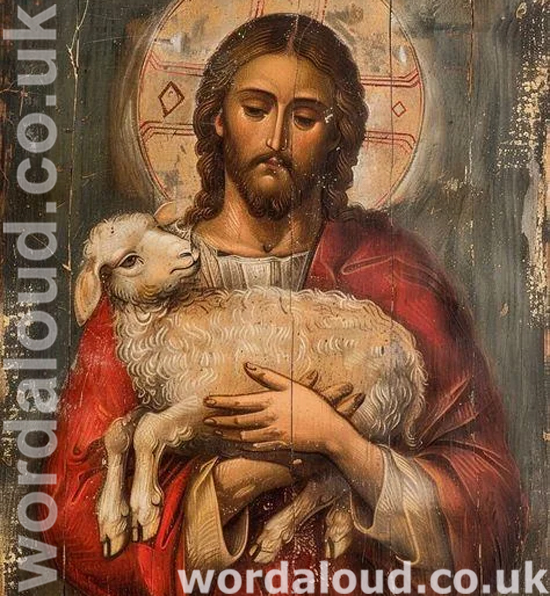
Saint Augustine develops his teaching on pastoral responsibility by focusing on how shepherds should address the realities of suffering and temptation in the Christian life. He begins with the principle from Hebrews 12:6: “God chastises every son whom he acknowledges.” This verse provides both warning and reassurance: chastisement is not a sign of rejection but of belonging, since even Christ, though sinless, endured suffering in the flesh. By sharing in discipline, the faithful are confirmed as adopted children of God and coheirs with Christ [ … ]
