

Christian Art | Prayer With Jesus | Psalms | Praise For God’s Care For Jerusalem | King David As A Boy | Audio KJV | Love Revealed By Jesus Christ | King James Audio Bible
Psalm 147 | King James Audio Bible
YouTube: Psalm 147 KJV | King James Audio Bible | Word Aloud
Psalm 147 begins with an instruction: ‘Praise ye the LORD: for it is good to sing praises unto our God; for it is pleasant; and praise is comely.’ This command introduces a composition that details God’s interactions with the world and His people, grounding the act of praise in observable actions and attributes of God.
The psalm describes God’s activities in restoration and healing, noting, ‘The LORD doth build up Jerusalem: he gathereth together the outcasts of Israel. He healeth the broken in heart, and bindeth up their wounds.’ These verses point to God’s engagement with both the community through the rebuilding of Jerusalem and individuals by healing their afflictions.
God’s sovereignty over creation is affirmed with, ‘He telleth the number of the stars; he calleth them all by their names.’ This statement emphasizes God’s omnipotence and omniscience, showcasing His control over the cosmos.
The psalm also details God’s provision for the earth, stating, ‘Who covereth the heaven with clouds, who prepareth rain for the earth, who maketh grass to grow upon the mountains.’ This provision extends to all living creatures, as ‘He giveth to the beast his food, and to the young ravens which cry.’
A distinction is made regarding the objects of God’s pleasure: ‘He delighteth not in the strength of the horse: he taketh not pleasure in the legs of a man.’ Instead, God’s favour is towards those who fear Him and hope in His mercy, highlighting a relationship based on reverence and hope rather than physical might.
The psalm then turns to God’s blessings upon Jerusalem and Zion, illustrating God’s protection and provision for His people: ‘He hath strengthened the bars of thy gates; he hath blessed thy children within thee.’
The control of God over the natural order is depicted with, ‘He sendeth forth his commandment upon earth: his word runneth very swiftly.’ This control is further illustrated through the changing seasons and weather, demonstrating God’s power.
The psalm concludes by reaffirming the unique relationship between God and Israel, noting the exclusive revelation of His laws and judgments to them: ‘He sheweth his word unto Jacob, his statutes and his judgments unto Israel.’
Psalm 147, through its verses, presents a comprehensive portrait of God as Creator, Healer, Provider, and Lawgiver, using direct quotations to highlight the reasons for and the importance of praise. The psalm encapsulates a call to recognize and celebrate God’s presence and actions in the world, emphasizing a theology of gratitude and the duty of acknowledging God’s manifold gifts and acts.


Psalm 147 | King James Audio Bible
Praise ye the LORD: for it is good to sing praises unto our God; for it is pleasant; and praise is comely.
The LORD doth build up Jerusalem: he gathereth together the outcasts of Israel.
He healeth the broken in heart, and bindeth up their wounds.
He telleth the number of the stars; he calleth them all by their names.
Great is our Lord, and of great power: his understanding is infinite.
The LORD lifteth up the meek: he casteth the wicked down to the ground.
Sing unto the LORD with thanksgiving; sing praise upon the harp unto our God:
Who covereth the heaven with clouds, who prepareth rain for the earth, who maketh grass to grow upon the mountains.
He giveth to the beast his food, and to the young ravens which cry.
He delighteth not in the strength of the horse: he taketh not pleasure in the legs of a man.
The LORD taketh pleasure in them that fear him, in those that hope in his mercy.
Praise the LORD, O Jerusalem; praise thy God, O Zion.
For he hath strengthened the bars of thy gates; he hath blessed thy children within thee.
He maketh peace in thy borders, and filleth thee with the finest of the wheat.
He sendeth forth his commandment upon earth: his word runneth very swiftly.
He giveth snow like wool: he scattereth the hoarfrost like ashes.
He casteth forth his ice like morsels: who can stand before his cold?
He sendeth out his word, and melteth them: he causeth his wind to blow, and the waters flow.
He sheweth his word unto Jacob, his statutes and his judgments unto Israel.
He hath not dealt so with any nation: and as for his judgments, they have not known them. Praise ye the LORD.

Psalm 147 | King James Audio Bible
- Praise As A Fitting Response: The imperative to praise God for His inherent goodness and the pleasantness of worship.
- Restoration And Gathering: God’s action in rebuilding Jerusalem and gathering the exiles of Israel.
- Healing And Care: God’s attention to individuals, healing the brokenhearted and binding their wounds.
- Sovereignty Over Creation: God’s knowledge of the stars and control over the cosmos, illustrating His omnipotence and omniscience.
- Provision For All Life: God’s sustenance provided to both the earth and its creatures, showcasing His role as the provider.
- Value In Reverence And Hope: God’s delight in those who fear Him and hope in His mercy, rather than in physical strength.
- Protection And Blessing For His People: God’s specific blessings upon Jerusalem and Zion, emphasizing His protection and provision.
- Control Over Natural Order: The demonstration of God’s command over the elements, affecting weather and seasons.
- Unique Relationship With Israel: The specific revelation of God’s laws and judgments to Israel, highlighting a special covenant relationship.
- Call To Continuous Praise: The concluding reiteration of praise to God, acknowledging His unmatched greatness and the depth of His care.




Psalm 147 begins with an instruction: ‘Praise ye the LORD: for it is good to sing praises unto our God; for it is pleasant; and praise is comely.’ This command introduces a composition that details God’s interactions with the world and His people, grounding the act of praise in observable actions and attributes of God [ … ]
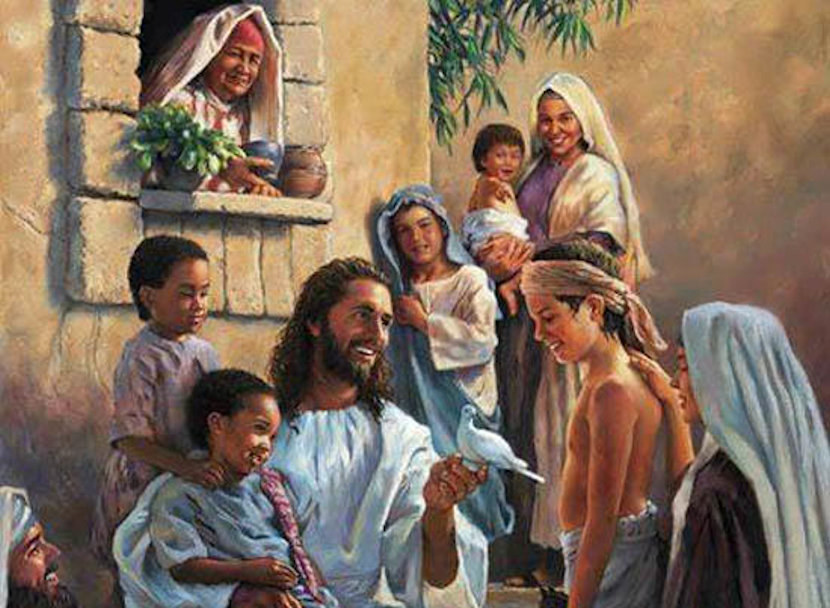
Relatives of Jesus, with Jesus’ mother Mary, have come to speak with him, but Jesus does not wish to meet with them. Jesus had problems with his family. We may consider some of the ways in which our own families support us, and at other times may hinder us from doing what is right. Jesus’ refusal to meet with his family is clearly expressed in all three of the Synoptic Gospels [ … ]
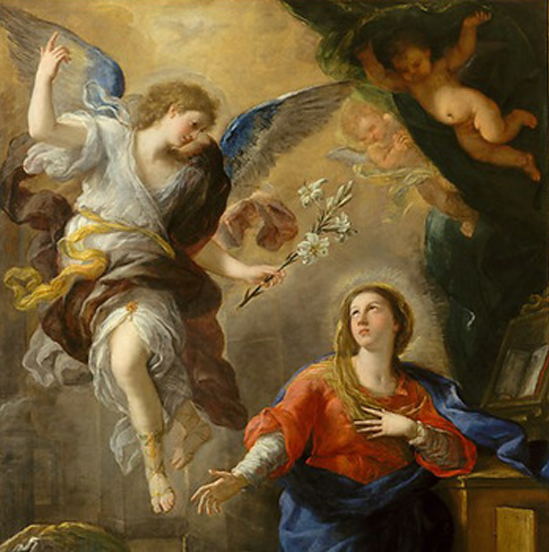
Sometimes, when I read my Bible, I pause in the reading and say to myself: ‘This bit’s real.’ It would be fair to say, I have issues with Mary, because, contrary to what we are taught to say, Mary isn’t my mother. Rather: Mum is. One bit of the Bible-text says this: And when his family heard it, they went out to seize him, for people were saying, “He is beside himself.” … And his mother and his brothers came; and standing outside they sent to him and called him. And a crowd was sitting about him; and they said to him, “Your mother and your brothers are outside, asking for you.” And he replied, “Who are my mother and my brothers?” And looking around on those who sat about him, he said, “Here are my mother and my brothers! Whoever does the will of God is my brother, and sister, and mother.” (Mark 3: 21; 31-35.) Here she comes. She is in considerable distress. I can imagine that. I can relate to that. To save her boy from whatever he’s got himself into this time. And you’re not telling me there isn’t something inside that. Her boy is beside himself. Radical. Radicalized. Radicalizing. A misunderstood word. /ˈradɪk(ə)l/ adjective & noun. 1 Forming the root, basis, or foundation; original, primary. 2a Inherent in the nature of a thing or person; fundamental. b Of action, change, an idea: going to the root or origin; far-reaching, thorough. c Advocating thorough or far-reaching change. d Characterized by departure from tradition; progressive; unorthodox. ‘He has a demon! And he is mad!’ – thus ‘the Jews’. (e.g. John 10: 20.) Come home! It’s all she wants. His family want him back now. But it is an exclusive cult: there is an inside and there is an outside; and on the outside, they are not meant to understand, lest they be converted. He has defined himself as different from anything she was. Only at the end does Jesus say to his Mum – and with savage, bitter irony: ‘Woman, behold your son.’ And then he dies. Hail Mary, full of grace, the Lord is with thee. Blessed art thou among women and blessed is the fruit of thy womb Jesus. Holy Mary, Mother of God, pray for us sinners now and at the hour of our death. We ask that we might find Mary in our hearts as a Yes! place for Jesus. It is also recommended that we pray to Jesus that we may be further in oneness with Mary. It is self-emptying, such that we only exist insofar as we are responsive to God’s Word. * Last term, and put-out to pasture, the old Archbishop Emeritus came over to stay for a few days and did the odd class with us. He spoke of Yes! as the meaning of Mary’s virginity. And we were not very nice about him. One or two took umbrage. One or two got the hump. In a sense, his Grace, the Arch, basically wanted to move anyone he’d ever known from a high-place – a mountain – received theological ‘truth’ – to an imminent, human plane. Earthing the spiritual. Recalibrating metrics of life’s believability toward a spiritual sense of things. He might have asked the impermissible question: what happened? His Grace described it. God’s love as a cloud. This descended upon Mary – and subsumed her. Within the cloud, Mary capitulated utterly. She became only and purely a response to God’s love. As he spoke, the Arch cradled her. He carried her in his lap – in his hands. His Grace was a consecrated bishop. He was faith. He sat squat, a rounded man, hands cupped and ankles crossed, fingers interlocked, with parted thighs. Rumpled, washed, speckled. A lifetime’s skin… There could be no doubt His Grace spoke through long-term personal relationship with Mary. It was Julian went for him: ‘So are you saying Mary was a Virgin? Or are you not saying Mary was a Virgin?’ Nasty. No, it wasn’t pretty. Julian twisting his silver ring. For a moment, what Julian had said to the Arch simply failed to communicate. No, for a moment, that dumped on the air meant nothing. Then His Grace said: ‘There is a range of possible meanings we may understand in the question of Mary’s virginity. For example, there are understandings of the word virginity entailed in the action of giving birth.’ Julian said: ‘Duh! So had she had sex or hadn’t she?’ Trigger words. No, it wasn’t pretty. On that went for a little while. At length, Julian’s point seemed reluctantly conceded. Then the Arch told us a new story, an additionally human event, the more to baffle us. Controversially, he told us that Mary could not have been Joseph’s first wife, for this would not have been the way of things in the society of that time. His belief was that Joseph must have taken Mary into his household through pity. That would be normal, he said, for Joseph to bring a young, vulnerable girl, who is about to have a baby, within his protection, not meaning to enjoy with her marital relations, but through kindness. ‘And this story of the inn and stable,’ the Archbishop said, ‘it can’t have been like that really. Joseph has travelled with Mary to stay with his family, at home in Bethlehem, and they don’t want Mary in their house, for reasons which I am sure we can understand. It must have been there was considerable resistance to Mary. But Mary gives birth, and who can resist a baby? That’s what happened. It must have been. ‘I’m convinced that must have been how it happened really.’ Later that term, toward the beginning of Advent, we met boys who had been here before, in Valladolid, and now were in regular seminary. They had heard and recited verbatim all the Archbishop had said to them. Their spot-on impressions of each of the fathers were scathing. […]
