

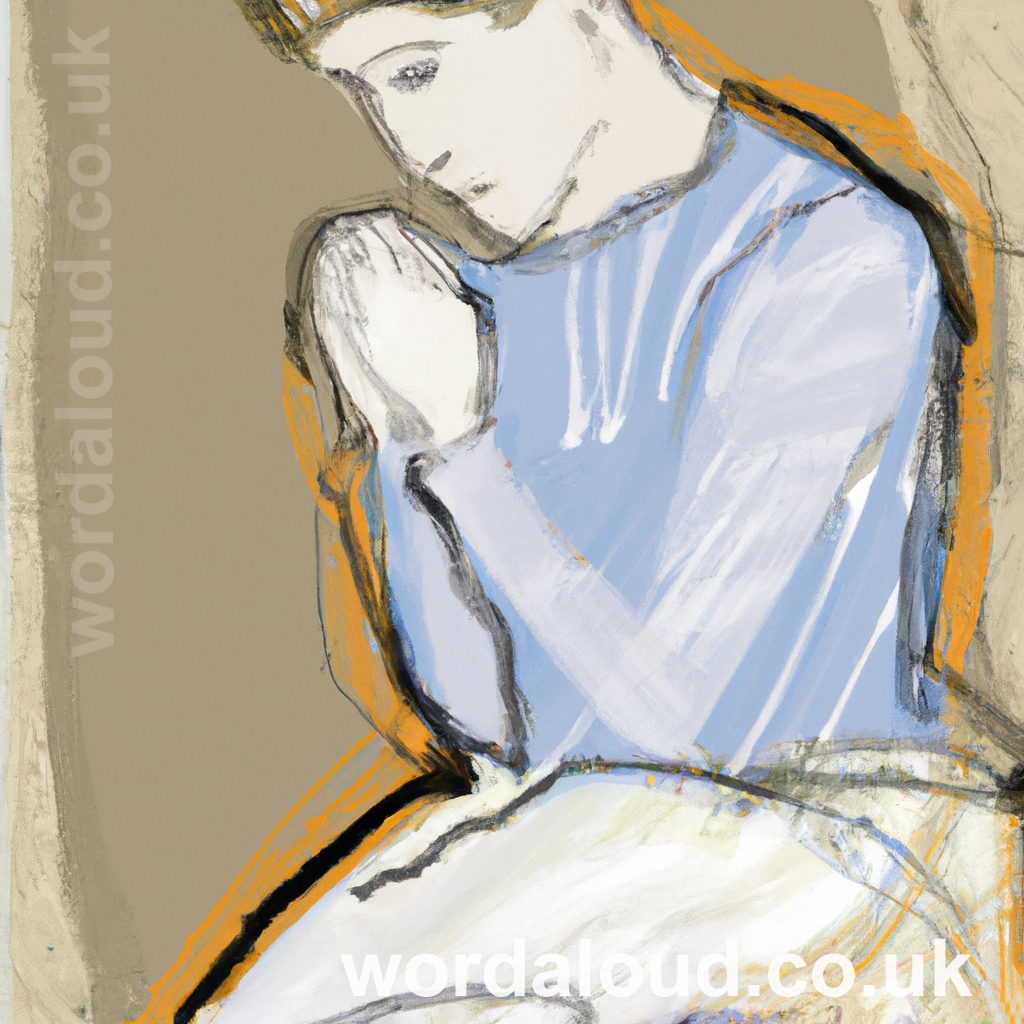
Christian Art | A Boy At Baptism | A Child With Jesus
Office Of Readings | Easter Friday | A Reading From The Instructions To The Newly Baptized At Jerusalem | On The Anointing With The Holy Spirit
‘The anointing of the Holy Spirit.’
Fragrance Of Christ | On The Anointing With The Holy Spirit
In the early Church, the days after Easter were not merely about looking back to the resurrection of Christ — they were about awakening the newly baptized to the mystery that they had just entered. The Jerusalem Catecheses, a series of teachings attributed to St. Cyril of Jerusalem or a contemporary bishop in the 4th century, offer us a glimpse into that world. Today’s passage reflects on what happens after baptism — the anointing with chrism — and why it matters so deeply.
The catechist begins with a striking claim: when we were baptized and anointed, we became like Christ — not just in name, but in substance. Baptism made us new, and the anointing sealed that newness. It was not a mere ritual. We were, in his words, ‘transformed into the likeness of the Son of God.’ This is the heart of Christian life: to be shaped, inwardly and outwardly, into the pattern of Jesus. Not to imitate him from afar, but to live in him.
In Scripture, to be ‘anointed’ is to be chosen, set apart, and filled with God’s Spirit. Kings, priests, and prophets were anointed for sacred tasks. The word ‘Christ’ itself means ‘Anointed One’. So when the catechist says we are now ‘the anointed ones’, he’s saying something profound: that we now share in Christ’s identity and his mission. What he is by nature, we become by grace. This was not just a metaphor for the early Christians — it was reality.
The anointing with chrism — a fragrant oil — symbolized and enacted the coming of the Holy Spirit. This wasn’t just olive oil from a press; it had been consecrated with prayer, and, as the catechist reminds us, ‘after the invocation of the Spirit it is no longer ordinary oil but the gift of Christ.’ That line deserves to be lingered over. The early Church truly believed that matter could carry mystery — that visible signs, like water and oil and fire, could be vessels of divine grace.
This moment in the baptismal rite echoes Christ’s own anointing at the Jordan River. After Jesus emerged from the water, the Spirit descended upon him. Not as a dove only, but as the fullness of God’s presence. The catechist writes beautifully that the Spirit ‘rested upon him, like resting upon like’ — the perfect match of holiness to holiness. In our baptism, that same Spirit rests upon us. In that moment, we are not only forgiven; we are claimed.
The image that lingers is the phrase ‘the oil of gladness’. It comes from Psalm 45, a royal wedding song later applied to Christ in the New Testament. The Holy Spirit is that oil — not a burden, not a weight, but gladness itself. This anointing is joy. It reminds us that Easter is not just a solemn mystery but a radiant one. The Spirit given to us is not abstract. He is the source of new life, fresh joy, spiritual fragrance.
That’s why the catechist cautions us not to see this as a mere ritual. The oil touches the forehead, yes — but something deeper happens beneath the surface. ‘Our souls are sanctified by the holy and life-giving Spirit.’ This early Church theology isn’t interested in empty symbolism. The signs are real. The transformation is real.
And what does this mean for us now? If we’ve been anointed with the same Spirit as Christ, then our lives should carry the same scent. We are meant to become bearers of Christ in the world — people marked by peace, joy, compassion, and courage. The anointing isn’t just something that happened to us once; it is something that continues to shape who we are.
As we move deeper into Easter, this reading from the Jerusalem Catecheses calls us to remember who we have become. The risen Christ lives in us. The Spirit rests upon us. And through us, his fragrance is meant to spread into the world — not by force, but by quiet radiance.

A Reading From The Instructions To The Newly Baptized At Jerusalem | On The Anointing With The Holy Spirit
When we were baptized into Christ and clothed ourselves in him, we were transformed into the likeness of the Son of God. Having destined us to be his adopted sons, God gave us a likeness to Christ in his glory, and living as we do in communion with Christ, God’s anointed, we ourselves are rightly called ‘the anointed ones.’ When he said: Do not touch my anointed ones, God was speaking of us.
We became ‘the anointed ones’ when we received the sign of the Holy Spirit. Indeed, everything took place in us by means of images, because we ourselves are images of Christ. Christ bathed in the river Jordan, imparting to its waters the fragrance of his divinity, and when he came up from them the Holy Spirit descended upon him, like resting upon like. So we also, after coming up from the sacred waters of baptism, were anointed with chrism, which signifies the Holy Spirit, by whom Christ was anointed and of whom blessed Isaiah prophesied in the name of the Lord: The Spirit of the Lord is upon me, because he has anointed me. He has sent me to preach good news to the poor.
Christ’s anointing was not by human hands, nor was it with ordinary oil. On the contrary, having destined him to be the Saviour of the whole world, the Father himself anointed him with the Holy Spirit. The words of Peter bear witness to this: Jesus of Nazareth, whom God anointed with the Holy Spirit. And David the prophet proclaimed: Your throne, O God, shall endure for ever; your royal sceptre is a sceptre of justice. You have loved righteousness and hated iniquity; therefore God, your God, has anointed you with the oil of gladness above all your fellows.
The oil of gladness with which Christ was anointed was a spiritual oil; it was in fact the Holy Spirit himself, who is called the oil of gladness because he is the source of spiritual joy. But we too have been anointed with oil, and by this anointing we have entered into fellowship with Christ and have received a share in his life. Beware of thinking that this holy oil is simply ordinary oil and nothing else. After the invocation of the Spirit it is no longer ordinary oil but the gift of Christ, and by the presence of his divinity it becomes the instrument through which we receive the Holy Spirit. While symbolically, on our foreheads and senses, our bodies are anointed with this oil that we see, our souls are sanctified by the holy and life-giving Spirit.



Psalm 87 expresses adoration and reverence for the city of Zion, as of its sacred foundation as the holy mountain. Attributed to the sons of Korah, this psalm begins by highlighting the exclusive and divine nature of Zion’s establishment [ … ]

Saint Augustine reflects on the contrast between the hidden riches of Christ and the visible poverty of his humanity. What appears small and limited in Christ’s earthly life conceals the fullness of divine wisdom and knowledge. Augustine draws on the language of scripture to show that Christ’s poverty is not a loss but a means: through it, humanity is brought to a greater inheritance [ … ]

Born Jorge Mario Bergoglio in Buenos Aires (1936), Pope Francis embraced a life of service through the Jesuits, becoming Archbishop and then Pope in 2013. Choosing the name Francis, he called the Church to humility and solidarity with the poor. He bowed before the people asking for their prayers, carrying the Cross of Peter in simplicity [ … ]