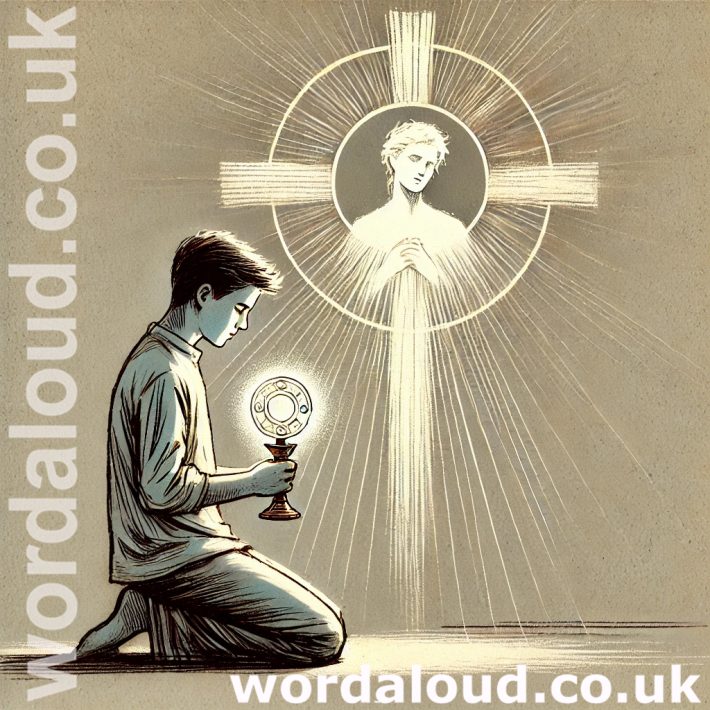
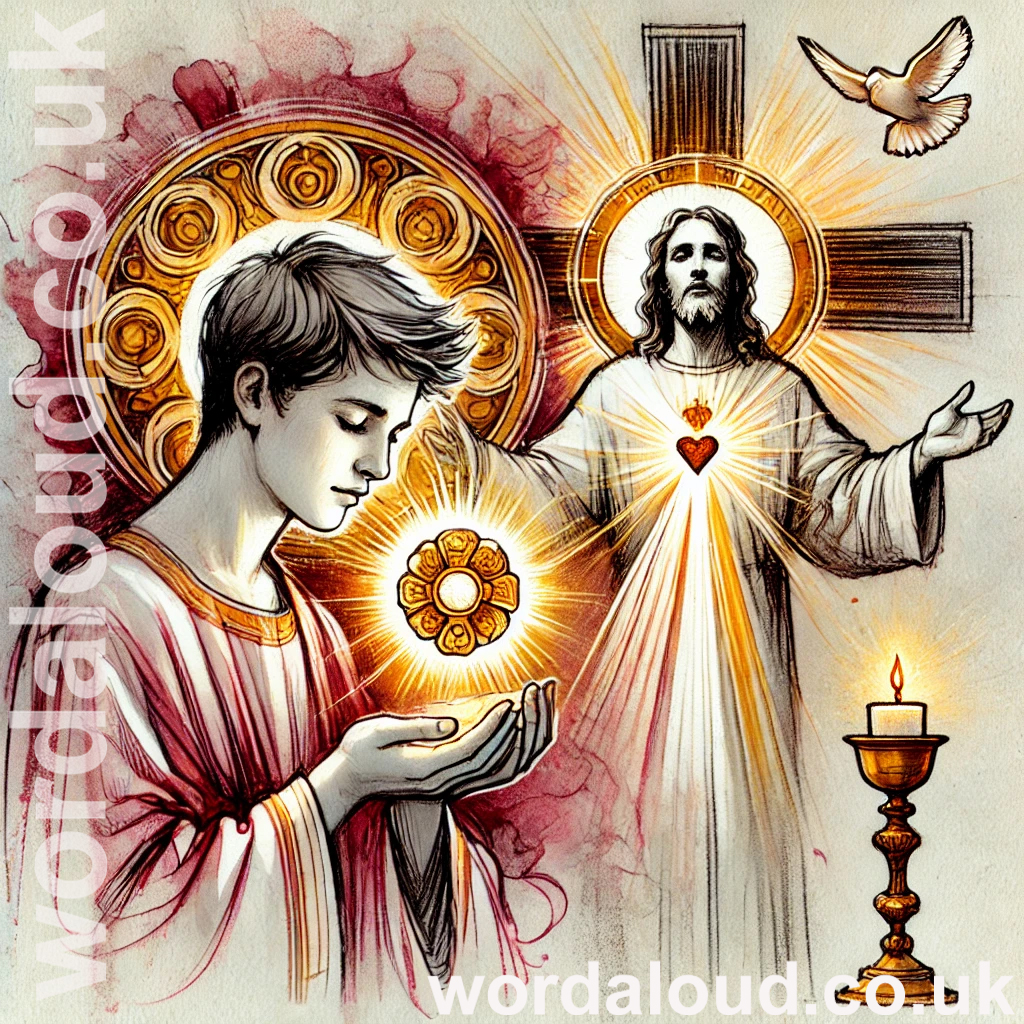
Christian Art | A Boy At Prayer With Jesus | The Eucharist | The Cross Of Jesus Christ
Office Of Readings | Eastertide Week 3, Saturday | A Reading From The Commentary Of Saint Cyril Of Alexandria On Saint John’s Gospel | Jesus Christ Gave His Body For The Life Of All
‘Christ gave his body for the life of all.’
Saint Cyril of Alexandria | Jesus Christ Gave His Own Body for the Life of All
Saint Cyril of Alexandria (c. 376–444), Patriarch of Alexandria and central figure in early Christological controversies, here articulates a robust theology of redemption grounded in the Incarnation and its sacramental outworking. Writing in the context of his conflict with Nestorius and the doctrinal developments that led to the Council of Ephesus (431), Cyril is concerned above all with affirming the unity of Christ’s divine and human natures, and the salvific power of that union. This excerpt reflects his mature theological vision, especially his emphasis on the death of Christ as the decisive means of defeating death and giving life to humanity through participation in his now-glorified body.
The Incarnation As The Basis Of Redemption
Cyril begins with Christ’s declaration: ‘I am dying for all men.’ This encapsulates the logic of the Incarnation—Christ assumes human nature in order to heal and redeem it. Crucially, the Word does not merely appear human; he truly shares in ‘flesh and blood’ (Hebrews 2:14). This genuine assumption of humanity is the necessary precondition for the redemption of human beings: salvation must reach into the depth of human mortality.
Cyril draws on Pauline and Johannine theology to explain this point. He cites Hebrews 2 to assert that Christ, in taking on human nature, enters into death in order to break its power. The Incarnation is thus not simply about revelation or moral example, but substitution: the Word dies in place of humanity, bearing death into himself so that death itself can be destroyed. This is a deeply anti-Gnostic and anti-Nestorian position. For Cyril, any separation between the divine and human in Christ would compromise salvation. The humanity of Christ is not an outer garment, but the very means by which God defeats death.
Christ’s Death As Universal And Effective
In Cyril’s reading of Psalm 40 (LXX), which is also echoed in Hebrews 10, he interprets the words ‘You have prepared a body for me’ and ‘Behold, I am coming’ as a prefiguration of the Incarnate Word’s willing obedience. Christ comes as both priest and victim, not offering sacrifices or holocausts, but offering himself. This is not a symbolic gesture, but a real, historical death ‘for all’, with the intention of giving ‘all of us life in him’.
This theology is at the core of the early Church’s soteriology. Cyril affirms that Christ’s death was not merely one example among many of martyrdom or suffering, but a singular, universal act. His one death has infinite value because the one who dies is the Word of God. And since he cannot be overcome by corruption—because he is life itself—his death is not defeat but the instrument by which he abolishes the finality of death.
Consecration And Sacrifice
Cyril then turns to Christ’s words in John 17:19—’For their sake I consecrate myself’—and interprets them in liturgical and sacrificial terms. The consecration of Jesus Christ is not a moral act alone, but a priestly offering. Just as offerings under the Old Law became holy when laid upon the altar, so too does Christ’s body become a holy, consecrated offering when given over to death. Cyril implies a parallel between the Jewish temple and the sacrifice of Christ: both involve consecration, but the latter is definitive and perfect.
Theologically, this points to the unification of cult and cosmos in Christ. The temple is no longer a physical building but the person of Christ; and the sacrifice is no longer bulls and goats, but Christ’s own self-offering, both human and divine. This is the foundation not only of redemption but also of Christian worship, especially the Eucharist.
The Eucharist And The Life-Giving Body
The final section of the reading shifts toward sacramental theology. Having argued that Christ’s death was redemptive, Cyril explains how that redemption reaches the faithful: through the body of Christ, given in the Eucharist. He writes that the body of Christ is the ‘channel through which life flows once more into us’. This is not metaphorical. For Cyril, the Eucharist is efficacious because the body of Christ is now vivified by the Word, and united to his divine nature.
Cyril’s view here aligns with the broader patristic consensus: that the Eucharist is the real reception of Christ’s glorified flesh. What makes it life-giving is the hypostatic union—the Word united to flesh in one person. Thus, when believers receive the Eucharist, they do not merely commemorate Christ’s death; they receive his incorruptible, life-giving body. This body, now beyond the power of death, communicates incorruptibility to those who partake of it. It does not simply nourish the soul—it transforms the body, preparing it for resurrection.
This theology is tied to Cyril’s Alexandrian emphasis on theosis—that is, the divinization of human beings through union with God. Christ became what we are so that we might become what he is. The Eucharist, then, is the vehicle of this transformation. It reverses corruption and mortality because it carries within it the Word who ‘abolishes corruption.’
Glossary Of Terms
Incarnation
The Christian belief that the Son of God took on human flesh in the person of Jesus Christ—fully divine and fully human.
Soteriology
A branch of theology that studies the doctrine of salvation—how humans are saved, and through whom and by what means.
Hypostatic union
The union of Christ’s two natures—divine and human—in one person (hypostasis). A central concept in orthodox Christology.
Substitution
The idea that Christ suffered and died in place of sinners, taking on the punishment or consequences due to them.
Theosis
A theological concept (especially in Eastern Christianity) meaning ‘divinization’: the process by which human beings are made partakers in the divine nature through Christ.
Sacramental theology
The study of the sacraments—visible signs instituted by Christ to give grace—such as Baptism and the Eucharist.
Eucharist
The sacrament of the Body and Blood of Christ, instituted at the Last Supper; also known as Holy Communion.
Consecration
The act of making something holy or setting it apart for sacred use. In the Eucharist, it refers to the moment when bread and wine become the Body and Blood of Christ.
Paschal mystery
The passion, death, resurrection, and ascension of Jesus—the central mystery of Christian faith and salvation.
Glorified body
The transformed, immortal body of Christ after his resurrection. Believers hope to receive a similar body in the resurrection.
Typology
A way of interpreting Scripture in which Old Testament events, persons, or institutions prefigure New Testament realities (e.g., Eve as a ‘type’ of Mary).
Christological
Pertaining to the study of the person and work of Jesus Christ.
Gnostic
Referring to early heresies that denied the goodness of the physical world and often rejected the true humanity of Christ.
Nestorianism
A heresy that claimed there were two separate persons in the incarnate Christ—one human and one divine—rather than one person with two natures.
Patristic
Related to the Church Fathers—early Christian theologians and writers whose works shaped Christian doctrine.
Sacrifice
In Christian theology, Christ’s death is seen as the ultimate offering to God for the forgiveness of sins, replacing Old Testament animal sacrifices.
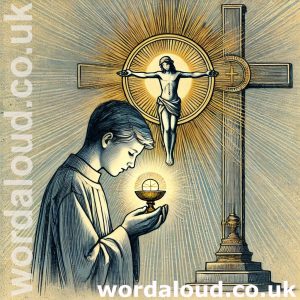
A Reading From The Commentary Of Saint Cyril Of Alexandria On Saint John’s Gospel | Jesus Christ Gave His Body For The Life Of All
‘I am dying for all men,’ says the Lord. ‘I am dying to give them life through myself and to redeem the whole human race through my humanity. In my death, death itself will die and man’s fallen nature will rise again with me. I wanted to be like my brothers in every respect, so I became a man like you, a descendant of Abraham.’ Understanding this well Saint Paul says: As the children of a family share the same flesh and blood, he too shared our human nature so that by his death he could destroy the power of the devil, the prince of death. Death itself and the prince of death could be destroyed only by Christ, who is above all, giving himself up as a ransom for all.
And so, speaking as a spotless victim offering himself for us to God the Father, Christ says in one of the psalms: You desired no sacrifices or offerings, but you have prepared a body for me. You took no pleasure in holocausts or sin offerings. Then I said, ‘Behold, I am coming.’ He was crucified for all, desiring his one death for all to give all of us life in him. It was impossible for him to be conquered by death; nor could he who by his very nature is life be subject to corruption. Yet we know that Christ offered his flesh for the life of the world from his own prayer, Holy Father, protect them, and from his words, For their sake I consecrate myself. By saying that he consecrates himself he means that he offers himself to God as a spotless and sweet-smelling sacrifice. According to the law, anything offered upon the altar was consecrated and considered holy. So Christ gave his own body for the life of all, and makes it the channel through which life flows once more into us. How he does this I will explain to the best of my ability.
When the life-giving Word of God dwelt in human flesh, he changed it into that good thing which is distinctively his, namely, life; and by being wholly united to the flesh in a way beyond our comprehension, he gave it the life-giving power which he has by his very nature. Therefore, the body of Christ gives life to those who receive it. Its presence in mortal men expels death and drives away corruption because it contains within itself in his entirety the Word who totally abolishes corruption.


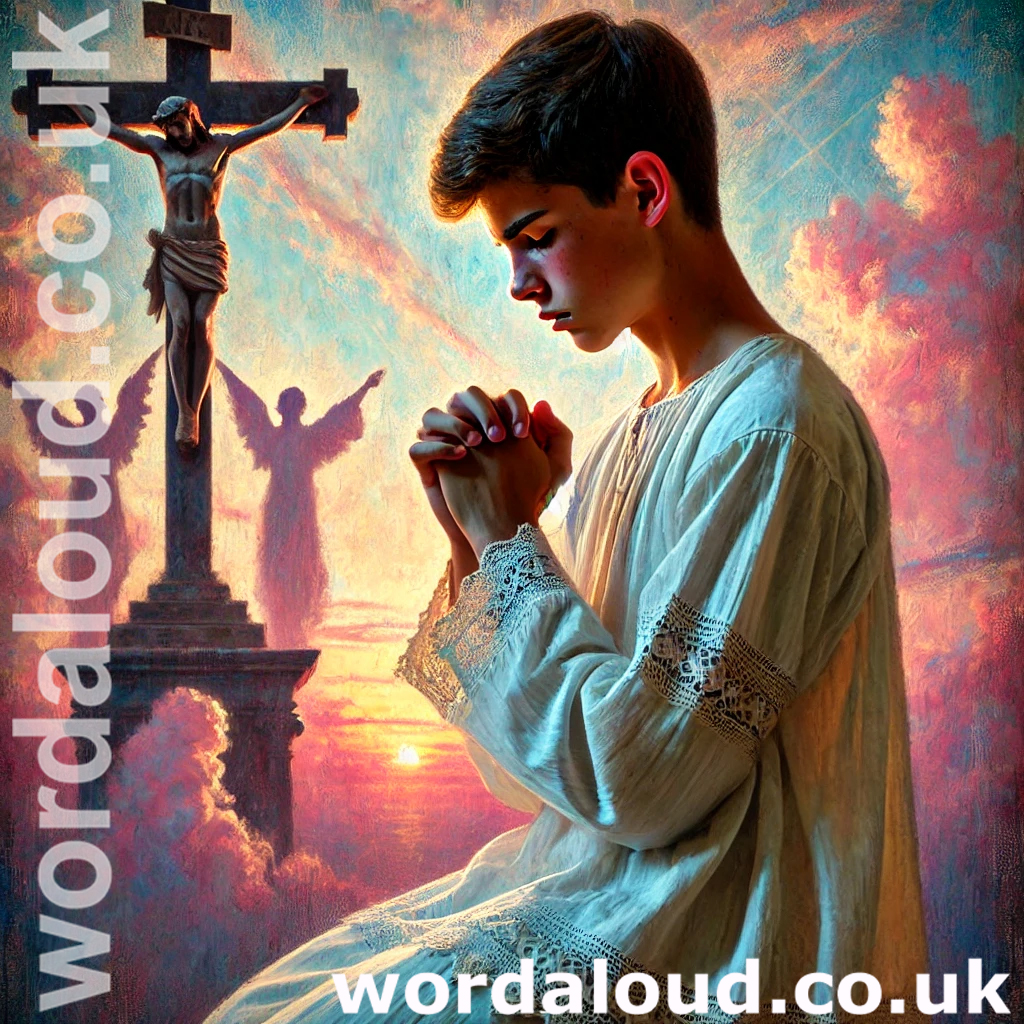
In this reflection on Psalm 126, Saint Augustine teaches that the true Solomon is not simply Israel’s famous king, but Jesus Christ himself. Solomon’s name means ‘Bringer of Peace’. While Solomon built the first temple in Jerusalem, Christ builds the true temple, the Church—made not from stones but from living people, drawn from every nation and brought into unity [ … ]
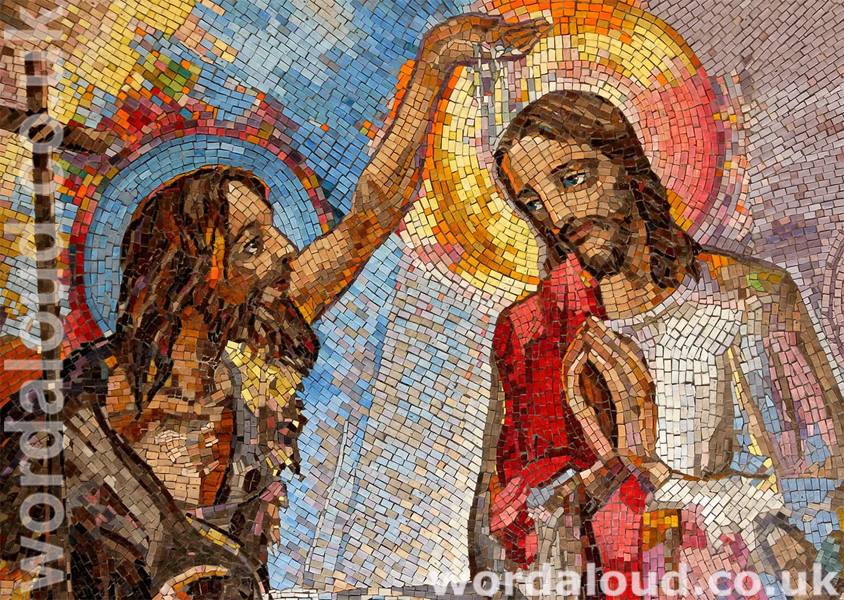
This sermon, attributed to Leo the Great, develops the theme of ‘Christ being formed in the believer’ by situating it within a broader account of creation, incarnation, and eschatological fulfilment. In contrast to the more pastoral and introspective tone of Augustine of Hippo, Leo adopts a declarative and liturgical style, marked by rhetorical elevation and doctrinal clarity [ … ]
The sermon begins with a triumphant proclamation: ‘Christ is risen! He has burst open the gates of hell and let the dead go free.’ This dramatic image immediately places the Resurrection within the context of the Harrowing of Hell, a traditional doctrine in early Christianity that sees Christ descending into the realm of the dead to liberate the righteous. The Resurrection is not limited to the physical body of Jesus—it triggers a universal release and upward movement: the dead rise, the Church is renewed through baptism, and the doors of heaven are opened [ … ]