

Christian Art | A Boy Carries His Cross In Christian Prayer | Living As Christians
Office Of Readings | Week 16, Sunday, Ordinary Time | A Reading From The Letter Of Saint Ignatius Of Antioch To The Magnesians | We Must Live The Name Of Christians
‘We ought not just to have the name of Christians, but to be so in reality.’
Saint Ignatius of Antioch was a Christian bishop writing in the early 2nd century AD, on his way to martyrdom in Rome. He wrote several letters to Christian communities, encouraging unity and correct belief. This letter is addressed to the church in Magnesia (in modern-day Turkey).
Real Christian Identity
Saint Ignatius warns that it is not enough to call oneself a Christian—one must live in a way that reflects the beliefs. Many in his time were using the label ‘Christian’ but were not following Church teaching or living accordingly. He sees this as a problem because it weakens the unity and integrity of the Christian community.
Christian identity must be shown through action and behaviour, not just claimed verbally.
Respect For Church Structure
Saint Ignatius refers to the bishop, Damas, who was apparently young. He tells the community not to disrespect the bishop because of his age. Instead, they should honour his position as the local leader of the Church. He explains that to obey the bishop is to obey God—not because the bishop is God, but because Church leadership is part of how God orders the community.
For Ignatius, Church authority matters. The bishop represents the presence of Christ in the local community.
Unity In Worship
Ignatius stresses that worship and community life must be done ‘lawfully’—that is, in unity with the bishop and the presbyters (priests). Some people in the community were apparently trying to live Christian lives separate from the bishop’s leadership. Ignatius says this is wrong. Real Christian practice must be united with Church authority and teaching.
Proper worship and teaching depend on remaining united with the bishop and the community.
Living In The Image Of God
Ignatius ends this passage with a contrast between two ways of living:
- One aligned with the world (the ‘coinage’ of the world),
- And one aligned with God (bearing the image of God through Christ).
Ignatius says that those who believe and love Christ carry the ‘image’ of God. But this identity means following Christ even in suffering. Unless we are willing to share in Christ’s suffering, Ignatius says, we cannot truly share in his life.
Following Christ means not just believing in him, but also being willing to suffer or be rejected for his sake.
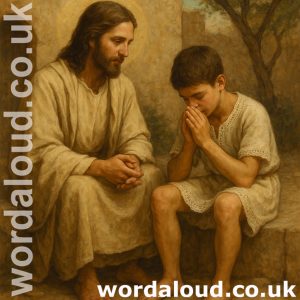
A Reading From The Letter Of Saint Ignatius Of Antioch To The Magnesians | We Must Live The Name Of Christians
Ignatius, also called Theophorus, to the church at Magnesia on the Maeander, a church blessed with the grace of God the Father in Christ Jesus, our Saviour, in whom I salute you. I send you every good wish in God the Father and in Jesus Christ.
I was delighted to hear of your love of God, so well-ordered and devout, and so I decided to address you in the faith of Jesus Christ. Honoured as I am with a name of the greatest splendour, though I am still in chains I sing with the praises of the churches, and pray that they be united with the flesh and the spirit of Jesus Christ, who is our eternal life; a union in faith and love, to which nothing must be preferred; and above all a union with Jesus and the Father, for if in him we endure all the power of the prince of this world, and escape unharmed, we shall make our way to God.
I have had the honour of seeing you in the person of Damas your bishop, a man of God, and in the persons of your worthy presbyters, Bassus and Apollonius, and my fellow-servant, the deacon Zotion; may I continue to take delight in him for he is obedient to the bishop as to the grace of God, and to the presbyters as to the law of Jesus Christ.
Now it hardly becomes you to presume on your bishop’s youth, but rather, having regard to the power of God the Father, to show him every mark of respect. This, I understand, is what your holy presbyters do, not taking advantage of his youthful condition but deferring to him with the prudence which comes from God, or rather not to him but to the Father of Jesus Christ, to the bishop of all. So then, for the honour of him who loves us, it is proper to obey without hypocrisy; for a man does not so much deceive the bishop he can see as try to deceive the bishop he cannot see. In such a case he has to reckon not with a man, but with God who knows the secrets of the heart.
We should then really live as Christians and not merely have the name; for many invoke the bishop’s name but do everything apart from him. Such men, I think, do not have a good conscience, for they do not assemble lawfully as commanded.
All things have an end, and two things, life and death, are side by side set before us, and each man will go to his own place. Just as there are two coinages, one of God and the other of the world, each with its own image, so unbelievers bear the image of this world, and those who have faith with love bear the image of God the Father through Jesus Christ. Unless we are ready through his power to die in the likeness of his passion, his life is not in us.
Christian Prayer With Jesus
Lord God,
You called St Ignatius to serve your Church faithfully and to bear witness to Christ even in suffering.
Help us to live not just in name but in truth as Christians—
with integrity, humility, and love.
Teach us to respect those you have placed in leadership,
and to seek unity in our communities.
When trials come, give us courage to follow your Son,
bearing his image in how we live, speak, and love.
Through Christ our Lord. Amen.
Glossary Of Christian Terms
Ignatius of Antioch: An early 2nd-century Christian bishop and martyr. He wrote letters to various churches while being taken to Rome for execution, encouraging faith, unity, and loyalty to Church authority.
Magnesia on the Maeander: An ancient city in Asia Minor (modern-day Turkey) with a Christian community to whom Ignatius wrote.
Presbyter: A term used in early Christianity for what we now call a priest or elder—leaders who assist the bishop.
Deacon: An ordained minister in the Church who assists with service, worship, and charitable work.
Bishop: The leader of a Christian community or diocese, seen as a successor to the apostles.
Church structure: The organised leadership of the early Church—bishop, presbyters, and deacons—intended to ensure order, unity, and correct teaching.
The ‘prince of this world’: A biblical term often used to refer to Satan or worldly powers opposed to God.
‘Image’ (coinage metaphor): Ignatius compares people to coins stamped with an image—those loyal to God bear his image; those loyal to the world bear a worldly one.
‘In the likeness of his passion’: Sharing in Christ’s suffering—being willing to endure hardship or persecution because of Christian faith.



Pope Saint Leo the Great served as Bishop of Rome from 440 to 461, during a time of both doctrinal dispute and political upheaval in the Western Roman Empire. A formidable theologian and administrator, Leo is perhaps best known for his Tome to Flavian, which played a decisive role at the Council of Chalcedon in 451 in defining the doctrine of Christ’s two natures, divine and human, in one person [ … ]

Psalm 131, attributed to David, begins with a declaration of humility: ‘Lord, my heart is not haughty, nor mine eyes lofty.’ Here, the psalmist asserts a conscious rejection of pride and arrogance, setting the tone for a meditation on humility and trust in God [ … ]
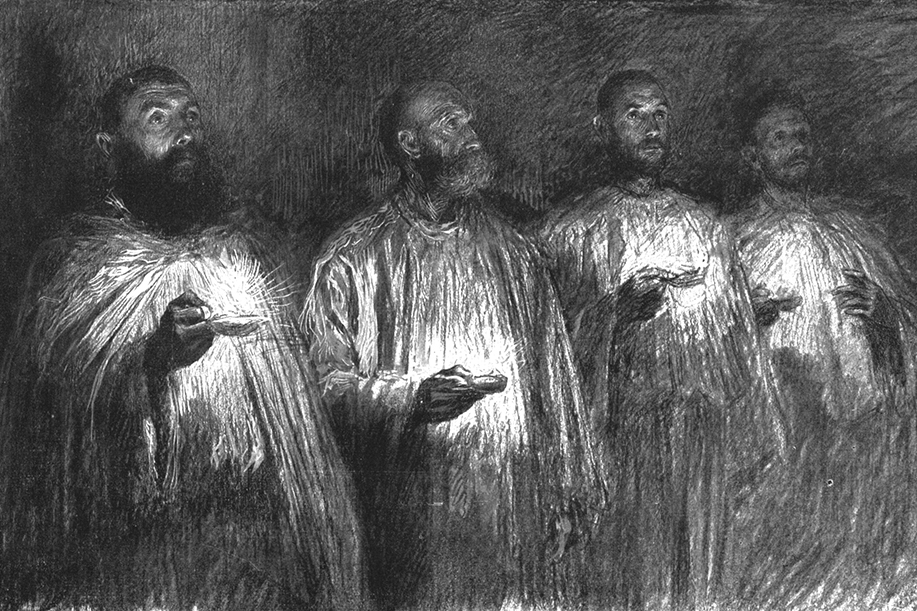
Jesus tells us to be vigilant. In Christ’s time, when the Jews would usually wear long, flowing garments, it was the practice to hitch them up, to gird oneself, in order to be ready to perform certain kinds of work. To gird oneself, therefore, and to keep lights burning, meant to be ready for action. Before the flight from Egypt, at the moment of the Passover, the Israelites had to gird themselves, to be ready to be able to leave immediately (Exodus 12:11) [ … ]
