

Christian Art | Jesus Calls His First Disciples | Fishers Of Men
Office Of Readings | Week 18, Sunday, Ordinary Time | The Beginning Of A Letter Attributed To Barnabus | Faith Begins And Ends With Hope, Hope Of Life
‘Hope of life is the beginning and end of our faith.’
This early Christian text, traditionally attributed to Barnabas and likely written by an anonymous Christian teacher in the late first or early second century, reflects on key themes of Christian belief and practice. The author addresses a group of Christians with a greeting of peace, expressing gratitude for the presence of God’s Spirit among them. He states that their spiritual condition has encouraged him to reflect on his own faith and prompted him to share what he has received in teaching.
The structure of the letter points to three central doctrines: hope, justice, and love. These are presented not as abstract ideas but as the foundation of Christian identity and behaviour. The writer calls hope of eternal life ‘the beginning and end of our faith.’ Justice is linked with righteousness, and love is described as bearing witness to righteous deeds. These are not defined in philosophical terms but are assumed to be lived realities among the community.
The text refers to prophecy as a source of knowledge about God’s actions in the past and present. The fulfilment of prophecy is used as a reason for believers to remain attentive and obedient to God. The author encourages the readers to be aware of the times they live in, especially when evil increases and harmful influences gain strength. In such circumstances, believers are urged to remain focused on their own behaviour, seeking to understand and follow the way of the Lord. The virtues listed—reverence, perseverance, forbearance, self-restraint, wisdom, understanding, knowledge, and insight—are described as necessary for this.
The author then addresses religious practices, quoting from the Hebrew Scriptures. He cites a passage (likely drawn from Isaiah 1) where God rejects ritual sacrifice and religious festivals that are not matched by sincere behaviour. This section critiques religious observance that is separated from moral conduct. The quotation suggests that God does not require external offerings without a corresponding inner disposition. This would have been particularly significant in the context of early Christian debates over the role of the Jewish law and sacrificial system.
In this passage, the writer does not propose a new set of rules but encourages a way of life grounded in faith, hope, and love. The authority of the prophets is affirmed, but the emphasis is on moral response rather than ritual observance. The letter appeals to a shared understanding of Christian teaching and the experience of living in a time when discernment and endurance are necessary.
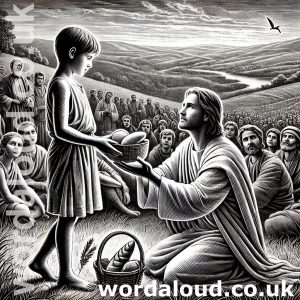
The Beginning Of A Letter Attributed To Barnabus | Faith Begins And Ends With Hope, Hope Of Life
Greetings, sons and daughters. In the name of the Lord who loves us, peace be to you.
Because the Lord has granted you an abundance of blessings, I rejoice immeasurably in your blessed and glorious company.
You have received abundantly that indwelling grace which is the Spirit’s gift, and for this reason I hope in my own salvation and I give thanks all the more when I see the bountiful fullness of the Lord’s Spirit pouring over you. I have longed so much for you that when I saw you I was overwhelmed.
I am now convinced and fully aware that I have learned much by speaking with you, for the Lord accompanied me on the road to righteousness, and so I am driven in all ways to love you more than my own life. For surely there is a great store of faith and charity within you because of your hope for life in Christ. Therefore, I have been thinking that if my concern for you inspires me to pass on to you a portion of what I have received, then I will be rewarded for ministering to souls such as yours. Consequently, I am writing to you, that you may have perfect knowledge along with your faith.
The Lord has given us these three basic doctrines: hope for eternal life, the beginning and end of our faith; justice, the beginning and end of righteousness; and love, which bears cheerful and joyous witness to the works of righteousness. Now the Lord has made the past and present known to us through his prophets, and he has given us the ability to taste the fruits of the future beforehand. Thus, when we see prophecies fulfilled in their appointed order, we ought to grow more fully and deeply in awe of him. Let me suggest a few things – not as a teacher, but as one of you – which should bring you joy in the present situation.
When evil days are upon us and the worker of malice gains power, we must attend to our own souls and seek to know the ways of the Lord. In those times reverential fear and perseverance will sustain our faith, and we will find need of forbearance and self-restraint as well. Provided that we hold fast to these virtues and look to the Lord, then wisdom, understanding, knowledge and insight will make joyous company with them.
Truly, the Lord has revealed to us through the prophets that he has no need of sacrifice, burnt offerings or oblations. He says in one place: Your endless sacrifices, what are they to me? says the Lord. I have had my fill of holocausts; I do not want the fat of your lambs, nor the blood of your bulls and goats, nor your presence in my sight. Indeed, who has made these demands of you? No more will you trample my courts. Your sacrifices of fine flour are in vain; your incense is loathsome to me; I cannot bear your feasts of the new moon, nor your sabbaths.
Christian Prayer With Jesus Christ
O God of hope and righteousness,
You have planted within us the promise of eternal life
And poured into our hearts the gift of Your Spirit.
Help us to live by the hope that begins and ends our faith,
To practise justice with humility,
And to bear witness to Your love with joy.
Keep us watchful in evil days,
Steadfast in truth, patient in adversity,
And generous in charity.
May we discern Your ways with reverent hearts
And never offer worship without mercy.
Lord, we long not for outward sacrifice,
But for lives wholly given over to Your will.
Through Jesus Christ, the true sacrifice and everlasting priest,
Grant us wisdom, endurance, and joy in Your service,
Now and always. Amen.
Glossary Of Christian Terms
Barnabas – Traditionally thought to be a companion of Paul in the New Testament.
Indwelling grace – The presence of God’s Spirit within a believer, enabling faith and moral action.
The Lord’s Spirit – A reference to the Holy Spirit, understood in Christian theology as God’s active presence in the world and in the Church.
Prophets – Individuals in the Hebrew Bible (Old Testament) believed to speak on God’s behalf, revealing divine will or foretelling future events.
Hope of eternal life – The Christian belief that life continues after death in the presence of God.
Justice / Righteousness – In biblical usage, a right relationship with God and other people, reflected in fair and ethical behaviour.
Love (Charity) – Not mere affection, but self-giving action for the good of others, considered one of the three theological virtues in Christian teaching.
Reverential fear – A respectful awe before God, leading to obedience and humility.
Forbearance – Patient self-control, especially when wronged.
Self-restraint – The ability to control one’s actions, particularly in resisting temptation.
Wisdom, understanding, knowledge, insight – Gifts or virtues that help a person discern God’s will and live accordingly.
Sacrifice / Burnt offerings / Oblations – Ritual offerings made to God in the Temple, particularly in Jewish worship. The author argues these are not sufficient without genuine moral conduct.
Holocausts – Complete burnt offerings, consumed entirely by fire on the altar in ancient Jewish ritual.
Isaiah – A major prophetic book in the Old Testament; often quoted in early Christian writings. The rejection of empty sacrifice is based on Isaiah 1:11–14.
Sabbaths / New moons – Regular religious observances in ancient Israel, part of the liturgical calendar.



Psalm 90 meditates on brevity of human existence juxtaposed against the eternal nature of God. Psalm 90 invites readers to ponder the fragility of life while seeking solace in the enduring and transcendent character of God [ … ]

Saint Hilary of Poitiers, a central figure in the development of Trinitarian theology during the fourth century, writes with clarity and conviction about the inner life of God and the role of the Holy Spirit. In this reflection, he meditates on the unity and diversity within the Trinity and on the Spirit’s role as the gift that allows us to participate in divine truth [ … ]
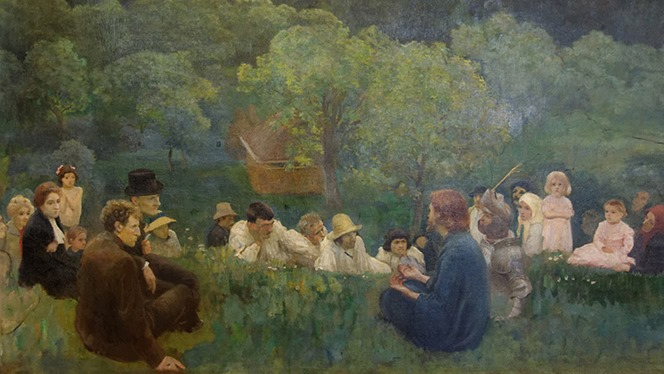
The three synoptic Gospels tell us of this episode of Jesus’ life, when he returned home to Nazareth and preached in the synagogue there. Luke’s Gospel gives us the text of Isaiah read by Jesus, in which Jesus’ announces his messianic mission – to bring the good news to the poor, to live and to identify with the poor, to heal us and set us at liberty from sin. As Jesus closes the book, he omits the following from Isaiah 61: 2: ‘…and the day of vengeance of our God.’ This is deliberate interruption. Jesus is not come to maintain old enmities. Jesus’ way is peace. It is the people of all the world who are to be blessed in Christ [ … ]
