
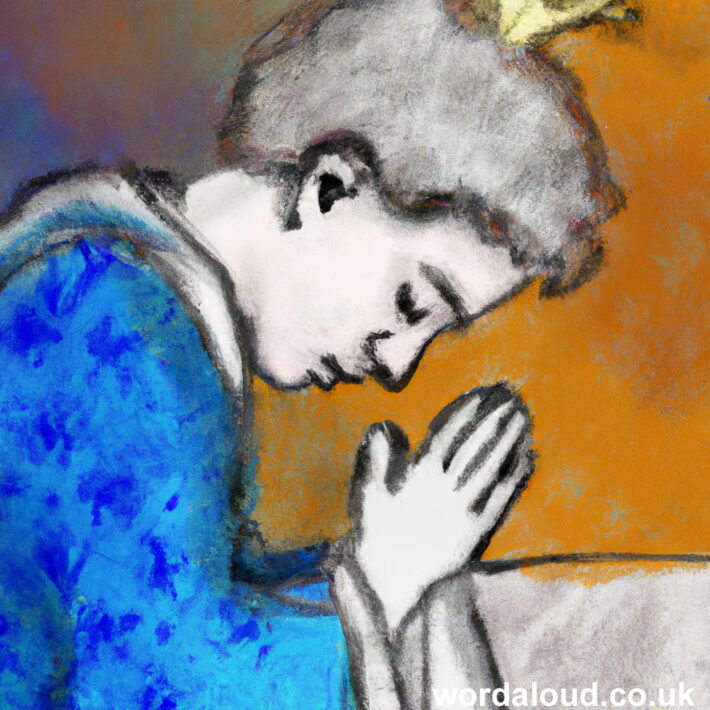
Christian Art | Prayer With Jesus | Psalms | Thanksgiving For Deliverance And Prayer For Help | King David As A Boy | King James Audio Bible | Psalm 40 KJV
Psalm 40 | King James Audio Bible
YouTube: Psalm 40 KJV | King James Audio Bible | Word Aloud | King James Version
Psalm 40 is a song of deep personal reflection attributed to King David. It tells a powerful narrative of waiting patiently for the Lord, being lifted from depths of despair, and responding with heartfelt praise.
Waiting Patiently for the Lord: The psalmist opens with a declaration of patience. He has waited patiently for the Lord, earnestly seeking divine intervention. This patience sets the stage for the psalm’s central themes of deliverance and gratitude.
Deliverance from Despair: In the following verses, the psalmist vividly describes his experience of being rescued by the Lord. He was trapped in a ‘horrible pit’ and ‘miry clay’, a metaphor for the depths of despair and hopelessness. However, the Lord’s intervention lifted him out of this pit, placed his feet upon a firm foundation, and established his path.
A New Song of Praise: The psalmist’s heart overflows with gratitude, leading to the emergence of a ‘new song’. This new song is one of praise and thanksgiving to God. The psalmist anticipates that many will witness this song and be inspired to trust in the Lord, recognizing God’s faithfulness and saving grace.
Blessed Trust in the Lord: Throughout the psalm, there is emphasis on placing trust in the Lord. The psalmist acknowledges the blessedness of those who make the Lord their trust, contrasting them with the proud and deceitful. Trusting in the Lord is portrayed as a source of strength and guidance.
The Delight of Obedience: The psalmist expresses delight in doing the will of God. He affirms that God’s law is written within his heart, signifying a deep commitment to righteousness and obedience. This alignment with God’s will is a source of joy and purpose.
Proclamation of God’s Righteousness: The psalmist testifies to having proclaimed God’s righteousness and faithfulness before others. He has not hidden God’s lovingkindness and truth but has declared it openly, even in the congregation.
A Plea for Continued Mercy: Amidst gratitude and proclamation, the psalmist acknowledges his own shortcomings and the innumerable evils that surround him. He pleads for God’s mercy and deliverance, recognizing his ongoing need for divine protection.
A Prayer for Deliverance and Vindication: The psalmist implores God to deliver him from those who seek harm. He prays that those who wish him evil may be put to shame, emphasizing the desire for divine vindication.
A Call to Rejoice and Praise: The psalm concludes with a call for rejoicing and gladness among all who seek the Lord. Those who love God’s salvation are encouraged to continually magnify the Lord, recognizing God’s role as their help and deliverer.

Psalm 39 | King James Audio Bible KJV | Love Revealed By Jesus Christ
I waited patiently for the Lord; and he inclined unto me, and heard my cry.
He brought me up also out of an horrible pit, out of the miry clay, and set my feet upon a rock, and established my goings.
And he hath put a new song in my mouth, even praise unto our God: many shall see it, and fear, and shall trust in the Lord.
Blessed is that man that maketh the Lord his trust, and respecteth not the proud, nor such as turn aside to lies.
Many, O Lord my God, are thy wonderful works which thou hast done, and thy thoughts which are to us-ward: they cannot be reckoned up in order unto thee: if I would declare and speak of them, they are more than can be numbered.
Sacrifice and offering thou didst not desire; mine ears hast thou opened: burnt offering and sin offering hast thou not required.
Then said I, Lo, I come: in the volume of the book it is written of me,
I delight to do thy will, O my God: yea, thy law is within my heart.
I have preached righteousness in the great congregation: lo, I have not refrained my lips, O Lord, thou knowest.
I have not hid thy righteousness within my heart; I have declared thy faithfulness and thy salvation: I have not concealed thy lovingkindness and thy truth from the great congregation.
Withhold not thou thy tender mercies from me, O Lord: let thy lovingkindness and thy truth continually preserve me.
For innumerable evils have compassed me about: mine iniquities have taken hold upon me, so that I am not able to look up; they are more than the hairs of mine head: therefore my heart faileth me.
Be pleased, O Lord, to deliver me: O Lord, make haste to help me.
Let them be ashamed and confounded together that seek after my soul to destroy it; let them be driven backward and put to shame that wish me evil.
Let them be desolate for a reward of their shame that say unto me, Aha, aha.
Let all those that seek thee rejoice and be glad in thee: let such as love thy salvation say continually, The Lord be magnified.
But I am poor and needy; yet the Lord thinketh upon me: thou art my help and my deliverer; make no tarrying, O my God.


Key Themes Of The Psalm For Reflection | Love Revealed By Jesus Christ
- Patience and Waiting on the Lord:
- The psalmist’s patient waiting for God’s intervention.
- Deliverance from Despair:
- Being rescued from the depths of despair by the Lord.
- Gratitude and Praise:
- Responding with a new song of praise and thanksgiving.
- Blessed Trust in God:
- The blessedness of trusting in the Lord rather than the proud and deceitful.
- Delight in Obedience:
- Finding joy in doing God’s will and having His law written in the heart.
- Proclamation of God’s Righteousness:
- Testifying to God’s righteousness and faithfulness before others.
- A Plea for Continued Mercy:
- Acknowledging personal shortcomings and the need for God’s ongoing mercy and deliverance.
- Prayer for Deliverance and Vindication:
- Implore the Lord to deliver from those who seek harm and a desire for divine vindication.
- Call to Rejoice and Praise:
- Encouraging all who seek the Lord to rejoice and magnify His name.


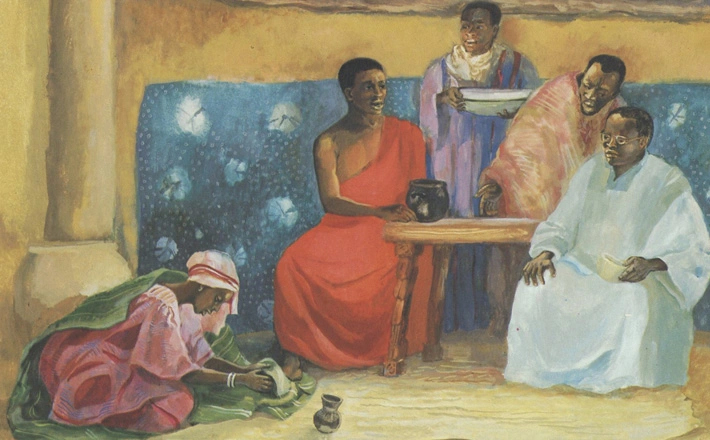
Jesus has been invited to dinner by Simon the Pharisee, which occasion in itself reminds us of the inclusivity of Jesus’ mission. There it would be customary for the men to recline on low divans, leaning on their left arm with their legs tucked under them, away from the table. It would also be customary for the host to honour his guests with a kiss of greeting, with water for their feet, and with perfumes [ … ]

Christian Art | George Herbert | The Temple | The Church | The Sinner George Herbert | The Temple | The Church | The Sinner Lord, how I am all ague, when I seek What I have treasur’d in my memorie! Since, if my soul make even with the week, Each seventh note by right is due to thee. I finde there quarries of pil’d vanities, But shreds of holinesse, that dare not venture To shew their face, since crosse to thy decrees. There the circumference earth is, heav’n the centre. In so much dregs the quintessence is small: The spirit and good extract of my heart Comes to about the many hundredth part. Yet Lord restore thine image, heare my call: And though my hard heart scarce to thee can grone, Remember that thou once didst write in stone. George Herbert | The Temple | The Church | The Sinner The poet reflects on his spiritual state, describing a struggle with weakness, sin, and the desire for divine alignment. The poem opens with the poet addressing God, expressing discomfort, likened to an ‘ague’ (fever or chill), when he searches his memory for spiritual treasures. This ‘ague’ suggests both a physical and spiritual unease, revealing the tension the poet feels in self-examination. The second line conveys a sense of regret as the poet searches for ‘treasur’d’ holiness in his memory. He recognizes that, although he might strive to keep his soul ‘even with the week’, dedicating every seventh day to God, he falls short. This phrase reflects the expectation to honour the Sabbath, but the poet’s efforts are met with disappointment in their perceived spiritual emptiness. The poet goes on to examine his inner self, describing ‘quarries of pil’d vanities’ that dominate his mind. Here, ‘quarries’ implies an overwhelming quantity of earthly or superficial concerns, while ‘vanities’ suggests that these concerns are meaningless in the context of divine expectation. In contrast, he finds only ‘shreds of holinesse’, fragmented attempts at righteousness, which he hesitates to bring forward as these elements are ‘crosse to thy decrees’, or in opposition to God’s laws. This imagery underscores the poet’s internal conflict and recognition of shortcomings. Further, the poet contrasts earth and heaven, saying that ‘the circumference earth is, heav’n the centre.’ This phrase symbolizes the poet’s focus on worldly concerns (the circumference) that orbit around a neglected spiritual core (the heavenly center). The poet reflects that his life is filled with ‘dregs’, the lesser, unrefined aspects of his being, while ‘quintessence’, or the purest part of himself, is scarce. This ‘quintessence’ is described as the ‘spirit and good extract’ of the poet’s heart, amounting to a ‘many hundredth part’ — a small fraction of life’s essence. The poet realizes that, despite attempts to cultivate holiness, his internal state largely lacks spiritual substance. The final lines shift to a plea for restoration. The poet calls on God to ‘restore thine image’, asking for renewal and transformation. This restoration request implies a yearning to reflect God’s nature more fully, as humanity is believed to be made in God’s image. The poet acknowledges that his heart ‘scarce… can grone’ to God, reflecting the difficulty he feels in truly connecting with or petitioning the divine. The poem ends with reference to the biblical account of the Ten Commandments, when God ‘didst write in stone’. This allusion serves as both a reminder of God’s past willingness to communicate directly and a plea for a similar intervention to etch divine law into the poet’s heart. The poem examines themes of introspection, human fallibility, and a longing for divine transformation. The poet’s self-examination reveals struggle to balance earthly concerns with spiritual commitments, culminating in a plea for God’s direct action to restore spiritual integrity.
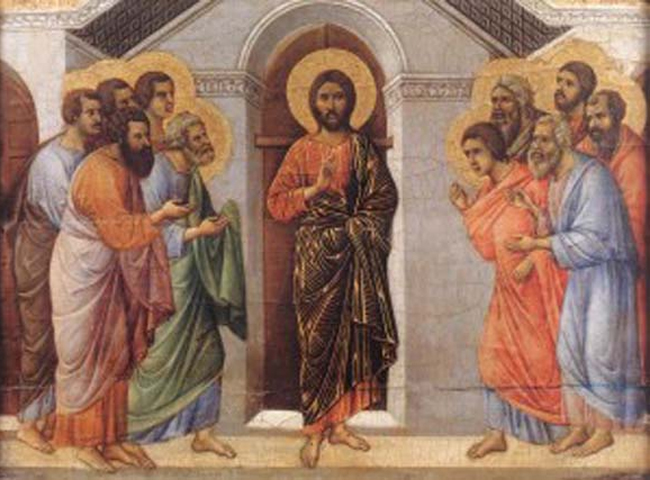
The disciples who encountered Jesus on their way to Emmaus have returned in haste to tell the disciples in Jerusalem what they have heard and seen. Jerusalem has long been a city special to God. It is the Holy City. The Church of Christ is described, in the New Testament, as the Jerusalem above, the heavenly Jerusalem, and the new Jerusalem. It is here that Christ suffered. It is from here that the Kingdom of God begins to spread [ … ]