

Christian Art | Jesus Joy Of Our Salvation | Prayers For The Dead | All Souls In Purgatory
Office Of Readings | Week 33, Sunday, Ordinary Time | A Reading From The Discourses Of Saint Augustine On The Psalms | Let Us Not Resist Jesus’ First Coming, So That We May Not Dread The Second
‘Let us not resist Jesus’ first coming, so that we may not dread the second.’
Saint Augustine’s reflection takes Psalm 96 (Vg.95) as its starting point, focusing especially on the proclamation that the Lord ‘has come’ and ‘will come again’ to judge the earth. The psalm’s imagery of the natural world rejoicing allows Saint Augustine to address the relationship between Christ’s first and second comings. Saint Augustine’s interpretation moves between the biblical text, the lived experience of the Church, and the internal dispositions of the believer.
Augustine begins by linking the psalm to the gospel testimony that the Son of Man will come ‘on the clouds’. He contrasts the future manifestation with Christ’s earlier coming through the preaching of the apostles. This twofold arrival — already present in the world through proclamation, yet still awaited — forms the basis of his pastoral appeal. The refusal to receive Christ now leads to fear later. The first coming demands a response of trust and conversion; the second reveals the consequences of that response.
Augustine then turns to a practical question: how should the Christian live in the present age? His answer is framed by Paul’s teaching in 1 Corinthians 7. The Christian is to ‘use the world’ without being mastered by it. Augustine expresses this by the phrase ‘having, as though not having’. The point is not disengagement from ordinary responsibilities but a form of interior freedom. Social ties, emotions, economic activity and public dealings all belong to the passing form of the world. They require attention, but they must not define the believer’s hope. This detachment allows the Christian to await Christ without anxiety.
Augustine then examines the tension between professed love for Jesus Christ and fear of his return. The question functions as a moral probe. If Christ is feared, it may indicate an attachment to practices or habits that stand in contradiction to his coming. The proposed remedy is to turn from sin rather than to avoid the thought of judgement. Augustine’s emphasis falls on preparation rather than prediction. The timing of Christ’s return remains unknown, but preparedness is accessible and constant.
The sermon next returns to the psalm’s declaration that the Lord will judge in equity and truth. Augustine interprets this through the parable of the sheep and goats. Judgement is aligned with mercy: those who practised mercy receive it; those who withheld it discover its absence. This reading underscores Augustine’s larger theme: divine justice is not arbitrary but corresponds to the shape of a person’s life. Mercy becomes a form of participation in God’s own generosity.
Augustine then explores the logic of Christian giving. Since all possessions are received from God, acts of generosity are understood not as personal largesse but as the return of what belongs to God. This reframes almsgiving: it is not self-display, but the restoration of goods entrusted for the benefit of others. Augustine groups mercy with humility, praise, peace, and charity as the ‘sacrifices’ pleasing to God, echoing Old Testament language about worship translated into ethical terms.
This reading ends by returning to the note of freedom from fear. The one who approaches the judge with a life shaped by mercy and truth can await the second coming without dread. Augustine thus links the spiritual condition of the believer to the psalm’s vision of rejoicing creation. The worship of the Church, the conduct of the individual, and the final renewal of all things are held together within a single movement of divine justice expressed as equity and truth.
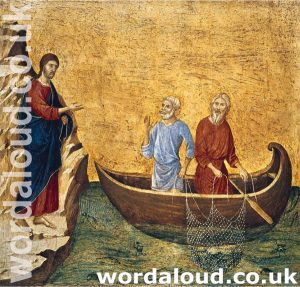
A Reading From The Discourses Of Saint Augustine On The Psalms | Let Us Not Resist Jesus’ First Coming, So That We May Not Dread The Second
All the trees of the forest will exult before the face of the Lord, for he has come, he has come to judge the earth. He has come the first time, and he will come again. At his first coming, his own voice declared in the gospel: Hereafter you shall see the Son of Man coming upon the clouds. What does he mean by hereafter? Does he not mean that the Lord will come at a future time when all the nations of the earth will be striking their breasts in grief? Previously he came through his preachers, and he filled the whole world. Let us not resist his first coming, so that we may not dread the second.
What then should the Christian do? He ought to use the world, not become its slave. And what does this mean? It means having, as though not having. So says the Apostle: My brethren, the appointed time is short: from now on let those who have wives live as though they had none; and those who mourn as though they were not mourning; and those who rejoice as though they were not rejoicing; and those who buy as though they had no goods; and those who deal with this world as though they had no dealings with it. For the form of this world is passing away. But I wish you to be without anxiety. He who is without anxiety waits without fear until his Lord comes. For what sort of love of Christ is it to fear his coming? Brothers, do we not have to blush for shame? We love him, yet we fear his coming. Are we really certain that we love him? Or do we love our sins more? Therefore let us hate our sins and love him who will exact punishment for them. He will come whether we wish it or not. Do not think that because he is not coming just now, he will not come at all. He will come, you know not when; and provided he finds you prepared, your ignorance of the time of his coming will not be held against you.
All the trees of the forest will exult. He has come the first time, and he will come again to judge the earth; he will find those rejoicing who believed in his first coming, for he has come.
He will judge the world with equity and the peoples in his truth. What are equity and truth? He will gather together with him for the judgment his chosen ones, but the others he will set apart; for he will place some on his right, other on his left. What is more equitable, what more true than that they should not themselves expect mercy from the judge, who themselves were unwilling to show mercy before the judge’s coming. Those, however who were willing to show mercy will be judged with mercy. For it will be said to those placed on his right: Come, blessed of my Father, take possession of the kingdom which has been prepared for you from the beginning of the world. And he reckons to their account their works of mercy: For I was hungry and you gave me to eat; I was thirsty and you gave me to drink.
What is imputed to those places on his left side? That they refused to show mercy. And where will they go? Depart into the everlasting fire. The hearing of this condemnation will cause much wailing. But what has another psalm said? The just man will be held in everlasting remembrance; he will not fear the evil report. What is the evil report? Depart into the everlasting fire, which was prepared for the devil and his angels. Whoever rejoices to hear the good report will not fear the bad. This is equity, this is truth.
Or do you, because you are unjust, expect the judge not to be just? Or because you are a liar, will the truthful one not be true? Rather, if you wish to receive mercy, be merciful before he comes; forgive whatever has been done against you; give of your abundance. Of whose possessions do you give, if not from his? If you were to give of your own, it would be largess; but since you give of his, it is restitution. For what have you that you have not received? These are the sacrifices most pleasing to God: mercy, humility, praise, peace, charity. Such as these, then, let us bring and, free from fear, we shall await the coming of the judge who will judge the world in equity and the peoples in his truth.
Christian Prayer With Jesus Christ
Lord Jesus Christ,
you came in humility and mercy,
and you will come in glory and judgement.
Grant that we may receive your first coming with trust
and prepare for your second with steadfast hope.
Free us from fear by turning our hearts from sin,
and teach us to practise mercy,
so that we may stand with confidence before your face.
Give us detachment from what passes away,
and a quiet readiness for what endures.
May our lives bear witness to your equity and truth,
and may your Spirit keep us faithful in works of charity,
until you gather your people into the kingdom
prepared from the foundation of the world.
Amen.
Glossary Of Christian Terms
Apostle
One of the first witnesses sent out by Christ to proclaim the gospel; more broadly, anyone commissioned to spread the faith.
Baptism
The Christian rite of initiation involving water, signifying cleansing from sin and union with Christ.
Church
The community of believers in Christ, understood both as a visible body on earth and as a spiritual communion united to Christ its head.
Equity
A term Augustine uses to describe God’s just and impartial judgement, in which each person receives what accords with truth.
Gospel
The ‘good news’ about Jesus Christ; also the written accounts of his life and teaching.
Judgement
The definitive assessment by God of each person’s life, culminating at the return of Christ.
Mercy
God’s compassionate response to human need; in believers, the practice of generosity, forgiveness, and care for others.
Repentance
Turning away from sin and towards God through sorrow, change of heart, and amendment of life.
Second Coming
The future return of Christ in glory, when he will judge the living and the dead and bring his kingdom to completion.
Sin
An act or disposition contrary to God’s will and harmful to oneself and others; often understood as a refusal of love.
The Psalms
Biblical prayers and hymns traditionally attributed to King David, used extensively in Christian worship.
Truth
For Augustine, both the character of God and the standard by which Christ judges; what aligns with God’s nature and reality.



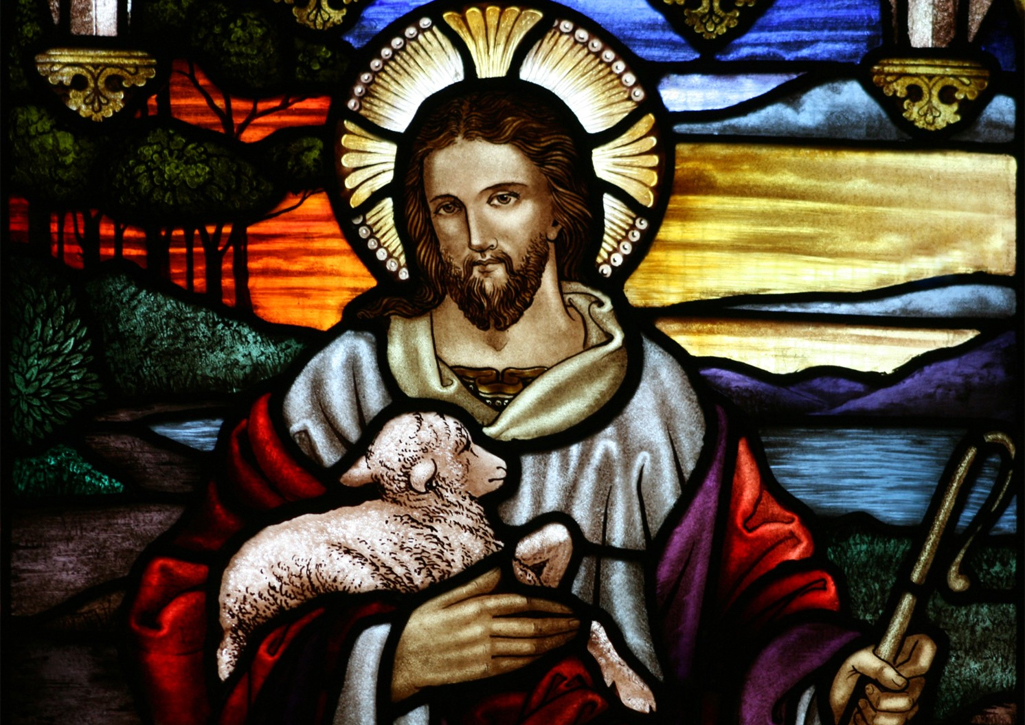
Christ offers himself to the people as the good shepherd, recalling a favourite theme of Old Testament prophecy. Priests and kings are so described, and indeed God is spoken of as a shepherd, as we hear, for example, in Psalm 23: THE Lord is my shepherd; I shall not want. 2 He maketh me to lie down in green pastures: he leadeth me beside the still waters [ … ]

Human life is sacred because from its beginning it involves the creative action of God and it remains forever in a special relationship with the Creator, who is its sole end. God alone is the Lord of life from its beginning until its end: no one can under any circumstance claim for himself the right directly to destroy an innocent human being [ … ]
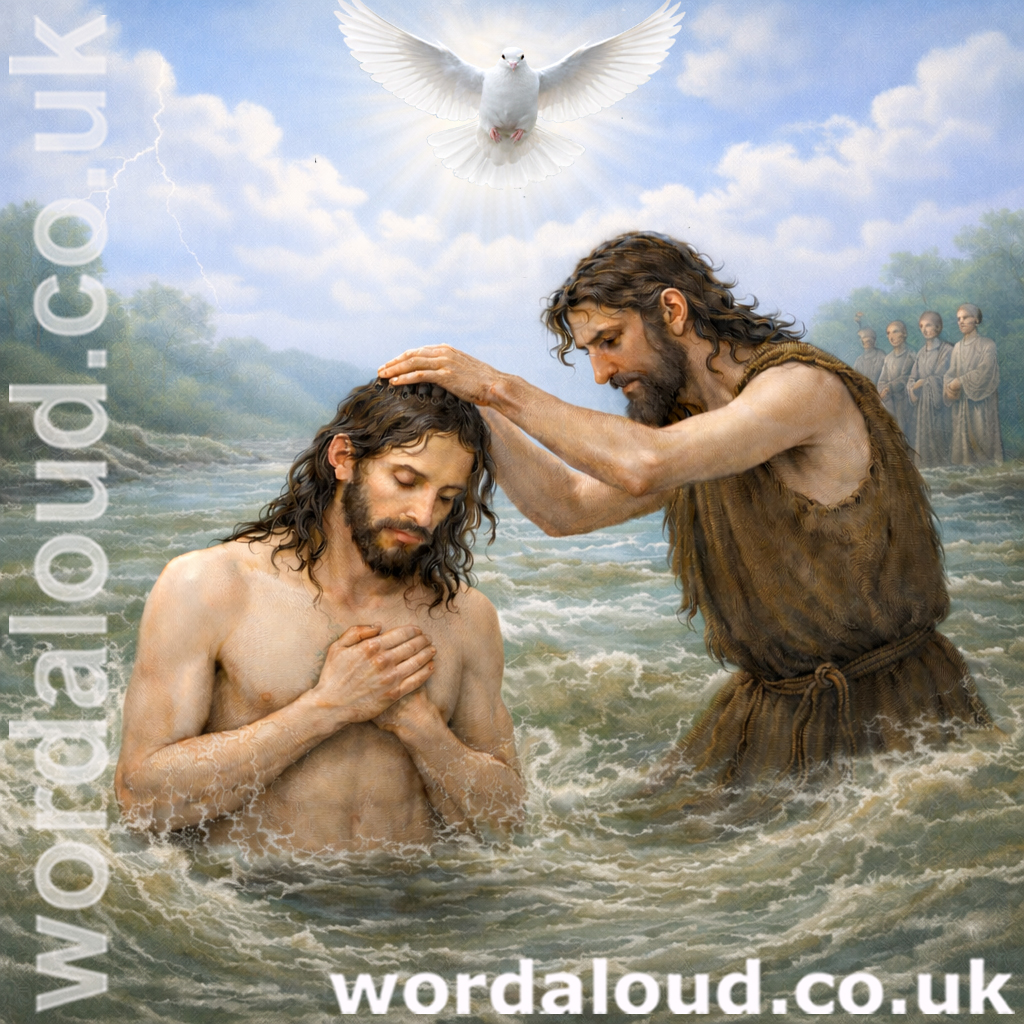
This homily from a fourth-century spiritual writer reflects on the varied ways in which the Holy Spirit works within those who have been reborn in Jesus Christ. Rather than describing a single spiritual pattern, the text presents Christian life as dynamic, marked by change, growth, and responsiveness to grace [ … ]
