

Parables Of Jesus | King James Audio Bible KJV | Parable Of The Unjust Judge
Luke 18: 1-8 | King James Audio Bible KJV | Parables Of Jesus | Week 32 Saturday
1 AND he spake a parable unto them to this end, that men ought always to pray, and not to faint;
2 Saying, There was in a city a judge, which feared not God, neither regarded man:
3 And there was a widow in that city; and she came unto him, saying, Avenge me of mine adversary.
4 And he would not for a while: but afterward he said within himself, Though I fear not God, nor regard man;
5 Yet because this widow troubleth me, I will avenge her, lest by her continual coming she weary me.
6 And the Lord said, Hear what the unjust judge saith.
7 And shall not God avenge his own elect, which cry day and night unto him, though he bear long with them?
8 I tell you that he will avenge them speedily. Nevertheless when the Son of man cometh, shall he find faith on the earth?
Jesus teaches his listeners the parable of the unjust judge in order to affirm for them the efficacy of prayer. If even this unrighteous judge will grant the widow’s request, he tells us, how much more will God vindicate his elect, and speedily. We are called upon by Jesus to live a life of prayer – to express and to strengthen our faith through prayer and to channel our ever enriched faith into further prayer. This is the way to orient our lives to God.
Pope Saint John Paul II taught us this, about why we pray:
‘1. We must pray first and foremost because we are believers. Prayer is in fact the recognition of our limitation and our dependence: we come from God, we belong to God and we return to God! We cannot, therefore, but abandon ourselves to Him, our Creator and Lord, with full and complete confidence. Prayer, therefore, is first of all an act of intelligence, a feeling of humility and gratitude, an attitude of trust and abandonment to Him who gave us life out of love. Prayer is a mysterious but real dialogue with God, a dialogue of confidence and love.
‘2. We, however, are Christians, and therefore we must pray as Christians. For the Christian, in fact, prayer acquires a particular characteristic, which completely changes its innermost nature and innermost value. The Christian is a disciple of Jesus; he is one who really believes that Jesus is the Word Incarnate, the Son of God who came among us on this earth. As a man, the life of Jesus was a continual prayer, a continual act of worship and love of the Father and since the maximum expression of prayer is sacrifice, the summit of Jesus’ prayer is the Sacrifice of the Cross, anticipated by the Eucharist at the Last Supper and handed down by means of the Holy Mass throughout the centuries. Therefore, the Christian knows that his prayer is that of Jesus; every prayer of his starts from Jesus; it is He who prays in us, with us, for us. All those who believe in God, pray; but the Christian prays in Jesus Christ: Christ is our prayer!
‘3. Finally, we must pray because we are frail and guilty. It must be humbly and realistically recognized that we are poor creatures, confused in ideas, tempted by evil, frail and weak, in continual need of inner strength and consolation. Prayer gives the strength for great ideas, to maintain faith, charity, purity and generosity. Prayer gives the courage to emerge from indifference and guilt, if unfortunately one has yielded to temptation and weakness. Prayer gives light to see and consider the events of one’s own life and of history in the salvific perspective of God and eternity. Therefore, do not stop praying! Let not a day pass without your having prayed a little! Prayer is a duty, but it is also a great joy, because it is a dialogue with God through Jesus Christ! Every Sunday, Holy Mass: if it is possible for you, sometimes during the week. Every day, morning and evening prayers, and at the most suitable moments!’
It must be humbly and realistically recognized that we are poor creatures, confused in ideas, tempted by evil, frail and weak, in continual need of inner strength and consolation. Prayer gives the strength for great ideas, to maintain faith, charity, purity and generosity. Prayer gives the courage to emerge from indifference and guilt, if unfortunately one has yielded to temptation and weakness. Prayer gives light to see and consider the events of one’s own life and of history in the salvific perspective of God and eternity. Therefore, do not stop praying! Let not a day pass without your having prayed a little! Prayer is a duty, but it is also a great joy, because it is a dialogue with God through Jesus Christ! Every Sunday, Holy Mass: if it is possible for you, sometimes during the week. Every day, morning and evening prayers, and at the most suitable moments!’


Audio Bible KJV | Endnotes
The Parable of the Unjust Judge, recorded in the Gospel of Luke 18:1-8, is a powerful teaching from Jesus about the power of prayer and the nature of God. This parable, together with the Parable of the Prodigal Son, serve as important lessons for Christians about living a faithful life and developing a closer relationship with God.
In the parable, Jesus tells the story of a widow who repeatedly approaches a judge for justice. Despite the judge’s initial lack of concern, the widow’s persistence eventually leads the judge to act justly and grant her the justice she seeks. Jesus draws a comparison between the unjust judge and God, emphasizing that if an unjust judge can be moved to act justly through persistence, then how much more will God, who is loving and just, respond to the prayers of his children.
The Christian cross is a central symbol of the Christian faith, representing the crucifixion of Jesus and his ultimate sacrifice for the forgiveness of sins. This sacrifice serves as a reminder of the love and justice of God, as taught by the church of Jesus Christ. Through the acceptance of Jesus’ message and the development of a personal relationship with God, Christians believe they can attain salvation and a path to Heaven. Our Christian gifts recall this message as a source of comfort and inspiration for Christians.
The Parable of the Unjust Judge is often interpreted as a reminder of the importance of persistence in prayer. Just as the widow refused to give up in her pursuit of justice, Christians are encouraged to persist in their prayers and never give up hope. Prayer is an essential part of a faithful life, allowing individuals to express their needs, gratitude, and hopes, and seek guidance and wisdom from God.
The Sermon on the Mount reflects the importance of persistence of prayer as of the attitude of the sinner in approach to confession of sin and God’s forgiveness. The Parable of the Unjust Judge serves as a powerful reminder of the transformative power of prayer and the love and justice of God. Christians are encouraged to persist in their prayer lives and seek a deeper relationship with God, just as the widow persisted in her pursuit of justice.
As we explore through the parables of Jesus relationship with God, an understanding of the meaning of parables is that within the context of engagement with the parables we are present with Jesus in the Garden of Gethsemane – toward crucifixion of Jesus and hence redemption.



Saint Columban (c. 543–615) was an Irish monk and missionary whose work helped to shape early medieval monasticism in continental Europe. His writings, including sermons and monastic rules, reveal a spirituality that is both ascetic and deeply scriptural. The passage we have today develops a theme central to his teaching: the inexhaustible desire for Christ as the fountain of life and bread of life [ … ]
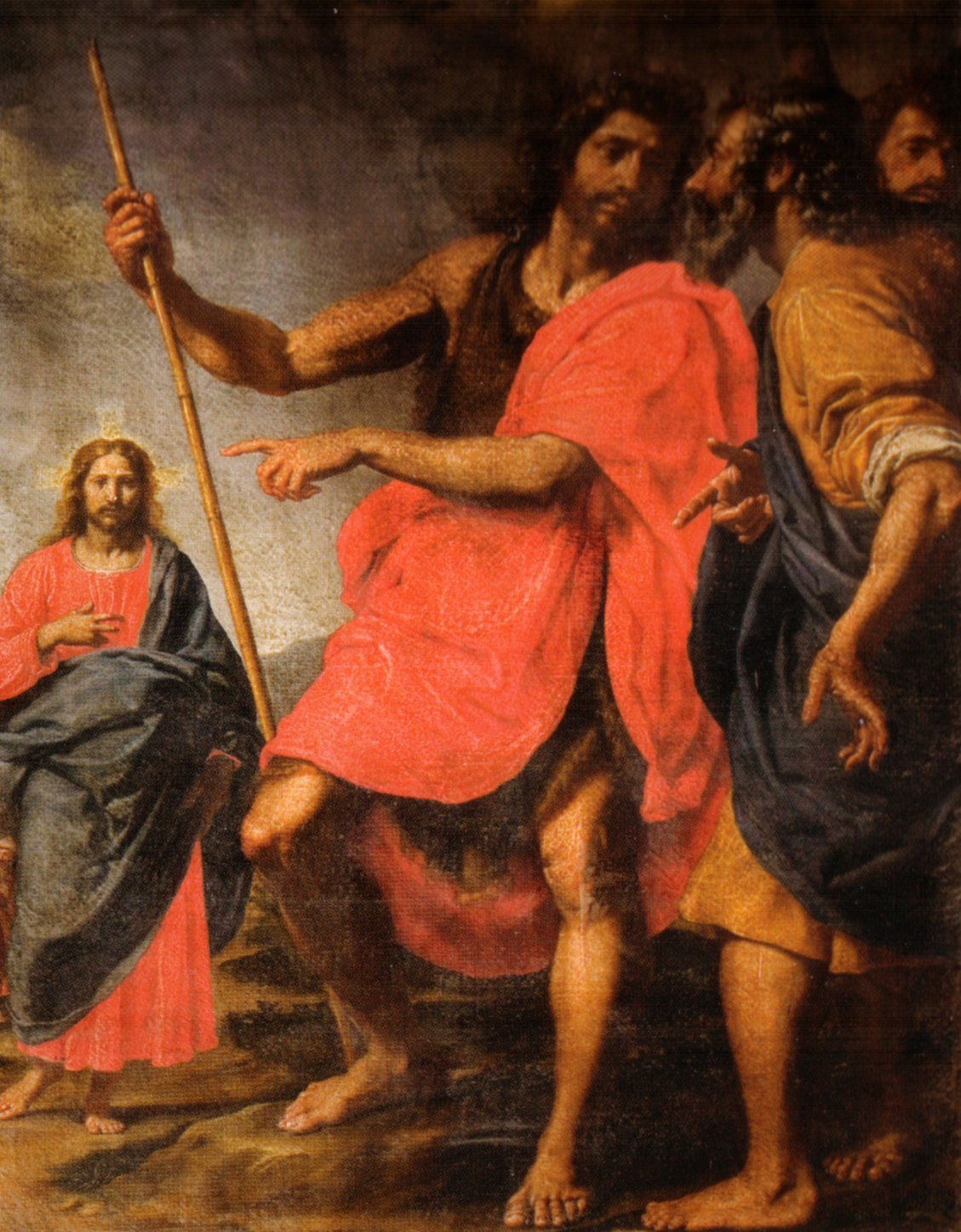
The first two disciples called by Jesus are disciples of John the Baptist. It is he who looks to Jesus and directs his disciples to look and so behold the Lamb of God. They are sent by John, through being told by him to recognize Jesus. John shows them the way to Jesus – as ‘the voice of one crying in the wilderness, Make straight the way of the Lord.’ [ … ]

Saint Augustine’s reflection takes Psalm 96 (Vg.95) as its starting point, focusing especially on the proclamation that the Lord ‘has come’ and ‘will come again’ to judge the earth. The psalm’s imagery of the natural world rejoicing allows Saint Augustine to address the relationship between Christ’s first and second comings. Saint Augustine’s interpretation moves between the biblical text, the lived experience of the Church, and the internal dispositions of the believer [ … ]