

Christian Art | Jesus | Bread Of Life | John’s Gospel
John 6: 41-51 | Audio Bible KJV | King James Version
41 The Jews then murmured at him, because he said, I am the bread which came down from heaven.
42 And they said, Is not this Jesus, the son of Joseph, whose father and mother we know? how is it then that he saith, I came down from heaven?
43 Jesus therefore answered and said unto them, Murmur not among yourselves.
44 No man can come to me, except the Father which hath sent me draw him: and I will raise him up at the last day.
45 It is written in the prophets, And they shall be all taught of God. Every man therefore that hath heard, and hath learned of the Father, cometh unto me.
46 Not that any man hath seen the Father, save he which is of God, he hath seen the Father.
47 Verily, verily, I say unto you, He that believeth on me hath everlasting life.
48 I am that bread of life.
49 Your fathers did eat manna in the wilderness, and are dead.
50 This is the bread which cometh down from heaven, that a man may eat thereof, and not die.
51 I am the living bread which came down from heaven: if any man eat of this bread, he shall live for ever: and the bread that I will give is my flesh, which I will give for the life of the world.


Eternal Life With Jesus | Bread Of Life
Jesus confronts doubts and murmuring of the Jews, who struggle to accept Jesus’ declaration that he is the ‘bread which came down from heaven’. This informs our understanding of the Eucharist, where Jesus offers his body and blood as spiritual sustenance. Jesus’ teaching unfolds the mystery of Jesus’ real presence in the Eucharist.
The Jews’ reaction, questioning how Jesus, whom they know as the son of Joseph, could claim such divine origins, mirrors human tendency to resist what is not easily understood. Jesus responds not by diminishing his claim but by further emphasizing the necessity of divine grace to recognize and accept this truth: ‘No one can come to me unless the Father who sent me draws him.’
Jesus teaches that faith is a gift from God, a divine drawing that leads one to recognize and believe.
Jesus identifies himself explicitly as the ‘bread of life’, contrasting the manna given to the Israelites in the wilderness with the living bread Jesus offers. The manna, though miraculous, was temporary and ultimately failed to give eternal life, as those who ate it eventually died. In contrast, the bread that Jesus offers is his flesh, which is given for the life of the world.
There is a need for a deep faith in the Eucharist. This calls people of faith to move beyond mere intellectual acceptance and to enter into a relationship of trust and reverence. We may think of the parables of Jesus: the Eucharist is the ‘pearl of great price’, a treasure beyond all earthly goods. The Eucharist is no mere ritual or symbol, rather the real presence of Christ, who humbles himself to become our spiritual food.
We are invited to approach the Eucharist with wonder and humility, recognizing this gift as the expression of God’s love. Jesus, who comes down from heaven to offer himself as the bread of life, invites us into a profound communion.
This communion is both personal encounter and participation in the life of the Church, the body of Christ. In receiving the Eucharist, we are united with Christ and with all who share this sacrament, this union transcending time and space.


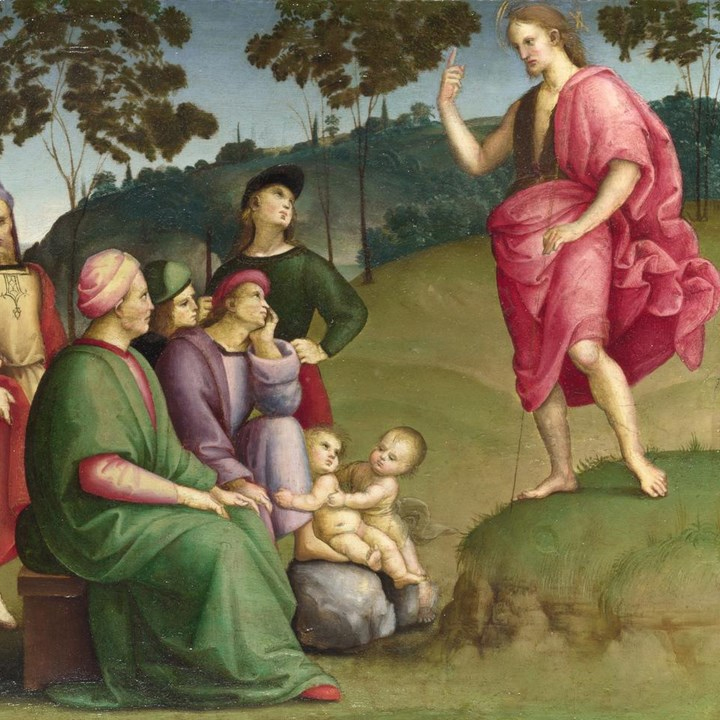
The message of this Sunday’s Gospel is so clear and so perfect. John has come to prepare the way of the Lord. He is not the Lord; he is come to prepare his way, the way of Christ. The opening of John’s Gospel may be heard this week as a beautiful restatement from a new point of view of the message of the coming of the Lord and the beginning of Christ’s ministry [ … ]

In this Easter sermon, Saint Augustine speaks tenderly and passionately to the newly baptized, those who have recently passed through the saving waters of baptism at the Easter Vigil. His words are full of warmth, joy, and hope, as he invites these ‘little children in Christ’ to recognize the extraordinary gift they have received and to live according to the new life that has been planted within them [ … ]
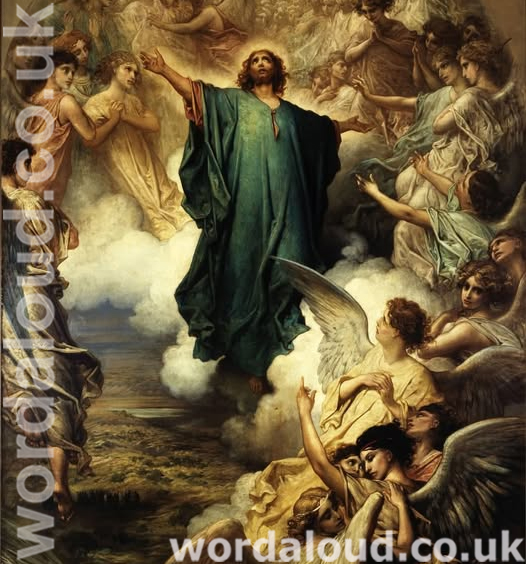
The homily, continued, turns from moral exhortation to ecclesial reflection. Its central concern is the integrity of Christian witness and the reality of the Church as the living body of Christ. The homilist moves between ethical warning and theological insight, showing that the credibility of the faith depends on the coherence between confession and conduct [ … ]
