

Christian Art | George Herbert | The Temple | The Church | The Holy Scriptures (2)
George Herbert | The Temple | The Church | The Holy Scriptures (2)
Oh that I knew how all thy lights combine,
And the configurations of their glorie!
Seeing not onely how each verse doth shine,
But all the constellations of the storie.
This verse marks that, and both do make a motion
Unto a third, that ten leaves off doth lie:
Then as dispersed herbs do watch a potion,
These three make up some Christians destinie:
Such are thy secrets, which my life makes good,
And comments on thee: for in ev’ry thing
Thy words do finde me out, and parallels bring,
And in another make me understood.
Starres are poore books, and oftentimes do misse:
This book of starres lights to eternall blisse.


George Herbert | The Temple | The Church | The Holy Scriptures (2)
This poem reflects George Herbert’s meditative approach to the relationship between Scripture and human understanding. He portrays the Bible as a source of ‘lights’ and ‘constellations’ whose complexity and hidden meanings illuminate human experience. Herbert expresses a desire to understand the Bible not just as individual verses but as a unified whole, where each part contributes to a larger, interconnected narrative. The ‘lights’ and ‘configurations of their glory’ in the poem evoke a metaphorical night sky, where each verse shines like a star. Herbert suggests that, like stars forming constellations, individual passages in scripture connect in ways that provide a grander, cohesive vision.
The structure of the poem emphasizes this theme of interconnectedness. Herbert notes how one verse seems to ‘mark’ another, and ‘both do make a motion / Unto a third, that ten leaves off doth lie’. This language conveys how understanding emerges not merely from isolated study but through perceiving these connections across different parts of scripture. Herbert compares this dynamic to herbalists preparing a medicinal ‘potion’, with ‘dispersed herbs’ working together for a healing purpose. The implication is that the Bible’s verses work collectively to heal and guide, much like the separate herbs in a restorative blend.
In contemplating the Bible’s ‘secrets’, Herbert acknowledges that his own life acts as a ‘commentary’ on Scripture. By living in alignment with divine principles, he finds a mirror between the texts he reads and his personal experiences. This process of finding parallels between Scripture and life suggests that the Bible holds a personal relevance, illuminating Herbert’s own journey and shaping his sense of purpose. Herbert sees Scripture as alive and active, constantly ‘finding [him] out’ and revealing insights that apply directly to his circumstances.
The poem contrasts the ‘poor books’ of astrology with the ‘Book of Stars’ that is the Bible. While stars were traditionally thought to guide fate and provide insight, Herbert suggests that they often ‘miss’—they cannot truly guide people to truth. In contrast, Scripture’s lights ‘lead to eternal bliss,’ pointing toward salvation rather than mere earthly guidance. This final line emphasizes the Bible’s role as a source of ultimate guidance, transcending earthly knowledge and bringing the reader into a divine understanding.
The poem celebrates depth and wisdom within Scripture, exploring how it engages the reader both intellectually and spiritually. Herbert highlights the Bible’s unique ability to connect vast themes while remaining intimately relevant to each individual. The poem’s contemplative tone suggests that understanding Scripture is an ongoing journey, where the reader continually discovers new meanings and applications. This understanding builds not from individual passages alone but from perceiving how each ‘light’ interconnects, forming a ‘constellation’ of wisdom that guides the believer toward ‘eternal bliss’. Thus, Herbert presents Scripture as a profound and dynamic text, one that requires dedication, reflection, and, ultimately, a life that mirrors its teachings to reveal its fullest meaning.



Elizabeth is introduced in Luke 1:5 as a woman ‘of the daughters of Aaron,’ indicating her priestly lineage, which complements her husband Zachariah’s role as a priest ‘of the course of Abia’ (Luke 1:5). Both Elizabeth and Zachariah are described as ‘righteous before God, walking in all the commandments and ordinances of the Lord blameless’ (Luke 1:6). This emphasizes their piety and faithfulness to God’s law. Despite their righteousness, the couple is childless because Elizabeth is barren, and both are advanced in age (Luke 1:7) [ … ]
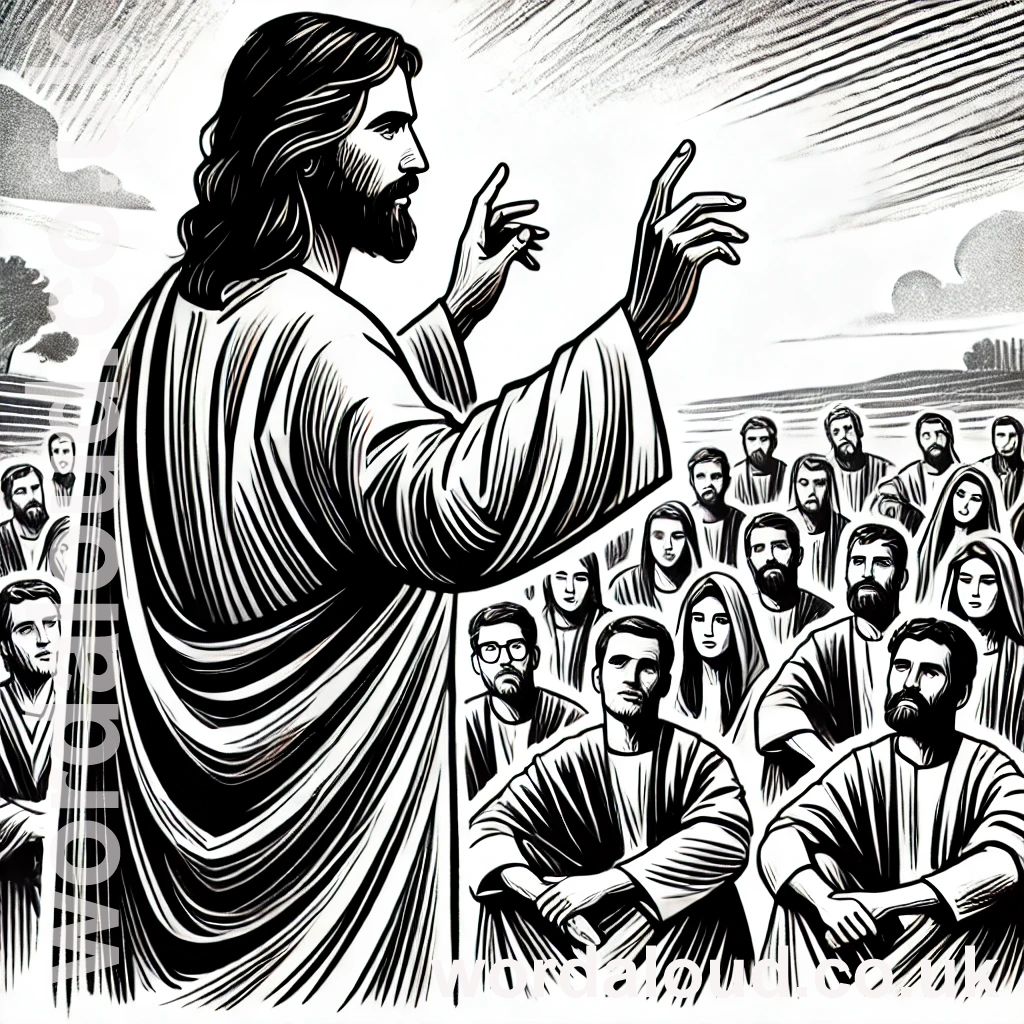
When Saint John Chrysostom interprets the words ‘You are the salt of the earth,’ he sets the task of the disciples in contrast to the prophets of Israel. Whereas the prophets were sent to particular peoples, Christ now sends his followers to all nations. The scope is universal: not one city or one country, but the world in its entirety. By calling them salt, Christ indicates the condition of humankind before his coming. Humanity, in Chrysostom’s description, had ‘lost its savour’ through sin, much as meat without salt becomes liable to decay. Christ alone restores what had become corrupt; the disciples are then charged with preserving this restored creation, preventing the return of corruption through their labour and teaching [ … ]
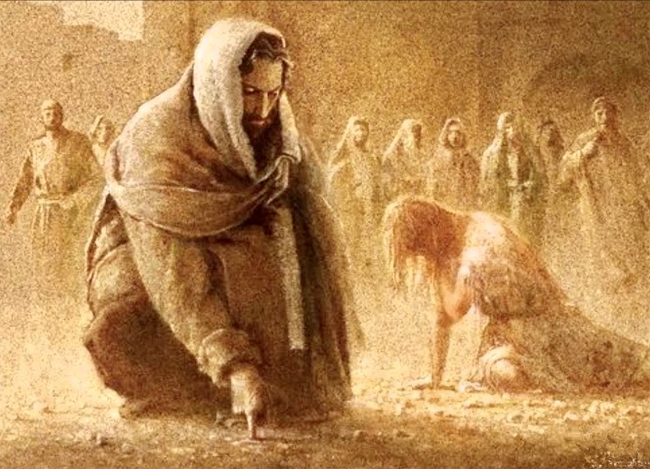
Jesus goes to the Mount of Olives on a number of occasions to pray. It is good for us now to witness Jesus praying. When we pray, we pray with Jesus and according to his example [ … ]
