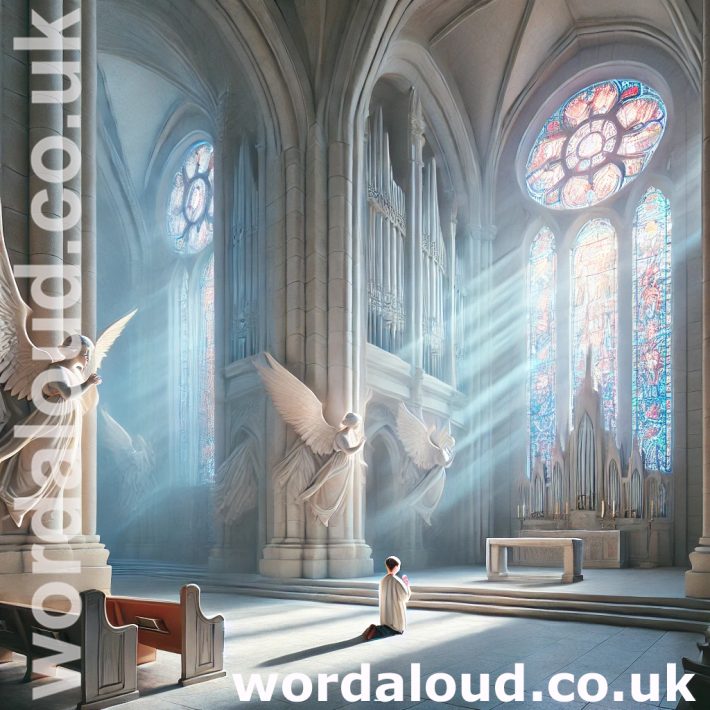
Christian Art | God’s Temple Is Holy And You Are His Temple
Office Of Readings | Week 14, Thursday, Ordinary Time | A Reading From The Discourse Of Saint Ambrose On Psalm 118(/Vg. 117) | God’s Temple Is Holy, And You Are His Temple
‘God can be found in man’s heart.’
The Soul As Temple | Patristic Context
Saint Ambrose echoes a theme common among the early Church Fathers — the soul as God’s temple. Saint Paul’s exhortation in 1 Corinthians 3:16-17, ‘Do you not know that you are God’s temple and that God’s Spirit dwells in you?’ was a foundational text for this spiritual anthropology. Saint Ambrose, like Saint Origen before him and Saint Augustine after him, understood this not merely as a doctrinal point but as a deeply pastoral invitation: the human soul is made to receive and house the divine.
In Ambrose’s context — fourth-century Milan — this was particularly relevant for catechumens preparing for baptism and for the newly baptised. To them he preached the urgency of opening their hearts to Christ, not passively but actively, through faith, repentance, and holy living.
Jesus Christ As The Knocking Bridegroom
Ambrose’s citation of the Song of Songs (5:2) and Revelation (3:20) situates this reflection firmly within biblical tradition. In both texts, Jesus Christ is depicted as the divine Bridegroom who stands at the door and knocks, desiring entry into the hearts of believers.
What is remarkable is Ambrose’s pastoral insight: Christ does not force his way into the human heart. He respects human freedom, appealing gently but persistently. This image is profoundly pastoral — Christ’s coming is certain, but whether he finds the soul open and vigilant depends on our response.
Ambrose connects this image with vigilance during tribulation: ‘You see that when the Word of God knocks hardest on your door, it is when his hair is wet with the dew of the night.’ Here Ambrose conveys the comforting truth that Christ draws closest in times of suffering, when believers are most tempted to despair. The ‘dew of the night’ symbolises the trials through which the Lord himself laboured and through which he accompanies us.
The Invitation To Watchfulness And Holiness
Ambrose emphasises the importance of vigilance. Echoing the Gospel parables about the faithful servant waiting for the master’s return (e.g., Luke 12:35-38), he exhorts the soul to remain alert. Faith, he says, is the door of the soul — through it Jesus Christ gains entry.
The psalm itself urges the soul to lift up its gates: ‘Gates, raise your heads. Stand up, eternal doors, and let the King of glory enter.’ Ambrose interprets this poetically: the soul must elevate itself through righteousness so that Christ may enter triumphantly, bringing with him the grace of redemption.
Biblical And Liturgical Resonance
This homily has deep biblical resonance. Besides the Song of Songs and Psalm 24, Ambrose subtly alludes to liturgical themes, especially those of Advent — a season marked by vigilant waiting for Christ’s coming. In the Advent liturgy, the Church prays for God to ‘rend the heavens and come down’, a longing that mirrors Ambrose’s call to open the soul to Christ’s visitation.
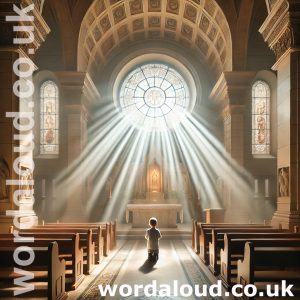
A Reading From The Discourse Of Saint Ambrose On Psalm 118 | God’s Temple Is Holy, And You Are His Temple
My father and I will come to him and make our home with him. Open wide your door to the one who comes. Open your soul, throw open the depths of your heart to see the riches of simplicity, the treasures of peace, the sweetness of grace. Open your heart and run to meet the Sun of eternal light that illuminates all men. Indeed that true light shines on all; but if anyone closes his shutters against it then he will defraud himself of the eternal light. To close the doors of your mind is to exclude Christ. Of course he is capable of entering even so, but he does not want to force his way in or seize you against your will.
Born of the Virgin’s womb, he shone on the whole world to give light to all. It is received by those who desire the brightness of perpetual light that no night can obscure. For the sun that we see daily in the sky is followed by darkness and night; but the Sun of righteousness never sets, since evil cannot defeat wisdom.
Blessed is he, therefore, at whose door Christ comes knocking. Faith is the door of the soul, and if it is strong then it fortifies the whole house. Through this door Christ enters. Thus it is that the Church herself says, The voice of my brother is knocking on the door. Listen to him knocking, listen to him asking to be let in: Open to me, my sister, my beloved, my dove, my perfect one, for my head is wet with dew, my hair with the drops of night.
You see that when the Word of God knocks hardest on your door, it is when his hair is wet with the dew of the night. In fact he chooses to visit those who are in tribulation and trial, lest one of them be overwhelmed by distress. So his head is covered with dew, with drops, when his body is labouring hard. It is important to keep watch so that when the Bridegroom comes, he is not shut out. If you are asleep and your heart is not keeping watch, he will go away without knocking; but if your heart is alert for his coming, he knocks and asks for the door to be opened to him.
Thus you see that our soul has a door, but we have gates too, as the psalm says: Gates, raise your heads. Stand up, eternal doors, and let the king of glory enter. If you choose to raise your gates, the King of glory will come to you, celebrating the triumph of his own Passion. For righteousness has gates, as we see it written when the Lord Jesus speaks through his prophets: Open to me the gates of righteousness.
It is the soul that has its door, it is the soul that has its gates. To that door Christ comes and knocks, he knocks at the door. Open to him, therefore: he wishes to come in, the Bridegroom wishes to find you keeping watch.
Prayer With Jesus Christ
Lord Jesus Christ,
You are the true light who comes to dwell in the hearts of those who open the doors of faith.
Help us to keep watch,
to live as temples of your presence,
to welcome you not just in word but in the deeds of holiness and charity.
When you knock at the door of our hearts,
grant us the grace to open without hesitation,
to receive you in faith and love,
and to persevere in vigilance,
especially in times of darkness and trial.
May we be ever attentive to your presence,
always ready to raise the gates of our souls
so that you, the King of Glory, may enter
and reign in us forever.
Amen.
Glossary Of Christian Terms
Saint Ambrose of Milan: A fourth-century bishop and Doctor of the Church, known for his theological writings, pastoral care, and influence on figures such as Saint Augustine.
Catechumen: A person undergoing instruction and preparation for baptism and entry into the Christian community.
Bridegroom image: A biblical metaphor, especially from the Song of Songs and Revelation, depicting Christ as the Bridegroom who seeks a loving relationship with the Church or individual souls.
Faith as the door of the soul: Ambrose’s metaphor suggesting that it is through faith that Christ gains entry into the believer’s heart.
Song of Songs 5:2: A poetic scripture often interpreted spiritually as an allegory of Christ’s love for the Church or the soul.
‘Gates, raise your heads’: A verse from Psalm 24:7, interpreted here as an exhortation for the soul to lift itself in readiness to receive Christ.
Sun of righteousness: A title for Christ derived from Malachi 4:2, symbolising his role as the bringer of divine light and healing.
Vigilance: The spiritual discipline of keeping one’s soul attentive and prepared for Christ’s coming, especially during times of tribulation.


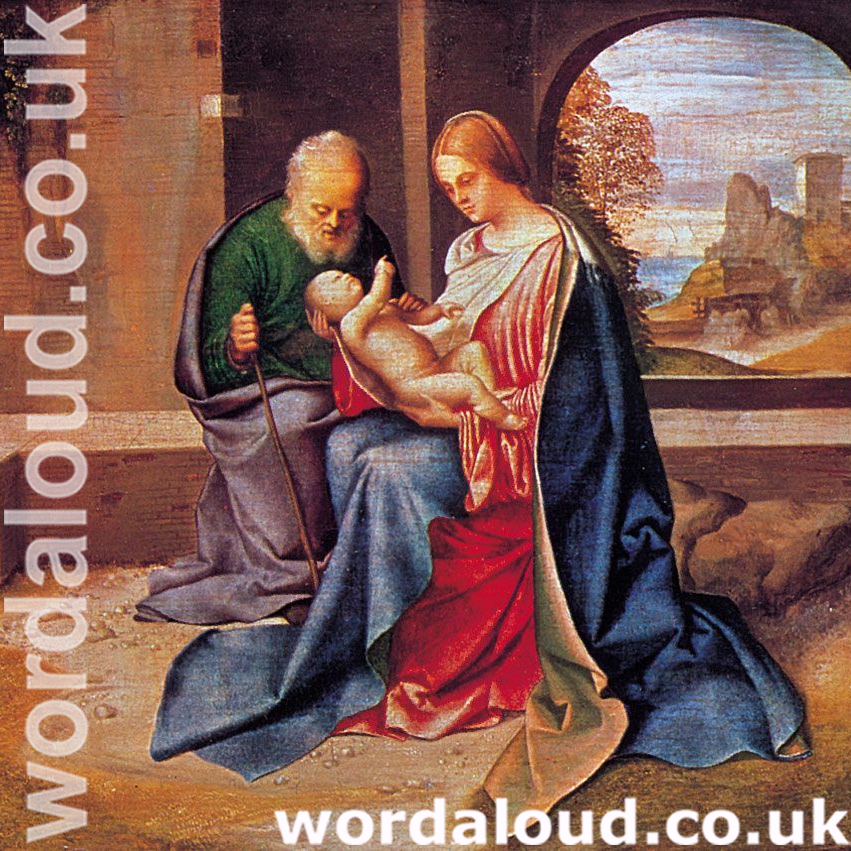
In this reading, Saint Bernard reflects on the revelation of God’s kindness through the Incarnation. Bernard links the coming of Christ to what Saint Paul calls ‘the fullness of time’, when God’s purposes are no longer promised but realised [ … ]
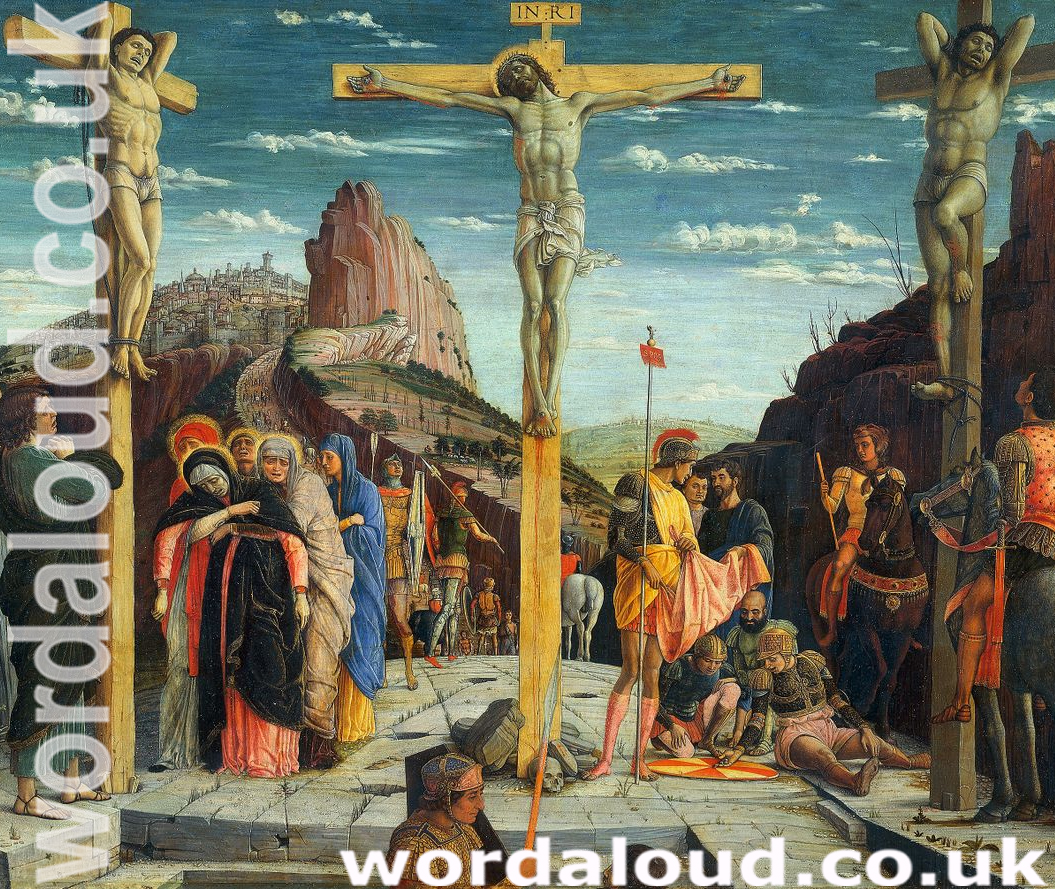
Christian Art | Our Lord Jesus On The Cross | God The Father | God The Son Office Of Readings | Advent December 23rd | A Reading From The Treatise Of Saint Hippolytus Against The Heresy Of Noetus | The Hidden Sacrament Is Revealed ‘The hidden sacrament is revealed.’ In this reading, Saint Hippolytus writes against the Noetic heresy, which denied the real distinction between the Father and the Son by treating them as the same person acting under different names. The purpose of Saint Hippolytus is to defend the Church’s confession of one God who is not solitary, but who exists with his Word and Spirit. Hippolytus begins by setting a principle: knowledge of God comes from the Holy Scriptures, not from speculation or private reasoning. Faith is not shaped by human preference but by what God has chosen to reveal. The Father determines how He is believed, the Son how He is glorified, and the Spirit how He is received. This establishes Scripture as the rule of faith and guards against theological invention. Hippolytus then affirms that God existed alone before creation, with nothing co-eternal alongside Him. At the same time, God was not without reason, wisdom, or power. Hippolytus insists that plurality within God does not compromise divine unity. God contains within himself Word, wisdom, and counsel. Creation begins when God wills and manifests His Word. The Word is not created from nothing but proceeds from God and acts as the agent of creation. The Word is first invisible to the created world, though known to God. When God chooses, He makes the Word visible, described as ‘Light of Light’. This language safeguards both distinction and unity: the Word comes from God and reveals God, without being separate from Him. The manifestation of the Word is ordered towards salvation, so that the world may see and be saved. Hippolytus identifies this Word clearly with the Son of God. Through him all things were made, and he alone comes forth from the Father. The Law and the prophets belong to the same saving plan. God speaks through them by the Holy Spirit, so that they proclaim not their own ideas but the Father’s will. Revelation is therefore coherent: creation, prophecy, and incarnation belong to one divine purpose. Hippolytus appeals to the Gospel of John to show continuity between prophecy and fulfilment. The Word spoken of by the prophets is the Word made flesh. Though the world was made through him, it failed to recognise him. This failure does not negate God’s plan but reveals the depth of the mystery now disclosed. A Reading From The Treatise Of Saint Hippolytus Against The Heresy Of Noetus | The Hidden Sacrament Is Revealed There is, brethren, one God, the knowledge of whom we gain from the Holy Scriptures and from no other source. Whatever things the Holy Scriptures declare, at these let us look; and whatever they teach, let us learn it; and as the Father wills our belief to be, let us believe; and as he wills the Son to be glorified, let us glorify him; and as he wills the Holy Spirit to be bestowed, let us receive him. Not according to our own will, nor according to our own mind, nor yet storming by force the things which are given by God, but even as he has chosen to teach them by the Holy Scriptures, so let us discern them. God, subsisting alone, and having nothing coeval with himself, chose to create the world. And conceiving the world in mind, and willing and uttering the Word, he made it; and at once it appeared, formed it in the way he desired. For us it is sufficient simply to know that nothing was coeval with God. Outside him there was nothing; but he, while existing alone, yet existed in plurality. For he did not lack reason, or wisdom, or power, or counsel. All things were in him, and he was the All. At a time and in a manner chosen by him he made his Word manifest, and through his Word he made all things. He bears this Word in himself, as yet invisible to the created world. He makes him visible, uttering the voice first, and begetting him as Light of Light. He presents him to the world as its Lord; and whereas the Word was visible formerly to God alone, and invisible to the world which is made, God makes the Word visible in order that the world might see him and be able to be saved. This is the mind which came forth into the world and was manifested as the Son of God. All things came into being through him, and he alone comes from the Father. He gave us the Law and the prophets; and in giving them, he made them speak by the Holy Ghost, in order that, receiving the inspiration of the Father’s power, they might declare the Father’s counsel and will. Thus, then, was the Word made manifest, even as the blessed John says. For he sums up the things that were said by the prophets, and shows that this is the Word, by whom all things were made. In the beginning was the Word, and the Word was with God, and the Word was God. All things were made by him, and without him nothing was made. And later, The world was made by him, and the world did not know him; he came to his own, and his own did not receive him. Christian Prayer With Jesus Lord God,You are one, and from You come the Word and the Spirit.You have chosen to make Yourself known, not by human effort,but by what You have revealed in the scriptures. You spoke Your Word, and all things were made.You made that Word visible, so that the world might see and be saved.Grant that we may receive what You give,believe what You teach,and worship You as You have shown Yourself to be. Keep us […]
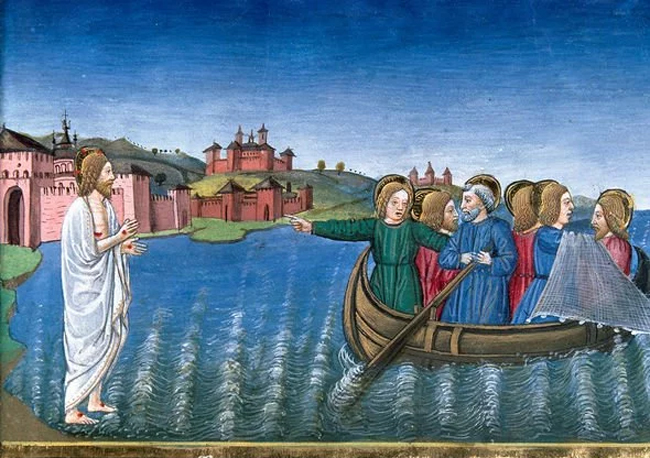
The people who have been fed through the miracle of the loaves and the fishes now seek Jesus and are mystified that he should not be near. They have seen that there was only one boat and that the disciples of Jesus have gone alone into the boat to pass across the Sea of Galilee. The events that have taken place overnight, as Jesus walked across the water, would have been completely beyond their comprehension [ … ]