
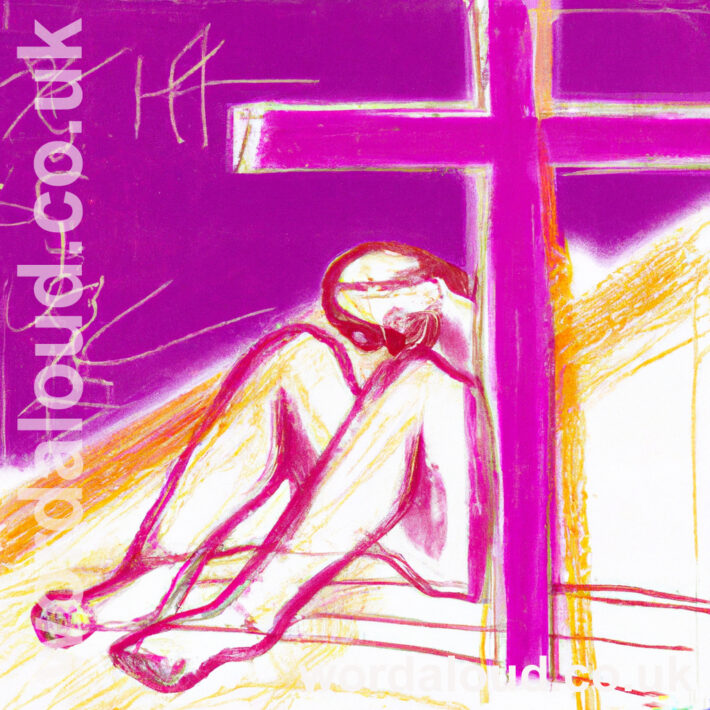
Christian Art | At The Foot Of The Cross | Imitation Of Jesus Christ | Advent Purple
Office Of Readings | Advent Tuesday Week 3 | A Reading From The Imitation Of Christ | Of Humble Submission, Of The Good, Peaceable Man
‘On humility and peace.’
This reading concerns the interior discipline required for humility and peace. It begins by redirecting attention away from other people and towards God. The question is not who supports us or opposes us, but whether our actions are aligned with God. A clear conscience before God is presented as the primary form of security.
The reading stresses patience under difficulty. Silent endurance is not described as weakness, but as a way of entrusting judgement and outcome to God. The timing and manner of deliverance are said to belong to God, not to human control.
Humility is closely linked with an honest awareness of weakness. Allowing others to see our limitations, and accepting criticism without agitation, is presented as beneficial for spiritual growth. Humility reduces conflict because it removes the need to assert oneself or to retaliate.
Peace is described as an interior condition that affects how a person interprets others. A peaceful person does not readily suspect bad intentions and is less disturbed by the behaviour of others. By contrast, inner unrest leads to suspicion, excessive speech, and misplaced concern with the faults of others.
The reading repeatedly calls for self-attention rather than comparison. The instruction is to examine one’s own conduct before judging that of others. Humility is expressed in patience with others and restraint in judgement. Peace grows where self-justification gives way to self-knowledge.

A Reading From The Imitation Of Christ | Of Humble Submission, Of The Good, Peaceable Man
Do not worry about who is and is not on your side: simply make sure that God is with you in all you do.
Have a clear conscience, and God will defend you. For if God chooses to help you, no malice can do you harm.
If you know how to suffer in silence, without doubt you will receive the help of the Lord. He knows when and how he will free you, so resign yourself into his care. It is for God to give help and give freedom from trouble.
For the sake of humility it is often good for others to know our weaknesses and tax us with them.
When a man holds himself humbly because of his weakness, it is easy for him to please others and calm those who are angry with him.
God protects and frees the humble, loves and consoles them. He leans down to the humble, he bestows great grace on them, he lifts them from their lowliness into glory.
God calls the humble gently to him, and to them he reveals his secrets.
If a humble man is humiliated, he is happy enough and at peace, because his support is God and not the world.
Do not count yourself as having made progress until you feel yourself inferior to everyone.
A peaceable man is of more use than a learned man.
If you are a slave to your feelings, you will see good actions as bad, and you will easily believe the worst; a good and peaceful man will see good in everything.
Whoever is truly at peace is not plagued by suspicion. Whoever is discontented and disturbed will be blown about by gusts of suspicion: he cannot rest and will not let others rest either.
He often says what he should not say, and fails to do what it would be best to do.
He knows what other people ought to do, but not what he should be doing himself.
Worry about your own behaviour first; you can worry about other people later.
You are good at making excuses for your own behaviour and showing it in the best light, but you do not want to accept the excuses of others. It would be fairer for you to accuse yourself and excuse your brother.
If you want other people to put up with you, put up with them first.
Christian Prayer With Jesus
Lord God,
teach us to seek your presence
rather than human approval.
Give us patience in difficulty,
truthfulness about ourselves,
and restraint in judging others.
Grant us humility of heart
and the peace that comes from trusting you.
Amen.
Glossary Of Christian Terms
The Imitation of Christ – A late medieval devotional work traditionally attributed to Thomas à Kempis, focused on interior spiritual life.
Humility – A truthful awareness of one’s condition before God, without self-exaltation.
Peace – Interior steadiness that is not dependent on circumstances or approval.
Clear conscience – Awareness of acting in accordance with God’s will.
Patience – Endurance without resentment or haste.
Self-examination – Attention to one’s own conduct rather than the faults of others.




Psalm 141, through appeals for divine guidance, protection, and the maintenance of righteousness, expresses struggles and aspirations of the faithful in their journey toward spiritual integrity. Psalm 141 is personal lament and a communal prayer, reflecting universal human desire for divine closeness and support in the face of adversity. Through its vivid imagery, heartfelt pleas, and expressions of trust in God, Psalm 141 meditates themes of prayer, moral integrity, and divine justice [ … ]
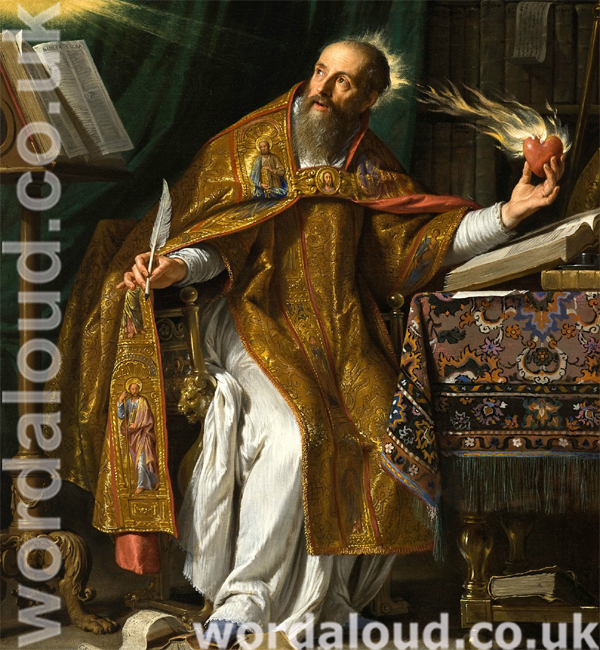
Saint Augustine contemplates the Christian life under the image of light—a light already received, yet not the fullness promised. Believers, he says, are light ‘in the Lord’, but only by participation: the true day has not yet dawned. The distinction is crucial. Our present illumination is real, but partial; it guides but does not satisfy. Thus Scripture, prophecy, and apostolic witness serve as lamps in the night of this world—trustworthy, necessary, and God-given, yet preparatory [ … ]
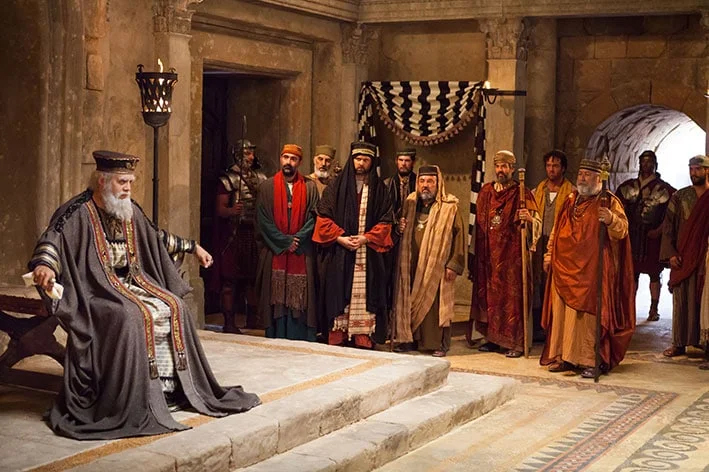
King James Audio Bible | KJV | King James Version King Herod There were several individuals named Herod who played significant roles in ancient history, particularly in the history of the Roman Empire and the region of Palestine. Here is a brief overview of the most notable Herods: Herod the Great: Also known as Herod I, he was a Roman client king of Judea, ruling from 37 BC to 4 BC. He is perhaps most famous for his role in the biblical story of the birth of Jesus, in which it is said that he ordered the slaughter of all male children in Bethlehem under the age of two in an attempt to kill the newborn Jesus. Herod Antipas: Also known as Herod II, he was the son of Herod the Great and ruled over Galilee and Perea, two regions in Palestine, from 4 BC to 39 AD. He is mentioned in the New Testament as the ruler who imprisoned John the Baptist and later had him beheaded. Herod Agrippa I: Also known as Herod III, he was the grandson of Herod the Great and ruled over Judea from 41 to 44 AD. He is mentioned in the New Testament as the ruler who imprisoned the apostle Paul. Herod Agrippa II: Also known as Herod IV, he was the great-grandson of Herod the Great and ruled over parts of Palestine and Syria from 50 to 100 AD. He is mentioned in the New Testament as the ruler who heard Paul’s defence before the Roman governor Festus. These rulers, who were known as the Herodian dynasty, were not Jewish but rather descended from a Greek family that had converted to Judaism. Despite this, they were appointed as rulers by the Roman Empire and were generally unpopular among the Jewish population due to their collaboration with the Roman occupation and their often brutal methods of rule. Herod The Great Herod the Great, also known as Herod I, was a Roman client king of Judea who ruled from 37 BC to 4 BC. He was born in 73 BC in Idumea, a region in southern Palestine, and was the son of Antipater the Idumean, an Edomite who had been appointed as a governor of Judea by the Roman general Pompey. Herod rose to power after the Roman general Julius Caesar appointed him as king of Judea in 40 BC. He consolidated his power over the next few years by defeating his rivals and establishing himself as the undisputed ruler of the region. As king, Herod embarked on a massive building program that included the expansion and renovation of the Temple in Jerusalem, the construction of the port city of Caesarea Maritima, and the fortification of several cities in Judea. He also commissioned the construction of a number of palaces and other buildings, including the famous Herodium, a palace-fortress located south of Jerusalem. Despite his many accomplishments, Herod was a controversial figure who was known for his harsh rule and his willingness to use violence to maintain his power. He was married several times and had a large number of children, several of whom he had executed when they posed a threat to his rule. One of the most famous stories associated with Herod is the biblical account of the birth of Jesus, in which it is said that he ordered the slaughter of all male children in Bethlehem under the age of two in an attempt to kill the newborn Jesus. According to the New Testament, Jesus was saved by his parents, who fled to Egypt, and later returned to Palestine after Herod’s death. Herod died in 4 BC at the age of 70, leaving a legacy as one of the most significant rulers in the history of ancient Palestine. Herod Antipas Herod Antipas, also known as Herod II, was the son of Herod the Great and ruled over Galilee and Perea, two regions in Palestine, from 4 BC to 39 AD. He was born in 20 BC and was named after his father’s patron, the Roman emperor Augustus. Like his father, Herod Antipas was known for his ambitious building projects, including the construction of the city of Tiberias on the Sea of Galilee and the expansion of the Temple in Jerusalem. He was also known for his political cunning and his ability to navigate the complex political landscape of the Roman Empire. Herod Antipas is mentioned in the New Testament as the ruler who imprisoned John the Baptist, a prominent religious figure who criticized Herod’s marriage to his sister-in-law, Herodias. According to the New Testament, John was eventually beheaded at the request of Herodias’ daughter, Salome, who danced for Herod and his guests at a banquet. Herod Antipas is also mentioned in the New Testament as the ruler who oversaw the trial and execution of Jesus. Although he initially wanted to release Jesus, he ultimately handed him over to the Roman authorities at the urging of the Jewish religious leaders. Herod Antipas’ rule came to an end in 39 AD when the Roman emperor Caligula exiled him to Gaul, modern-day France. He died in exile a few years later. Herod Agrippa I Herod Agrippa I, also known as Herod III, was the grandson of Herod the Great and ruled over Judea from 41 to 44 AD. He was born in 10 BC and was the son of Aristobulus and Bernice, two of Herod the Great’s children. Herod Agrippa I was well-educated and fluent in both Greek and Hebrew, and he was highly regarded by the Roman authorities for his loyalty and his ability to maintain order in Judea. He was appointed as king of Judea in 41 AD by the Roman emperor Claudius, who was impressed by his abilities and saw him as a reliable ally in the region. As king, Herod Agrippa I continued the building projects of his grandfather and expanded the Temple in Jerusalem. He also implemented a number of reforms aimed at improving the lives of the […]
