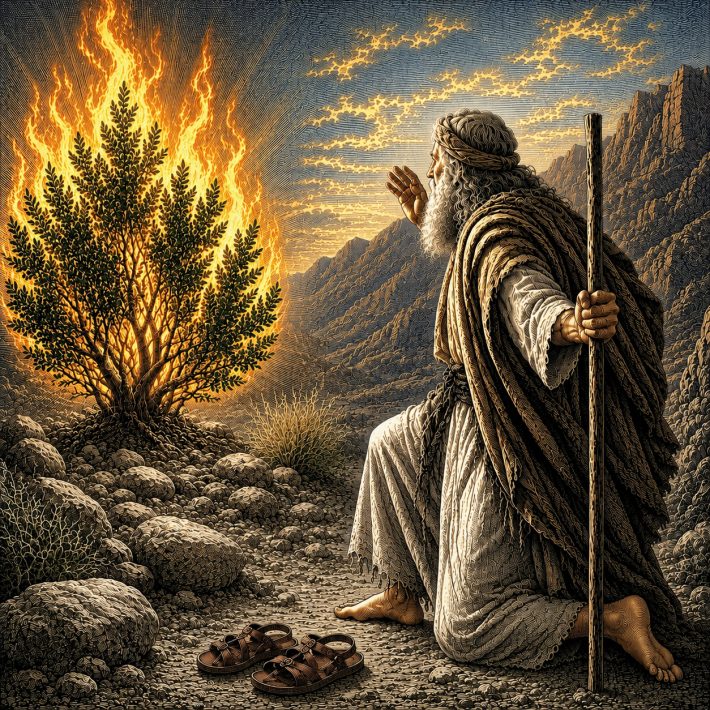
Christian Art | Put Off Thy Shoes From Off Thy Feet, For The Place Whereon
Thou Standest Is Holy Ground.
Moses And The Burning Bush | Exodus
1 Now Moses kept the flock of Jethro his father in law, the priest of Midian: and he led the flock to the backside of the desert, and came to the mountain of God, even to Horeb.
2 And the angel of the LORD appeared unto him in a flame of fire out of the midst of a bush: and he looked, and, behold, the bush burned with fire, and the bush was not consumed.
3 And Moses said, I will now turn aside, and see this great sight, why the bush is not burnt.
4 And when the LORD saw that he turned aside to see, God called unto him out of the midst of the bush, and said, Moses, Moses. And he said, Here am I.
5 And he said, Draw not nigh hither: put off thy shoes from off thy feet, for the place whereon thou standest is holy ground.
6 Moreover he said, I am the God of thy father, the God of Abraham, the God of Isaac, and the God of Jacob. And Moses hid his face; for he was afraid to look upon God.
7 And the LORD said, I have surely seen the affliction of my people which are in Egypt, and have heard their cry by reason of their taskmasters; for I know their sorrows;
8 And I am come down to deliver them out of the hand of the Egyptians, and to bring them up out of that land unto a good land and a large, unto a land flowing with milk and honey; unto the place of the Canaanites, and the Hittites, and the Amorites, and the Perizzites, and the Hivites, and the Jebusites.
9 Now therefore, behold, the cry of the children of Israel is come unto me: and I have also seen the oppression wherewith the Egyptians oppress them.
10 Come now therefore, and I will send thee unto Pharaoh, that thou mayest bring forth my people the children of Israel out of Egypt. (Exodus 3)
The Book Of Exodus begins with a people who have become hidden beneath power. Descendants of Jacob remain in Egypt, yet the memory of Joseph has faded into distance. What once began in preservation has hardened into oppression. Pharaoh fears the increase of Israel because life itself appears threatening to a kingdom built upon control. Children of Israel are drawn into forced labour, their lives reduced to production and usefulness, their suffering absorbed into the order of empire.
Opening chapters of Exodus are marked by heaviness. Everything feels burdened: the labour of people; the fear of Pharaoh; the cry rising from Israel under bondage. Egypt appears not merely as place, but as a condition of existence. Human beings are valued only insofar as they sustain the permanence of power. Pharaoh seeks security through domination, yet the more tightly he attempts to secure the future, the more violent the kingdom becomes.
It is into this that Moses is born.
Moses’ life begins under threat. Pharaoh commands the death of Hebrew sons, and Moses survives only because others act with quiet courage around him. Exodus gives remarkable attention to these hidden acts of preservation. Before Moses ever speaks to Pharaoh or ascends Sinai, his life depends entirely upon women who refuse surrender to death: his mother who hides him, his sister who watches over him, Pharaoh’s daughter who draws him from the river.
The child placed among the reeds in an ark of bulrushes already carries the shape of the book within his own story. Moses is preserved through water before he will later lead Israel through the sea. Deliverance in Exodus begins long before anyone recognises it.
Moses grows up divided. He belongs to the suffering people of Israel, yet is raised within Pharaoh’s house. From the beginning Moses stands between worlds. He possesses proximity to power without truly belonging to it, and kinship with the oppressed without fully sharing their life. This division never entirely leaves him.
When Moses kills the Egyptian who beats a Hebrew slave – Exodus 2: 11-12 – the act reveals both compassion and incompleteness. Moses recognises suffering instinctively, yet does not yet understand the nature of the vocation resting upon him. His intervention comes through anger rather than mediation. The result is exile. Moses flees into the wilderness carrying uncertainty, failure, and displacement.
The wilderness is one of the great spiritual landscapes of Exodus. Again and again the book returns to such because the wilderness strips life down to its dependence. Removed from Egypt, Moses enters into obscurity. He becomes a shepherd in Midian, living far from those structures of power which once formed him.
There is a deep stillness to these years. Exodus says little about them, yet this silence matters. Moses must be emptied before he can become mediator. The man who once acted suddenly and violently must learn patience, endurance and solitude. The wilderness removes him from certainty. In that exposed landscape another kind of seeing becomes possible.
The burning bush appears within the silence of the wilderness. Moses sees fire that burns without consuming, and the moment gathers some deepest themes of Exodus at once. Fire signifies holiness, yet the bush remains unconsumed. Divine presence does not annihilate what it touches, though neither does it leave things unchanged.
Moses turns aside to look, and immediately discovers that holiness creates distance. The ground becomes holy. Exodus never treats God as familiar or manageable. Again and again throughout the book, divine nearness is accompanied by awe, fear, concealment and restraint.
The God who speaks from the bush is not distant from suffering. Holiness revealed is inseparable from compassion. God has heard the cry of the oppressed. He has seen affliction. Transcendence of God in Exodus never withdraws from history. Divine holiness moves toward human suffering rather than away.
This is what transforms the burning bush from mystical spectacle to vocation. Moses is not simply given knowledge about God. He is drawn into participation within the movement of deliverance.
Yet he hesitates.
Hesitation is a feature of Moses through Exodus. He does not appear as a naturally commanding figure who rises confidently to leadership. Moses questions his adequacy. He fears disbelief. He fears speech itself. He asks why he should be chosen at all.
Such hesitations matter spiritually. The book understands that genuine vocation often begins not in certainty, but in a painful recognition of insufficiency. Moses knows the scale of what stands before him. Pharaoh commands empire, labour, military power, wealth and political order. Moses possesses none of these things. He returns toward Egypt carrying only obedience to a voice heard in wilderness solitude.
The confrontation between Moses and Pharaoh becomes more than political conflict. It is a struggle between rival understandings of power and reality. Pharaoh believes permanence can be secured through control. Egypt rests upon hierarchy, production and fear. Human life exists to sustain the kingdom.
Power And Liberation | Freedom
Against this stands the strange freedom of the God who speaks from the bush. Pharaoh cannot comprehend such freedom because his kingdom depends upon possession and control. This is why his heart hardens repeatedly through the narrative. He cannot relinquish the order upon which his world depends.
The plagues unmake that order. Stability of Egypt begins to fracture. Water, light, fertility, livestock, labour and finally death move beyond Pharaoh’s control. Yet Exodus does not present these events merely as displays of destructive force. They are revelations. Egypt must learn that empire is not ultimate.
At the same time, Israel must learn with difficulty. Deliverance is not simply escape from suffering. The demand laid before Pharaoh is that Israel may go forth to worship. Freedom in Exodus is ordered toward covenant. The people are not liberated into self-sufficiency, but into relation with God.
This is increasingly important once Israel leaves Egypt. Liberation occurs swiftly; transformation does not. The people carry Egypt within themselves long after they have departed from it. In the wilderness they repeatedly long to return. Hunger, uncertainty and fear expose how deeply slavery has shaped imagination. Bondage may become familiar enough to seem safer than freedom.
The wilderness is the true school of Israel. There the people must learn dependence. Food arrives day by day. Water appears unexpectedly. Direction depends upon cloud and fire. Nothing can finally be secured or stored against the future. The people who once lived beneath Pharaoh’s system of visible control must now learn trust within uncertainty.
Moses is transformed within this process. Increasingly he becomes mediator rather than liberator. Burdens of the people gather upon him: their complaints, fears, rebellions, and exhaustion. Moses stands between divine holiness and human weakness.
This thought culminates at Sinai. The mountain burns with fire and disappears into cloud and smoke. Boundaries are drawn. The people tremble at a distance. Exodus presents holiness not as abstract moral purity, but as overwhelming reality before which ordinary life cannot continue unchanged.
The Law emerges from such holiness. Yet our commandments are not given in abstraction. Covenant begins with remembrance of deliverance. Israel is addressed as a people already brought out of bondage. Obedience grows from relationship rather than submission to rule.
Moses alone ascends fully into the cloud. Increasingly Exodus isolates Moses. He moves nearer toward God, yet in doing so becomes more separated from the people he serves. This loneliness forms part of his vocation. Mediation means dwelling continually between two realities which cannot easily be joined: divine holiness and human frailty.
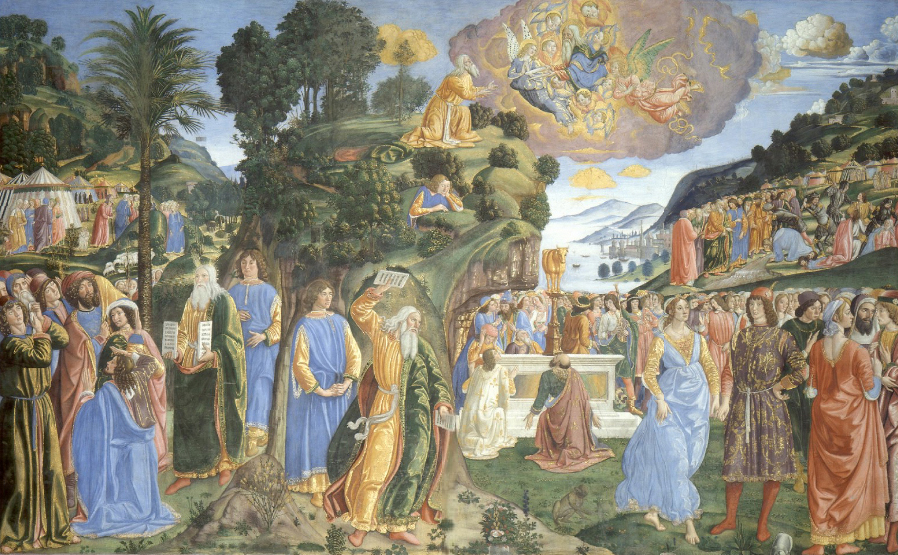
The Golden Calf | Egypt In The Brain
From Exodus chapter 32:
1 And when the people saw that Moses delayed to come down out of the mount, the people gathered themselves together unto Aaron, and said unto him, Up, make us gods, which shall go before us; for as for this Moses, the man that brought us up out of the land of Egypt, we wot not what is become of him.
2 And Aaron said unto them, Break off the golden earrings, which are in the ears of your wives, of your sons, and of your daughters, and bring them unto me.
3 And all the people brake off the golden earrings which were in their ears, and brought them unto Aaron.
4 And he received them at their hand, and fashioned it with a graving tool, after he had made it a molten calf: and they said, These be thy gods, O Israel, which brought thee up out of the land of Egypt.
5 And when Aaron saw it, he built an altar before it; and Aaron made proclamation, and said, Tomorrow is a feast to the LORD.
6 And they rose up early on the morrow, and offered burnt offerings, and brought peace offerings; and the people sat down to eat and to drink, and rose up to play.
7 And the LORD said unto Moses, Go, get thee down; for thy people, which thou broughtest out of the land of Egypt, have corrupted themselves:
8 They have turned aside quickly out of the way which I commanded them: they have made them a molten calf, and have worshipped it, and have sacrificed thereunto, and said, These be thy gods, O Israel, which have brought thee up out of the land of Egypt.
9 And the LORD said unto Moses, I have seen this people, and, behold, it is a stiffnecked people:
10 Now therefore let me alone, that my wrath may wax hot against them, and that I may consume them: and I will make of thee a great nation.
11 And Moses besought the LORD his God, and said, LORD, why doth thy wrath wax hot against thy people, which thou hast brought forth out of the land of Egypt with great power, and with a mighty hand?
12 Wherefore should the Egyptians speak, and say, For mischief did he bring them out, to slay them in the mountains, and to consume them from the face of the earth? Turn from thy fierce wrath, and repent of this evil against thy people.
13 Remember Abraham, Isaac, and Israel, thy servants, to whom thou swarest by thine own self, and saidst unto them, I will multiply your seed as the stars of heaven, and all this land that I have spoken of will I give unto your seed, and they shall inherit it forever.
14 And the LORD repented of the evil which he thought to do unto his people.
15 And Moses turned, and went down from the mount, and the two tables of the testimony were in his hand: the tables were written on both their sides; on the one side and on the other were they written.
16 And the tables were the work of God, and the writing was the writing of God, graven upon the tables.
17 And when Joshua heard the noise of the people as they shouted, he said unto Moses, There is a noise of war in the camp.
18 And he said, It is not the voice of them that shout for mastery, neither is it the voice of them that cry for being overcome: but the noise of them that sing do I hear.
19 And it came to pass, as soon as he came nigh unto the camp, that he saw the calf, and the dancing: and Moses’ anger waxed hot, and he cast the tables out of his hands, and brake them beneath the mount.
20 And he took the calf which they had made, and burnt it in the fire, and ground it to powder, and strawed it upon the water, and made the children of Israel drink of it.
*
The golden calf reveals how fragile Israel’s covenant life remains. Moses is upon the mountain while below the people grow restless. Absence becomes intolerable to them. They have left Egypt physically, yet Egypt still shapes the imagination through which they understand power, worship, and security.
The calf is more than an act of disobedience. It represents a desire to make the divine visible, manageable and immediate. The people cannot endure waiting within uncertainty. They turn back instinctively toward forms they can possess and control. Sinai has revealed holiness too overwhelming to bear continuously.
This moment exposes one of the deepest tensions within the book. Humans long for the presence of God, yet also fear the demands such presence places upon them. Again and again throughout the book, Israel recoils from the very nearness toward which it is being led.
Moses descends from the mountain carrying the covenant into the midst of confusion and disorder. The structure is symbolic. Through Exodus, Moses continually ascends toward God only to descend once more among the weakness of the people. Moses never remains within divine nearness for himself alone. Mediation means continual return into the instability of human life.
After the breaking of the covenant, Moses enters deeply into intercession. He stands before God carrying the burden of Israel’s failure. A remarkable thing is the persistence of Moses. He is weary, frustrated, and often overwhelmed, yet he does not abandon the people entrusted to him.
Indeed, the closer Moses draws toward God, the more profoundly he carries such suffering and instability of Israel. This vocation becomes increasingly costly. Leadership in Exodus is not triumph but endurance. Moses carries complaint, rebellion, fear and disappointment. He belongs less and less to ordinary communal life. Even his moments of intimacy with God separate him further from the people below.
Yet Exodus never presents this separation as superiority. Moses remains profoundly human throughout. He becomes angry. He grows exhausted. He pleads for help beneath the burden laid upon him. Greatness of Moses lies not in invulnerability, but in continued obedience despite weakness.
Longing For God | Divine Presence
Moses asks not merely for forgiveness or success, but for presence. Without the presence of God, the journey loses meaning. Freedom, land and survival are not enough by themselves. What Israel needs is that God remain among them.
This longing reveals true direction of Exodus. The book is not ordered toward political liberation alone. Liberation matters because it opens possibility of communion. Egypt represents a world in which human beings exist beneath domination and distance. Covenant moves toward another kind of life: existence shaped by divine presence.
Even here Exodus preserves mystery. Moses asks to see the glory of God, but cannot behold it fully. Nearness remains accompanied by concealment. God may be encountered, yet never possessed. Holiness remains beyond complete comprehension.
A tension between presence and hiddenness runs throughout the book. The text is liminal. God leads Israel visibly through cloud and fire, yet also dwells within darkness upon Sinai. The people are drawn near, yet boundaries remain. Worship becomes structured around approach and restraint, nearness and reverence.
The radiance of Moses after speaking with God expresses something of this mystery. Moses descends from the mountain transformed without realising this himself. The change is not self-generated. It comes from proximity to divine glory. Moses veils his face before the people, as though even reflected holiness remains difficult for Israel to endure directly.
The Tabernacle
Exodus describes the construction of the tabernacle. Spiritually, Exodus has all the while moved toward this point.
The people who suffered beneath Pharaoh are now being formed into a community ordered around the presence of God. The tabernacle is not merely structure or ritual apparatus. It represents the possibility that holiness may dwell in the midst of human life without destroying it.
This is why the details matter. Exodus lingers over measurements, fabrics, lampstands, altars, incense, garments and sacred vessels because worship requires order. Egypt was ordered around domination and labour; Israel must now learn an order shaped by holiness and communion.
The tabernacle stands at the centre of the camp because divine presence stands at the centre of covenant life. Even here, approach remains careful and mediated. Exodus never dissolves distance between God and humanity into familiarity. The holy remains holy.
And still, astonishingly, God chooses to dwell among the people.
The ending of Exodus possesses extraordinary stillness. After the violence of Pharaoh, the terror of the sea, the fire of Sinai, the rebellion of the wilderness, and the burden borne by Moses, the narrative comes finally to rest in presence. The cloud descends upon the tabernacle and the glory of the Lord fills it.
The book ends without completion. Israel has not entered the promised land. The wilderness journey continues. The people remain dependent upon guidance. Moses remains servant rather than triumphant ruler.
Life Is Pilgrimage
Exodus presents covenant life not as settled possession, but as pilgrimage. The people have been brought out, yet they are still travelling. They have encountered holiness, yet struggle to bear it. They have been liberated from bondage, yet carry within themselves a memory and habits of slavery.
Moses stands at the centre of this movement throughout the book. He is prophet, lawgiver, intercessor and leader, yet beneath all these roles he remains mediator: one who continually goes before God on behalf of the people and before the people on behalf of God.
Moses’ life is shaped by ascent and descent, solitude and burden, nearness and distance. Through him Exodus reveals that liberation is not an end in itself. The deeper purpose of deliverance is that human beings may learn once more to live in the presence of God.
There is also profound tension in Exodus between movement and delay. Again and again the narrative resists expectation of swift fulfilment. Israel leaves Egypt quickly, yet almost everything afterwards unfolds slowly: trust, obedience, worship, covenantal understanding and communal formation. The people are delivered in a night, but they are not transformed in a night.
The slowness is spiritual. Exodus understands that liberation from external bondage does not immediately heal inward habits created by bondage. The people continue to think like slaves long after Pharaoh has been left behind. Fear governs them repeatedly. They murmur against Moses whenever uncertainty appears. They long for visible securities, predictable provision, immediate reassurance.
The wilderness exposes all of this. Nothing there can finally be controlled. There are no permanent structures, no stable sources of food, no visible future. Israel must live day by day from what is given. In this sense the wilderness becomes not merely place of hardship, but place of truth. The illusions sustained by Egypt begin slowly to fall away.
The process is painful. Exodus never romanticises either the people or the wilderness. Hunger is real. Fear is real. Exhaustion is real. People reach the limits of endurance. Their complaints emerge not from rebellion alone, but from genuine human frailty. Moses sometimes seems near collapse beneath the strain of leading them.
This shared vulnerability matters deeply. The people are dependent; Moses is dependent. Moses repeatedly withdraws toward God because the burden placed upon him exceeds ordinary human strength. A striking feature of Exodus is how often Moses listens rather than acts. He waits, ascends, prays, intercedes, receives instruction, returns again. His authority does not arise from self-possession but from continual receptivity.
This is especially true upon Sinai. Moses enters the cloud where God is. The image has extraordinary depth. Revelation occurs not in clarity alone but in obscurity. The nearer Moses draws toward God, the more mystery increases rather than diminishes. Exodus never suggests that divine reality becomes fully transparent to human understanding.
Perhaps this is why the book continually joins intimacy with restraint. God dwells among Israel, yet the holy remains dangerous. Worship requires mediation, sacrifice, washing, boundaries, veils, priesthood, and careful approach. Nearness to God is life-giving, and never casual.
A tension reaches beyond ritual into the whole shape of covenant life. Israel cannot simply absorb divine holiness into ordinary existence unchanged. Covenant demands transformation. Justice, memory, worship, sabbath and communal responsibility all flow outward from the presence dwelling among the people.
Moses, like Joseph, belongs to incompletion. He is never allowed to become the settled figure of worldly success. His life remains marked by burden and movement. He belongs to the mountain and to the wilderness more than to any settled homeland. Again and again Moses leaves the camp to seek God, then returns once more carrying the weight of mediation.
There is something deeply sacrificial in the life of Moses. He continually gives himself away for the sake of the people entrusted to him. He bears complaint without abandoning his people. He intercedes after rebellion. He persists when isolated and exhausted.
Exodus never finally centres upon Moses. He is servant rather than source. The deepest reality within the book is always the presence of God moving among the people: the voice from the bush, the fire upon Sinai, the cloud within the tabernacle, the glory that leads Israel onward.
Moses matters because he teaches Israel how to live before God’s presence. Through him the people slowly learn reverence, obedience, memory, worship and trust. They learn that freedom without holiness collapses back into confusion, and that covenant without presence becomes empty law.
At the close of Exodus the journey remains unfinished, yet something essential has changed. Israel is no longer a population enslaved beneath empire. A covenant people has begun to emerge, imperfectly and painfully, around the presence of God.
And Moses remains at the centre of that emergence: solitary and burdened, hesitant yet obedient, drawn continually upward toward God and downward once more among the people, carrying within his own life the difficult meeting between divine holiness and human need.
Conclusions | Between God And Man
Moses begins within the household of Pharaoh, surrounded by structures of power and permanence. By the end of the book he belongs instead to cloud, wilderness and tabernacle. His life is gradually displaced from every ordinary centre of stability.
This displacement is not accidental. Divine vocation in Exodus continually removes Moses from possession and self-sufficiency. He cannot remain comfortably within Egypt, yet neither does he belong simply among the people. Again and again he withdraws outside the camp, ascends the mountain alone, or waits within silence before returning once more to Israel carrying commandment, judgement, consolation or intercession.
There is profound solitude surrounding Moses through the book. Even Aaron, Miriam and Joshua cannot fully accompany Moses into the deepest places of encounter. Exodus portrays Moses entering into the cloud alone. The closer he approaches divine presence, the more radical solitude becomes.
Solitude is never presented as escape from responsibility. On the contrary, it deepens responsibility. Moses returns continually from communion with God into the confusion and instability of the people. Revelation does not remove him from burden; it binds him more deeply.
This rhythm of ascent and return is a defining spiritual movement of Exodus. Moses ascends toward God, receives instruction or revelation, and then descends once more into human need. The mountain and the camp belong together throughout the narrative. Neither can be abandoned.
Perhaps this is why Moses appears so often weary. He bears not only his own uncertainty, but the fears and failures of an entire people. Israel projects anxiety, anger and disappointment onto him. The people complain against Moses when hungry, thirsty, frightened or uncertain. Yet beneath their complaint lies something deeper: they do not yet know how to live as free people before God.
Exodus understands that slavery damages the inward life as well as outward circumstance. The Israelites repeatedly long for Egypt because oppression, though painful, at least appeared predictable. Freedom lived in dependence upon God feels far more uncertain. The wilderness strips away visible guarantees. There is no permanent food supply, no settled land, no obvious future. The people must learn trust slowly and painfully.
Moses must learn this trust also. Despite his extraordinary vocation, Exodus never presents Moses as beyond struggle. Moses questions, pleads, hesitates, grows angry, and sometimes appears overwhelmed by the burden entrusted to him. His greatness lies less in perfection than in perseverance. Again and again he returns to God rather than abandoning either the people or the vocation placed upon him.
This persistence becomes especially significant when considered alongside the repeated failures of Israel. The golden calf is only the clearest expression of a deeper instability running throughout the wilderness narratives. The people continually seek visible reassurance. They fear absence, delay and uncertainty. They long repeatedly for immediate satisfaction rather than covenant faithfulness.
Exodus never portrays God as simply abandoning the people because of this instability. Judgement remains real and severe, but so too does mercy. The covenant is wounded repeatedly, yet renewed repeatedly also. Moses exists within this tension, interceding for a people who often seem incapable of sustaining the relationship into which they have been called.
This intercessory role reveals something essential about biblical mediation. Moses does not merely transmit divine instruction. He bears the suffering and failure of the people before God. Again and again he places himself within the breach opened by rebellion and judgement. The mediator in Exodus is therefore not detached administrator of covenant, but one who suffers beneath such weight of the people’s condition.
Moses reminds Israel that covenant cannot exist without holiness. Divine presence is not merely comfort. It transforms, judges, orders and sanctifies. This is why worship in Exodus becomes increasingly structured and careful. The tabernacle, priesthood, sacrifices, washings, garments and ritual all arise from the same theological reality: holiness cannot be approached casually.
We may experience these passages as distant or overly detailed, yet spiritually they express profound truth. Exodus insists that life before God requires formation. Worship shapes perception, memory and communal existence. The people delivered from Egypt must learn slowly how to live before holiness.
Through the story, the tabernacle becomes far more than portable sanctuary. It stands as sign that God chooses to dwell among the people while still remaining holy beyond possession. The divine presence accompanies Israel, yet cannot be reduced to familiarity. The cloud descends, yet mystery remains.
This union of nearness and transcendence is near the heart of Exodus. God is neither remote from history nor fully assimilated into ordinary life. The divine presence leads, judges, nourishes, conceals and sanctifies all at once.
Moses inhabits this mystery more fully than anyone else within the book. He speaks with God intimately, yet even he cannot see the fullness of divine glory. Moses enters the cloud, yet the cloud remains darkness as well as revelation. Exodus continually preserves the incomprehensibility of God even amid profound nearness.
At the close of the narrative, Israel exists no longer as scattered slaves beneath Pharaoh, but as a people gathered around divine presence. This transformation remains incomplete and fragile, yet it is real. Worship, covenant, law, memory and pilgrimage now shape communal life. The cloud rests upon the tabernacle at the centre of the camp, and Israel moves only when the presence moves.


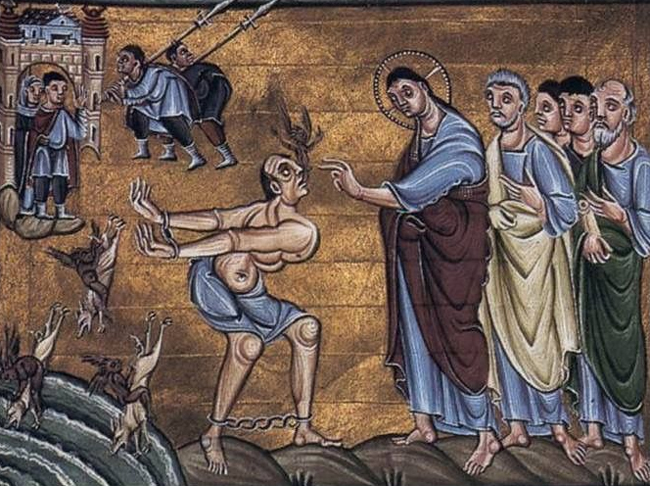
Our Lord Jesus’ visit to this particular part of the coast of the Sea of Galilee is brief. In today’s reading, Jesus alights in an area which is largely non-Jewish, as is evident in the huge herd of pigs that is here. It seems quite alien territory. We are reminded of just how very different communities existed in relatively close proximity around Galilee (also known as: The Sea of Tiberias; Lake Gennesaret), and we might think of how between those different communities there would be distrust, dislike, silence, even outright hatred. It is very beautiful to see Jesus passing between communities, and especially outside of his own Jewish community. There is a lesson for all time here against sectarianism. We are reminded that Jesus’ message is offered to all, perhaps especially when we find ourselves in strange lands [ … ]
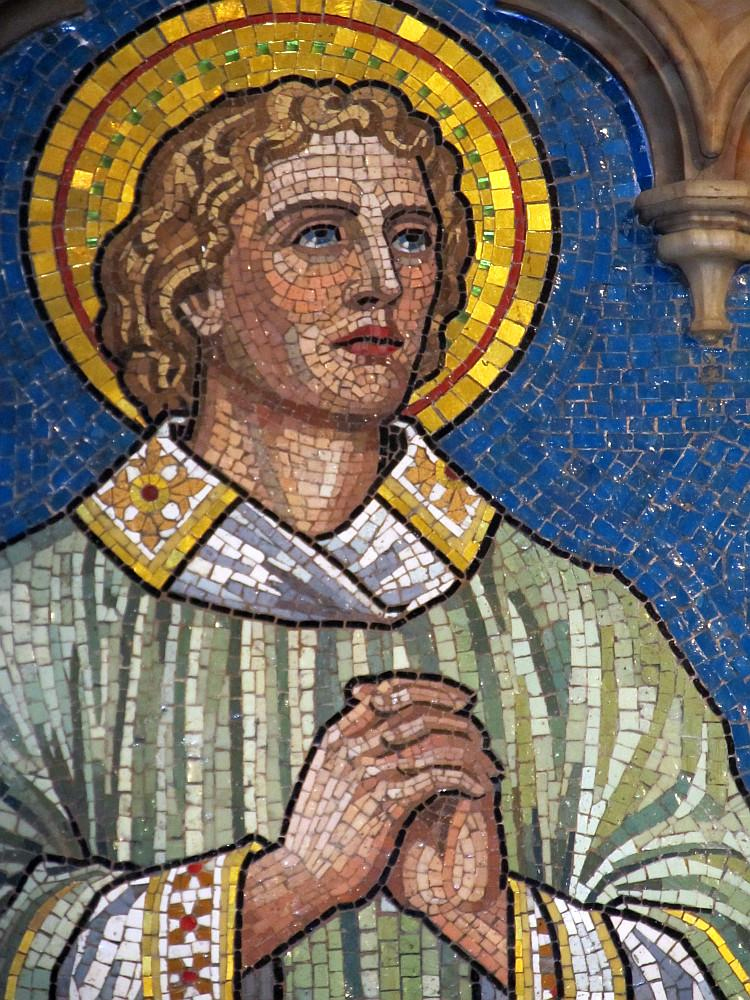
Acts 7 is among the most profound and dramatic passages in the New Testament. Saint Stephen, the first Christian martyr, stands before the council and offers not merely a defence of himself, but a sweeping interpretation of the whole history of Israel. His speech traces the movement of God’s covenantal action through Abraham, Joseph, Moses, the tabernacle, and the prophets, culminating in a fierce indictment of those who resisted the Holy Spirit and betrayed Jesus [ … ]
The woman raises her voice to praise Mary, for Jesus’ sake. Through Jesus, the woman is moved to acclaim the holiness of Mary. It can be true to say also that very many Christians are moved to contemplate Mary through knowledge of Jesus. For many Christians, Mary is our spiritual mother. Through Jesus, we discover our relationship with Mary, and so reciprocally through Mary we discover and seek to imitate the Son [ … ]