Loading...
George Herbert | The TemplePoems With Jesus | Christian Faith In Poetry

George Herbert | The Temple | The Church | Sinne (2) | Christian Poems | Metaphysical Poetry

George Herbert | Temple | Sin | Jesus | Cross

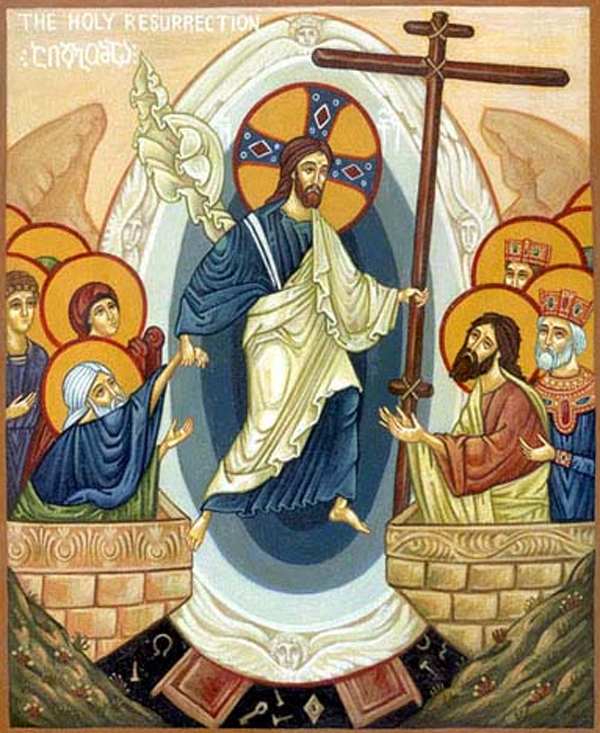
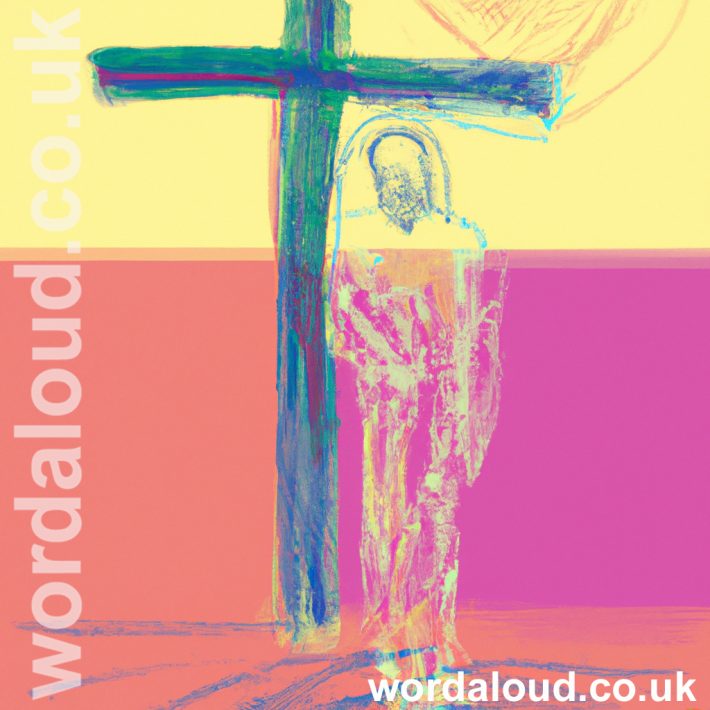
Christian Art | George Herbert | Sepulchre | The Church | Sinne (2)

George Herbert | The Temple | The Church | Sinne (2)

O that I could a sinne once see!
We paint the devil foul, yet he
Hath some good in him, all agree.
Sinne is flat opposite to th’ Almighty, seeing
It wants the good of vertue, and of being.

But God more care of us hath had:
If apparitions make us sad,
By sight of sinne we should grow mad.
Yet as in sleep we see foul death, and live:
So devils are our sinnes in perspective.
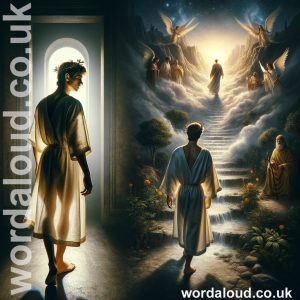
Take Up Your Cross And Follow Me | Love Of Jesus Christ Revealed | Mission Of The Disciples

George Herbert | The Temple | The Church | Sinne (2)

The poem explores the nature of sin, the opposition to God of sin, and the paradoxical ways in which humans perceive evil. Herbert reflects on sin as a force that contrasts with the divine, but also acknowledges that sin has a presence in the world that may hold some form of goodness, suggesting a complexity in its nature. The first stanza raises the idea that while sin is in opposition to God, it may still contain elements that are, at least partially, good, challenging simplistic moral dichotomies.

The second stanza offers a reflection on human perception. Herbert points out that apparitions, which might normally cause fear or sorrow, become less frightening when viewed through the lens of faith or divine care. This mirrors the way humans view sin: although sin is inherently harmful, by seeing it in perspective, through the understanding of God’s greater care and presence, one may avoid the despair it might otherwise inspire.

In the final stanza, the poem introduces a paradox: though sin is destructive, it can be viewed as a necessary part of the human experience, just as death in dreams does not prevent waking life. Herbert suggests that devils are simply manifestations of human sins, much as dreams of death do not bring about actual death. This implies that sin, while present, is not as overpowering or final as it might appear at first glance, and it can be understood as a distortion of a deeper truth or divine order.

The poem examines how humans perceive sin as both a force of destruction and a potential source of moral insight. The poem invites readers to reconsider the simplicity of viewing sin as wholly evil, instead suggesting a more nuanced approach that acknowledges complexity. Reference to sin as a perspective suggests that it is, in part, a construct shaped by human perception, and that through divine intervention or understanding, one can better navigate or reinterpret presence of sin in the world. The poem expresses divine care and the idea that God’s presence transforms how humans experience and understand suffering, sin, and death.

The poet reflects on the idea that what seems to be evil or destructive might, in a larger divine framework, serve a purpose or be rendered less fearsome. The poem is a meditation on the way humans live with the presence of sin, our capacity to perceive sin, and hope that with a proper perspective, we can live with sin without being overwhelmed by its force. This thematic exploration makes the poem a reflection on faith, perception, and divine providence.

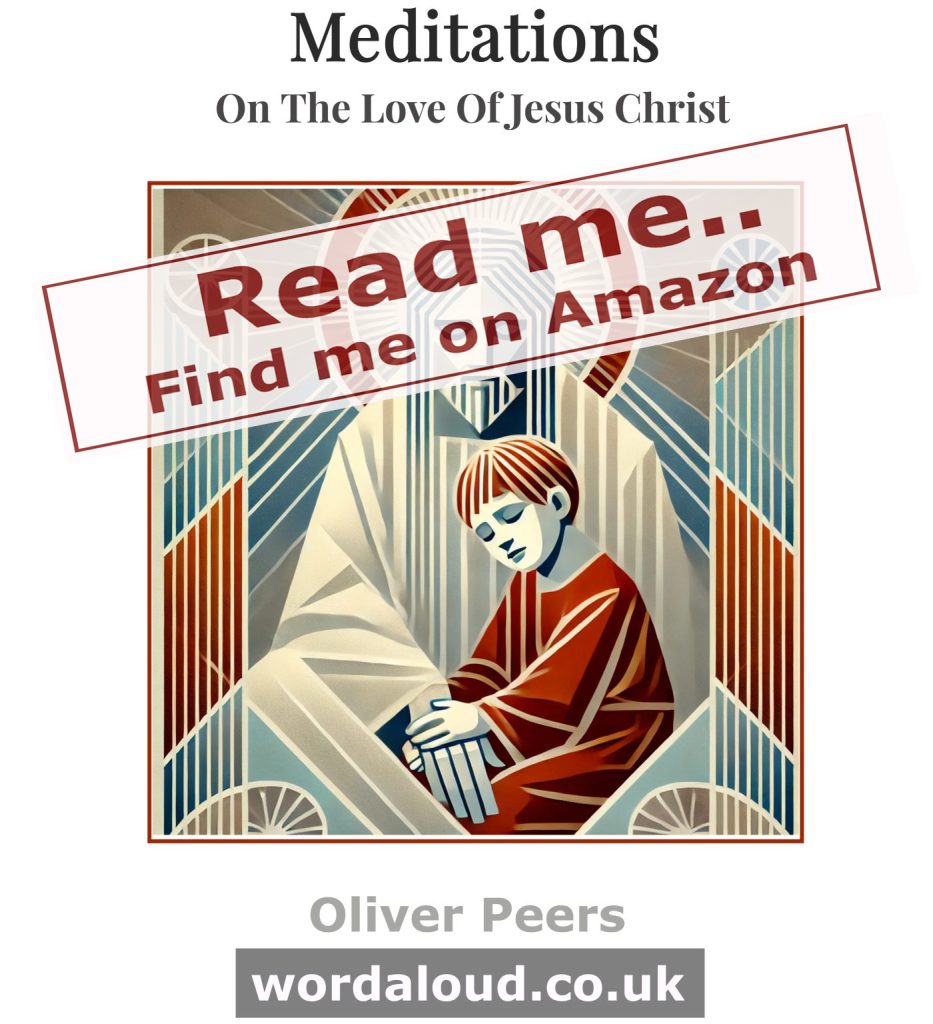
Meditations On The Love Of Jesus Christ | Word Aloud | Prayer And Reflection
  • The Virginity Of Mary And The Birth Of Christ | Hail Mary, Full Of Grace | Annunciation

    Sometimes, when I read my Bible, I pause in the reading and say to myself: ‘This bit’s real.’ It would be fair to say, I have issues with Mary, because, contrary to what we are taught to say, Mary isn’t my mother. Rather: Mum is. One bit of the Bible-text says this: And when his family heard it, they went out to seize him, for people were saying, “He is beside himself.” … And his mother and his brothers came; and standing outside they sent to him and called him. And a crowd was sitting about him; and they said to him, “Your mother and your brothers are outside, asking for you.” And he replied, “Who are my mother and my brothers?” And looking around on those who sat about him, he said, “Here are my mother and my brothers! Whoever does the will of God is my brother, and sister, and mother.” (Mark 3: 21; 31-35.) Here she comes. She is in considerable distress. I can imagine that. I can relate to that. To save her boy from whatever he’s got himself into this time. And you’re not telling me there isn’t something inside that. Her boy is beside himself. Radical. Radicalized. Radicalizing. A misunderstood word.  /ˈradɪk(ə)l/ adjective & noun. 1 Forming the root, basis, or foundation; original, primary. 2a Inherent in the nature of a thing or person; fundamental. b Of action, change, an idea: going to the root or origin; far-reaching, thorough. c Advocating thorough or far-reaching change. d Characterized by departure from tradition; progressive; unorthodox. ‘He has a demon! And he is mad!’ – thus ‘the Jews’. (e.g. John 10: 20.) Come home! It’s all she wants. His family want him back now. But it is an exclusive cult: there is an inside and there is an outside; and on the outside, they are not meant to understand, lest they be converted. He has defined himself as different from anything she was. Only at the end does Jesus say to his Mum – and with savage, bitter irony: ‘Woman, behold your son.’ And then he dies. Hail Mary, full of grace, the Lord is with thee. Blessed art thou among women and blessed is the fruit of thy womb Jesus. Holy Mary, Mother of God, pray for us sinners now and at the hour of our death.   We ask that we might find Mary in our hearts as a Yes! place for Jesus. It is also recommended that we pray to Jesus that we may be further in oneness with Mary. It is self-emptying, such that we only exist insofar as we are responsive to God’s Word. * Last term, and put-out to pasture, the old Archbishop Emeritus came over to stay for a few days and did the odd class with us. He spoke of Yes! as the meaning of Mary’s virginity. And we were not very nice about him. One or two took umbrage. One or two got the hump. In a sense, his Grace, the Arch, basically wanted to move anyone he’d ever known from a high-place – a mountain – received theological ‘truth’ – to an imminent, human plane. Earthing the spiritual. Recalibrating metrics of life’s believability toward a spiritual sense of things. He might have asked the impermissible question: what happened? His Grace described it. God’s love as a cloud. This descended upon Mary – and subsumed her. Within the cloud, Mary capitulated utterly. She became only and purely a response to God’s love. As he spoke, the Arch cradled her. He carried her in his lap – in his hands. His Grace was a consecrated bishop. He was faith. He sat squat, a rounded man, hands cupped and ankles crossed, fingers interlocked, with parted thighs. Rumpled, washed, speckled. A lifetime’s skin… There could be no doubt His Grace spoke through long-term personal relationship with Mary. It was Julian went for him: ‘So are you saying Mary was a Virgin? Or are you not saying Mary was a Virgin?’ Nasty. No, it wasn’t pretty. Julian twisting his silver ring. For a moment, what Julian had said to the Arch simply failed to communicate. No, for a moment, that dumped on the air meant nothing. Then His Grace said: ‘There is a range of possible meanings we may understand in the question of Mary’s virginity. For example, there are understandings of the word virginity entailed in the action of giving birth.’ Julian said: ‘Duh! So had she had sex or hadn’t she?’ Trigger words. No, it wasn’t pretty. On that went for a little while. At length, Julian’s point seemed reluctantly conceded. Then the Arch told us a new story, an additionally human event, the more to baffle us. Controversially, he told us that Mary could not have been Joseph’s first wife, for this would not have been the way of things in the society of that time. His belief was that Joseph must have taken Mary into his household through pity. That would be normal, he said, for Joseph to bring a young, vulnerable girl, who is about to have a baby, within his protection, not meaning to enjoy with her marital relations, but through kindness. ‘And this story of the inn and stable,’ the Archbishop said, ‘it can’t have been like that really. Joseph has travelled with Mary to stay with his family, at home in Bethlehem, and they don’t want Mary in their house, for reasons which I am sure we can understand. It must have been there was considerable resistance to Mary. But Mary gives birth, and who can resist a baby? That’s what happened. It must have been. ‘I’m convinced that must have been how it happened really.’ Later that term, toward the beginning of Advent, we met boys who had been here before, in Valladolid, and now were in regular seminary. They had heard and recited verbatim all the Archbishop had said to them. Their spot-on impressions of each of the fathers were scathing. […]

  • John Donne | Holy Sonnets | Batter My Heart | Christian Poem

    John Donne’s Holy Sonnet 14, beginning, ‘Batter my heart, three-person’d God,’ enacts a struggle between divine grace and human resistance, expressed through forceful imagery and paradox. The speaker does not ask for gentle persuasion but for a radical upheaval of the self. The poem presents a mind at war with itself, aware of divine sovereignty yet bound by sin, seeking liberation through subjugation [ … ]

  • Psalm 42 | KJV | King James Version | Audio Bible | Word Aloud

    Psalm 42 expresses deep spiritual longing. The psalm compares the psalmist’s thirst for God to a deer panting for water brooks, conveying intensity of desire to be in God’s presence [ … ]

Search Google Here | A Holy Land Jerusalem Pilgrimage? | A Safari? | An Escape..