

King James Audio Bible
The Ten Commandments | The Sixth Commandment: ‘You Shall Not Commit Adultery’
The sixth commandment ‘You shall not commit adultery’ is a commandment that instructs Christians to remain faithful in marriage and to avoid any sexual activity outside of the bounds of marriage. This commandment is rooted in the belief that sex is a sacred act that should only take place within the confines of a committed, monogamous relationship.
In the Catechism of the Catholic Church it is stated: ‘Adultery refers to marital infidelity. When two partners, of whom at least one is married to another party, have sexual relations – even transient ones – they commit adultery.’ (CCC, 2380)
The commandment against adultery is not only a negative prohibition against engaging in unfaithful behaviour; it affirms the sanctity and importance of marriage. The Church teaches that marriage is a sacrament, which means that it is an outward sign of an inward grace. In marriage, a man and a woman are united in a way that reflects the union between Christ and the Church. Therefore, the commandment against adultery is not only about avoiding sin, but also about honouring and preserving the sacredness of marriage.
How Do Christians Live The Commandment?
By remaining faithful to one’s spouse in marriage, Christians are true to the promises made during the marriage ceremony and remain sexually pure. In addition, any form of pornography use and masturbation is considered morally disordered as it violates the virtue of chastity.
Some Christians believe that a way in which the commandment against adultery is lived out is by refraining from sexual activity before marriage. The Catholic Church teaches that premarital sex is a violation of the sixth commandment, as it disregards the sanctity of sex within marriage. It also teaches that artificial methods of contraception are not in conformity with the dignity of the human person, and the moral law is that couples should use Natural Family Planning (NFP) to regulate their fertility.


The prohibition against adultery has been understood by Christians to extend to a range of views and understandings relating to sex, sexuality, and love. Here is a selection of topics we often find discussed:
What Is The Christian View Of People Masturbating?
The Christian view on masturbation varies among different denominations and individual belief systems. The Catholic Church has taught that masturbation is a morally disordered act that goes against the teachings of the sixth commandment: ‘You shall not commit adultery.’ The Catechism of the Catholic Church states: ‘Both the Magisterium of the Church, in the course of a constant tradition, and the moral sense of the faithful have been in no doubt and have firmly maintained that masturbation is an intrinsically and gravely disordered action.’ (CCC, 2352)
The Church’s official view on masturbation is that it is a form of self-pleasure that violates the virtue of chastity. Masturbation is considered morally disordered because it uses the sexual faculty in a way that is not in conformity with its proper end, which is procreation and the union of the married couple. Pope John Paul II in his book Love and Responsibility writes: ‘[S]elf-masturbation, or masturbation properly so-called, that is, the deliberate stimulation of the genital organs in order to derive sexual pleasure, is an intrinsically and gravely disordered action.’
Protestant denominations have a more varied perspective on masturbation, with some taking a forgiving view while others view it as morally disordered. Protestantism does not have a unified stance on the topic; it varies with the different churches and traditions.
Some Protestant theologians argue that masturbation is not inherently sinful or morally wrong. Lewis Smedes in his book ‘Sex for Christians’ writes: ‘Masturbation is not a sin’ on the grounds that it does not involve any violation of another person’s rights.’ He goes further to argue that masturbation is not a morally wrong act; it is seen as a natural form of self-exploration and self-pleasure. ‘Masturbation is not evil in itself. It is only one way of expressing human sexuality. And it is not even the most important way of expressing it. It is a minor way.’
Some Protestant denominations hold that masturbation is a natural form of sexual expression that can be morally acceptable within certain boundaries. According to an article by the Christian Post, ‘Some Protestant denominations view masturbation as a natural and harmless form of sexual expression that can be morally acceptable within certain boundaries, such as not engaging in masturbation to the point of addiction or obsession and not using masturbation as a substitute for healthy sexual expression within marriage.’

What Have Individual Priests Said?
Some priests have offered a compassionate and understanding view, recognizing that masturbation is a complex issue.
Father Thomas Reese, an American Jesuit priest, has written about the topic of masturbation and stated that the traditional teaching of the Church does not take into account that ‘masturbation can be a way of dealing with stress, anxiety, and sexual desires that are not being met.’ He further goes on to say: ‘It is not a mortal sin, and it is not a venial sin. It is not a sin at all.’
Father James Martin, S.J, an American Jesuit priest, has acknowledged that masturbation is a complex topic that can be influenced by a variety of factors such as physical, emotional, and psychological factors. He suggests: ‘If you are struggling with masturbation, seek help. Talk to a priest, a spiritual director, or a therapist. God wants you to be happy and fulfilled, and he wants you to be sexually fulfilled as well.’
A Range Of Christian Views Upon Pornography
The Catholic Church views pornography as a grave moral disorder that undermines the inherent dignity of the human person. The Catechism of the Catholic Church states: ‘Pornography consists in removing real or simulated sexual acts from the intimacy of the partners, in order to display them deliberately to third parties. It offends against chastity because it perverts the conjugal act, the intimate giving of spouses to each other. It does grave injury to the dignity of its participants (actors, vendors, the public), since each one becomes an object of base pleasure and illicit profit for others.’ (CCC,2354)
The Evangelical community also views pornography as a sin and a violation of the virtue of chastity. For example, the Southern Baptist Convention passed a resolution in 2015 calling pornography ‘a public health crisis’ and condemning it as ‘a poison that destroys individuals, marriages, families and society’.
Pope Benedict XVI has spoken out against the harms of pornography, stating that ‘the use of the means of social communication for spreading pornography has become almost uncontrollable’ and that it ‘does grave injury to the dignity of its participants (actors, vendors, the public), since each one becomes an object of base pleasure and illicit profit for others’.
Cardinal Peter Turkson, the head of the Pontifical Council for Justice and Peace, has spoken out against the harms of pornography, stating: ‘Pornography makes victims of everyone involved, not just the actors, but also the consumers, who become desensitized to the human person, and the society, which becomes poisoned by it.’
Evangelical leaders and organizations view pornography as a sin and a violation of the virtue of chastity. For example, the Southern Baptist Convention passed a resolution in 2015 calling pornography ‘a public health crisis’ and condemning it as ‘a poison that destroys individuals, marriages, families, and society’.
Pastor Rick Warren, author of the Purpose-Driven Life, has written about the harms of pornography and stated: ‘Pornography is a toxin that destroys a person’s ability to relate to others in a healthy way. It distorts the way we see ourselves and others, leading to objectification and disrespect.’
Christian author and speaker, Ed Young, in his book ‘Outrageous, Contagious Joy’ writes: ‘Pornography is not just a man’s problem. It’s not just a Hollywood problem. It’s not just a societal problem. It’s a heart problem. It’s an issue of the heart. It’s an issue of purity. It’s an issue of holiness.’
From the Anglican Communion, the Archbishop of Canterbury Justin Welby has spoken out against the harms of pornography, stating: ‘Pornography distorts relationships, diminishes love and gives a distorted view of human sexuality.’ He also encourages people to take a positive action against the harms of pornography by using internet filters and signing petitions.
In the Pentecostal tradition, Pastor Benny Hinn has spoken out against the harms of pornography and the importance of remaining pure and chaste, stating: ‘Pornography is a form of sexual immorality that steals away the beauty of sex and replaces it with a distorted and perverted version of it.’ He encourages individuals to avoid pornography and to turn to God for help in overcoming its allure.
In the Seventh-day Adventist Church, the General Conference of Seventh-day Adventists has passed a resolution condemning pornography, stating that it ‘diminishes human dignity and objectifies human beings’. It also encourages individuals to avoid pornography and to seek help in overcoming addiction to it.
Dr. Mark Laaser, Christian counsellor, and author of ‘Faithful and True: Sexual Integrity in a Fallen World’ states: ‘Pornography is not just a personal problem, it’s a relational problem. It hurts everyone it touches, it’s not just a sin, it’s a form of sexual addiction.’ He provides guidance and resources for individuals and couples dealing with addiction to pornography and its negative impact on their relationships.
Dr. Juli Slattery, a Christian counsellor, and author of ‘Risen Motherhood’ states: ‘Pornography is not a victimless sin, it’s an addiction that affects every area of a person’s life, and it’s not something that can be easily overcome on one’s own. It’s a battle that requires accountability and support.’
Is It True To Say That Christians Don’t Like Sex?
It is not true to say that Christians don’t like sex. In fact, many Christian denominations and individuals view sex as a gift from God that is meant to be enjoyed within the confines of marriage.
The Catholic Church, for example, teaches that sexual desire is a natural and good part of human nature, and that sexual activity within marriage is not only morally acceptable, but also an important part of God’s plan for human flourishing. The Catechism of the Catholic Church states: ‘The conjugal union is by its nature ordered to the procreation and education of children, and finds its crowning on the blessing of the children, natural fruit of the mutual gift of the spouses.’ (CCC, 2360)
Similarly, many Protestant denominations also view sex as a gift from God that is meant to be enjoyed within the confines of marriage. For example, Dr. Tim Clinton, president of the American Association of Christian Counsellors, has written about the importance of a healthy sexual relationship within marriage, stating: ‘God created sex, and it’s a good thing, and it’s meant to be enjoyed within the confines of marriage.’
Some Christian authors and speakers have written about the beauty and importance of sex within marriage from a biblical perspective. For example, Dr. Juli Slattery, a Christian counsellor and author of ‘Risen Motherhood’ writes: ‘God designed sex for pleasure, for oneness, for procreation, and for intimacy. It is a sacred, beautiful, and necessary part of marriage.’
However, it is also true that some Christian denominations and individuals hold the belief that sex should be reserved for marriage, and that any sexual activity outside of marriage is morally wrong. In this view, sex is not seen as something to be enjoyed, but rather as something that should be avoided until marriage.

How Do Various Christians View Homosexuality?
Views of Christians on homosexuality vary widely across different denominations and individuals. Some Christians view homosexuality as a sin, while others view it as morally neutral or even as a gift from God.
For example, the Catholic Church has taught that homosexual acts are ‘intrinsically disordered’ and that homosexual orientation is ‘objectively disordered.’ The Catechism of the Catholic Church states that ‘homosexual acts are intrinsically disordered,’ and ‘under no circumstances can they be approved.’ (CCC, 2357)
Similarly, many Evangelical denominations view homosexuality as a sin and a violation of God’s plan for human sexuality. For example, the Southern Baptist Convention has passed a resolution stating that ‘homosexual behaviour is a sin,’ and that ‘all Christians are called to be examples of moral purity.’
On the other hand, many mainline Protestant denominations, such as the United Methodist Church, the Presbyterian Church (USA), and the Episcopal Church, have become more inclusive of LGBTQ+ members and have taken more liberal views on homosexuality. These denominations now accept and ordain LGBTQ+ clergy and perform same-sex marriages.
Additionally, there are Christian denominations such as the Metropolitan Community Church, which was founded in 1968 and open to members of the LGBTQ+ community, that specifically affirm and celebrate LGBTQ+ individuals and relationships.
Some Christians view homosexuality as morally neutral, acknowledging that it is simply a variation of human sexuality and not necessarily sinful. For example, some Christian counsellors and authors have written about the importance of accepting and affirming LGBTQ+ individuals, without necessarily condoning all homosexual behaviour.
Christian author and speaker, Dr. Mark Yarhouse, wrote in his book ‘Understanding Gender Dysphoria’ that ‘it is possible to affirm individuals with same-sex attraction as persons of worth and dignity, while also acknowledging that certain sexual behaviours are not in keeping with historical Christian sexual ethics.’
Views of Christians on homosexuality vary widely across different denominations and individuals. Some view homosexuality as a sin, while others view it as morally neutral or even as a gift from God. Some denominations have become more inclusive of LGBTQ+ members and have taken more liberal views on homosexuality, while others hold more traditional views. While the view of some Christians may differ on this subject, it’s important to remember that all people should be treated with respect and love regardless of their sexual orientation.
What Has Pope Francis Had To Say To Gay People?
Pope Francis, the head of the Catholic Church, has made a number of statements regarding the Catholic Church’s stance on homosexuality, as well as his own personal views on the issue.
One of his most notable statements on the issue came in 2013, when he was asked about gay priests, to which he famously replied ‘Who am I to judge?’ ‘If someone is gay and he searches for the Lord and has good will, who am I to judge?’ This statement is considered a significant shift in the tone of the Church’s approach towards the LGBTQ+ community.
In addition to this, Pope Francis has also spoken about the importance of the Church being more welcoming to people of all sexual orientations. He stated that ‘The Church must be a house for all and not a small chapel for a select group.’ He has called for more pastoral care for LGBT people and emphasized that ‘The Church must be able to welcome these people, guaranteeing that they are not discriminated against.’ He said, ‘The Church must be a field hospital for all, especially the wounded.’
He has also called on Catholic parents to love and accept their children regardless of their sexual orientation. He said ‘Parents should be able to accept their children as they are’ and he urged the Church not to marginalize people because of their sexual orientation. Furthermore, he emphasized that God loves every person as they are, ‘God’s mercy is not limited. It is not removed from any one.’
In his document, ‘Amoris Laetitia’ (The Joy of Love) which he published in 2016, he wrote ‘The Church must welcome, accompany and care for persons with homosexual tendencies and their families, and accompany them with respect, compassion, and sensitivity.’ He also emphasized that the Church should not only be concerned with the avoidance of sins, but the support, care and acceptance of people who are trying to live according to their faith.
In summary, Pope Francis has emphasized the need for the Catholic Church to be more welcoming and accepting of gay people, and called for more pastoral care for them. He has also emphasized the importance of treating all people with dignity and respect. He urged the Church not to marginalize people because of their sexual orientation and encourages Catholic parents to love and accept their children regardless of their sexual orientation. His statements represent a more compassionate and pastoral approach towards the LGBTQ+ community, rather than a judgmental one.
How Might Christians Understand Love Within The Context Of Sexual Relations?
Christians understand love within the context of sexual relations in different ways, depending on the denomination and individual beliefs. Generally, most Christian denominations teach that sexual relations are intended for the context of marriage and that sexual activity outside of marriage is morally wrong.
The Catholic Church teaches that sexual love is a sacred expression of the mutual self-giving of husband and wife, and that sexual activity should be open to procreation. The Catechism of the Catholic Church states: ‘The marital act expresses the complete self-giving of one’s partner in the body, and it is this act that realizes the marital covenant.’ (CCC, 2360)
Many Evangelical denominations also teach that sex is intended for marriage, and that sexual activity outside of marriage is a violation of God’s plan for human sexuality. For example, Evangelical pastor and author Dr. Tim Lane has written: ‘God designed sexual intimacy to be experienced within the context of a committed, monogamous, heterosexual marriage.’
Some Christians believe that love and sex should be understood as two different things, and that sexual activity should be reserved for marriage. In this view, sex is seen as a physical expression of love between a husband and wife, rather than a casual or recreational activity.
Some Christian denominations, particularly Protestant denominations, have become more inclusive of same-sex relationships, and they understand that love within a sexual relationship also applies to same-sex couples, as it’s important to follow Jesus’ commandments to love one another. For example, the United Church of Canada, ordains people in same-sex relationships and performs same-sex marriages, they understand that love is the centre of these relationships, and that it’s important to respect, include and accept the love of all people.
Discuss Yahweh God’s Description Of The Behaviour Of His People With Other Gods As Adultery
In the Bible, Yahweh God often uses the metaphor of adultery to describe the behaviour of his people when they worship other gods. This metaphor is used to convey the idea that the Israelites, as the chosen people of Yahweh, have a unique and exclusive relationship with God, similar to that of a married couple. By worshiping other gods, the Israelites are seen as being unfaithful to their relationship with Yahweh and breaking the covenant that they have with him.
One example of this can be found in the book of Jeremiah, where Yahweh says to the Israelites, ‘You have played the whore with many lovers; and would you return to me? declares the Lord.’ (Jeremiah 3:1) This passage uses the metaphor of adultery to convey the idea that the Israelites have broken their covenant with Yahweh by worshiping other gods and that they must repent and return to him in order to be reconciled.
Another example can be found in Ezekiel 16:15-34, where Yahweh describes the Israelites as a prostitute who has broken their covenant with him by committing adultery with other gods. The passage describes how Yahweh had taken the Israelites in, gave them a covenant and protected them, but in return they betrayed him by turning to other gods. The metaphor of adultery is used to illustrate the unfaithfulness of the Israelites and how their behaviour broke the covenant between them and God.
This metaphor is also used in the New Testament, for instance, in 2 Corinthians 11:2-3, where the Apostle Paul states: ‘For I feel a divine jealousy for you, since I betrothed you to one husband, to present you as a pure virgin to Christ.’ This passage uses the metaphor of marriage to convey the idea that the Corinthians, like the Israelites, have a unique and exclusive relationship with God, and that their turning to other gods is equivalent to committing adultery.


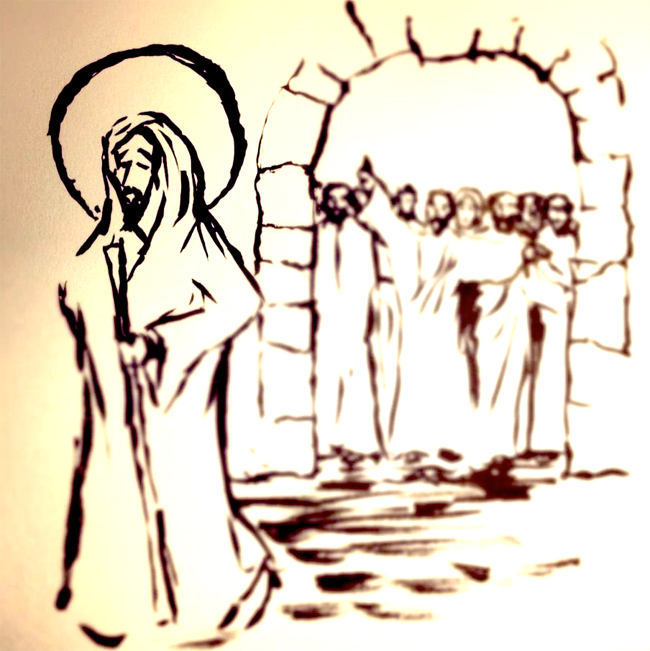
It is all too common in our time to see a beautiful gift or initiative rejected by those who are set against anything new and good. Imagine a child standing up in the midst of a small community filled with hatred, whatever form that hatred might take, and that child saying that there is an alternative to hatred, called love. That child could possibly be killed for so doing [ … ]

Psalm 39 is a contemplative reflection on the fleeting nature of human existence. Attributed to King David, this psalm delves into themes of silence, self-control, and brevity of life in face of God’s eternal nature [ … ]
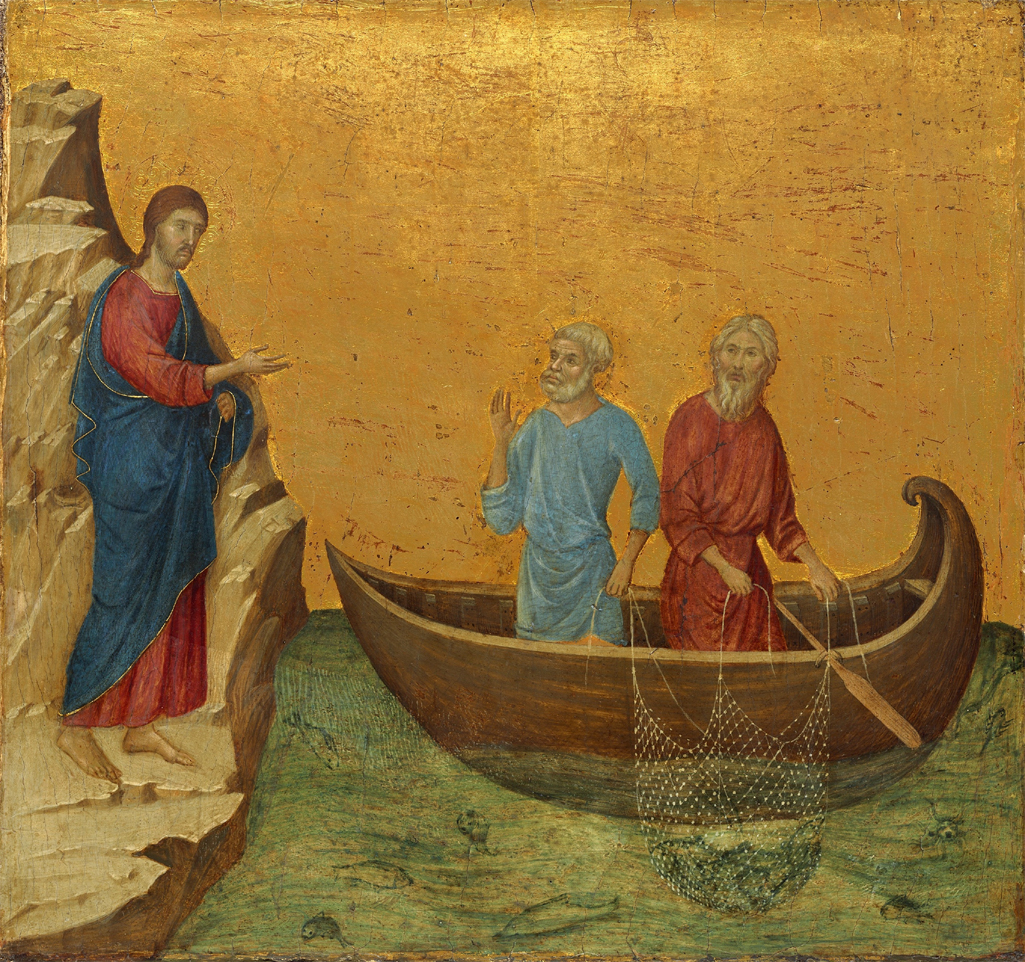
Jesus has told the rich young man that, to be perfect, he must do more than obey the commandments; additionally, he must give everything away and follow Jesus; he must sell it all, give the money to the poor, and pursue a life of total gratuity with Jesus [ … ]
