
Christian Art | The Priestly Prayer Of Jesus
John 17: 11-19 | King James Audio Bible
11 And now I am no more in the world, but these are in the world, and I come to thee. Holy Father, keep through thine own name those whom thou hast given me, that they may be one, as we are.
12 While I was with them in the world, I kept them in thy name: those that thou gavest me I have kept, and none of them is lost, but the son of perdition; that the scripture might be fulfilled.
13 And now come I to thee; and these things I speak in the world, that they might have my joy fulfilled in themselves.
14 I have given them thy word; and the world hath hated them, because they are not of the world, even as I am not of the world.
15 I pray not that thou shouldest take them out of the world, but that thou shouldest keep them from the evil.
16 They are not of the world, even as I am not of the world.
17 Sanctify them through thy truth: thy word is truth.
18 As thou hast sent me into the world, even so have I also sent them into the world.
19 And for their sakes I sanctify myself, that they also might be sanctified through the truth.
The Priestly Prayer of Jesus continues. In these Bible verses, Jesus asks his Father to guard the disciples. Jesus says that he himself has kept them safe while he has been with them. Only Judas Iscariot has been lost to him, and this was known in advance by God and foretold in Scripture; the other disciples have been prepared for the betrayal, in order to help them not to lose heart.
The disciples are going to need to be strong on the journey ahead of them. They will need God’s help continually to sustain them on their mission to preach the Gospel and establish the Church. They will suffer persecutions, and ultimately, for most, martyrdom. Jesus asks the Father to preserve them in faith, to preserve their sanctity.
In these verses, the word ‘world’ has multiple meanings. The world was not made to be evil. It was made by God and God saw that his creation was good. It is for the world that Christ came into the world, to restore that initial and essential goodness, to return mankind to our proper inheritance.
The world, though, does not last and can often be at odds with the life of the spirit. Furthermore, through our actions, people have made some aspects of the world evil and ugly, this following the prompting of the evil one, who tempted us to follow him in sin and error. In this sense, the world is God’s enemy, tempting us still to embrace transitory, fleshly pleasures, at the expense of the immortal inheritance which can be ours.
Through their belief and their fidelity to Jesus, therefore, through receiving Jesus’ word, the disciples are not of the world. They have given themselves to the life of the spirit, and now are sent by Jesus into the world to communicate this gift to all. Through their missionary activity, they are sanctified, and through Christ’s consecration of himself to the Father on the cross. Through this, all Christians are sanctified. The words taught to us by Jesus are truth. The Word is truth.
‘The world, the flesh and the devil are a band of adventurers who take advantage of the weakness of that savage you bear within you. In exchange for the glittering tinsel of a pleasure – which is worth nothing – they want you to hand over to them the pure gold and the pearls and the diamonds and rubies drenched in the living and redeeming blood of your God, which are the price and the treasure of your eternity.’ St Josemaria Escriva
King James Audio Bible | Endnotes
What Does It Mean For Christians To Be In The World But Not Of The World?
Christians are called to be in the world but not of the world. An idea is that Christians are meant to live in the world and engage with the world, but not to be consumed by worldly values or priorities.
Saint Augustine, prominent Christian theologian in the early Church, wrote about the tension between being in the world and not of the world. He wrote:
‘Christians are a new creation, and, in a certain sense, are already taken out of the world. For they are not of the world, even as Christ is not of the world, whose example they follow. Yet, on account of the flesh, in which they still live, they are still in the world; and hence, while living in it, they are exposed to temptation.’ City of God, Book 14, Chapter 26.
Saint Thomas Aquinas wrote about the tension between being in the world and not of the world:
‘Man has a threefold relation to the world: first, as to the end for which he uses it; secondly, as to his neighbor whom he has to help; thirdly, as to himself whom he has to perfect. In respect of the first relation man ought to be in the world so as to use it and enjoy God’s works therein. In respect of the second he ought to be in the world so as to aid his neighbor by word and deed, and thus procure for himself the good of friendship. In respect of the third relation he ought to be in the world so as to acquire knowledge and to put it into practice, and thus to bring his own life to perfection.’ Summa Theologica, Part II-II, Question 81, Article 1
In more modern times, Pope Benedict XVI also wrote about the tension between being in the world and not of the world:
‘The disciple of Christ, while living in the world, is not of the world, and his true citizenship is in heaven. This does not mean, however, that he or she is to withdraw from the world, but rather to engage it, with the power of the Gospel, and bring about a transformation of culture.’ Homily on the Feast of the Conversion of Saint Paul, 2012.

Early Monasticism And The Development Of Christianity
The desert fathers – mystics, monks – played a vital role in the development of Christianity, particularly in terms of the idea of living outside of the world. In the early centuries of Christianity, many people began to feel disillusioned with the worldly and materialistic aspects of the Church, and sought a more ascetic and contemplative lifestyle. This led to the rise of the monastic movement, which involved withdrawing from society and living a life of poverty, celibacy, and devotion to God.
The desert fathers were Christian hermits who lived in the deserts of Egypt, Syria, and Palestine in the 4th and 5th centuries. They sought to live a life of solitude and prayer, and believed that by renouncing worldly possessions and desires, they could achieve a closer relationship with God. They often lived in caves or simple huts, and subsisted on a diet of bread and water.
One of the most famous desert fathers was Saint Anthony of Egypt, who is considered the father of monasticism. He lived as a hermit in the Egyptian desert for many years, and was known for his asceticism and his battles against demons. He is said to have emerged from his isolation to become a spiritual guide and teacher to other monks.
The influence of the monastic movement on the development of Christianity was significant. The monastic lifestyle was seen as a way of living out the teachings of Jesus in a more pure and authentic way, and it became an important part of the Church’s spiritual tradition. Monasteries were established throughout Europe, and became centers of learning, scholarship, and spiritual practice. Monks and nuns became known for their devotion to prayer, their service to the poor and sick, and their contributions to art and literature.
One of the key ideas of the monastic movement was the concept of living outside of the world. Monks and nuns were seen as living in a state of spiritual purity that was separate from the corrupting influences of society. This idea of separation from the world was seen as a way of achieving a closer relationship with God, and was reflected in the monastic vows of poverty, celibacy, and obedience.
Poverty, Celibacy, Obedience
Saint Francis of Assisi, a Catholic saint of the 12th century, famously renounced his wealth and devoted himself to a life of poverty and service to others. He wrote:
‘ Remember that when you leave this earth, you can take with you nothing that you have received – only what you have given: a full heart, enriched by honest service, love, sacrifice and courage.’ (Saint Francis of Assisi)
In the 20th century, Mother Teresa, a Catholic nun who devoted her life to serving the poor in India, wrote about the importance of putting others before oneself:
‘I am a little pencil in the hand of a writing God who is sending a love letter to the world.’ Mother Teresa.
The goal of Christian life is to be a saint. The Catholic Church has canonized many saints throughout its history, and the process of becoming a saint involves a rigorous evaluation of the person’s life and works.
Saint John of the Cross, a Catholic mystic of the 16th century, wrote about the process of becoming a saint:
‘Live in the world as if only God and your soul were in it; then your heart will never be made captive by any earthly thing.’ Saint John of the Cross.
Saint Theresa of Avila, a Catholic mystic of the 16th century, wrote of the importance of prayer and contemplation in the process of becoming a saint:
‘Let nothing trouble you, let nothing frighten you. All things are passing; God never changes. Patience obtains all things. He who has God lacks nothing: God alone suffices.’ Saint Theresa of Avila.
There is no single answer as to how unworldly Christians are called to be. Christians are called to prioritize spiritual values over material possessions and worldly desires, and to strive for holiness and sainthood through prayer, contemplation and service to others.


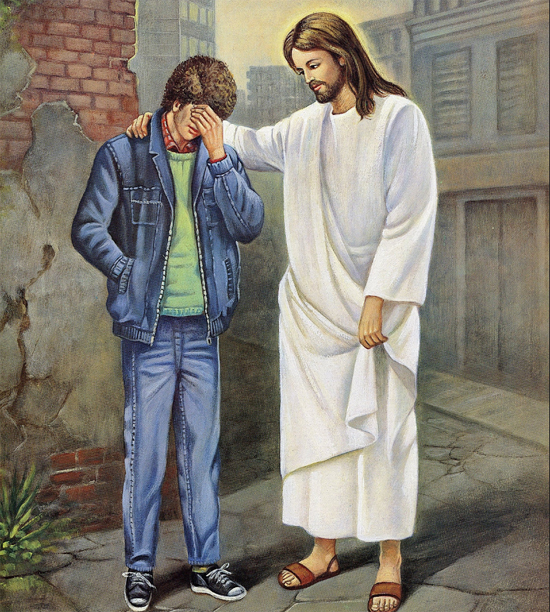
Jesus returns with Peter and James and John from the mountain of the transfiguration. He finds a scene which is crowded and confused. The scribes are present, arguing with Jesus’ disciples. They are surrounded by many people, who now catch sight of Jesus and rush to greet him. Jesus asks what has happened to create such a hubbub, and we learn that at its focal point there is sickness, in the form of possession, and inability on the part of the disciples to cast the evil out of the child [ … ]
YouTube: Ash Wednesday | T.S. Eliot | Audio Christian Poetry | Word Aloud Ash Wednesday, one of T.S. Eliot’s most profound and enigmatic poems, marks a significant transition in his life and work. Written in 1930, it is the first long poem Eliot composed after his conversion to Anglicanism in 1927. The poem, often considered one of Eliot’s masterpieces, delves into themes of faith, redemption, and spiritual struggle. It reflects the poet’s personal journey towards spiritual enlightenment and serves as a testament to his newfound religious beliefs. A reading of Ash Wednesday is an exploration of the poem’s religious, literary, and personal contexts, as of the poem’s complex structure and themes. Religious Context And Symbolism Ash Wednesday is deeply embedded in Christian symbolism and tradition. The title refers to the first day of Lent in the Christian liturgical calendar, a day marked by penance, fasting, and prayer. Ash Wednesday is a time for reflection on mortality and repentance, themes that are intricately woven throughout the poem. Eliot’s conversion to Anglicanism profoundly influenced his writing; ‘Ash Wednesday’ is an expression of spiritual awakening and quest for redemption. The poem is replete with religious imagery and references, drawing on Christian doctrine and scripture. The use of liturgical language, biblical allusions, and references to saints and spiritual figures creates a tapestry of faith that invites readers to contemplate deep spiritual truths with which Eliot is grappling. The repetitive and prayer-like quality of the verses echoes meditative practices of the faithful, in part enabling the contemplative nature of the poem. Literary Influences And Techniques T.S. Eliot was a master of literary allusion and technique, and Ash Wednesday expresses Eliot’s ability to blend various influences into a cohesive whole. The poem reflects the influence of Dante, particularly The Divine Comedy, which Eliot admired for its exploration of spiritual ascent and redemption. Dante’s journey through Hell, Purgatory and Heaven parallels Eliot’s own spiritual journey, and the structure of Ash Wednesday can be seen as a reflection of this pilgrimage. Eliot’s use of fragmented narrative, a hallmark of his earlier work such as The Waste Land, is also present in Ash Wednesday. However, in this poem, the fragmentation serves a different purpose. Instead of depicting the disintegration of modern society, it mirrors the fragmented and often painful process of spiritual rebirth. The disjointed structure reflects the internal struggle of the speaker, who is torn between the pull of worldly desires and the aspiration for divine grace. The poem’s language is rich and varied, combining the lyrical and the obscure, the personal and the universal. Eliot employs a range of poetic forms and devices, including free verse, rhyme and meter, to convey the tumultuous journey of faith. The shifting tone and style reflect the complexities and contradictions inherent in the spiritual quest, capturing moments of doubt, despair, hope, and transcendence. Personal Significance Ash Wednesday is a deeply personal work. Eliot’s conversion to Anglicanism marked a profound shift in his life, providing a sense of purpose and direction that had been missing. The poem can be read as a reflection of Eliot’s own struggles with faith and his efforts to reconcile his intellectual skepticism with his desire for spiritual certainty. Eliot’s personal experiences, including his troubled marriage and professional pressures, also inform the poem. Themes of renunciation and acceptance, sin and redemption, are not merely abstract concepts but lived realities for the poet. This personal dimension adds a layer of intimacy and urgency to the poem, which thereby resonates with readers who have faced their own spiritual crises. Thematic Exploration At its core, Ash Wednesday is a meditation on the possibility of spiritual renewal in a world that often seems devoid of meaning. The poem grapples with the tension between faith and doubt, reflecting the existential struggles of modernity. The poem acknowledges the difficulties of maintaining belief in an age of skepticism but ultimately affirms the possibility of redemption and grace. The central theme of renunciation is explored through imagery of ascension and purification. The speaker’s journey is marked by a series of renunciations, symbolizing the shedding of earthly attachments in pursuit of spiritual truth. This process is neither straightforward nor easy; it involves moments of intense struggle and introspection. Yet, through this arduous journey, the speaker moves closer to a state of spiritual clarity and acceptance. Ash Wednesday | T. S. Eliot Because I do not hope to turn again Because I do not hope Because I do not hope to turn Desiring this man’s gift and that man’s scope I no longer strive to strive towards such things (Why should the agèd eagle stretch its wings?) Why should I mourn The vanished power of the usual reign? Because I do not hope to know The infirm glory of the positive hour Because I do not think Because I know I shall not know The one veritable transitory power Because I cannot drink There, where trees flower, and springs flow, for there is nothing again Because I know that time is always time And place is always and only place And what is actual is actual only for one time And only for one place I rejoice that things are as they are and I renounce the blessèd face And renounce the voice Because I cannot hope to turn again Consequently I rejoice, having to construct something Upon which to rejoice And pray to God to have mercy upon us And pray that I may forget These matters that with myself I too much discuss Too much explain Because I do not hope to turn again Let these words answer For what is done, not to be done again May the judgement not be too heavy upon us Because these wings are no longer wings to fly But merely vans to beat the air The air which is now thoroughly small and dry Smaller and dryer than the will Teach us to care and not to care Teach us to sit still. Pray for us sinners now […]
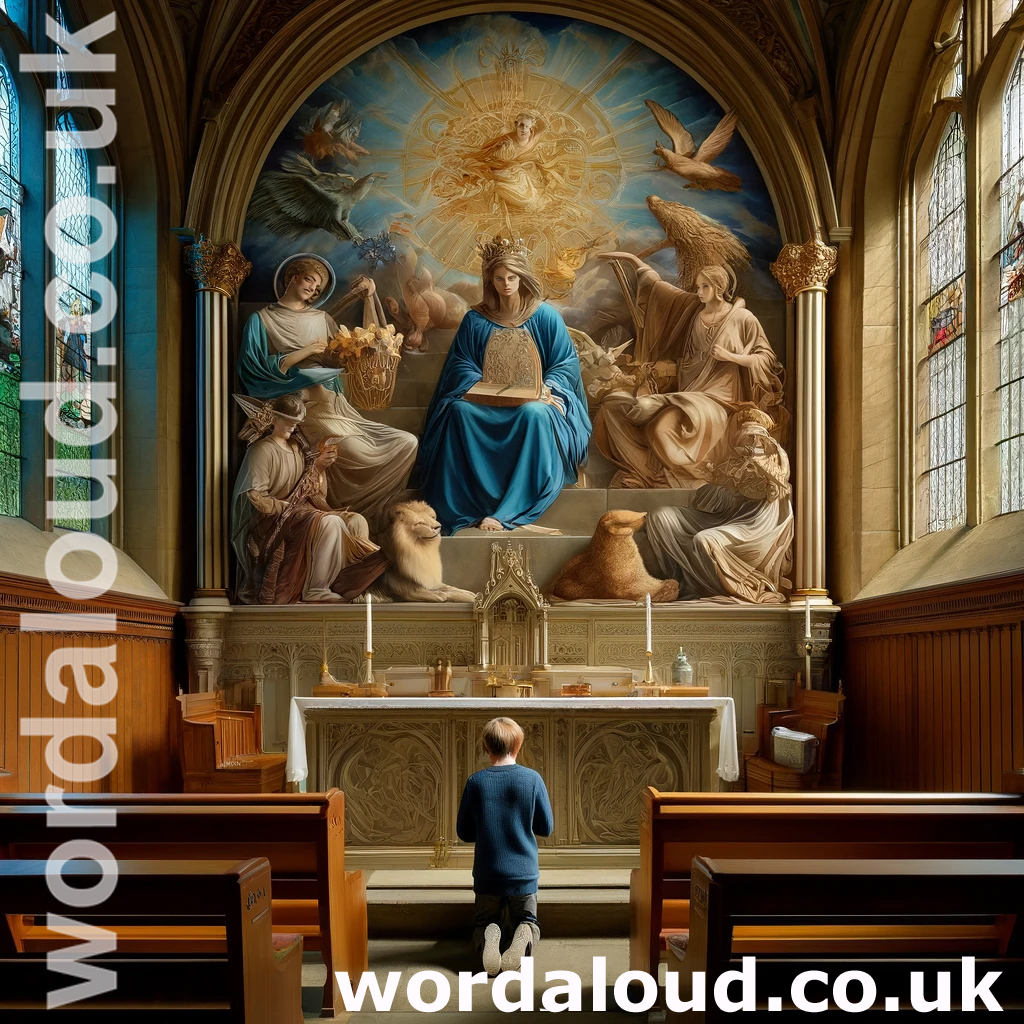
Saint Isaac of Stella reflects on the deep unity between Christ, Mary, the Church, and the individual Christian. His central conviction is that God’s saving work is one, though it is shared in different ways. What is true of Christ is extended to those who belong to him; what is true of Mary is reflected in the Church; and what is true of the Church touches each believer [ … ]