
Christian Art | Prayer With Jesus | Psalms | God’s Work In Creation And In History | King David As A Boy | Audio KJV | Love Revealed By Jesus Christ | King James Audio Bible
Psalm 136 | King James Audio Bible
YouTube: Psalm 136 KJV | King James Audio Bible | Word Aloud
Psalm 136 is a mosaic of praise, history, and theology. The psalm invites the community of believers to remember, recite and relive manifold demonstrations of God’s mercy. Each of the psalm’s 26 verses ends with the refrain, ‘for his mercy endureth for ever.’ This structure not only provides rhythm but also deeply ingrains the core truth of God’s steadfast love. From creation to historical events, from personal deliverance to provision for all life, the psalm celebrates the enduring and comprehensive nature of God’s mercy.
The psalm begins with a call to thanksgiving: ‘O give thanks unto the Lord; for he is good.’ This invocation serves as an entry point into a litany of God’s acts, reminding the faithful of the reasons for their gratitude. The initial verses set the tone, focusing on God’s supremacy, ‘O give thanks unto the God of gods’ and ‘O give thanks to the Lord of lords.’ This recognition of God’s ultimate authority forms the foundation for the subsequent recounting of His deeds.
In following verses, the psalm celebrates God’s creative power: ‘To him who alone doeth great wonders’ and ‘To him that by wisdom made the heavens.’ These verses of the psalm draw attention to God as Creator of all, emphasizing God’s unparalleled ability to shape and command the universe. Mention of celestial bodies, ‘The sun to rule by day’ and ‘The moon and stars to rule by night,’ serves to magnify the grandeur of God’s creation, highlighting God’s mastery over both day and night.
The psalm recounts God’s acts in history, particularly God’s deliverance of Israel from Egypt: ‘To him that smote Egypt in their firstborn’ and ‘And brought out Israel from among them.’ These verses recall defining moments of the Exodus, marking God’s intervention as both powerful and decisive. The psalm continues to recount the miraculous crossing of the Red Sea: ‘To him which divided the Red sea into parts,’ and the subsequent destruction of Pharaoh’s forces: ‘But overthrew Pharaoh and his host in the Red sea.’ These events are commemorated as pivotal demonstrations of God’s mercy and power in delivering His people.
Through the Exodus narrative, the psalm expresses and relives God’s guidance through the wilderness: ‘To him which led his people through the wilderness.’ This expresses God’s constant presence and provision, even in times of uncertainty and hardship.
The psalm further acknowledges God’s might in conquests: ‘To him which smote great kings’ and ‘And slew famous kings.’ The specific mention of Sihon and Og, ‘Sihon king of the Amorites’ and ‘And Og the king of Bashan,’ not only recounts victories but also the provision of a homeland for Israel: ‘And gave their land for an heritage.’ This passage celebrates God’s role as a warrior and provider for His people.
From the national to the personal, the psalm recalls God’s faithfulness in times of distress: ‘Who remembered us in our low estate.’ This verse highlights God’s attentiveness and care even in moments of vulnerability and weakness.
The psalm concludes by returning to the motif of God as sustainer: ‘Who giveth food to all flesh.’ This verse encompasses God’s provision for all creation, asserting God’s role as provider of sustenance.
The final verse, ‘O give thanks unto the God of heaven,’ serves as a bookend, mirroring the opening verse and reinforcing the psalm’s call to gratitude.


Psalm 136 | King James Audio Bible
O give thanks unto the Lord; for he is good: for his mercy endureth for ever.
O give thanks unto the God of gods: for his mercy endureth for ever.
O give thanks to the Lord of lords: for his mercy endureth for ever.
To him who alone doeth great wonders: for his mercy endureth for ever.
To him that by wisdom made the heavens: for his mercy endureth for ever.
To him that stretched out the earth above the waters: for his mercy endureth for ever.
To him that made great lights: for his mercy endureth for ever:
The sun to rule by day: for his mercy endureth for ever:
The moon and stars to rule by night: for his mercy endureth for ever.
To him that smote Egypt in their firstborn: for his mercy endureth for ever:
And brought out Israel from among them: for his mercy endureth for ever:
With a strong hand, and with a stretched out arm: for his mercy endureth for ever.
To him which divided the Red sea into parts: for his mercy endureth for ever:
And made Israel to pass through the midst of it: for his mercy endureth for ever:
But overthrew Pharaoh and his host in the Red sea: for his mercy endureth for ever.
To him which led his people through the wilderness: for his mercy endureth for ever.
To him which smote great kings: for his mercy endureth for ever:
And slew famous kings: for his mercy endureth for ever:
Sihon king of the Amorites: for his mercy endureth for ever:
And Og the king of Bashan: for his mercy endureth for ever:
And gave their land for an heritage: for his mercy endureth for ever:
Even an heritage unto Israel his servant: for his mercy endureth for ever.
Who remembered us in our low estate: for his mercy endureth for ever:
And hath redeemed us from our enemies: for his mercy endureth for ever.
Who giveth food to all flesh: for his mercy endureth for ever.
O give thanks unto the God of heaven: for his mercy endureth for ever
Psalm 136 | King James Audio Bible
- God’s Enduring Mercy: Every verse concludes with ‘for his mercy endureth for ever,’ emphasizing the perpetual and steadfast nature of God’s mercy, a central theme that unifies the psalm.
- Divine Supremacy And Power: The psalm opens with a recognition of God as the supreme deity, ‘O give thanks unto the God of gods,’ underscoring God’s omnipotence and authority over all creation.
- Creation And Cosmic Order: References to God’s acts of creation, such as ‘To him that by wisdom made the heavens,’ highlight God’s role as the creator and sustainer of the universe, including celestial bodies like the sun, moon, and stars.
- Historical Acts Of Deliverance: The psalm recounts pivotal events including the Exodus, ‘To him that smote Egypt in their firstborn,’ and the crossing of the Red Sea, celebrating God’s intervention and salvation of Israel.
- Guidance And Provision: Verses including, ‘To him which led his people through the wilderness,’ acknowledge God’s continuous guidance and provision, not just in monumental events but also in everyday sustenance.
- Victory Over Enemies: The psalm recalls God’s might in defeating enemies, ‘To him which smote great kings,’ and God’s role as a divine warrior who secures victory and land for His people.
- God’s Faithfulness In Distress: The verse, ‘Who remembered us in our low estate,’ reflects God’s attentiveness and compassion, even in times of vulnerability and distress.
- Universal Care And Sustenance: The psalm concludes with a broader view of God’s mercy, noting His role as the sustainer of all life, ‘Who giveth food to all flesh,’ indicating God’s providence extends to all creation.


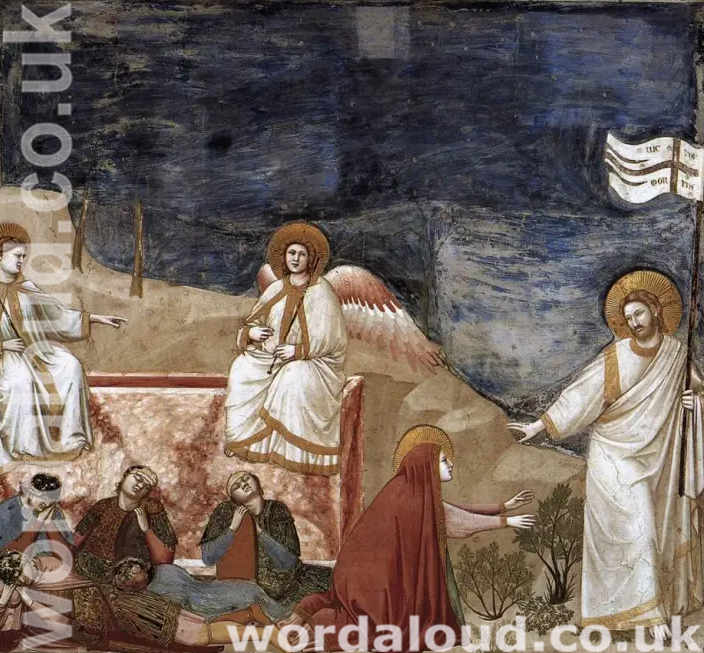
Pope Saint Gregory the Great reflects on the moment in the Gospels when Jesus looks out upon the crowds and says: ‘The harvest is great, but the labourers are few.’ The image is simple but searching. It describes a field full of life and possibility, waiting for workers to gather its fruit. For Gregory, this scene becomes a picture of the Church itself — abundant in potential, yet in need of those who will tend, teach and draw others toward faith [ … ]

One of the ways Jesus revealed his love was through healing miracles. In the Gospel of Matthew, we read, ‘Jesus went about all the cities and villages, teaching in their synagogues, and preaching the gospel of the kingdom, and healing every sickness and every disease among the people.’ (Matthew 9:35, KJV) This verse shows us that Jesus was not only concerned with our spiritual well-being, but also our physical health [ … ]

‘Faith’ begins with a reflection on human struggle with sin and the difficulty of achieving spiritual clarity. Herbert employs vivid imagery to describe this challenge, asking, ‘Lord, how couldst thou so much appease / Thy wrath for sin, as when man’s sight was dim, / And could see little, to regard his ease, / And bring by Faith all things to him?’ This opening begins to explore how faith transforms human perception, making divine truths clearer [ … ]